
Silk!
History, production, and styling tips

Silk is my favorite fabric. Not only because of its feel and texture - we say "silky-smooth" for a reason - but also because it's strong, durable and beautiful. However, its production is incredibly cumbersome, resource-intensive and prone to various environmental factors such as climate, disease and bacteria that can damage or kill silkworms and mulberry trees.
Moreover, those who are familiar with the process of silk production know that it is downright cruel: To get a continuous thread, you need to boil or steam the cocoon before the moth naturally comes out breaking the fibers with its protein-dissolving enzymes. Gazillions of silkworms die every year in their cocoons for us to get a continuous strong silk thread.
A way of making "peace silk," where the broken thread is harvested after the moth emerges from the cocoon, produces fibers that are much shorter, rougher and fuzzier than the silk produced from one continuous thread strung from an unbroken cocoon. Most people prefer the "non-peace silk."
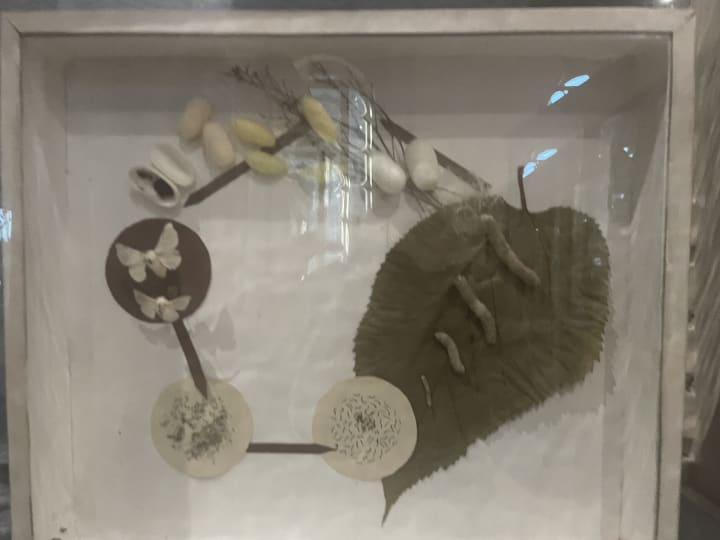
People's fascination with and love for silk goes back millennia. It is scientifically established that the first samples of silk found in China date back 8,500 years. Domestication of silkworms happened in China around 5,000 years ago, which led to establishment of a whole new discipline - sericulture. Interestingly enough, India developed processes of making silk from wild cocoons about 3,500 years ago, independent of China.
There are many interesting myths of the origin of silk, and I will give you some from the Chinese and Indian mythology. Note that even though silk existed for much longer, the oldest myths go back to 2700 BCE, i.e. about 5,000 years ago.
Chinese Myths:
1. On a warm summer day, Leizu, wife of the Yellow Emperor (Huangdi) was drinking tea in the shade of a mulberry tree. A silkworm cocoon fell into Leizu’s tea cup. Curious, she tried to fish it out, but the hot tea caused the cocoon to unravel into a long thread. She started to wrap the thread around her finger and was struck by how long and durable it was. Fascinated, she studied silkworms and learned how to raise them, inventing sericulture and the silk reel. She then taught the Chinese people how to cultivate mulberry trees and process cocoons. This most commonly known myth is significant as it emphasizes innovation, divine feminine craftsmanship, and imperial legitimacy.
2. A more local myth from Sangshen (Niangniang) ties a deity to silk workers. According to this myth, a maiden tending mulberry trees accidentally discovered the silk thread when a silkworm cocoon snagged on her fingers and unraveled. In some versions, she sacrifices herself or dies from exhaustion and becomes a protective spirit of spinners and weavers. This myth elevates silk production to sacred feminine labor from the worker class rather than royalty.
3. There is also a darker myth, which tells the origin of the silkworm deity, Ma-tou-niang: A man joins a military campaign, leaving his daughter and a horse behind. The lonely girl, missing her father, jokingly promises to marry the horse if it can bring her father back home. The horse hears the promise, escapes, and finds the father. The father is surprised and happy to see his horse but is unaware of the promise. He rides the horse home. The horse refuses to eat and becomes wildly agitated every time it sees the girl. Suspicious, the father questions his daughter, who reveals the lighthearted promise she made. The father, horrified and angry, breaks the promise and kills the horse, stripping off its skin and leaving it to dry in the sun. One day, while the father is away, the girl goes to the horsehide. The horsehide suddenly wraps itself around the girl, and they fly away together. The pair land in a mulberry tree and transform into silkworms. They feed on the leaves and produce silk and cocoons. The girl is thereafter worshiped as the silkworm deity, Ma-tou-niang, often depicted in illustrations as a girl wearing a horsehide as a hat or shroud. This myth is associated with fertility, sacrifice, the power of oaths. It is also a reminder of the taboo of breaking sacred promises.
Indian Myths:
1. As Lakshmi, the goddess of prosperity, rose from the cosmic ocean during Samudra Manthan (the Churning of the Ocean), threads of shimmering golden fiber fell from her lotus seat. These threads became the first silk, representing prosperity, generosity, and divine beauty. Silk here has auspicious cultural meaning, tied to wealth and blessings.
2. In some Vedic cosmological interpretations Prajapati, the creator deity, produced living beings wrapped in a “cocoon of life.” When the cosmic cocoon unraveled during creation, the threads were taken by humans as sacred fibers — the proto-silk. These myths tie silk to creation, cycles of birth, and sacred clothing (e.g., silk dhoti, sari).
3. A regional myth from Assam, home to India’s unique and world-famous golden Muga silk: Forest spirits (Baak or Yakshi-like figures) befriended humans and taught a young girl how to care for wild silkworms. She became the first master weaver of Assam. The Muga silkworms are believed to be descendants of these benign spirit beings. This myth emphasizes respect for nature, animism, and women's skilled labor.
4. My personal favorite - the South Indian “Silk Born from Fire” Myth - is linked to temple traditions in Karnataka and Tamil Nadu. According to this myth, Agni (the fire god) burns away illusions and impurities, revealing a dazzling thread within the flames. This pure flame-thread becomes silk. Temple priests often describe silk garments as "fire-born" (Agneya). Here, silk has the meaning of a fabric that is purifying, suitable for gods, rituals, and sacred attire.
All these myths reflect the divinity and hard labor associated with the production of silk, making it incredibly valuable. So valuable that the first human practice of globalization - Silk Road - was centered on transporting silk and spices from Asia to Europe in exchange for precious metals, gems, and European technologies of metal forging and weaponry.
In Middle Ages, European kings were craving silk for everything in their castles and later palaces, from silk wall upholstery, tapestry, drapes and bedding to clothing and underwear. They were envious of silk production in Asia and wanted local productions in Europe for easier access and lower price. The Chinese and Indians, understanding the exchange value of silk, fiercely guarded the secrets of its production and tending for the mulberry trees and silkworms.
It is believed that for the first time the secrets were smuggled out into Europe by monks who went to Asia on Christian missions. When returning home, they hid the silk worms and mulberry seeds for tree propagation in their hollowed out canes.
As mulberry trees are relatively easy to grow in mild warm climates, silk production in France and Italy was ramped up on kings' orders in relatively short periods of time. By the middle of 19th century, before the notorious pébrine epidemic that reduced the production almost ten times, France became the leader of silk industry in Europe, producing about 26,000 tons of cocoons annually, with Italy tailing in second place with 20,000 tons. China was still the largest global producer of raw silk, but at least Europe by then had its own production and could compete with Asian silk in terms of quality.
Russia decided to enter the silk race in the 1880s, seeing an opportunity after a lot of silk capacity in Europe was damaged by the silkworm pébrine epidemic. As a site for the imperial production, Georgia was chosen for its mild climate and relatively long warm seasons suitable for mulberry tree growing and harvesting silkworms up to three times in a year. A huge Silk Station was set up in Tbilisi, where a lot of research and training was carried out to set up local capacities in Georgia.
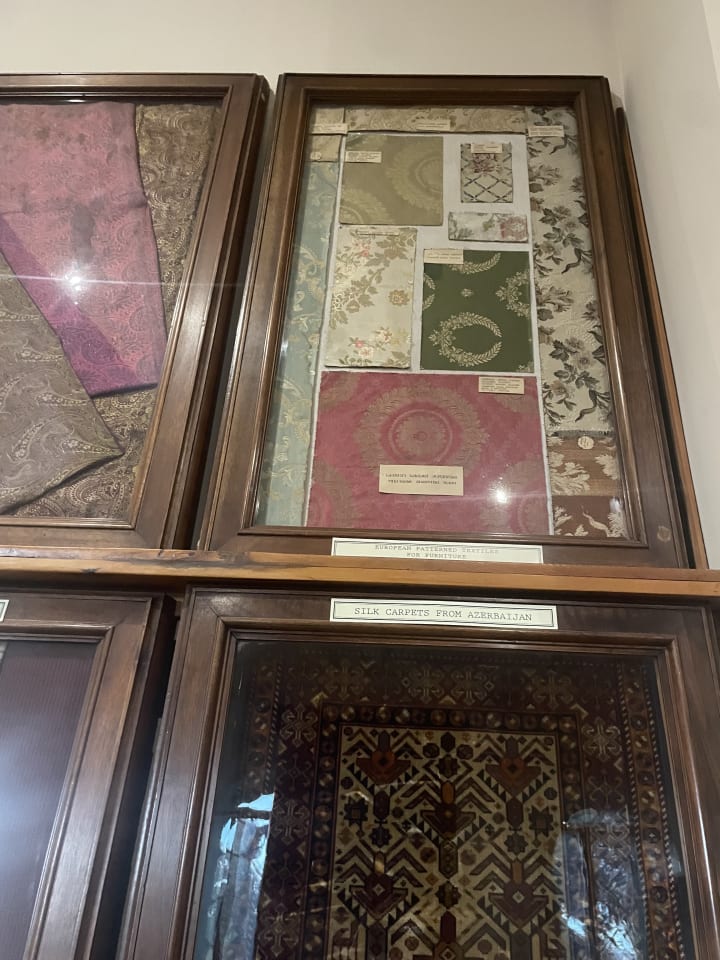
By 1914, Russia was able to boost up its own silk production to 3,000 tons of raw silk, which was about the post-epidemic volume in Europe. And when the Bolsheviks came to power in 1917, they first neglected silk production altogether but then managed to ramp it up to 5,000 tons in the 1950-60s. But then synthetic threads were invented and the rest became history. Literally.
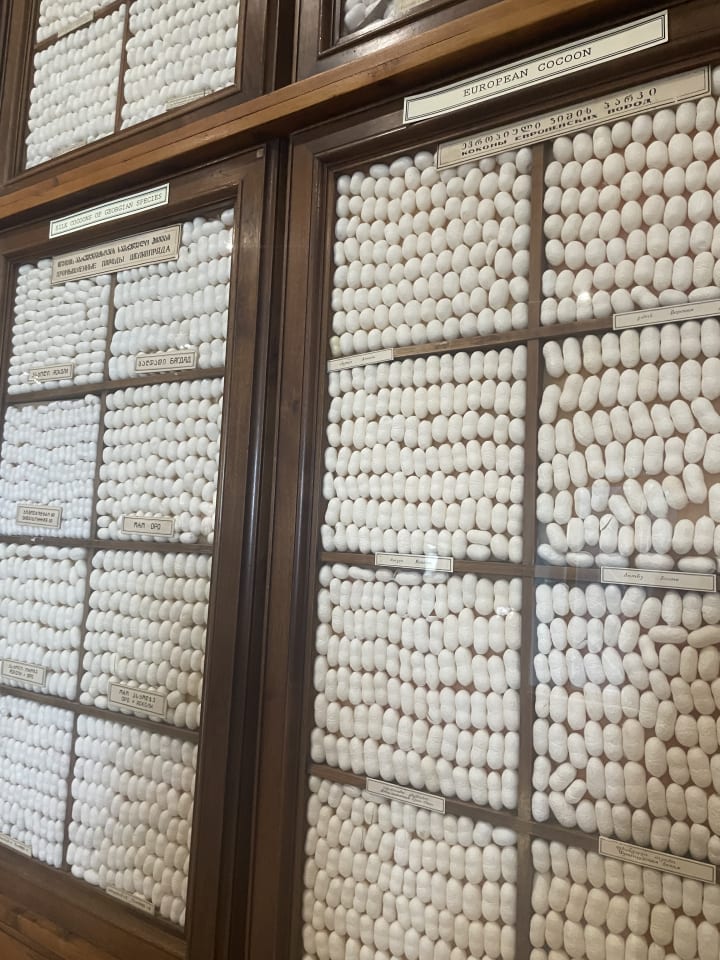
Where a huge imperial Silk Station used to be sprawling in Tbilisi, there's now a soccer stadium for 55,000 spectators and other modern city infrastructure. The State Silk Museum, designed by a Polish architect Alexander Shimkevich and built by 1887, is the only reminder of the history of silk production, and it is a fascinating place. It is probably my favorite museum in Tbilisi. Not only it will tell you everything about the silkworm and moth life cycle, but also about the properties, stages, and equipment for silk production.

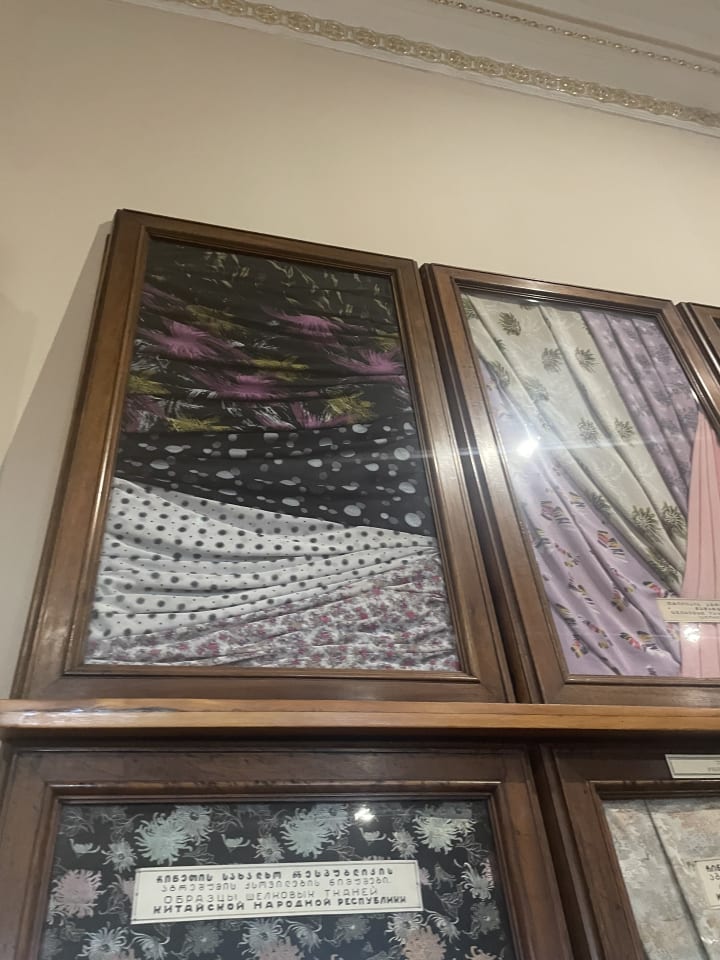
It also has an amazing collection of silk fabrics from all over the world and a beautiful ornate library set up by the Station founder and leading researcher, Russian biologist Nikolay Shavrov, who personally collected the most current research volumes on botany and sericulture in different languages. The library there is absolutely spectacular.
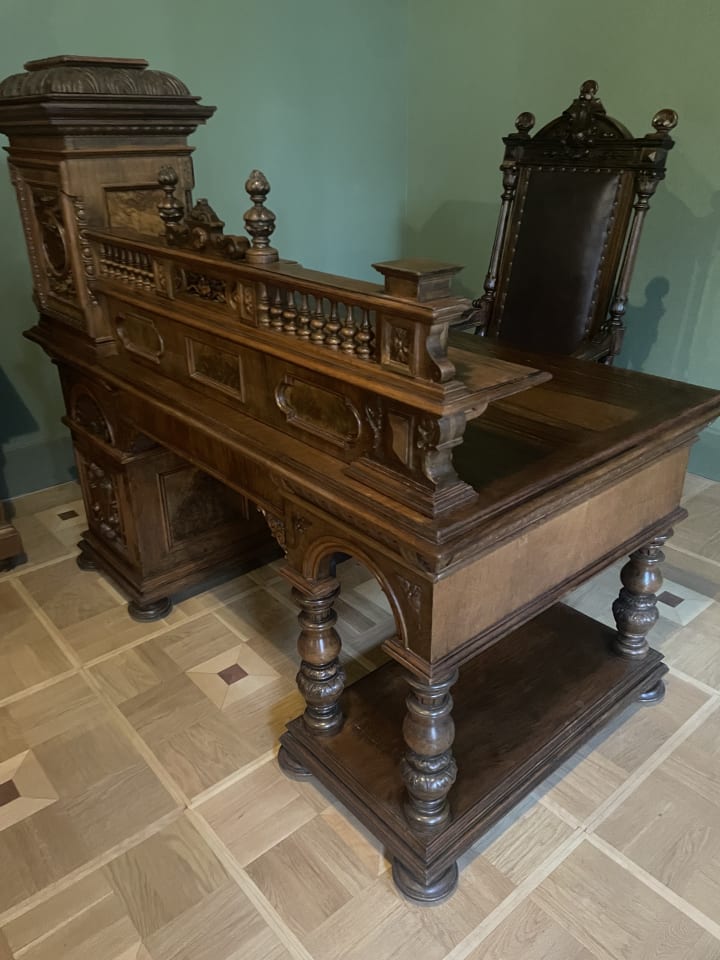
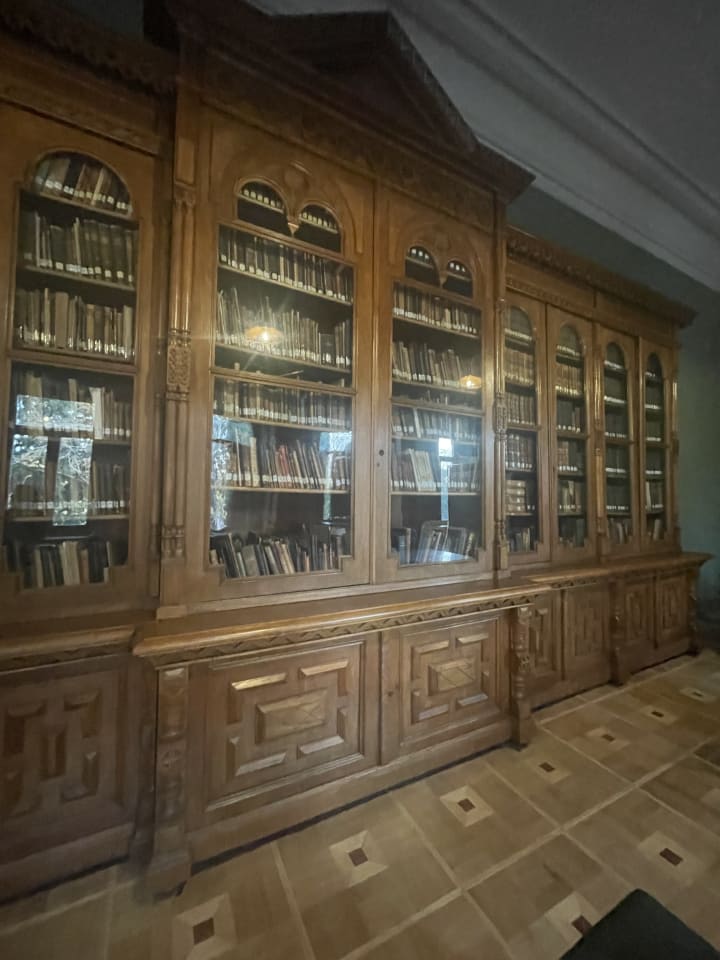
I strongly encourage you to explore the museum website to appreciate the history and importance of silk.
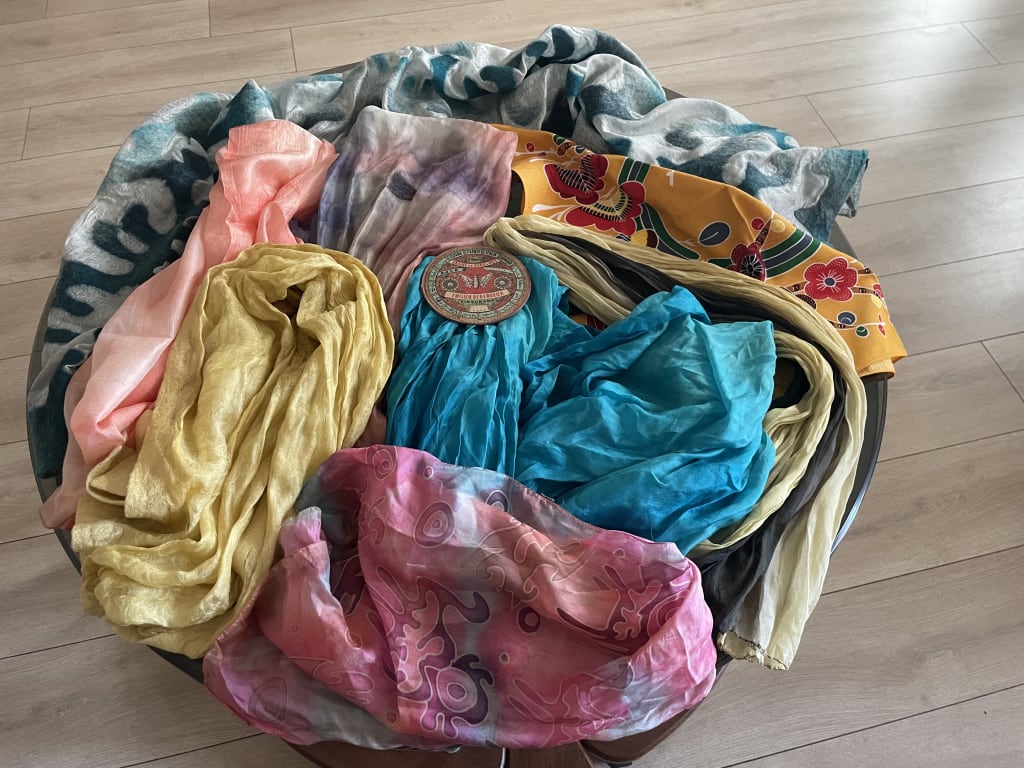
My affinity to silk is expressed in a now vast collection of pure silk scarves from different countries of the world. Most come from Kyrgyzstan, where local silk artisans revived the craft in early 2000s and developed a technique of fusing silk with felt (the yellow, green and violet scarves in the cover image), making it into one of the national signature products. But I also have lots of silk scarves gifted to me by people who know my passion for them, eg. the bright yellow scarf with red flowers made from Japanese "peace silk" in the cover image. I love them all and regret that there not enough colder days in the year I can alternate to wear them all.
I like wearing them in a variety of knots and ties, and because I desperately needed to write a story for the Style community, I'm going to give you the tutorials I use often to variate the styles of wearing square and long scarves:
Square scarf tying techniques:
Long and winter scarf tying tips:
Finally, some useful tips for caring for silk:
1) Wash it in lukewarm water with shampoo for soft hair. Silk is protein, so it likes gentle care.
2) Dry by laying it out away from the sun. Direct sun rays will not only fade the color but also make silk brittle and prone to breaks and tears.
3) If you need to iron it (I never do), do not wait for it to dry completely and use only warm iron.
Hope you enjoyed this and thanks for reading!
About the Creator
Lana V Lynx
Avid reader and occasional writer of satire and short fiction. For my own sanity and security, I write under a pen name. My books: Moscow Calling - 2017 and President & Psychiatrist
@lanalynx.bsky.social
Reader insights
Outstanding
Excellent work. Looking forward to reading more!
Top insights
On-point and relevant
Writing reflected the title & theme
Easy to read and follow
Well-structured & engaging content
Masterful proofreading
Zero grammar & spelling mistakes
Compelling and original writing
Creative use of language & vocab
Expert insights and opinions
Arguments were carefully researched and presented
Eye opening
Niche topic & fresh perspectives
Excellent storytelling
Original narrative & well developed characters
Heartfelt and relatable
The story invoked strong personal emotions
Keep reading
More stories from Lana V Lynx and writers in Styled and other communities.
Ditched - Index
This index is just for my subscribers. I finished and published this long story or short novella of 6,000 words recently. I tried to link all previous parts of the story in the next one, so if you went along you shouldn't have been lost. This index is just put everything in one place.
By Lana V LynxExclusive • 4 months ago
Top Fashion Trends to Watch This Season — 2026 Style Forecast
Fashion in 2026 is shaping up to be one of the most dynamic and expressive periods in recent memory, with stories today emerging from runways, street style, and digital fashion spaces alike. The industry is embracing bold reinvention while balancing practicality and individuality — from high-concept couture to everyday wear shaped by real lifestyles. This season’s trends blend nostalgia and futurism, comfort and structure, vivid colour and minimalist restraint. Whether you’re a style enthusiast or simply curious about what’s next, these stories today reveal what’s truly dominating wardrobes this year.
By Stories Today7 days ago in Styled



Comments (7)
Fascinating and beautifully written. The museum details and myths were my favorite parts!
Wow you put so much info in here! I had no idea Russia also did silk. I like the 3rd Indian myth the best. I don’t wear silk because of the cruelty- when I found that out years ago I stopped buying silk. The tying of scarves - I have a booklet showing different ways and love it. Lately I have not worn scarves because then I get hot. 😬 Fabulous story!!
💖You write so well for the Style community. I like your versatility and your interest in keeping us educated on the ways providing silk could be causing harm. You are tracing the narrative for us, and I love the pacing of your writing as you capture the details both big and small. This is especially true in the bit about silkworms dying in their cocoons. It is upsetting to know this is what is happening. Maybe if we were never exposed to how luxurious silk can be, we wouldn't feel so divided in how we feel about having and not having it. Ooo, there is a phrase and method called "non-peace silk." I’ve never heard of this before! 💖It is also nice to know that India found a way to be independent of China in their own process. Thank you for the images, too. They help me piece together the words you’ve written into a mental picture of what this all must look like, particularly the cocoon samples photo. I had fun pronouncing, and failing at pronouncing, the names "Leizu" and "Huangdi." "It fell into the tea," oh that is most fascinating. Just a little accident to learn a lot!
Oooo, my favourite was the broken promise to the horse! I've never heard of any of those myths and they were all so fascinating!
Wow...it's fascinating how what we wear is so tied to history. What is fascinating is how the love of the material is a world phenomenon. The myths you introduced here are fascinating!
Fascinating work here, Lana. I have an old silk scarf that was gifted to my mother about 50 years ago. I haven't thought about framing it. I think I will frame it. It's gorgeous. Thank you for sharing.
Thank you for this well-researched piece!