
Crypto Coin vs Token: Understanding the Technical Differences in Blockchain Assets
Exploring the Core Technical Differences and Development Insights Behind Crypto Coins and Tokens in Modern Blockchain Ecosystems
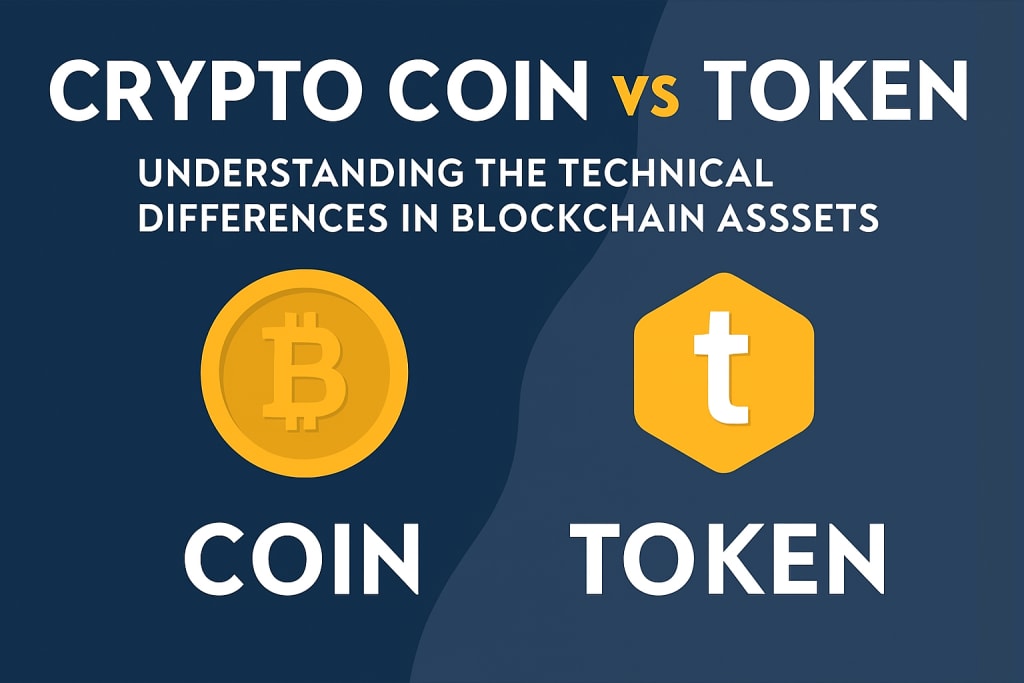
In the dynamic blockchain ecosystem, the debate of Crypto Coin vs Token often arises among developers, investors, and blockchain enthusiasts. While both represent digital assets, their technical architecture, creation process, and functional utility differ significantly. Understanding these nuances is crucial for anyone engaged in Cryptocurrency coin development or token-based projects within decentralized networks.
What Is a Crypto Coin?
A crypto coin is a native digital asset that operates on its own blockchain. Coins like Bitcoin (BTC), Ethereum (ETH), and Litecoin (LTC) are prime examples. These coins serve as both a medium of exchange and a store of value.
From a technical perspective, a crypto coin is built directly into the core protocol of a blockchain. The consensus mechanism—whether Proof of Work (PoW) or Proof of Stake (PoS)—governs its minting, validation, and distribution. Developers involved in Cryptocurrency coin development focus on designing secure consensus models, implementing node architecture, and integrating encryption algorithms that ensure transactional integrity.
A coin has its independent ledger and operates autonomously without depending on another blockchain. It can be used for various on-chain activities such as transaction fees, staking, and smart contract execution (in the case of Ethereum).
What Is a Crypto Token?
A crypto token, unlike a coin, does not have its own blockchain. It is created on an existing blockchain platform such as Ethereum (ERC-20 standard), Binance Smart Chain (BEP-20), or Solana. Tokens are developed using smart contracts that define their total supply, distribution rules, and transfer mechanisms.
Tokens represent a wide range of assets and functionalities. They can signify ownership (security tokens), provide access to decentralized applications (utility tokens), or represent stable assets pegged to fiat (stable tokens). The development process mainly involves deploying smart contracts and ensuring interoperability across wallets and exchanges.
The Crypto Coin vs Token distinction here is purely architectural—coins function as the backbone of a blockchain, whereas tokens function as programmable units built on top of an existing network.
Technical Difference Between Crypto Coin vs Token
From a developer’s standpoint, Crypto Coin vs Token comes down to infrastructure and autonomy. Coins require the creation of a new blockchain from scratch. Developers working on Cryptocurrency coin development must design consensus layers, transaction validation protocols, and network nodes.
Tokens, in contrast, leverage the infrastructure of existing blockchains. The focus lies on smart contract logic—defining parameters like supply limits, burning mechanisms, and governance functions. Tokens are easier to create, making them popular among startups that want to deploy decentralized applications quickly without building a blockchain infrastructure.
Coins, however, demand more technical depth but offer greater flexibility and control over the ecosystem.
Use Cases in the Blockchain Ecosystem
Coins are used for value transfer, staking, and maintaining blockchain security. They act as the fuel that powers the blockchain’s economic model.
Tokens are primarily used for governance, utility within decentralized applications, or representing digital assets like NFTs and real-world tokenized assets.
For example, ETH (a coin) powers the Ethereum network, while USDT (a token) functions on top of Ethereum or other chains for stable-value transfers.
This clear functional distinction reinforces why understanding Crypto Coin vs Token is essential before launching a blockchain-based project.
Why Businesses Prefer Custom Coin Development
Enterprises and startups are increasingly investing in Cryptocurrency coin development to gain better control over transaction logic, security features, and scalability. By building a native blockchain, they can customize consensus mechanisms, integrate unique transaction validation logic, and implement privacy-focused architectures.
In contrast, launching a token may be suitable for businesses focused on decentralized finance (DeFi), gaming, or NFT marketplaces where quick deployment and interoperability are key.
Developing a crypto coin also offers the advantage of independent governance and long-term sustainability without relying on third-party platforms.
The Future of Crypto Coin vs Token
As blockchain technology continues to evolve, both coins and tokens will coexist with defined roles. Coins will remain the foundation of blockchain infrastructure, while tokens will continue driving innovation in decentralized ecosystems.
The distinction of Crypto Coin vs Token will become even more pronounced as interoperability frameworks, cross-chain bridges, and Layer-2 scalability solutions expand their reach. Understanding these differences enables developers and investors to make informed decisions while building or investing in blockchain-based products.
Conclusion
The Crypto Coin vs Token debate is more than a semantic one—it defines the technological foundation of blockchain ecosystems. Coins serve as native digital currencies driving blockchain consensus, while tokens enhance programmability and user utility within existing platforms.
For businesses aiming to innovate in blockchain, exploring Cryptocurrency coin development opens the door to building independent, secure, and scalable ecosystems that align with their strategic vision.
About the Creator
Keep reading
More stories from Siddarth D and writers in The Chain and other communities.
The Technical Evolution of a Cryptocurrency Exchange Development Company
The digital asset industry has entered a new phase of technical maturity, where performance, scalability, and regulatory compliance define success. A Cryptocurrency Exchange Development Company operates at this intersection — combining blockchain architecture with financial engineering to enable efficient, high-volume trading platforms.
By Siddarth D3 months ago in The Chain
How Cross-Chain NFT Marketplace Development Solves Scalability and High Gas Fee Issues
Single-chain NFT marketplaces, where users buy and sell NFTs on a single blockchain, may deal with problems such as network congestion, high transaction fees, and limited scalability. This is because single-chain NFT marketplaces are limited by the number of transactions that the blockchain can process. Cross-chain NFT marketplaces allow transactions and interactions between multiple blockchains, which can address limitations such as scalability, cost, and liquidity. Possible solutions to the challenges of existing NFT marketplaces include cross-chain technology such as cross-chain atomic swaps. Cross-chain NFT marketplace solutions ease NFT platform scalability across NFT markets, enabling creators and collectors around the world to access its services.
By Henry james5 days ago in The Chain



Comments
There are no comments for this story
Be the first to respond and start the conversation.