
Decentralized Exchange Development: Scaling & Cross-Chain Liquidity
DEXs have grown from clunky experiments into real competitors to centralized exchanges. But speed, costs, and liquidity across chains remain the big challenges. That’s where Layer-2 scaling and cross-chain liquidity step in, powering faster, cheaper, and more connected trading experiences. This blog explores how these innovations are reshaping DEX development and why they’re key for building the next generation of exchanges.
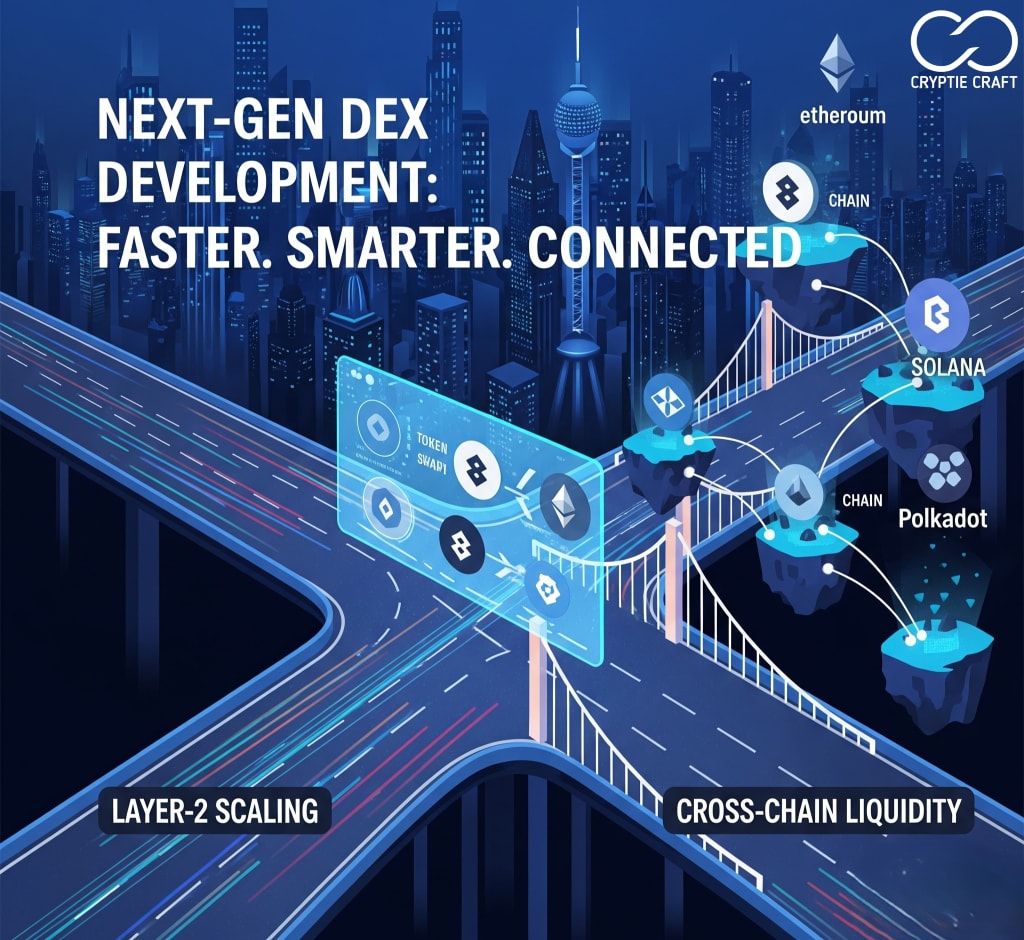
If you’ve been following crypto for a while, you’ve probably noticed how far decentralized exchanges (DEXs) have come. A few years ago, trading on a DEX meant dealing with clunky interfaces, painfully high fees, and the constant fear that your transaction might get stuck midway. Fast forward to today, and DEXs are no longer an experimental corner of DeFi, they’re serious competitors to centralized exchanges.
But here’s the catch: the expectations have changed. Traders want faster execution, lower costs, and access to tokens across different blockchains without jumping through hoops. That’s where Layer-2 scaling and cross-chain liquidity step in. Together, they’re reshaping how developers build and scale DEX platforms.
Why the Next Generation of DEXs Looks Different
The first wave of decentralized exchanges solved one big problem: custody. Instead of trusting an exchange with your funds, you could trade directly from your wallet. It was a breakthrough for financial freedom.
Yet, those early models hit walls quickly:
- Transactions on Ethereum got pricey whenever the network was busy.
- Confirmations dragged on during congestion.
- Liquidity stayed fragmented on separate chains, limiting what you could actually trade.
- Developers needed fresh answers, and they found them in scaling layers and interoperability frameworks.
Layer-2 Scaling: The Speed Engine Behind Modern DEXs
Think of Layer-2 solutions as the fast lanes on a crowded highway. Instead of forcing every car (transaction) to crawl through the same bottleneck, Layer-2 systems let trades happen elsewhere, then settle the results on the main blockchain.
Different approaches are being tested, but the most promising include:
- Rollups (Optimistic and ZK): bundle transactions and send them back as one, cutting costs dramatically.
- State Channels: allow users to trade multiple times “off-chain” and only close the tab on-chain once.
- Sidechains: run in parallel to big chains like Ethereum, offering faster and cheaper interactions.
For traders, this means lower gas fees and blazing speed. For developers, it means designing DEXs that can actually scale as user numbers grow, without the network grinding to a halt.
Cross-Chain Liquidity: Unlocking the Full Market
Scaling solves the speed problem, but what about choice? A trader might want to swap an Ethereum-based token for something native to Solana. On older DEXs, that wasn’t even an option.
This is where cross-chain liquidity changes the game. Instead of treating each blockchain like an island, new tools connect them into one larger marketplace.
How it works in practice:
- Bridges lock tokens on one chain and release mirrored versions on another.
- Liquidity aggregators scan multiple DEXs to get users the best price.
- Interoperable protocols like Polkadot or Cosmos create a common language for chains to talk to each other.
The result? Traders get access to a much wider pool of assets, and DEXs stop losing users to centralized exchanges that already offer multi-chain support.
Also Read>>DEX Platform Development with Liquidity Pool Integration
What Developers Need to Keep in Mind
Building a DEX in 2025 isn’t just about deploying smart contracts and calling it a day. Users are spoiled for choice, so the bar is higher. Three things matter most:
- Security – especially around cross-chain bridges, which are prime hacker targets.
- User experience – clean interfaces, wallet compatibility, and simple flows are deal-breakers.
- Regulation – while DEXs are decentralized, the pressure from global regulators is growing, and ignoring it can kill long-term projects.
The Road Ahead for DEX Development
If there’s one thing the last few years taught us, it’s that DEXs will keep evolving. Layer-2 scaling makes them faster and cheaper. Cross-chain liquidity makes them more versatile. Together, they’re setting the stage for exchanges that feel just as smooth as centralized platforms, without giving up the decentralization that makes them valuable in the first place.
The DEXs that lead the next wave will be the ones that master both: efficiency and connectivity. For developers, that means now is the time to dig into scaling solutions, experiment with cross-chain frameworks, and build platforms that meet the expectations of tomorrow’s users.
Because in this space, one thing’s certain — the competition isn’t slowing down. And if you’re ready to stay ahead, Cryptiecraft can help you build scalable, future-ready decentralized exchange solutions that deliver both speed and liquidity.
About the Creator
Keep reading
More stories from Eva Collins and writers in The Chain and other communities.
Top 5 Must-Have DEX Features for 2025
Decentralized exchange (DEX) ecosystem has made remarkable progress over the past few years. DEXs are developing rapidly, moving on to DeFi systems but also to simple token replacement. However, with maturity in the industry, user demands are also increasing at a faster rate.
By Eva Collins6 months ago in The Chain
How Cross-Chain NFT Marketplace Development Solves Scalability and High Gas Fee Issues
Single-chain NFT marketplaces, where users buy and sell NFTs on a single blockchain, may deal with problems such as network congestion, high transaction fees, and limited scalability. This is because single-chain NFT marketplaces are limited by the number of transactions that the blockchain can process. Cross-chain NFT marketplaces allow transactions and interactions between multiple blockchains, which can address limitations such as scalability, cost, and liquidity. Possible solutions to the challenges of existing NFT marketplaces include cross-chain technology such as cross-chain atomic swaps. Cross-chain NFT marketplace solutions ease NFT platform scalability across NFT markets, enabling creators and collectors around the world to access its services.
By Henry james5 days ago in The Chain


Comments
There are no comments for this story
Be the first to respond and start the conversation.