
Emirates, Etihad Cancel and Reschedule UAE–US Flights Amid Severe Snowstorm
Powerful winter storm grounds transcontinental flights, stranding passengers and forcing Gulf airlines to halt key U.S. routes.

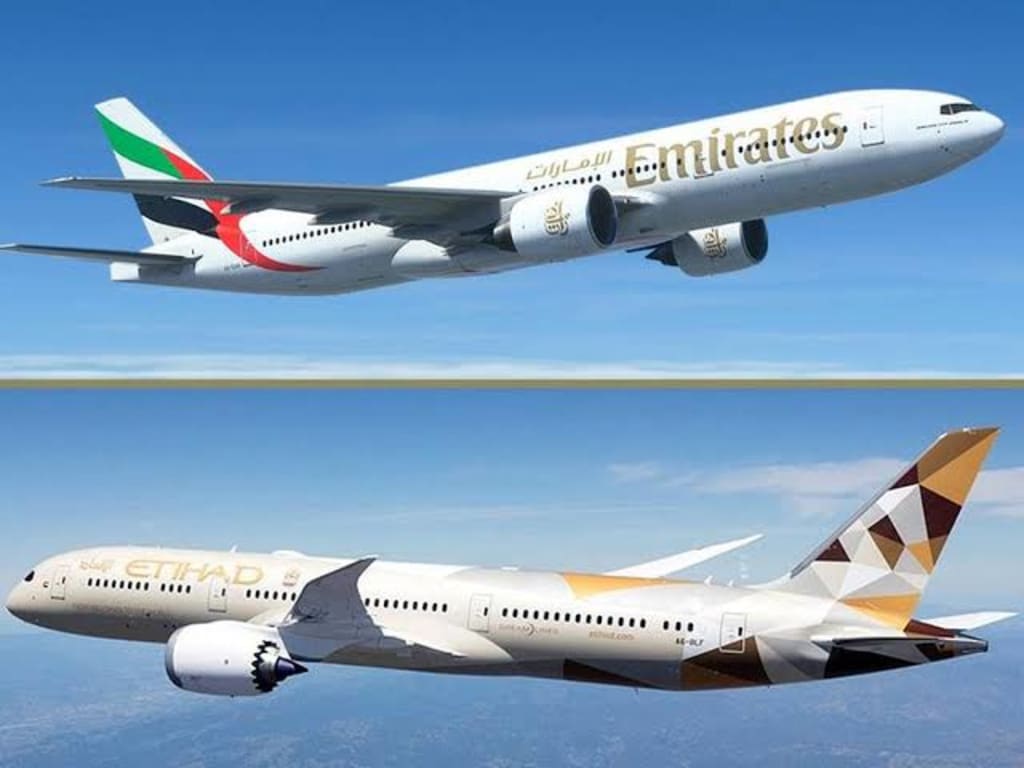
Major Middle Eastern airlines Emirates and Etihad Airways have canceled and rescheduled multiple flights between the United Arab Emirates and the United States after a powerful winter storm blanketed large parts of North America with heavy snow, ice, and dangerous winds.
The storm, which meteorologists described as one of the most disruptive of the season, caused widespread airport closures and delays across the northeastern and midwestern United States. Major hubs including New York, Boston, Chicago, and Washington experienced runway shutdowns and severe staffing disruptions, forcing international carriers to suspend long-haul services for safety reasons.
Flight Disruptions Across Key Routes
Emirates confirmed that several flights from Dubai to U.S. destinations such as New York (JFK), Boston, Chicago, and Newark were either canceled outright or delayed by more than 24 hours. Etihad also announced schedule changes affecting its Abu Dhabi services to New York and Washington, citing unsafe landing conditions and congestion at U.S. airports.
In a statement, Emirates said passenger safety was its “highest priority” and that operations would resume only when weather conditions and airport infrastructure allowed normal service. Etihad echoed the sentiment, advising travelers to check flight status online before heading to the airport.
Airports on the U.S. East Coast reported snowfall exceeding 30 inches in some regions, with blizzard-like conditions making aircraft de-icing and ground handling extremely difficult. Thousands of domestic flights were grounded, creating a ripple effect for international services.
Passengers Stranded and Rebooked
The sudden wave of cancellations left many passengers stranded at Dubai International Airport and Abu Dhabi International Airport, some of whom were traveling for business, family emergencies, or long-planned holidays. Airlines said they were working to rebook affected travelers on later services once U.S. airports reopen fully.
“I was supposed to fly to New York for a conference,” said Khalid Al-Mansoori, a Dubai-based passenger. “The airline staff were helpful, but the uncertainty is stressful. Hotels are filling up quickly because so many flights are canceled.”
Both carriers have offered free rebooking and ticket flexibility for customers traveling during the storm window. Passengers were also advised to avoid unnecessary travel to airports unless they had confirmed departure times.
Economic and Logistical Impact
The cancellations highlight the vulnerability of global aviation to extreme weather events. Long-haul routes between the Gulf and North America are among the most profitable for Emirates and Etihad, and even short disruptions can cost airlines millions of dollars in lost revenue, fuel rescheduling, and compensation expenses.
Cargo operations were also affected. Emirates SkyCargo confirmed that several freight shipments, including pharmaceuticals and electronics, were delayed due to airport closures and limited ground handling capacity in the United States.
Industry analysts noted that climate-related weather extremes are increasingly disrupting international travel patterns. “Airlines now factor in severe winter storms as routine operational risks,” said aviation consultant Mark Reynolds. “What used to be rare is becoming more frequent.”
Government and Airport Responses
U.S. aviation authorities urged travelers to monitor official advisories and avoid non-essential travel during the storm. Snowplows, emergency crews, and de-icing teams worked around the clock to reopen runways and terminals, but progress remained slow in heavily affected regions.
Meanwhile, UAE aviation authorities said they were coordinating with airlines and U.S. airport officials to ensure safe resumption of services. Embassies in Washington and New York also issued travel alerts to UAE nationals.
Looking Ahead
Both Emirates and Etihad expect gradual normalization of services over the next 48 to 72 hours, depending on weather improvements and airport recovery efforts. Additional flights may be added later in the week to accommodate backlogged passengers.
For now, travelers between the UAE and the U.S. are being urged to remain flexible and prepared for further changes. The episode serves as another reminder of how interconnected global aviation is — and how a single storm system can disrupt journeys across continents.
About the Creator
Fiaz Ahmed
I am Fiaz Ahmed. I am a passionate writer. I love covering trending topics and breaking news. With a sharp eye for what’s happening around the world, and crafts timely and engaging stories that keep readers informed and updated.
Keep reading
More stories from Fiaz Ahmed and writers in The Swamp and other communities.
HMS Anson Arrives in Australia
The British nuclear-powered attack submarine HMS Anson has arrived in Australia, marking a significant milestone in growing defense cooperation between the United Kingdom and its Indo-Pacific partners. The submarine docked at Garden Island Naval Base as part of a scheduled port visit and joint engagement program with the Royal Australian Navy. The arrival of HMS Anson underscores the strengthening military ties between United Kingdom and Australia, particularly under the AUKUS security partnership that also includes the United States. Officials described the visit as routine but strategically important, reflecting the increasing tempo of allied naval operations in the Indo-Pacific region. A Powerful Symbol of Cooperation HMS Anson is the fifth Astute-class submarine operated by the Royal Navy. Equipped with advanced sonar systems, Tomahawk cruise missiles, and sophisticated intelligence-gathering capabilities, the submarine represents one of the most advanced underwater platforms in service today. British defense officials said the visit aims to strengthen interoperability between allied navies through joint training, technical exchanges, and port activities. “This deployment highlights the close partnership between the UK and Australia and our shared commitment to maintaining stability and security in the Indo-Pacific,” a Royal Navy spokesperson said. Australian defense leaders echoed this message, calling the visit an important step toward preparing for future submarine cooperation under AUKUS. Australia is expected to begin hosting more frequent visits by UK and U.S. submarines in the coming years as it transitions toward acquiring its own nuclear-powered fleet. Strategic Context The arrival of HMS Anson comes amid rising geopolitical tension in the Indo-Pacific, driven largely by increased Chinese naval activity in the South China Sea and around Taiwan. Western allies have sought to demonstrate unity and readiness by conducting joint exercises and port visits across the region. Defense analysts note that submarine deployments carry strong symbolic and operational value. Unlike surface warships, submarines are designed for stealth and long-duration patrols, making their presence a quiet but powerful signal of deterrence. “This is not just a courtesy visit,” said one regional security expert. “It reflects the evolving strategic environment and the desire of allied nations to show that they can operate together seamlessly, including in the most sensitive domains of naval warfare.” Local Reception and Security Measures Security around Garden Island Naval Base was heightened during HMS Anson’s arrival, with patrol boats and air surveillance ensuring safe entry into Sydney Harbour. While the submarine’s visit was planned in advance, authorities treated it with caution due to its nuclear propulsion and strategic importance. Members of the public gathered at vantage points along the harbor to catch a glimpse of the rare visitor. For many Australians, the presence of a British nuclear submarine was both a reminder of historic ties and a sign of changing defense priorities in the region. Environmental groups raised questions about nuclear-powered vessels entering Australian ports, although officials stressed that HMS Anson adheres to strict safety standards and poses no environmental risk. Training and Engagement Activities During its stay, HMS Anson’s crew will participate in joint exercises with Australian naval personnel, including simulations focused on underwater warfare, communications, and logistics support. Technical specialists from both navies will also exchange expertise on maintenance and operational procedures. The visit is expected to provide valuable insight for Australia as it prepares its own sailors and engineers for future nuclear submarine operations. Defense officials described the engagement as a “learning opportunity” that will help shape Australia’s long-term maritime strategy. Looking Ahead HMS Anson’s arrival is part of a broader pattern of increased allied naval presence in the Indo-Pacific. Similar visits by U.S. and UK submarines are expected to become more common as AUKUS cooperation deepens and infrastructure in Australia expands to support advanced undersea platforms. For now, the submarine’s presence stands as a visible sign of renewed strategic alignment between the UK and Australia. As global power dynamics continue to shift toward the Pacific, such visits are likely to play an increasingly important role in shaping the region’s security landscape.
By Fiaz Ahmed 2 days ago in The Swamp
A Gathering of Evil Bosses
“I’m the queen of chin jutting while I smooth my hair, attacking, insulting, and deflecting to protect my appointer.” “Oh, please, Blondi, my hair is curled, highlighted, and longer than yours. I feature television commercials telling immigrants that we will give them a free plane ride home, and if they voluntarily turn themselves in, they will be allowed to legally apply for re-entry. It runs everywhere, and I look good in it! You can’t compete because of your blond hair. Mine is nicer, and my lips are prettier than yours.”
By Andrea Corwin 6 days ago in The Swamp
Craft Over Catharsis Challenge Winners
Craft Over Catharsis? What the hell does that even mean? The phrase came out of a curation meeting as a genuine question. We had been noticing that many challenge entries, across prompts, naturally gravitate toward trauma, grief, and personal reckoning. That makes sense. Writing is often cathartic. It's one of the ways we process what we've lived through.
By Vocal Curation Team6 days ago in Resources




Comments
There are no comments for this story
Be the first to respond and start the conversation.