
Iran’s Missiles Pose Deadly Threat, Gulf Allies Warn, as Trump Weighs Strikes
Gulf states caution Washington over risks of a wider conflict Missile fears and diplomacy collide as Trump reviews strike options Allies urge restraint while Iran signals readiness to retaliate Regional security hangs in the balance as military pressure mounts Warnings from Gulf capitals highlight danger of miscalculation

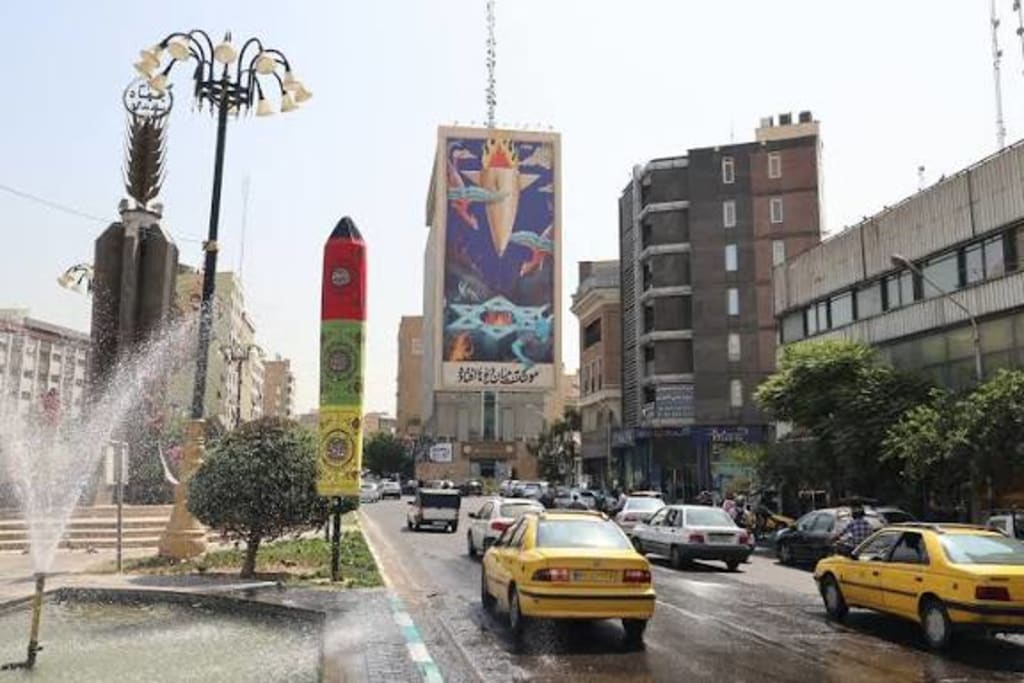
Start writinTensions between the United States and Iran have reached a critical point as Gulf allies raise alarms about Tehran’s growing missile capabilities, warning that they pose a “deadly threat” to regional security, even as U.S. President Donald Trump weighs potential military strikes amid simmering crises across the Middle East. The situation unfolds against the backdrop of internal unrest in Iran, rising U.S. military deployments, and widespread fears of a broader conflict that could draw in neighboring countries.
Growing Missile Capabilities and Regional Concern
Persian Gulf states, long wary of Iran’s regional ambitions, have told U.S. officials that despite recent conflicts and claims of degradation, Iran retains significant stockpiles of short-range and medium-range missiles capable of reaching military bases, allies, and strategic infrastructure across the region. Gulf assessments suggest that Iran’s missile forces, though damaged in past engagements, have been rebuilt and dispersed, making them difficult to eliminate in a pre-emptive strike.
Analysts note that even after last year’s intense clashes between Iran and Israel, Tehran’s missile production — and its ability to strike allied forces — remains robust. U.S. allies say intercepting these weapons would be difficult, and that their existence represents a serious deterrent to any American or coalition action.
Such warnings illustrate the shifting calculus for both Washington and its partners, who must balance deterrence with the risk that military action could prompt a dramatic escalation.
Trump Administration’s Deliberations
According to multiple officials familiar with internal discussions, President Trump has been considering a range of military options against Iran — including targeted airstrikes — as part of broader pressure designed to weaken Tehran’s strategic capabilities and influence. Options reportedly under review include strikes on missile launchers, command infrastructure, or nuclear-related facilities.
Some U.S. advisers believe limited strikes could help reinvigorate internal protests against Iran’s clerical regime by demonstrating external support for dissenters and by disrupting Tehran’s ability to project force. However, officials also warn that air power alone is unlikely to topple Iran’s leadership and could instead harden resistance or trigger unpredictable retaliation.
In recent days, the U.S. has deployed significant naval assets — including an aircraft carrier strike group and accompanying escort vessels — to the Arabian Sea and Persian Gulf as a demonstration of resolve and readiness. A senior U.S. commander has described the deployment as both a deterrent and a preparation for possible action, underscoring how seriously Washington views the threat environment.
ایران اینترنشنال | Iran International
Gulf States Call for Caution
Despite shared concerns about Iran’s missile stocks, Saudi Arabia, the United Arab Emirates, Qatar and other Gulf Cooperation Council members have urged caution and restraint from direct military confrontation. These governments fear that a U.S. strike could provoke immediate retaliation against their territory or U.S. forces stationed within their borders, potentially destabilizing their economies and security.
Arab allies emphasize that even if Tehran’s regime is deeply unpopular and facing internal protest, abrupt external military action could backfire by uniting Iranian factions and catalyzing a prolonged conflict. Many Gulf leaders have instead pushed Washington to channel pressure through diplomacy and economic leverage, arguing that negotiated restraint on Iran’s strategic programs would better protect regional stability.
Tehran’s Response and Escalation Risks
In response to the growing threat of strikes, Iran’s leadership has issued tough warnings. Supreme Leader Ayatollah Ali Khamenei, in multiple speeches, has stated that any U.S. military action would trigger a broader regional war. Western news agencies report that Tehran’s rhetoric frames possible U.S. action as existential, making retaliation — potentially using the very missile forces Gulf allies fear — a real possibility. �
PBS
Iran’s government continues to insist that it does not seek conflict and that its defense posture is deterrent in nature. At the same time, military leaders have emphasized their readiness to respond decisively to any attack on Iranian territory or interests. These mixed signals reflect a Tehran strategy of warning without overt provocation — but they have nonetheless amplified anxiety across capitals from Riyadh to Washington.
The Express Tribune
Internal Unrest and Diplomatic Pressures
The U.S. calculus is further complicated by Iran’s internal situation. Nationwide protests sparked by economic grievances and political repression have been met with deadly force by Iranian authorities. Trump administration officials have linked potential intervention to support for protesters and to forcing Tehran back to the negotiating table over its nuclear program and missile development.
Diplomacy has not been ruled out entirely. Despite tense rhetoric, Trump has indicated that Iran is engaged in serious negotiations over elements of its strategic programs, suggesting a desire to reach an agreement that could avert war. Still, demands over missile restrictions and nuclear limits remain central sticking points, and Tehran rejects negotiating under overt military threat.
Financial Times
Global Implications
If Washington elects to strike, analysts warn the effects could reverberate far beyond the Middle East. A regional war could disrupt global energy supplies, intensify refugee flows, and strain relations among NATO partners who differ on how to respond to Iran’s strategic programs. Gulf allies — already wary of escalation — also worry that direct conflict could undercut fragile economic recoveries and shift geopolitical alignments.
The United States faces a stark dilemma: escalate militarily and risk wide conflict, or pursue diplomatic pressure and risk being seen as tolerating threats to its allies. In the meantime, Iran’s missile arsenal remains a focal point of concern — a stark reminder that even without open conflict, the threat of deadly escalation looms large.
About the Creator
Fiaz Ahmed
I am Fiaz Ahmed. I am a passionate writer. I love covering trending topics and breaking news. With a sharp eye for what’s happening around the world, and crafts timely and engaging stories that keep readers informed and updated.
Keep reading
More stories from Fiaz Ahmed and writers in The Swamp and other communities.
Trump Family Crypto Firm Sold Major Stake to UAE Investment Firm
A cryptocurrency company linked to members of the Trump family has sold a significant ownership stake to a major investment firm based in the United Arab Emirates, according to sources familiar with the transaction. The deal highlights the growing role of Middle Eastern capital in the global digital asset market and raises new questions about the intersection of politics, private business interests, and emerging financial technologies. The firm, which operates in blockchain services and digital asset management, has been expanding its footprint in international markets over the past two years. While financial terms of the transaction were not publicly disclosed, the UAE investment firm is believed to have acquired a substantial minority stake, giving it influence over strategic decisions and future expansion plans. Representatives for the Trump family business interests declined to comment in detail on the transaction but said the company remains independently managed and focused on innovation in the digital economy. A Strategic Investment Move The sale comes at a time when cryptocurrency companies are seeking stable sources of funding following volatility in global markets. The UAE has emerged as a hub for crypto-related investment due to its regulatory framework, which is viewed as more welcoming to digital assets than those of many Western nations. Industry analysts say the partnership reflects a broader shift in how crypto firms are financed and governed. “This is part of a trend where capital from the Gulf region is becoming increasingly important in shaping the future of blockchain enterprises,” said a digital finance researcher. “It also reflects how politically connected business ventures are seeking international partners to expand their legitimacy and reach.” The UAE investment firm involved in the deal reportedly manages billions of dollars in assets across technology, infrastructure, and energy sectors. Its entry into the crypto market aligns with the country’s push to diversify its economy away from oil dependence and toward advanced technology and financial services. Political and Ethical Scrutiny Because the company is associated with members of the Trump family, the transaction has drawn scrutiny from ethics experts and political watchdog groups. Former President Donald Trump has been increasingly vocal in recent years about cryptocurrency and digital finance, shifting from earlier skepticism to a more supportive stance. Critics argue that foreign investment in a firm tied to a prominent political family raises concerns about influence and transparency, especially if Trump returns to public office or maintains strong political power. “Any time a business connected to a political dynasty receives substantial foreign investment, it creates questions about conflicts of interest,” said a government ethics analyst. “Even if everything is legal, perception matters greatly in democratic systems.” Supporters counter that the firm operates as a private commercial entity and that international investment is common in the technology sector. “There is no evidence that this transaction violates any law,” said a spokesperson familiar with the deal. “This is a standard business arrangement driven by market opportunity, not politics.” The Firm’s Role in Crypto Markets The Trump-linked crypto firm has positioned itself as a bridge between traditional finance and blockchain-based services. Its offerings reportedly include digital asset custody, tokenized investments, and advisory services for institutional clients seeking exposure to cryptocurrency markets. Over the past year, the company has launched several pilot projects focused on tokenizing real-world assets, such as real estate and commodities, allowing investors to trade fractional ownership on blockchain platforms. Executives involved in the venture have described their mission as making crypto more accessible and regulated, appealing to mainstream investors wary of risk. “Digital assets are moving out of the shadows and into the financial system,” one executive said in a recent interview. “We want to be part of that transition.” The UAE investment firm is expected to help accelerate this vision by providing capital and connections to financial institutions in the Middle East and Asia. Regulatory Environment and Global Impact The deal comes amid shifting regulatory landscapes for cryptocurrencies worldwide. In the United States, regulators continue to debate how digital assets should be classified and supervised. Meanwhile, the UAE has developed licensing regimes for crypto exchanges and blockchain firms that attract international businesses. Experts say such cross-border deals could complicate regulatory oversight. “When a politically connected American firm partners with a foreign investment group, it creates layers of jurisdiction and accountability,” said a professor of international finance. “That can be perfectly legal, but it also demands transparency.” The partnership may also signal growing competition between financial centers such as New York, London, Dubai, and Singapore for leadership in the digital economy. Public Reaction and Market Response News of the transaction generated mixed reactions online. Supporters praised the deal as evidence of strong investor confidence in U.S.-based crypto innovation. Critics questioned whether political branding was being used to attract foreign capital. Some market analysts noted that the firm’s valuation reportedly increased following the announcement, suggesting investors see strategic value in the UAE partnership. “The optics may be controversial, but the market tends to focus on growth potential,” said one investment strategist. “Access to Gulf capital can dramatically expand a company’s operational reach.” Looking Ahead While the full details of the stake sale remain confidential, observers expect further disclosures as regulatory filings are completed. The firm is reportedly planning to expand into new regions and launch additional blockchain products in the coming year. For the Trump family-linked venture, the deal marks a significant step toward becoming a global player in digital finance. For policymakers and ethics watchdogs, it also raises important questions about how political influence, private enterprise, and international investment intersect in the rapidly evolving crypto economy. Conclusion The sale of a major stake in a Trump family crypto firm to a UAE investment company underscores the growing globalization of the cryptocurrency industry and the increasing involvement of politically connected enterprises in digital finance. While supporters see the move as a strategic business decision, critics argue it highlights the need for greater transparency and ethical safeguards. As cryptocurrency continues to reshape global finance, deals like this will likely become more common—and more closely examined—by regulators, investors, and the public alike.
By Fiaz Ahmed about 14 hours ago in The Swamp
Balochistan in Turmoil: Coordinated Separatist Attacks Shake Pakistan’s Restive Province
Quetta, Balochistan — January 31, 2026 — Balochistan, Pakistan’s largest but least developed province, has once again become the epicenter of violent conflict. On Saturday, a series of coordinated attacks by Baloch separatist militants rocked the region, leaving dozens dead, including civilians and security personnel, and prompting one of the most significant militant flare-ups in recent memory.
By sehzeen fatima2 days ago in The Swamp
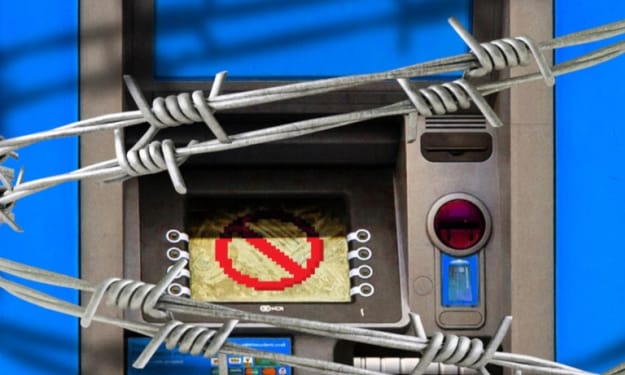
Access Denied: Why Muslims Worldwide Are Being ‘Debanked’
For millions of Muslims around the world, access to traditional banking services has become increasingly complicated. Reports indicate a growing phenomenon known as “debanking”, where individuals and businesses are denied access to bank accounts, loans, and other financial services, often without clear explanations.
By Aarif Lashari5 days ago in The Swamp
Trouble at the Tea Leafing Café
The rain had started right around the time that Annie was buttering her second thick slice of homemade toast for breakfast, and hadn’t paused since. Not that anyone could tell. The windows of the café were fogged over, and with every seat filled with happy customers munching on fresh baked pastries or steaming bowls of the delicious soup of the day, it was hardly surprising. Annie looked around the room, finally taking a moment to breathe after the lunch time rush. Her old life already felt like a bad memory, a part of her history, always, but just that. History.
By Hannah Moore3 days ago in Fiction



Comments
There are no comments for this story
Be the first to respond and start the conversation.