
Iran Says US Military Build-Up ‘Unnecessary and Unhelpful’, Deal Still Achievable
Foreign Minister Abbas Araghchi states diplomacy remains possible despite rising regional tensions

Introduction
Iran has described the recent increase in United States military presence in the Middle East as “unnecessary and unhelpful,” while signaling that a diplomatic agreement between the two countries remains achievable. The remarks were made by Iran’s Foreign Minister, Abbas Araghchi, who emphasized that dialogue remains the preferred path despite ongoing tensions.
Speaking during a press briefing in Tehran, Araghchi addressed concerns about regional stability and the stalled nuclear negotiations. His comments reflect Iran’s official position that diplomacy is still possible, but that military escalation complicates progress.
Iran’s Position on US Military Activity
According to Araghchi, the expansion of US military deployments in the region does not contribute to stability. He stated that such actions increase mistrust and reduce the space for constructive talks.
The United States has recently reinforced its military assets in strategic locations across the Middle East. Washington has argued that the measures are defensive and intended to deter potential threats. However, Tehran views the move differently.
Iranian officials say that increasing military presence near Iranian borders sends the wrong message at a time when diplomatic efforts could resume. Araghchi noted that regional security cannot be achieved through force alone, and called for what he described as a balanced and responsible approach.
Diplomatic Channels Remain Open
Despite criticism of the US military build-up, Araghchi made clear that Iran does not consider negotiations to be over. He said that a deal is still within reach if both sides show political will.
The primary focus remains the revival of the nuclear agreement that once limited Iran’s nuclear program in exchange for sanctions relief. The agreement, formally known as the Joint Comprehensive Plan of Action, was signed in 2015 between Iran and several world powers, including the United States.
However, the deal began to unravel after the United States withdrew from it in 2018 under then-President Donald Trump. Following the withdrawal, Washington reimposed economic sanctions on Tehran. In response, Iran gradually reduced its compliance with certain nuclear restrictions outlined in the agreement.
Araghchi said that restoring mutual compliance is possible, but requires trust-building measures. He stressed that actions on the ground should align with diplomatic statements.
Regional Context and Rising Tensions
The Middle East has experienced several rounds of tension in recent months, including maritime incidents and indirect confrontations between Iran and US allies. These developments have contributed to a fragile security environment.
The US military presence in the region includes naval forces in the Persian Gulf and air assets at regional bases. American officials maintain that these deployments aim to protect commercial shipping routes and deter escalation.
Iran, meanwhile, argues that regional countries should take responsibility for their own security arrangements. Araghchi reiterated Tehran’s long-standing position that foreign military forces do not enhance stability.
He pointed out that regional dialogue among neighboring states could reduce misunderstandings and create long-term security frameworks without external intervention.
The Path to a Potential Agreement
While political disagreements persist, both Washington and Tehran have indicated at various times that they prefer a diplomatic resolution. Araghchi said that technical discussions on nuclear limits, verification mechanisms, and sanctions relief could move forward if political obstacles are addressed.
One of the main sticking points remains the sequence of steps. Iran has consistently called for the lifting of sanctions before returning to full compliance with nuclear restrictions. The United States has argued that Iran must first reverse its nuclear advances.
Araghchi stated that compromise is possible if negotiations focus on practical solutions rather than public messaging. He emphasized that diplomacy requires patience and a willingness to address concerns on both sides.
International observers note that indirect talks have previously taken place in locations such as Vienna, with European mediators facilitating communication. While no formal negotiations are currently underway, diplomatic contacts have not completely stopped.
Domestic and International Reactions
Within Iran, public opinion on negotiations with the United States remains divided. Some political figures advocate for renewed talks to ease economic pressure, while others question Washington’s reliability following its withdrawal from the previous agreement.
Internationally, European governments have expressed support for de-escalation and renewed diplomacy. They have urged both sides to avoid steps that could further complicate efforts to revive the agreement.
Araghchi acknowledged these concerns and said Iran remains in consultation with international partners. He indicated that constructive engagement with global stakeholders continues, even as tensions with the United States persist.
Economic Implications
The outcome of any renewed agreement would have significant economic implications for Iran. US sanctions have affected Iran’s oil exports, banking sector, and access to international markets.
Araghchi noted that economic relief is a key element of any potential deal. He stated that sanctions have had a direct impact on ordinary citizens and that resolving the issue would contribute to broader stability.
From the US perspective, sanctions are viewed as leverage to ensure compliance with nuclear commitments. American officials have repeatedly said that any easing of sanctions would depend on verifiable steps by Iran.
The balance between economic incentives and security assurances remains central to ongoing discussions.
Security Concerns and Confidence Building
Security concerns extend beyond the nuclear file. Issues such as regional proxy conflicts, missile development, and maritime security also shape the broader relationship between Iran and the United States.
Araghchi suggested that confidence-building measures could reduce the risk of unintended escalation. He did not provide specific proposals but emphasized the importance of communication channels.
Analysts say that small steps, such as humanitarian exchanges or limited sanctions waivers, could create momentum for broader talks. However, these measures require coordination and trust.
The foreign minister reiterated that Iran seeks what he described as a fair and balanced agreement. He said that lasting solutions must respect national sovereignty while addressing international concerns.
The Role of Leadership and Political Will
Political leadership on both sides will play a critical role in determining the outcome. Changes in domestic politics, election cycles, and shifting regional alliances all influence diplomatic calculations.
Araghchi underlined that diplomacy is a process rather than a single event. He said that even during periods of tension, communication should not stop.
Observers note that previous negotiations involved months of detailed discussions before the 2015 agreement was reached. A similar level of engagement would likely be required for any new understanding.
The foreign minister concluded that while the current military build-up is not helpful, it does not make diplomacy impossible. He maintained that practical steps could still lead to progress.
Conclusion
Iran’s message, as articulated by Abbas Araghchi, combines criticism of US military actions with an openness to renewed negotiations. By calling the build-up “unnecessary and unhelpful,” Tehran signals its concern about rising tensions. At the same time, it keeps the door open for a diplomatic solution.
The future of any agreement will depend on mutual decisions in both capitals. With regional stability at stake, the coming months may determine whether confrontation deepens or diplomacy resumes.
For now, Iran’s official stance is clear: military escalation does not support dialogue, but a deal remains achievable if both sides commit to serious engagement.
About the Creator
Saad
I’m Saad. I’m a passionate writer who loves exploring trending news topics, sharing insights, and keeping readers updated on what’s happening around the world.
A Gathering of Evil Bosses
“I’m the queen of chin jutting while I smooth my hair, attacking, insulting, and deflecting to protect my appointer.” “Oh, please, Blondi, my hair is curled, highlighted, and longer than yours. I feature television commercials telling immigrants that we will give them a free plane ride home, and if they voluntarily turn themselves in, they will be allowed to legally apply for re-entry. It runs everywhere, and I look good in it! You can’t compete because of your blond hair. Mine is nicer, and my lips are prettier than yours.”
By Andrea Corwin 4 days ago in The Swamp
Malaysia Launches Third Littoral Combat Ship
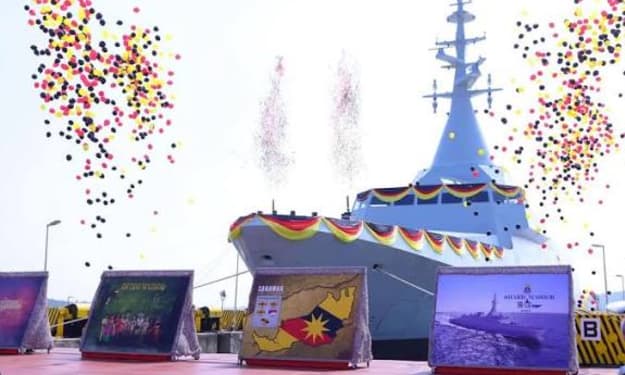
Malaysia has officially launched the third of its new littoral combat ships, marking a significant step forward in the modernization of its navy and maritime defence capabilities. The vessel’s launch at the Boustead Naval Shipyard facility in Kuala Lumpur was attended by senior military officials, government representatives, and defence industry partners, underscoring Kuala Lumpur’s commitment to strengthening its naval posture in contested waters. The new combat ship, designated KD Maharaja Lela II, will be the third in a series of modern surface combatants designed to operate in littoral — or near‑shore — environments. The series is part of Malaysia’s broader naval modernization plan aimed at addressing evolving maritime security challenges, including piracy, smuggling, and regional territorial disputes. Enhancing Maritime Security Malaysia’s strategic location along the Strait of Malacca — one of the world’s busiest sea lanes — makes maritime security a national priority. The patrol of these waters and surrounding exclusive economic zones (EEZs) necessitates a navy equipped with agile, networked, and well‑armed vessels capable of responding quickly to asymmetric threats and maintaining presence in contested areas. The littoral combat ship project, officially known as the Second Generation Patrol Vessel (SGPV) programme, reflects a shift towards modular, multi‑mission platforms that can be tailored for anti‑surface, anti‑air, and anti‑submarine operations. Unlike larger warships designed for open‑ocean engagements, littoral combat ships combine speed, flexibility, and advanced sensor suites suitable for complex coastal environments. A Milestone in Naval Capability Speaking at the launch ceremony, Malaysia’s Defence Minister hailed the event as a “significant milestone” in the Royal Malaysian Navy’s development. He noted that the new vessel would enhance Malaysia’s ability to safeguard its maritime interests, contribute to regional security initiatives, and participate in joint exercises with friendly navies. The ceremony included a traditional ship blessing, speeches from military leaders, and remarks from industry partners involved in the ship’s design and construction. Officials emphasized the importance of national industrial participation, with local firms contributing to systems integration, hull fabrication, and electronics packages. “The launch of the third littoral combat ship demonstrates Malaysia’s commitment to building a capable, credible navy,” the defence minister said. “This vessel strengthens our deterrence and increases our capacity to protect sovereign waters and maritime resources.” Technical Features and Capabilities While specific details of the ship’s capabilities remain classified, defence analysts say the SGPV series incorporates state‑of‑the‑art sensors, communication systems, and weaponry suited for multifaceted missions. Typical configurations include a 76mm main gun, close‑in weapon systems (CIWS), anti‑ship missiles, and a flight deck capable of supporting naval helicopters or drones. Modular design allows mission packages to be swapped out depending on operational needs, enabling the ship to transition from combat engagements to humanitarian assistance and disaster relief missions. Naval experts note that the ships’ automation and advanced command and control systems reduce crew requirements while enhancing situational awareness — a valuable feature for long patrols and networked operations with allied forces. Regional Implications The launch is occurring amid heightened maritime security concerns in Southeast Asia, where competing territorial claims in the South China Sea have underscored the need for capable naval assets among littoral states. Malaysia, like its neighbours, has been investing in naval upgrades to protect its EEZ, enforce national jurisdiction, and participate in freedom of navigation operations and regional patrols. Malaysia’s move has drawn attention from regional partners including Indonesia, Singapore and Association of Southeast Asian Nations members, who have expressed support for cooperative maritime security initiatives. Analysts say that while the new littoral combat ships are not designed to alter regional power balances, they contribute to a collective boost in naval capacity that enhances deterrence and stability in contested waters. Industry and Economic Impact The SGPV programme has also stimulated Malaysia’s defence industry, creating jobs and fostering skills in naval design, systems integration, and advanced manufacturing. Officials note that local suppliers have benefitted from contracts related to the programme, which could position Malaysian firms for future participation in international naval markets. Defence economists highlight that such investments not only improve national security but also contribute to long‑term industrial growth and technological development. Next Steps With the launch ceremony complete, the third littoral combat ship will undergo outfitting, sea trials, and crew training before it enters active service. The Royal Malaysian Navy expects all SGPV vessels to be fully operational within the next year, enhancing fleet readiness and response capacity. The launch of KD Maharaja Lela II underscores Malaysia’s focus on maritime defence and its determination to safeguard its sovereignty and economic interests in an increasingly contested regional theatre.
By Fiaz Ahmed 2 days ago in The Swamp


Comments
There are no comments for this story
Be the first to respond and start the conversation.