
Is Micron the New Nvidia
Examining how Micron’s rising dominance in memory chips could mirror Nvidia’s meteoric rise in graphics and AI markets
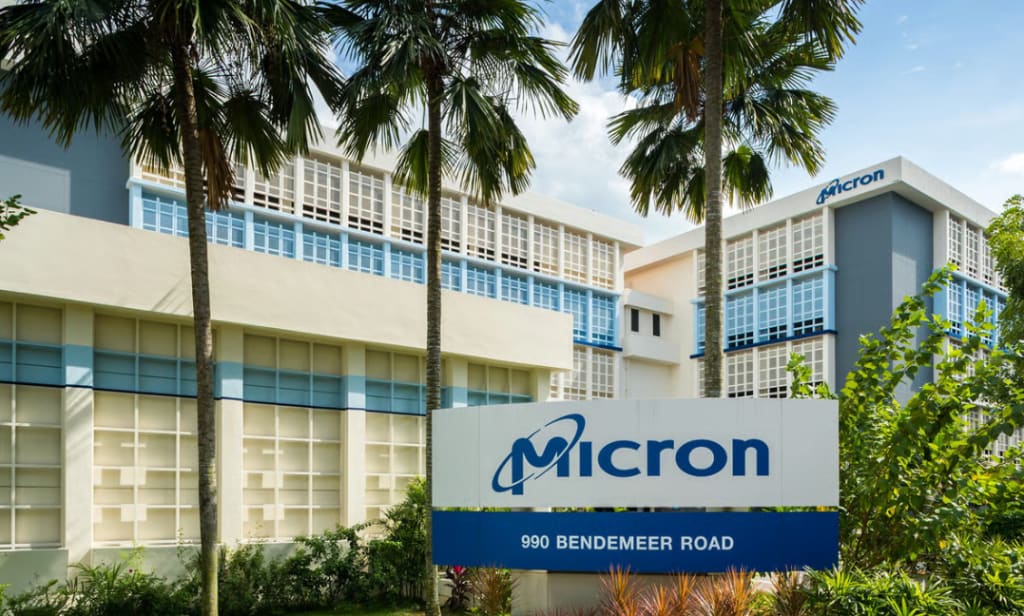
In the world of technology investing, few companies have captured attention like Nvidia. The graphics processing unit (GPU) giant transformed itself from a niche player in gaming to a dominant force in artificial intelligence (AI), data centers, and high-performance computing. Investors who recognized Nvidia’s potential early reaped enormous rewards.
Now, some analysts and market observers are asking whether Micron Technology, the memory chip manufacturer, could be the next Nvidia. With its critical role in supplying DRAM and NAND memory—vital components for AI, cloud computing, and next-generation devices—Micron is emerging as a potential powerhouse in a sector that fuels much of modern technology. But is the comparison justified? Let’s explore.
Micron’s Growing Role in Modern Technology
Micron designs and manufactures DRAM (Dynamic Random Access Memory) and NAND flash memory, which power everything from smartphones to supercomputers. While Nvidia is known for GPUs, Micron provides the foundational memory that allows these GPUs and CPUs to function efficiently.
Recent trends suggest several factors driving Micron’s rising prominence:
AI and Data Centers:
AI models and cloud computing require vast amounts of high-speed memory. Micron’s advanced DRAM and high-bandwidth memory (HBM) products are essential for servers running AI workloads.
Smart Devices and IoT:
From smartphones to smart cars, consumer electronics rely heavily on fast, reliable memory. With the proliferation of connected devices, Micron’s products remain in constant demand.
Automotive Technology:
Autonomous vehicles and advanced driver-assistance systems (ADAS) depend on massive amounts of memory. Micron’s memory chips are critical for storing and processing data in real time.
Comparison with Nvidia’s Trajectory
Nvidia’s rise was fueled by several key factors:
Expansion into AI and data centers beyond gaming.
Strategic partnerships with cloud providers, research institutions, and tech companies.
Innovative product lines like GPUs optimized for AI workloads.
Micron shares similar growth drivers:
AI-Optimized Memory: Micron is developing memory solutions tailored for AI accelerators and high-performance computing, similar to how Nvidia specialized GPUs for AI.
Data Center Dependence: Cloud providers and hyperscalers rely on Micron for high-capacity memory modules.
Technological Leadership: Micron invests heavily in R&D, aiming to stay ahead of competitors in memory density, speed, and energy efficiency.
While Nvidia became a household name in GPUs, Micron is quietly becoming indispensable in the broader technology ecosystem.
Financial Performance and Market Impact
Micron’s recent financial results reflect strong demand in key sectors:
Revenue growth is driven by AI and cloud computing adoption.
Profit margins have expanded with higher-value DRAM and NAND products.
Global memory shortages in the past have highlighted Micron’s strategic importance in the supply chain.
Nvidia’s meteoric rise made investors rich, partly due to its dominant market share and growth in AI computing. Micron could follow a similar path if AI adoption continues accelerating, though memory markets historically experience more cyclicality.
Challenges Ahead for Micron
Despite the potential, Micron faces several challenges:
Market Cycles: Memory chips are subject to supply-demand fluctuations. A sudden drop in demand can hurt revenue.
Competition: Samsung, SK Hynix, and other memory manufacturers compete aggressively in DRAM and NAND markets.
Technological Pressure: As AI models demand faster and higher-capacity memory, Micron must continuously innovate.
Geopolitical Risks: Semiconductor supply chains face risks due to trade tensions and export restrictions, particularly with China.
Investors need to consider these factors before assuming Micron will mirror Nvidia’s smooth upward trajectory.
Micron and the AI Revolution
AI represents the fastest-growing segment in computing, and memory is critical for AI workloads:
Training large language models (LLMs) like GPT or AI image generators requires high-bandwidth, low-latency memory.
Micron’s HBM and DDR5 DRAM products are essential for these operations.
Companies like Nvidia, AMD, and Intel depend on Micron to deliver the memory that powers next-generation AI processors.
In this sense, Micron is less of a visible star like Nvidia and more of a silent enabler of AI’s growth. Investors may find value in recognizing this crucial position in the ecosystem.
Investor Takeaways
Growth Potential: AI, cloud computing, and automotive technology suggest long-term demand for Micron’s memory products.
Cyclical Risks: Unlike Nvidia’s GPU market, memory prices can fluctuate dramatically, which may impact earnings.
Strategic Positioning: Micron’s commitment to innovation, supply chain control, and global partnerships strengthens its market position.
Valuation Considerations: Investors should weigh Micron’s growth potential against cyclical risks and competitive pressures.
Conclusion
Is Micron the new Nvidia? Not exactly—but it shares several characteristics that fueled Nvidia’s rise:
Vital technology for AI and computing
Strong innovation and R&D investment
Partnerships with major tech companies
Growth potential in emerging markets
Unlike Nvidia, Micron operates in a more cyclical, competitive, and less visible market, which may make its journey more complex. Still, for investors and tech enthusiasts looking for companies powering the AI revolution, Micron deserves attention.
The comparison may be aspirational rather than literal, but the bottom line is clear: memory is becoming as critical as computing power itself, and Micron is at the heart of that transformation. For those watching the next wave of tech growth, understanding Micron’s role could reveal opportunities similar to those early Nvidia investors once saw.
About the Creator
Why Black History Matters in America?
The United States of America is celebrating their 250th anniversary in 2026. I'm proud to be an American and as someone who was born here, I wouldn't imagine myself living anywhere else. This is a country where opportunities are possible. Where anyone can be successful in anything they desire to do. Equality, community, and togetherness are the backbones of what America is and should be about. However, we have an administration who wants to erase and disregard those who have made positive, meaningful impacts in our country, specifically Black figures, such as Martin Luther King, Jr., Rosa Parks, and Maya Angelou. President Trump and his administration have been constantly complaining and fighting against what they call the "Woke agenda". They use this excuse as a distraction from other issues they refuse to address, such as the high cost of living, climate change, and inflation. That equality is dividing America, when in reality, it's bringing us together. Being woke is not tied to a specific political party. No matter where you stand on the political spectrum, you can still care about other people and their plights. Compassion and empathy for others isn't tied to a political party, either. We were taught as children to treat others the way we want to be treated and not judge others because they're different from us. Caring about others isn't a personal attack on your beliefs. It doesn't make you any less of a person. People who are easily offended over African American figures, past or present, or anything related to it, are grasping at straws. Current and future generations need to know who people like Harriet Tubman and Shirley Chisholm were, especially in the classroom. Black History is part of American History. It should be recognized, not hidden or forgotten. Besides, you can't shield children from everything, just because your feelings are easily hurt.
By Mark Wesley Pritchard 8 days ago in The Swamp
UK and France Asylum Deal Could Violate Human Rights Laws, Warns UN
A proposed asylum cooperation agreement between the United Kingdom and France has drawn sharp criticism from the United Nations, with human rights officials warning that key provisions of the deal may breach international legal obligations. The arrangement, intended to curb dangerous migrant crossings in the English Channel, has raised concerns about the treatment of asylum seekers and the potential erosion of protections guaranteed under international refugee law. Under the proposed framework, the UK and France would expand joint patrols, strengthen border enforcement, and introduce faster procedures for returning migrants who attempt to cross the Channel irregularly. British officials argue that the deal is necessary to disrupt human smuggling networks and reduce the number of perilous journeys made in small boats. French authorities have also emphasized the importance of cooperation to manage migration pressures affecting both countries. However, the UN High Commissioner for Refugees (UNHCR) and the UN Office of the High Commissioner for Human Rights have expressed alarm at several elements of the agreement. They warn that the plan risks prioritizing deterrence over protection, potentially placing vulnerable individuals in situations that violate their fundamental rights. Legal and Ethical Concerns UN officials say the agreement may conflict with the 1951 Refugee Convention, which guarantees the right to seek asylum and prohibits the forced return of individuals to countries where they face persecution or serious harm. Critics argue that accelerated returns and offshore processing mechanisms could prevent migrants from having their asylum claims properly assessed. “The right to seek asylum is not optional,” a UN spokesperson said. “Any bilateral agreement must fully respect international law and ensure that people fleeing violence and persecution are treated with dignity and fairness.” Human rights groups fear the deal could create a system in which asylum seekers are transferred between countries without adequate legal safeguards. There are also concerns that some migrants could be sent back to unsafe conditions or detained in overcrowded facilities while their cases are processed. Channel Crossings and Political Pressure The issue of Channel crossings has become one of the most politically sensitive topics in the UK. Thousands of migrants have attempted the journey in recent years, often using fragile boats operated by smuggling gangs. Several fatal accidents have intensified public debate and increased pressure on governments to act decisively. British ministers have defended the proposed agreement as a life-saving measure. They argue that discouraging illegal crossings will reduce the power of criminal networks and prevent deaths at sea. “We must stop people risking their lives on dangerous routes and instead promote safe and legal pathways,” a UK government official said. France has echoed this view, stating that stronger border coordination is necessary to manage migration flows responsibly. French authorities also stress that they are already hosting large numbers of asylum seekers and need shared solutions. Reaction from Civil Society Non-governmental organizations and refugee advocacy groups have strongly criticized the deal. Amnesty International and other watchdogs warn that policies focused on deterrence often push migrants into more dangerous routes rather than stopping migration altogether. “These agreements are designed to look tough but fail to address the root causes of displacement,” said one campaigner. “War, poverty, and climate change cannot be solved with fences and patrol boats.” Legal experts caution that if the agreement is implemented without clear safeguards, it could face court challenges both domestically and internationally. Previous attempts by the UK to introduce strict asylum policies have been delayed or blocked by legal rulings citing human rights violations. Broader European Context The UK-France deal is part of a wider European trend toward tighter border controls and bilateral arrangements. Several European states have explored similar agreements with neighboring countries to limit irregular migration. The UN has repeatedly warned that such policies risk undermining the international asylum system by shifting responsibility rather than sharing it. Analysts note that migration pressures are likely to increase due to ongoing conflicts in the Middle East and Africa, as well as climate-related displacement. This makes the need for coordinated and humane solutions more urgent than ever. “There is a danger that countries will compete to be the toughest rather than the fairest,” said a migration policy researcher. “That could weaken the entire framework of refugee protection built after World War II.” Government Responses UK officials insist that the agreement will remain compliant with international law. They say legal experts are reviewing its provisions and that humanitarian exemptions will be built into the process. French authorities have similarly emphasized that any measures taken will respect European and global standards. Despite these assurances, UN representatives have urged both governments to reconsider aspects of the plan and to consult more closely with international bodies. They recommend expanding safe and legal migration routes, improving asylum processing capacity, and investing in integration programs. Looking Ahead The debate over the UK-France asylum deal highlights the tension between border control and human rights in modern migration policy. As political pressure grows to reduce irregular arrivals, governments face difficult choices about how to balance security concerns with moral and legal responsibilities. If the agreement proceeds in its current form, it may become a test case for how far European states can go in limiting asylum access without breaching international law. For the UN and human rights advocates, the message is clear: cooperation must not come at the cost of compassion or legality. Whether the deal will survive legal scrutiny remains uncertain. What is clear, however, is that the future of asylum policy in Europe will continue to be shaped by this struggle between deterrence and protection.
By Fiaz Ahmed 3 days ago in The Swamp



Comments
There are no comments for this story
Be the first to respond and start the conversation.