
Mamdani’s 31-Day Challenge: Showing Voters They Were ‘Right to Believe’
How a new lawmaker is building trust through daily accountability Grassroots politics meets early governance in Albany From campaign trail to concrete steps in office Supporters praise transparency while critics question results A bold experiment in political leadership Testing the power of public promises in the first 31 days Can short-term action lead to long-term change?

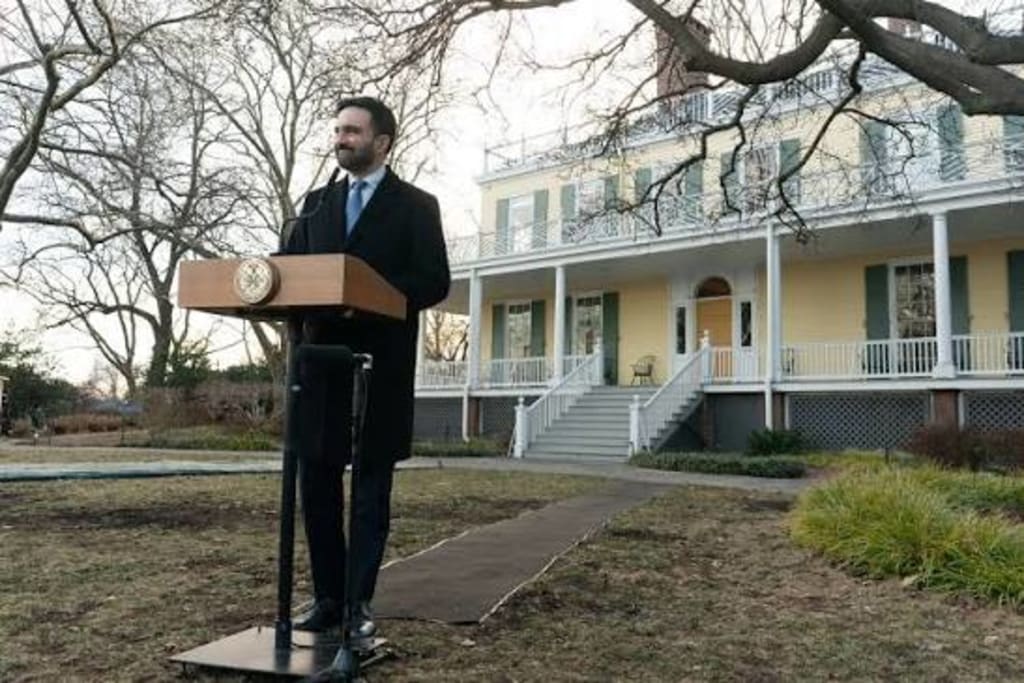
In the first month since taking office, Assemblymember Zohran Mamdani has launched what he calls a “31-day challenge” — an ambitious effort to demonstrate to voters that their faith in his leadership was justified. The initiative, built around daily actions and policy priorities, reflects Mamdani’s attempt to translate campaign promises into visible results while maintaining a strong connection with the communities that propelled him into office.
For Mamdani, a progressive lawmaker known for grassroots organizing and outspoken advocacy, the challenge is as much about symbolism as it is about substance. Each day has focused on a specific issue, ranging from housing affordability and public transit to labor rights and community safety.
“This is about accountability,” Mamdani said at a recent town hall. “People voted not just for ideas, but for action. I want them to see, in real time, that their belief in change matters.”
A Strategy Rooted in Visibility
The 31-day challenge was designed to make government more accessible. Mamdani and his team have documented daily progress through social media updates, community meetings, and short policy briefings. The approach mirrors the campaign style that helped him win office — direct communication, simple language, and a strong emphasis on lived experience.
Political analysts say the strategy is unusual but effective in a time when public trust in institutions remains fragile.
“Voters are tired of promises that disappear after election day,” said a political science professor at a New York university. “Mamdani’s challenge reframes the first month in office as a public contract.”
Rather than unveiling a sweeping legislative package, the initiative highlights small but concrete steps: introducing bills, meeting with tenant groups, supporting worker protests, and pushing for budget amendments.
Housing and Cost of Living at the Center
Housing affordability has been a central theme throughout the challenge. Mamdani has met with tenants facing eviction, backed stronger rent protections, and called for expanded public housing investment.
In one of the early days of the initiative, he visited a rent-stabilized building where residents reported rising fees and poor maintenance. Standing outside the building, he pledged to bring their concerns directly to lawmakers and regulators.
“People don’t just need sympathy,” he said. “They need someone willing to fight with them.”
He has also emphasized the rising cost of groceries, transportation, and utilities, arguing that economic pressure is the most immediate crisis facing working families.
Building Coalitions in Albany
While Mamdani’s public-facing efforts have drawn attention, much of the challenge has taken place behind the scenes. He has worked to build alliances with fellow lawmakers who share progressive priorities, particularly around labor rights and climate policy.
Supporters say this coalition-building is critical if his agenda is to survive the legislative process.
“Mamdani understands that activism alone isn’t enough,” said a fellow assemblymember. “You need votes, relationships, and patience.”
The challenge has included meetings with union leaders, immigrant advocacy groups, and small business owners, signaling an attempt to balance ideology with practical governance.
Supporters Feel Seen
Among his supporters, the 31-day challenge has generated enthusiasm. Many say it feels like a continuation of the campaign rather than a retreat into political routine.
“He didn’t disappear after winning,” said Aisha Khan, a volunteer who helped canvass during the election. “He’s still listening. That means something.”
Community events tied to the challenge have drawn residents who might otherwise avoid politics. Pop-up forums in libraries and schools have allowed people to speak directly with Mamdani and his staff about everyday concerns.
For younger voters in particular, the initiative resonates with a desire for transparency and participation.
“It feels like politics is happening with us, not to us,” said one college student attending a public meeting.
Critics Question Long-Term Impact
Not everyone is convinced. Critics argue that the challenge risks prioritizing optics over outcomes.
“Posting daily updates is not the same as passing laws,” said a local political commentator. “The real test will be what changes a year from now.”
Some opponents accuse Mamdani of turning governance into performance, suggesting that complex policy problems cannot be solved through short-term initiatives.
Mamdani has responded by saying the challenge is only a starting point, not a substitute for long-term legislative work.
“This is not a victory lap,” he said. “It’s the foundation.”
A Broader Political Message
The 31-day challenge also carries a broader message about modern political leadership. In an era shaped by social media and constant scrutiny, Mamdani’s approach reflects an attempt to redefine what accountability looks like.
Rather than waiting for annual reports or election cycles, the initiative invites voters to judge progress in real time.
“This is about trust,” said a communications strategist. “If you can show effort and integrity early, you set the tone for everything that follows.”
The challenge has attracted attention beyond his district, with activists in other cities discussing similar models of short-term accountability campaigns.
Looking Ahead
As the 31 days come to an end, Mamdani plans to release a public summary of actions taken, bills introduced, and partnerships formed. He has also promised to outline goals for the next three months.
Whether the initiative will translate into measurable policy wins remains to be seen. But for many voters, the message is already clear: their representative is trying to keep faith with them.
“I don’t expect miracles,” said one resident after a community meeting. “I just want effort and honesty. So far, he’s giving us that.”
Conclusion
Mamdani’s 31-day challenge represents a bold attempt to prove that political belief can lead to tangible action. By turning his first month in office into a visible test of accountability, he has sought to reassure voters that their support was not misplaced.
In a political climate often marked by cynicism, the initiative offers a different narrative — one where leadership is measured not only by promises, but by daily presence and purpose. Whether this approach will produce lasting change will depend on what follows, but for now, Mamdani has made one thing clear: he intends to show voters they were right to believe.
About the Creator
Fiaz Ahmed
I am Fiaz Ahmed. I am a passionate writer. I love covering trending topics and breaking news. With a sharp eye for what’s happening around the world, and crafts timely and engaging stories that keep readers informed and updated.
Keep reading
More stories from Fiaz Ahmed and writers in The Swamp and other communities.
‘Trauma Does Not Define Us’: Living With Loss in Wartime Ukraine
In a small apartment block on the outskirts of Kyiv, the walls still bear the marks of shelling from months earlier. Windows have been replaced with plastic sheets, and families gather around portable heaters to survive another cold evening. For many Ukrainians, daily life continues in the shadow of war, shaped by grief, resilience, and an unbreakable sense of identity. “Trauma does not define us,” says Olena, a schoolteacher who lost her husband in fighting near the eastern front. “It is part of our story, but it is not who we are.” Across Ukraine, millions have experienced loss—of loved ones, homes, and certainty about the future. Yet communities continue to rebuild, refusing to let devastation erase their humanity. A Nation Marked by Grief Since the conflict escalated, entire towns have been emptied, and countless families displaced. Cemeteries have expanded rapidly, while makeshift memorials line city streets. Photographs of fallen soldiers and civilians hang from lampposts, reminding passersby of the cost of survival. For many Ukrainians, grief is not a single moment but an ongoing reality. Psychologists report rising levels of anxiety, depression, and post-traumatic stress among adults and children alike. “Children draw pictures of tanks instead of flowers,” says Kateryna, a counselor working with displaced families in western Ukraine. “But they still laugh, still play. That contrast is heartbreaking and powerful.” Finding Strength in Community In villages and cities alike, local networks have become lifelines. Churches, schools, and volunteer groups distribute food, clothing, and emotional support. These spaces have evolved into centers of healing as much as survival. Every week, Olena attends a support group organized by neighborhood volunteers. There, she sits with others who have lost family members. They share stories, tears, and small victories—such as returning to work or helping children feel safe again. “We talk about memories, not just pain,” she explains. “We remind each other that life continues.” Such gatherings are common across Ukraine, reflecting a culture of collective endurance. Sociologists note that this sense of shared suffering has strengthened social bonds rather than weakened them. Children Growing Up Too Fast For Ukraine’s youngest generation, war has reshaped childhood. Schools alternate between in-person classes and underground shelters during air raid alerts. Many students attend lessons from refugee centers or foreign countries. Ten-year-old Danylo now dreams of becoming a doctor. He says he wants to “help people who are hurt like my father was.” His mother admits she worries about the emotional burden her son carries. “He understands death in a way no child should,” she says. “But he also understands courage.” Teachers have adjusted lessons to include emotional expression and storytelling. Art and music therapy programs have expanded, giving children tools to process fear and loss. The Silent Struggle of the Elderly While much attention focuses on soldiers and families with children, elderly Ukrainians face unique challenges. Many refused to leave their homes, even when front lines moved closer. “My husband is buried here,” says Mykola, a retired engineer in a partially destroyed village. “This is where I belong.” For older residents, displacement can feel like losing the last link to a lifetime of memories. Volunteers deliver food and medicine to those who remain, checking on them daily. “These people survived previous wars and crises,” says a humanitarian worker. “Their resilience is extraordinary, but they still need care and recognition.” Mental Health in Wartime Ukraine’s healthcare system has struggled to meet the growing need for mental health services. International organizations and local NGOs have stepped in, training counselors and providing trauma support programs. Online therapy platforms have emerged for those unable to travel. Mobile teams visit rural areas, offering psychological first aid and referrals. “Trauma doesn’t disappear when the bombs stop,” explains a psychiatrist in Lviv. “Healing is a long process. But acknowledging pain is the first step.” The government has also begun integrating mental health education into schools and public campaigns, encouraging citizens to seek help without shame. Identity Beyond Suffering Despite hardship, Ukrainians emphasize that their lives are more than war stories. Cultural events, poetry readings, and concerts continue—even in shelters. These acts of normalcy have become symbols of resistance. In Kharkiv, musicians recently performed in a metro station turned bomb shelter. The audience included soldiers, children, and elderly residents. For one hour, the sound of music replaced the echo of sirens. “Art reminds us we are alive,” said one violinist. “Not just surviving, but living.” National holidays are marked with quiet ceremonies rather than large parades, honoring those lost while celebrating what remains. Looking Toward the Future Many Ukrainians speak cautiously about peace, uncertain when it will come but determined to be ready for it. Rebuilding plans are already underway, focusing not only on infrastructure but also on emotional recovery. Universities are training more psychologists. Community centers are preparing long-term counseling programs. Teachers are learning how to address trauma in classrooms. “We will rebuild our cities,” Olena says. “But we must also rebuild hearts.” Conclusion Living with loss has become a shared experience in wartime Ukraine. Yet amid destruction and sorrow, a powerful message emerges: trauma does not define the nation. Through community support, cultural expression, and an unwavering belief in tomorrow, Ukrainians continue to shape their identity beyond suffering. Their resilience is not rooted in denial of pain but in the determination to honor life in the face of it. As one survivor put it, standing beside a memorial filled with flowers and photographs, “We remember the dead. But we live for the living.”
By Fiaz Ahmed a day ago in The Swamp
Gold Extends Rally to Seven Days as Trade War and FX Fears Roil Global Markets
Gold prices have extended their rally for a seventh consecutive day, reflecting growing anxiety across global financial markets. Heightened trade war tensions, combined with foreign exchange (FX) volatility and fears of economic slowdown, have pushed investors toward safe-haven assets, with gold emerging as one of the primary beneficiaries.
By Aarif Lashari6 days ago in The Swamp
Off the Book
It ended like every other stupid idea. Badly, and alone. I’m researching digital confession ethics, he said. A tech ethicist. He gestured at floating data I couldn’t see then pulled out a physical notebook. Actual paper, fountain pen. He held it up like he was showing me scripture.
By Nicky Frankly3 days ago in Fiction



Comments
There are no comments for this story
Be the first to respond and start the conversation.