
Pakistan Alleges Unprovoked Firing by Afghan Taliban Along Border
Prime Minister’s spokesperson says incident occurred on Pak-Afghan frontier as tensions rise over security concerns

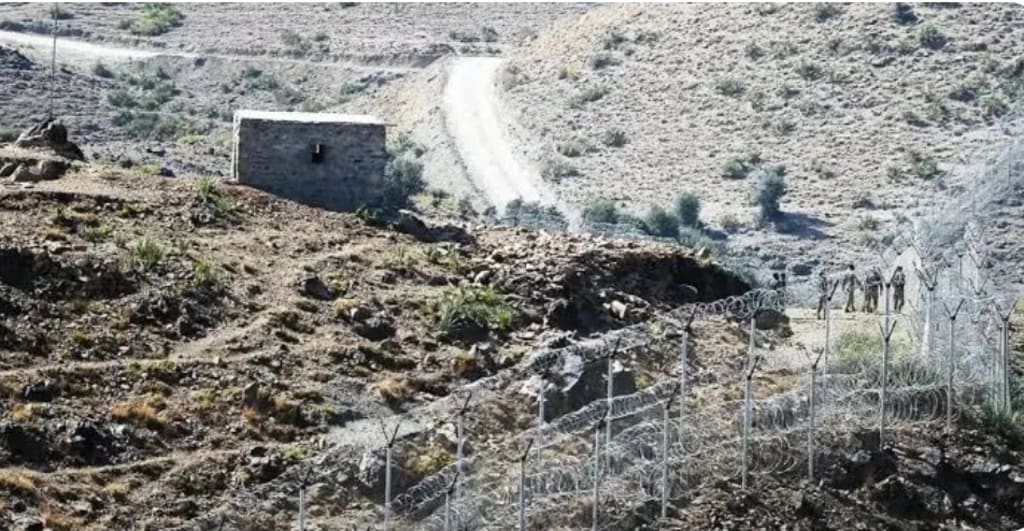
Incident Reported Along the Frontier
Pakistan’s government has stated that Afghan Taliban forces initiated unprovoked firing along the Pak-Afghan border, according to comments from the Prime Minister’s spokesperson. The statement comes amid ongoing security concerns along the shared frontier, which has seen periodic tensions in recent years.
Officials said the exchange of fire took place at a designated border sector. Pakistani security personnel responded after what authorities described as sudden and unprovoked gunfire from the Afghan side. No immediate details were released about casualties or damage.
The Afghan Taliban administration has not publicly confirmed the claim at the time of reporting. Cross-border incidents often involve differing accounts from both sides.
Background of Border Tensions
The border between Pakistan and Afghanistan stretches roughly 2,600 kilometers and has long been a source of dispute. Known internationally as the Durand Line, the boundary has historically been contested by successive Afghan governments.
Security challenges along the frontier include militant movement, smuggling, and unauthorized crossings. Pakistan has invested in fencing large portions of the border in recent years, aiming to regulate movement and prevent infiltration by armed groups.
Since the Afghan Taliban regained control of Afghanistan in August 2021, Islamabad and Kabul have maintained diplomatic engagement but have also experienced episodes of tension.
Official Statement from Islamabad
According to the Prime Minister’s spokesperson, the firing was initiated without provocation. The statement emphasized that Pakistani forces acted in self-defense and remained committed to protecting national sovereignty.
The spokesperson also reaffirmed Pakistan’s desire for stable relations with Afghanistan, urging Afghan authorities to prevent incidents that could escalate tensions. Officials stated that communication channels remain open between border commanders.
Such statements are typically followed by diplomatic outreach through military or foreign ministry channels to prevent misunderstandings from growing into broader confrontations.
Security Concerns in the Region
Border incidents often occur in areas where militant activity is suspected. Pakistan has repeatedly raised concerns about armed groups operating from Afghan territory, including factions that Islamabad alleges target Pakistani security forces.
The Afghan Taliban leadership has previously denied allowing Afghan soil to be used against neighboring countries. However, regional security experts note that controlling mountainous border terrain remains complex.
Cross-border firing incidents are not uncommon in volatile frontier regions, particularly where checkpoints or patrol movements overlap contested areas.
Impact on Border Communities
Communities living near the Pak-Afghan border frequently face disruptions when security incidents occur. Temporary closures of crossing points can affect trade, medical travel, and family visits.
The border serves as a critical route for bilateral commerce. Official trade between Pakistan and Afghanistan includes agricultural goods, construction materials, and household supplies. Any prolonged closure can strain local economies.
Residents in border districts often rely on cross-border interaction for daily livelihoods, making stability a shared interest for both governments.
Diplomatic Channels and Communication
Pakistan and Afghanistan maintain formal diplomatic relations, although representation levels have fluctuated since the Taliban takeover. Security coordination mechanisms exist between military officials stationed along the border.
In previous incidents, joint investigations have sometimes been conducted to clarify circumstances. De-escalation efforts usually involve hotline communications between local commanders to prevent further firing.
Analysts suggest that prompt diplomatic engagement is essential to avoid misunderstandings escalating into sustained clashes.
Regional Implications
Border instability between Pakistan and Afghanistan carries wider regional implications. Both countries play key roles in South Asian security dynamics, and tensions can affect broader diplomatic relations.
Neighboring countries and international stakeholders often monitor developments closely. Stability along the frontier supports counterterrorism cooperation and regional trade initiatives.
Persistent incidents, however, can undermine trust and complicate multilateral dialogue efforts.
Trade and Economic Considerations
The Pak-Afghan border hosts several formal crossing points, including Torkham and Chaman. These gateways handle significant cargo movement and passenger travel.
Temporary shutdowns following security incidents can delay shipments and increase costs for traders. Businesses dependent on cross-border supply chains may face financial strain during extended disruptions.
Both governments have economic incentives to maintain open and secure trade corridors.
Military Preparedness and Border Management
Pakistan has completed fencing across most of its side of the frontier, citing security needs. The barrier is intended to control unauthorized crossings and limit militant infiltration.
Afghanistan’s Taliban administration has at times objected to certain sections of fencing, arguing that the border remains disputed. These disagreements have occasionally led to local confrontations.
Military preparedness on both sides reflects ongoing concerns about infiltration, smuggling, and armed group movements.
Calls for Restraint
Following the reported incident, observers and analysts have called for restraint. Escalation could negatively affect bilateral relations at a time when both countries face economic and security challenges.
Public messaging from Islamabad emphasized dialogue over confrontation. Whether Kabul responds with a formal statement or joint inquiry may influence the next steps.
Diplomatic engagement remains a central tool in preventing localized incidents from expanding.
International Context
The situation unfolds against a backdrop of evolving regional alliancnd global focus on Afghanistan’s political and humanitarian conditions. Since 2021, Afghanistan has faced economic hardship and limited international recognition.
Pakistan has advocated for constructive engagement with Afghan authorities while also raising concerns about cross-border security threats.
International observers stress that cooperation between neighboring countries is vital to long-term regional stability.
Media Reporting and Verification
As with many cross-border incidents, early reports rely heavily on official statements. Independent verification can be difficult in remote frontier areas.
Responsible reporting requires presenting claims clearly while acknowledging that accounts from both sides may differ. Updates often emerge after diplomatic consultations or joint assessments.
Transparency from authorities can help reduce speculation and misinformation.
Looking Ahead
The reported firing incident adds to a pattern of periodic tensions along the Pak-Afghan border. While such events raise concern, they have historically been contained through military communication and diplomatic channels.
Future developments will depend on official responses from both governments and any agreed investigative measures. Observers expect continued dialogue aimed at preventing recurrence.
Stability along the border remains essential for trade, community welfare, and broader regional security.
Conclusion
Pakistan’s Prime Minister’s spokesperson has alleged that Afghan Taliban forces initiated unprovoked firing along the Pak-Afghan border, prompting a defensive response from Pakistani security personnel. While details remain limited, both countries face pressure to manage the situation carefully.
The frontier has long presented security challenges, but diplomatic engagement and coordinated communication have often helped prevent escalation. Border communities, trade networks, and regional stability all depend on sustained cooperation.
As more verified information becomes available, policymakers and observers will assess the broader implications. For now, official channels remain central to ensuring that tensions do not expand beyond the initial incident.
About the Creator
Saad
I’m Saad. I’m a passionate writer who loves exploring trending news topics, sharing insights, and keeping readers updated on what’s happening around the world.
A Gathering of Evil Bosses
“I’m the queen of chin jutting while I smooth my hair, attacking, insulting, and deflecting to protect my appointer.” “Oh, please, Blondi, my hair is curled, highlighted, and longer than yours. I feature television commercials telling immigrants that we will give them a free plane ride home, and if they voluntarily turn themselves in, they will be allowed to legally apply for re-entry. It runs everywhere, and I look good in it! You can’t compete because of your blond hair. Mine is nicer, and my lips are prettier than yours.”
By Andrea Corwin 7 days ago in The Swamp
These Shy, Scaly Anteaters Are the Most Trafficked Mammals in the World
In the quiet forests and grasslands of Africa and Asia, a remarkable creature quietly scuttles along the forest floor, searching for ants and termites. Covered in hard, overlapping scales that resemble armor, the pangolin is one of the most unique mammals on Earth. Shy, solitary, and nocturnal, these scaly anteaters have lived for millions of years, yet today they face a threat that could erase them from the wild: illegal trafficking.
By Sajida Sikandar4 days ago in The Swamp




Comments
There are no comments for this story
Be the first to respond and start the conversation.