
Palestinian Authority in Dire Straits as Israel's Hold on West Bank Deepens
Mounting Israeli control, economic shortfalls, and internal divisions leave the Palestinian Authority struggling to govern effectively in the West Bank


The Palestinian Authority is facing mounting political, economic, and social pressure as Israel consolidates its control over key areas of the West Bank, leaving the Palestinian leadership struggling to maintain authority and deliver basic services. Analysts warn that the combination of territorial restrictions, financial constraints, and internal divisions is pushing the PA toward a precarious situation that could have long-term implications for governance and stability.
Territorial and Security Pressures
Over the past year, Israel has increased its presence in the West Bank through expanded settlements, military operations, and tighter control of movement for Palestinian residents. These measures have restricted the PA’s ability to operate freely and undermine its capacity to implement policy in areas where it nominally holds authority.
Palestinian officials report frequent clashes between Israeli forces and local communities, further complicating law enforcement and civil administration. “Every week, we face new restrictions that limit our access to villages and towns,” said a senior PA official on condition of anonymity. “Our ability to govern effectively is being systematically reduced.”
Economic Strains
Economic pressures are intensifying as Israel retains significant control over trade, taxes, and resource allocation. Customs revenues collected by Israel on behalf of the PA have been delayed or withheld at times, depriving the Palestinian government of crucial funds. Coupled with dwindling foreign aid and budget deficits, this has left the PA struggling to pay public sector salaries and maintain basic services such as health care, education, and utilities.
According to recent estimates, the PA faces a shortfall exceeding hundreds of millions of dollars. Municipal services are increasingly disrupted, with shortages affecting hospitals, schools, and public transportation. Residents report frustration and uncertainty as service delivery falters, heightening social tension.
Internal Political Challenges
Compounding the external pressures are internal divisions within Palestinian politics. The longstanding rivalry between the PA, dominated by Fatah, and Hamas, which controls Gaza, has hampered coordinated policy responses. Reconciliation efforts have repeatedly stalled, leaving the PA politically isolated and reducing its leverage in negotiations with Israel and international actors.
Political analysts say that without effective governance and unity, public confidence in the PA is eroding. Recent protests over unpaid salaries and restrictions on movement illustrate growing dissatisfaction among Palestinians, particularly in the West Bank’s younger population.
International Implications
The deepening control by Israel has also affected international diplomatic efforts. While some foreign governments continue to provide financial support to the PA, growing concerns about accountability and efficiency have led to calls for greater scrutiny. Additionally, ongoing settlement expansion and security operations complicate the prospects for renewed peace negotiations, leaving the two-state framework increasingly tenuous.
“The Palestinian Authority is caught in a vise,” said a Middle East policy expert. “Israel’s consolidation of control, combined with internal political fractures and economic dependency, is leaving the PA with very limited maneuvering room.”
Humanitarian and Social Impact
For ordinary Palestinians, the convergence of territorial, economic, and political pressures translates into daily hardships. Restricted movement hampers access to workplaces, hospitals, and schools, while economic stagnation exacerbates poverty. Humanitarian organizations have warned that the situation could worsen without urgent interventions to ensure public services and protect vulnerable communities.
Looking Ahead
Observers suggest that unless the PA can secure stable funding, strengthen internal cohesion, and regain some operational autonomy, its ability to function as a governing authority may continue to decline. Failure to address these challenges could destabilize the West Bank, increase tensions with Israel, and further fragment Palestinian political and social structures.
As Israel deepens its presence and influence, the Palestinian Authority finds itself in an increasingly vulnerable position—struggling to assert authority, deliver essential services, and maintain legitimacy in the eyes of its people and the international community. The coming months may prove critical in determining whether the PA can survive under mounting pressure or be rendered largely symbolic.
About the Creator
Fiaz Ahmed
I am Fiaz Ahmed. I am a passionate writer. I love covering trending topics and breaking news. With a sharp eye for what’s happening around the world, and crafts timely and engaging stories that keep readers informed and updated.
Keep reading
More stories from Fiaz Ahmed and writers in The Swamp and other communities.
Pratt & Whitney Unveils Possible Design for Sixth-Generation F-47 Fighter Jet
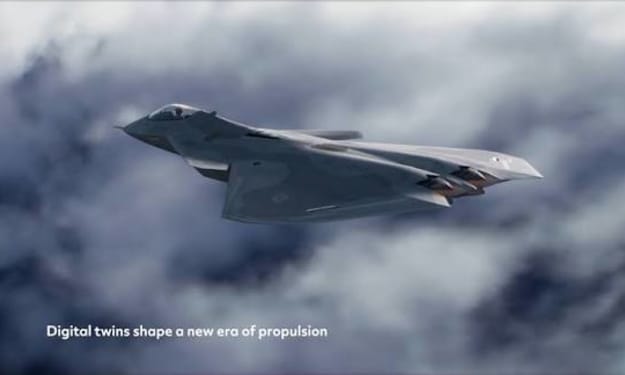
Pratt & Whitney has revealed preliminary design concepts for its sixth-generation F-47 fighter jet, signaling a major step forward in next-generation aerial combat technology. The announcement, made at a confidential industry briefing last week, highlights potential advances in propulsion, stealth, and networked warfare capabilities that could redefine air superiority for allied forces in the coming decades. Vision for the F-47 According to Pratt & Whitney engineers, the F-47 is envisioned as a highly adaptable, multi-role fighter capable of dominating both air-to-air and air-to-ground operations. Key design priorities include: Advanced propulsion systems that promise higher thrust-to-weight ratios, improved fuel efficiency, and supersonic cruise capabilities without afterburners. Enhanced stealth features, including radar-absorbing materials and adaptive surface geometry to minimize detection across multiple spectrums. Integrated sensor networks that allow seamless communication with other aircraft, unmanned systems, and ground-based command centers. The aircraft is also expected to incorporate modular systems, allowing for rapid upgrades in avionics, weapons payloads, and electronic warfare suites. This flexibility is seen as essential in a rapidly evolving threat environment where adversaries are deploying increasingly sophisticated anti-air systems. Propulsion Breakthroughs Pratt & Whitney emphasized that the F-47’s propulsion design could leverage next-generation adaptive cycle engines. These engines are designed to switch between high-thrust and high-efficiency modes depending on mission demands, a capability that could significantly extend operational range and loiter time. “Adaptive propulsion is a game-changer,” said a senior engineer at the briefing. “It allows the fighter to maintain performance while optimizing fuel use, reducing the need for frequent refueling and increasing mission flexibility.” Stealth and Survivability Stealth remains a central focus. While exact specifications are classified, Pratt & Whitney indicated the F-47 design integrates both passive and active measures to avoid detection. This includes adaptive coatings, low-observable exhaust management, and smart airframe shaping to minimize radar and infrared signatures. Electronic countermeasures and advanced avionics are also planned to improve survivability against emerging integrated air defense systems. Analysts note that survivability, more than raw speed or armament, is increasingly the determining factor in future fighter effectiveness. Strategic and Operational Implications The F-47 program is seen as critical to maintaining a technological edge over potential peer adversaries in the Asia-Pacific and European theaters. The aircraft is expected to operate in conjunction with unmanned aerial vehicles, satellites, and networked sensor systems to create a highly integrated battlefield picture. Defense analysts suggest that the F-47 could serve both national and allied needs, potentially integrating into NATO or other coalition frameworks. Its modular design could allow customization for specific mission profiles, from high-intensity combat to reconnaissance and electronic warfare. Challenges Ahead Despite the promise of the F-47, experts caution that development faces significant hurdles. Advanced materials, engine technology, and AI-driven sensor networks require extensive testing and validation. Additionally, integrating such capabilities while controlling costs will be a critical challenge. “The technology is feasible, but turning concept into production is a complex, multi-year endeavor,” said an aerospace industry consultant. “There are risks in propulsion, stealth, and avionics integration that must be carefully managed.” Looking Ahead Pratt & Whitney has not announced a formal production timeline, but the briefing indicated that prototypes could be tested within the next decade. The F-47 program reflects the company’s commitment to shaping the future of air combat, offering a glimpse of the next generation of fighter capabilities. “As threats evolve, so must our solutions,” a Pratt & Whitney spokesperson said. “The F-47 represents a bold step forward in ensuring air dominance and operational flexibility for the decades to come.”
By Fiaz Ahmed about 6 hours ago in The Swamp
Why Black History Matters in America?
The United States of America is celebrating their 250th anniversary in 2026. I'm proud to be an American and as someone who was born here, I wouldn't imagine myself living anywhere else. This is a country where opportunities are possible. Where anyone can be successful in anything they desire to do. Equality, community, and togetherness are the backbones of what America is and should be about. However, we have an administration who wants to erase and disregard those who have made positive, meaningful impacts in our country, specifically Black figures, such as Martin Luther King, Jr., Rosa Parks, and Maya Angelou. President Trump and his administration have been constantly complaining and fighting against what they call the "Woke agenda". They use this excuse as a distraction from other issues they refuse to address, such as the high cost of living, climate change, and inflation. That equality is dividing America, when in reality, it's bringing us together. Being woke is not tied to a specific political party. No matter where you stand on the political spectrum, you can still care about other people and their plights. Compassion and empathy for others isn't tied to a political party, either. We were taught as children to treat others the way we want to be treated and not judge others because they're different from us. Caring about others isn't a personal attack on your beliefs. It doesn't make you any less of a person. People who are easily offended over African American figures, past or present, or anything related to it, are grasping at straws. Current and future generations need to know who people like Harriet Tubman and Shirley Chisholm were, especially in the classroom. Black History is part of American History. It should be recognized, not hidden or forgotten. Besides, you can't shield children from everything, just because your feelings are easily hurt.
By Mark Wesley Pritchard 19 days ago in The Swamp



Comments
There are no comments for this story
Be the first to respond and start the conversation.