

I believe in our democracy and the principal that we are free to make a choice in this election also the power that it represents. It is hard to be optimistic about this election, but now ten days to the election and I feel optimistic. Many who seek to suppress people's vote have been doing just that a very long time. For example, Gerrymandering, voter ID laws, closing polling places in Areas where minorities live. There is so much more interference if you look into it. One day I hope we can have fair and free elections. We need to keep voting for people who care about free and fair elections.
We are now here at the most important election of my lifetime. If you are paying attention to politics right now. The republican majority senate is about to appoint Amy Coney Barrett to the Supreme Court. If you care about your reproductive rights as a woman it's time to pay attention. After the election it is expected the Roe v. wade and the ACA will be back to the Supreme court. There may not be enough left leaning judges in the Supreme court to keep those laws in place. If you are currently unemployed and using the ACA for your medical insurance it could be in jeopardy.
If you are not familiar with Roe v. wade it is a 1973 Landmark decision of the U.S. Supreme court that ruled the Constitution of the United States protects a pregnant woman's right to choose to have an abortion without government restriction.
Latino's are showing up to vote in full force in this election. I saw a great video on social media today where hundreds of Latino voters on horseback and a truck parade were on their way to vote. There is record number of eligible Latino voter's this year it's 32 million. To put that in context in 2016 less than half of eligible Latino's cast a ballot in 2016.
There is a great organization I learned about called LULAC (League of United Latin American Citizens). LULAC has many programs including a Civic engagement & Democracy Initiative. They also have grants you can apply for called HIIP grants. These grants seek to provide immigrant integration assistance to low-income, immigrant, Spanish-dominant and otherwise underserved Latinos living in California, Illinois, Texas and Washington DC.
I have three daughters who's lives will be affected by a reversal of Roe v. wade. It's important to me that they are empowered and to make choices about their body that are their own. This election is the fight of our life. So I am asking you please vote. It's your right as an American.
Vote!
About the Creator
Keep reading
More stories from peachick 876 and writers in The Swamp and other communities.
Kiwi
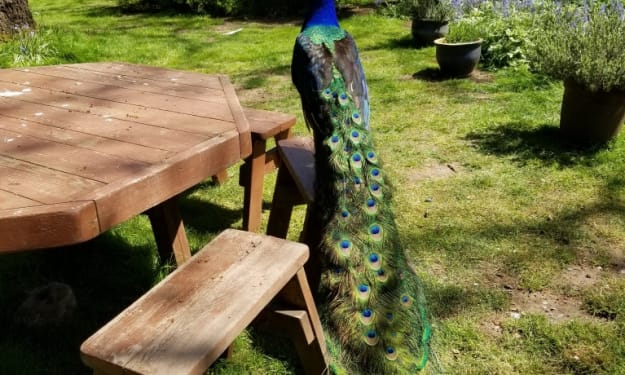
This is my pet peacock Kiwi. He is a very sweet gentle bird. He likes to eat bugs and leaves. He also likes to sleep in my black walnut tree. Every night he flies up into the tree and sleeps. During mating season his tail grows long, up to five feet and he shows it off to the pea hens. I raised this bird from a small little peachick. If you visit a local zoo let's say the Oregon Zoo. They have many peacocks who can be very aggressive, this is due to be pestered by every 3 year old that visits the zoo. Peacocks don't take kindly to harassment.
By peachick 8765 years ago in Petlife
The Saddest Thing - The Billionaires Who Rule America Aren't Even Enjoying Themselves
This single post says more about our ruling class than a thousand policy papers. The saddest thing about today's system is that the men robbing the rest of us - sabotaging our economic prospects, our pensions, our access to affordable healthcare - are not even happy.
By Scott Christenson🌴6 days ago in The Swamp


Comments
There are no comments for this story
Be the first to respond and start the conversation.