
Prediction: This Will Be Nvidia's Stock Price in 5 Years
A forward-looking analysis of growth drivers, AI dominance, risks, and valuation trends shaping Nvidia’s long-term trajectory.
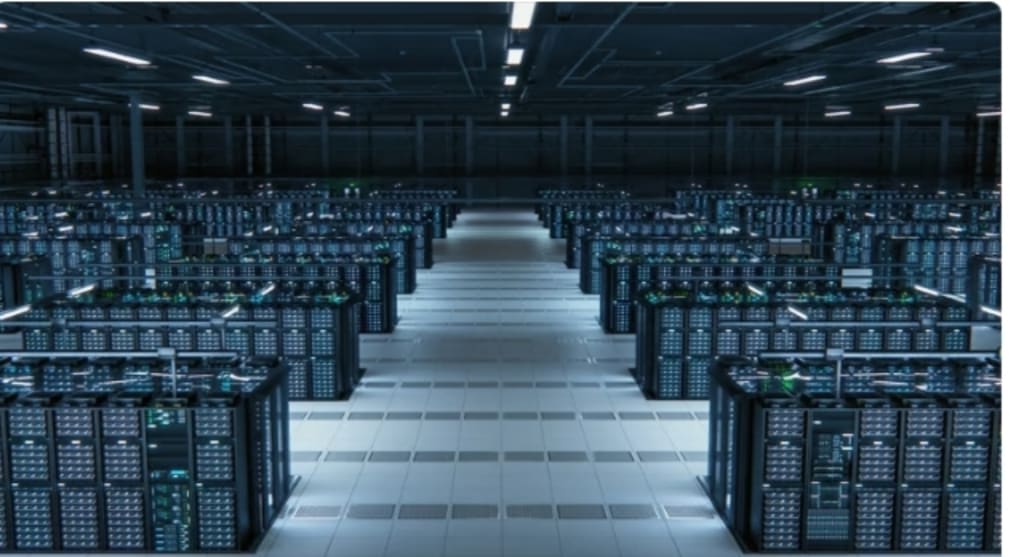
Few companies have reshaped the technology landscape in recent years quite like Nvidia. Once primarily known for powering high-end gaming graphics, Nvidia has transformed into the backbone of the artificial intelligence revolution. From massive data centers to autonomous vehicles and generative AI systems, its chips are at the center of the modern computing boom.
With shares experiencing explosive gains over the past several years, investors are asking the inevitable question: Where could Nvidia’s stock be five years from now?
While no prediction is guaranteed, analyzing growth trends, competitive pressures, valuation metrics, and macroeconomic conditions provides a framework for a realistic long-term estimate.
The Foundation: AI Dominance
Nvidia’s rise is inseparable from the AI explosion. Its graphics processing units (GPUs) became the industry standard for training and running advanced machine learning models. Companies building generative AI tools, large language models, and data-intensive applications rely heavily on Nvidia’s hardware.
Major technology players — including Microsoft, Amazon, and Google — have invested billions into AI infrastructure powered largely by Nvidia chips.
Industry analysts project that the global AI market could exceed $1 trillion in economic impact over the next decade. If Nvidia maintains even a dominant fraction of this ecosystem, revenue growth could remain robust for years.
However, sustaining today’s growth rates indefinitely is unrealistic. The more important question is whether Nvidia can continue compounding earnings at a pace that justifies its premium valuation.
Revenue Growth: Can It Continue?
Nvidia’s data center segment has been the primary engine of expansion. Explosive demand for AI training hardware has led to record-breaking quarterly revenue figures.
Over a five-year horizon, revenue growth will likely normalize but remain strong. Even if annual growth moderates to 15–25%, that would still represent substantial expansion for a company of Nvidia’s size.
Additional catalysts include:
Expansion into AI inference markets
Automotive AI systems
Robotics and industrial automation
Edge computing
Software and recurring AI platform services
Diversification beyond chip sales may also improve long-term margins and stabilize earnings.
The Competitive Landscape
Nvidia’s dominance is not uncontested. Companies such as Advanced Micro Devices and Intel are aggressively expanding their AI hardware offerings. Meanwhile, major cloud providers are designing in-house AI chips to reduce reliance on Nvidia.
The risk here is margin compression. If customers gain alternatives, pricing power could weaken.
Yet Nvidia benefits from a powerful competitive moat: its CUDA software ecosystem. Developers worldwide are trained on Nvidia’s platform, creating switching costs that are difficult to overcome.
Unless a disruptive architectural shift occurs, Nvidia appears positioned to remain a leader in AI acceleration through at least the medium term.
Valuation Considerations
Stock price predictions must account for valuation multiples — not just revenue growth.
Nvidia has often traded at premium price-to-earnings (P/E) ratios due to its growth profile. Over five years, two scenarios are plausible:
Bullish Case: Earnings grow rapidly while valuation multiples remain elevated due to sustained AI dominance.
Moderate Case: Earnings grow strongly, but multiples contract as growth stabilizes and competition increases.
Historically, high-growth tech companies often see some degree of multiple compression over time. That does not mean stock prices fall — just that gains may track earnings more closely than speculative enthusiasm.
A Realistic Five-Year Projection
To build a hypothetical scenario:
Assume Nvidia grows earnings at an average annual rate of 20%.
Assume some modest multiple contraction as the company matures.
Under this framework, Nvidia’s stock could potentially rise between 60% and 120% over five years.
If shares compound at roughly 15% annually, that would roughly double the stock price in five years. More aggressive growth could lead to even higher upside.
Conversely, if AI demand slows dramatically or competitive threats intensify, returns could be more muted.
Macroeconomic Factors
Broader economic conditions also matter. Rising interest rates tend to pressure high-growth stocks because future earnings become less valuable in present-value terms.
A stable or declining rate environment could support higher valuations. Global semiconductor demand cycles, geopolitical tensions involving chip manufacturing, and regulatory policy toward AI will also influence Nvidia’s trajectory.
Export restrictions to certain international markets could limit growth in specific regions, while domestic semiconductor investment initiatives could boost long-term production capacity.
Risks to Consider
Even strong companies face risks. For Nvidia, key concerns include:
AI spending slowdown after initial infrastructure buildout
Intensified competition reducing margins
Supply chain disruptions
Regulatory scrutiny surrounding AI deployment
Overreliance on a concentrated group of large customers
Market sentiment can also shift rapidly. High-flying stocks often experience volatility, especially during earnings seasons.
Investors should prepare for significant price swings along the way, even if the long-term trajectory remains positive.
The Bull Case: AI as the New Electricity
Some analysts argue that AI is comparable to electricity or the internet in terms of transformational impact. If that analogy proves accurate, Nvidia could remain central to global infrastructure for decades.
In such an optimistic scenario, earnings growth may exceed expectations, and valuation multiples could remain elevated longer than skeptics anticipate.
This would push five-year price targets substantially higher than conservative projections.
The Bear Case: Peak AI Hype
Skeptics caution that AI enthusiasm may be front-loaded. Once data centers are built and initial model training demand subsides, growth could decelerate.
If earnings growth slows sharply while the stock trades at a premium valuation, downside pressure could emerge.
History shows that even industry leaders can face periods of stagnation if expectations outpace results.
Final Prediction
Taking into account growth prospects, competitive dynamics, valuation normalization, and macroeconomic conditions, a balanced projection suggests Nvidia’s stock could reasonably trade between 1.6x and 2.2x its current level within five years.
That implies steady but potentially less explosive returns compared to the extraordinary gains of recent years.
Of course, no forecast is guaranteed. Markets are influenced by innovation cycles, economic shifts, and unforeseen events. Yet Nvidia’s entrenched role in AI infrastructure provides a strong foundation for continued expansion.
For long-term investors, the key question is not whether volatility will occur — it almost certainly will — but whether Nvidia can maintain its leadership in one of the most transformative technological shifts of our era.
If it does, the next five years may still reward patient shareholders, even if the path forward proves less dramatic than the recent past.
About the Creator
A Gathering of Evil Bosses
“I’m the queen of chin jutting while I smooth my hair, attacking, insulting, and deflecting to protect my appointer.” “Oh, please, Blondi, my hair is curled, highlighted, and longer than yours. I feature television commercials telling immigrants that we will give them a free plane ride home, and if they voluntarily turn themselves in, they will be allowed to legally apply for re-entry. It runs everywhere, and I look good in it! You can’t compete because of your blond hair. Mine is nicer, and my lips are prettier than yours.”
By Andrea Corwin 4 days ago in The Swamp
Iran FM in Geneva for US Talks, as IRGC Holds Drills in Strait of Hormuz
As Iran’s foreign minister arrives in Geneva for renewed diplomatic talks with the United States, the world is witnessing a striking contrast between negotiation and military signaling. While diplomats gather around conference tables in Switzerland, the Islamic Revolutionary Guard Corps (IRGC) has launched large-scale naval drills in the Strait of Hormuz, one of the most strategically vital shipping lanes on Earth.
By Sajida Sikandar6 days ago in The Swamp
Unofficial Challenge: What would you do if you were rich?
I love the kind of work I get to do in my career, but as I job search and browse apartments again due to another understaffed and unsustainable work environment that I did not intend to get into, my daydreams of better days consistently lean into the same question: What would I do if I didn't have to worry about my basic needs being met?
By Kay Husnick5 days ago in Writers




Comments
There are no comments for this story
Be the first to respond and start the conversation.