
Punch the Monkey, Initially an Outcast, Finds Some Friends (and the Internet’s Support)
A story of resilience, unlikely friendships, and how compassion can go viral

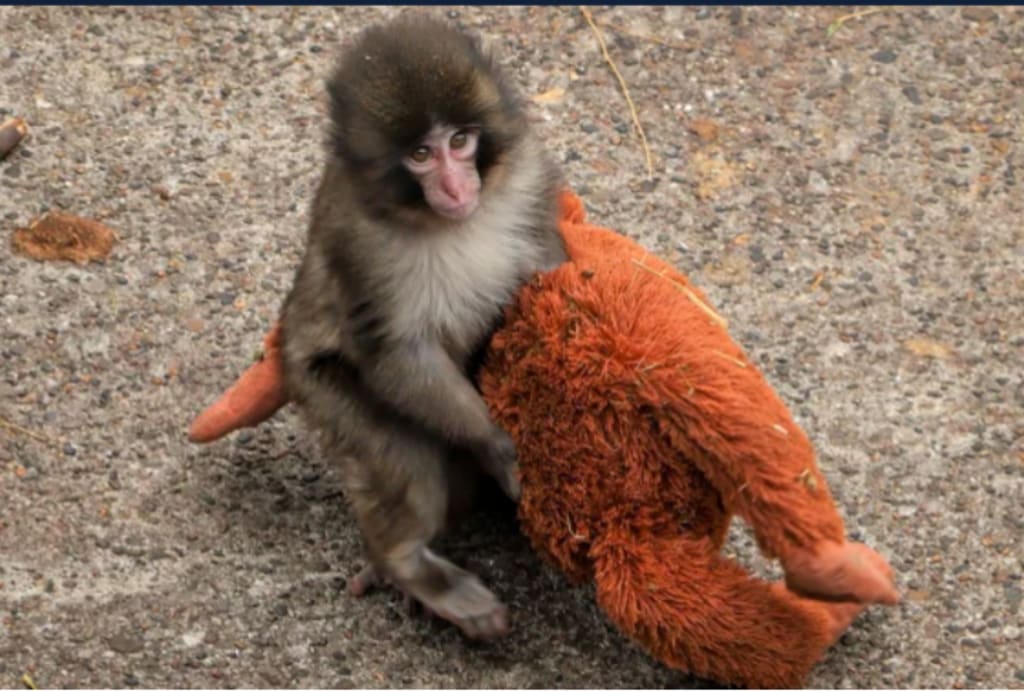
When Punch first arrived at a small wildlife sanctuary, his future looked uncertain. The young monkey, rescued after being separated from his troop, was visibly different from the others—smaller, timid, and hesitant to interact. While the sanctuary staff hoped he would eventually integrate into a new group, the early days were painful to watch. Punch was ignored, pushed aside during feeding time, and often sat alone at the edge of the enclosure.
To the caretakers, it was more than just animal behavior. It felt like watching a child struggle to belong.
But what began as a quiet concern within the sanctuary soon turned into a global story of hope, thanks to a few short videos posted online. Punch’s journey from outcast to accepted friend captured hearts across the world and reminded millions that even in nature, compassion can change everything.
A Lonely Beginning
Punch’s early behavior was shaped by trauma. Having lost contact with his original troop, he arrived fearful and unsure of how to socialize. Monkeys rely heavily on group dynamics for survival—grooming, play, and shared routines help build trust. Punch, however, didn’t understand the unspoken rules of his new environment.
Other monkeys avoided him. Some reacted with mild aggression, while others simply ignored his attempts to join in. During feeding times, Punch often waited until the others had finished before approaching the food. Sanctuary workers noticed he would curl up alone, watching the rest of the troop interact from a distance.
For a time, it seemed as though Punch might never fit in.
Caretakers debated whether to move him to another enclosure or pair him with a different group. But instead of forcing integration, they chose patience—allowing Punch to observe and slowly build confidence at his own pace.
The Video That Changed Everything
One caretaker recorded a short clip of Punch sitting alone while the other monkeys played nearby. In the video, Punch tentatively reached out to touch another monkey, only to be brushed aside. The clip was uploaded to social media with a simple caption about his struggle to find friends.
Within hours, the video began spreading.
Viewers flooded the comments with encouragement. Some compared Punch’s experience to bullying in schools. Others shared personal stories of feeling isolated and misunderstood. The monkey became a symbol of anyone who had ever felt like they didn’t belong.
Soon, follow-up videos showed Punch’s small victories: sitting closer to the group, receiving his first grooming session, and eventually joining in play. Each update drew millions of views, turning Punch into an unlikely internet star.
On platforms like TikTok, users created reaction videos, artwork, and even short poems dedicated to the monkey’s journey. What started as a quiet rehabilitation effort transformed into a worldwide movement of empathy.
Finding Friendship
The turning point came when one older monkey began grooming Punch. In monkey society, grooming is a sign of trust and acceptance. Once that barrier was broken, others followed. Punch gradually became more confident—moving closer to the group, engaging in playful chases, and sharing food without hesitation.
Sanctuary workers noticed a visible change in his posture and behavior. He no longer sat alone. His eyes were brighter. He vocalized more often. Where there was once fear, there was now curiosity.
This transformation wasn’t sudden, but it was steady. And each step was documented for the growing online audience that had become emotionally invested in Punch’s story.
Why the Internet Cared So Much
Punch’s story resonated because it reflected something deeply human. Social rejection is a universal experience. Seeing it play out in an animal—so raw and unfiltered—triggered empathy on a massive scale.
Psychologists say people connect strongly to animals when they display emotions we recognize: loneliness, hope, and joy. Punch didn’t need words. His body language told the entire story.
The internet’s response also highlighted how digital spaces can be used for good. Instead of outrage or conflict, Punch’s videos inspired kindness. Donations poured into the sanctuary. Volunteers reached out. Messages of encouragement came from every continent.
For once, a viral story wasn’t about scandal or fear—it was about healing.
The Role of Sanctuaries in Emotional Recovery
Wildlife sanctuaries often focus on physical rehabilitation, but Punch’s case showed how important emotional recovery can be too. Animals that experience trauma may struggle with social behavior, much like humans.
By allowing Punch to integrate naturally rather than forcing interactions, caretakers gave him the chance to rebuild trust. This approach is now being highlighted as a model for other facilities working with rescued animals.
Punch’s success has encouraged sanctuaries to pay closer attention to emotional well-being, not just survival.
From Outcast to Inspiration
Today, Punch is no longer the lonely monkey he once was. He plays, grooms, and naps alongside his troop. Visitors often point him out as the monkey who “used to be alone,” amazed at how far he’s come.
Online, Punch has become a symbol of resilience. His story is shared in classrooms, animal welfare campaigns, and mental health discussions. People use his journey to teach children about kindness and inclusion.
What makes Punch’s story powerful is not just that he found friends—it’s that the world cared enough to notice.
Final Thoughts
Punch the monkey’s journey from rejection to belonging is a reminder that healing takes time and patience. It also proves that empathy can travel far beyond the walls of a sanctuary, reaching millions through a simple video.
In a world often filled with division, Punch offered something rare: a moment of collective compassion.
He didn’t set out to become famous. He just wanted to belong. And in the process of finding his place among other monkeys, he found a place in the hearts of people everywhere.
Sometimes, the smallest stories carry the biggest lessons: that no one—human or animal—should be left alone when friendship is possible, and that even the quietest voice can inspire the loudest wave of support.
About the Creator
Sajida Sikandar
Hi, I’m Sajida Sikandar, a passionate blogger with 3 years of experience in crafting engaging and insightful content. Join me as I share my thoughts, stories, and ideas on a variety of topics that matter to you.
Keep reading
More stories from Sajida Sikandar and writers in The Swamp and other communities.
4 Journalists Detained in Cameroon Reporting on Trump’s Deportations
In a troubling development that has sparked international concern, four journalists and a lawyer were detained in Cameroon while investigating a controversial deportation policy linked to former U.S. President Donald Trump. Their detention has reignited debates about press freedom, migrant rights, and the secrecy surrounding so-called “third-country deportations.”
By Sajida Sikandara day ago in The Swamp
A Gathering of Evil Bosses
“I’m the queen of chin jutting while I smooth my hair, attacking, insulting, and deflecting to protect my appointer.” “Oh, please, Blondi, my hair is curled, highlighted, and longer than yours. I feature television commercials telling immigrants that we will give them a free plane ride home, and if they voluntarily turn themselves in, they will be allowed to legally apply for re-entry. It runs everywhere, and I look good in it! You can’t compete because of your blond hair. Mine is nicer, and my lips are prettier than yours.”
By Andrea Corwin 3 days ago in The Swamp
Pakistan Accused of Denying Treatment for Imran Khan’s Failing Eyesight
Former Pakistani Prime Minister Imran Khan is reportedly facing worsening eyesight, with allegations emerging that authorities have denied him access to timely medical care. Sources close to Khan indicate that his right eye has lost significant vision, with doctors warning that further delays could result in permanent impairment. The situation has drawn attention from human rights organizations, political analysts, and the international community, raising questions about the treatment of high-profile political figures under house arrest or government scrutiny. The Health Situation According to insiders, Khan’s vision deterioration began months ago, initially manifesting as blurred vision and reduced visual acuity in his right eye. Medical examinations reportedly revealed advanced damage to the optic nerve, which experts say could lead to irreversible blindness if not treated promptly. Khan’s personal doctors have reportedly recommended immediate intervention, including specialized surgical procedures and continuous monitoring. However, supporters claim that the government has not permitted him to access necessary treatment outside controlled facilities. Reports indicate that Khan’s medical appointments have been repeatedly delayed, with bureaucratic restrictions cited as the primary obstacle. Some political commentators describe the situation as a deliberate effort to undermine his well-being and limit his public engagements. Political Context Khan, who was ousted from office in a no-confidence vote in 2022, remains a central figure in Pakistan’s political landscape. His Pakistan Tehreek-e-Insaf (PTI) party continues to enjoy substantial popular support, and Khan’s personal charisma has made him a polarizing figure. Analysts note that restricting access to medical care for prominent political figures is highly unusual and has heightened tensions between the government and opposition supporters. Political allies have framed the allegations as part of a broader pattern of targeting Khan and his supporters. “This is not just about health; it’s about intimidation,” said a senior PTI official. “Denial of medical care to a political leader is unacceptable under any democratic or human rights framework.” Human Rights and Legal Concerns The claims have drawn attention from human rights advocates, who emphasize that access to medical care is a fundamental right. International observers have urged Pakistani authorities to ensure that Khan receives prompt and appropriate treatment. Delays in care for high-risk conditions, such as deteriorating eyesight, can have lasting consequences and are considered serious violations of medical and human rights standards. Legal experts note that under Pakistani law, citizens—including political figures—are entitled to medical attention regardless of their political status. Denying treatment could expose authorities to both domestic and international scrutiny, particularly if the situation leads to permanent disability. Public Reaction News of Khan’s alleged treatment denial has fueled protests and social media campaigns. Supporters have called for urgent intervention, using hashtags and online platforms to demand medical access. Street demonstrations have been reported in several major cities, with protestors emphasizing the broader implications of denying healthcare to political leaders. Opposition figures argue that the case is emblematic of a wider erosion of rights and liberties, while government spokespeople have largely remained silent, citing security and procedural concerns. Analysts suggest that the lack of transparency has intensified speculation and public concern, further politicizing Khan’s health condition. Implications and Outlook If the allegations are confirmed, Khan’s health crisis could have significant political and social repercussions. Beyond the personal risk to a prominent leader, the case raises questions about the treatment of political detainees and opposition figures in Pakistan. Observers warn that mishandling the situation could inflame public tensions and undermine trust in government institutions. Medical experts stress the urgency of intervention. Prompt surgical or therapeutic measures could stabilize Khan’s eyesight and prevent permanent damage. Meanwhile, political analysts are monitoring how the situation might affect PTI’s activities, public support, and upcoming political developments. As Pakistan grapples with a complex intersection of health, politics, and human rights, the international community continues to watch closely. The outcome of Khan’s medical access could set important precedents for the treatment of political figures and the broader protection of citizen rights in the country.
By Fiaz Ahmed 6 days ago in The Swamp
Goodbye, Mr. Duvall
It is turning out to be an interesting year. I was in the middle of teaching a class when a pop-up appeared on the screen announcing the death of Mr. Robert Seldon Duvall (yes, that was his full name). I was in the middle of a discussion on the obsession we have with winning when it comes to sports (the Winter Olympics was a theme), and I felt as though things were coming full circle. We had already lost Gene Hackman last year, and along with that titan, it feels though one particular golden age has closed off to be replaced by...?
By Kendall Defoe 5 days ago in Geeks



Comments
There are no comments for this story
Be the first to respond and start the conversation.