
Royal Navy Submarine HMS Anson Arrives in Western Australia: A Strategic Milestone
The arrival highlights deepening defense ties and the future of Indo-Pacific security
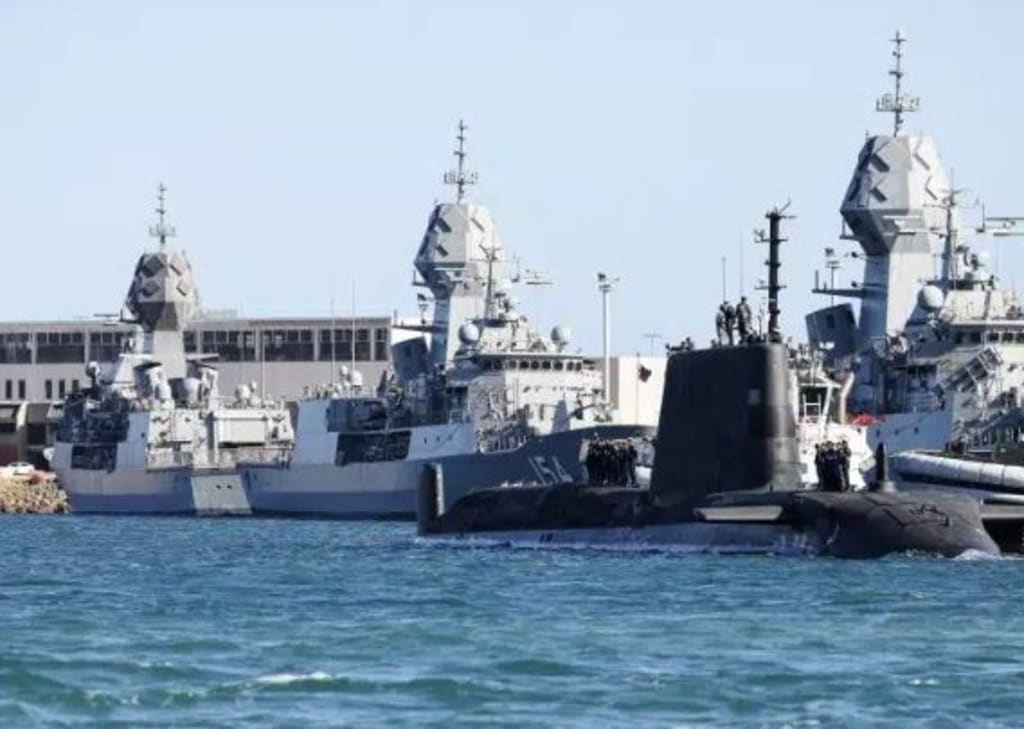
The arrival of the British submarine HMS Anson in Western Australia marks an important moment in global defense cooperation and maritime strategy. As one of the most advanced nuclear-powered submarines operated by the Royal Navy, HMS Anson’s deployment signals the strengthening of security partnerships in the Indo-Pacific region and highlights the growing importance of underwater capabilities in modern naval warfare.
The visit is not simply ceremonial. It reflects a broader shift in geopolitical focus toward the Indo-Pacific, where allied nations are investing heavily in naval technology, joint training, and strategic coordination. For Australia, the arrival underscores its evolving role as a key security partner for Western allies, while for the United Kingdom it demonstrates its renewed commitment to maintaining a visible military presence far from home waters.
A Submarine Built for Modern Warfare
HMS Anson is part of the Astute-class submarine, widely regarded as one of the most sophisticated attack submarine designs in the world. Powered by nuclear propulsion, the vessel can remain submerged for extended periods, operate with minimal detection, and carry advanced weapon systems designed for intelligence gathering, surveillance, and strike missions.
Unlike older submarines that required frequent surfacing, nuclear-powered submarines such as HMS Anson provide persistent underwater presence — a capability that is increasingly valuable as maritime competition intensifies. The submarine’s stealth features, advanced sonar, and long-range strike capacity make it a critical asset in maintaining maritime deterrence.
Its arrival in Australia demonstrates how allied nations are sharing operational experience and preparing for joint missions in complex environments, including contested sea lanes and strategic chokepoints.
Strategic Importance of Western Australia
The submarine’s visit is closely linked to the growing strategic importance of HMAS Stirling, Australia’s primary submarine base located near Perth. The base has become central to allied naval cooperation, hosting training exercises, maintenance support, and rotational deployments from partner nations.
Western Australia’s geographic position offers direct access to the Indian Ocean and major global trade routes. This makes it an ideal hub for submarines conducting patrols, exercises, or joint operations across the Indo-Pacific. By operating from Australian facilities, allied submarines can extend their reach while strengthening interoperability with Australian forces.
The presence of HMS Anson also provides valuable opportunities for knowledge sharing, particularly in areas such as submarine maintenance, nuclear stewardship, and crew training.
The AUKUS Connection
The deployment aligns with the broader goals of AUKUS, the security partnership between United Kingdom, Australia, and the United States. AUKUS focuses heavily on helping Australia acquire nuclear-powered submarines while expanding collaboration in advanced technologies such as cyber capabilities, artificial intelligence, and undersea warfare.
Visits by submarines like HMS Anson serve as practical steps toward that long-term objective. They allow Australian personnel to gain experience working alongside nuclear submarine crews and help infrastructure evolve to support future fleets.
For the United Kingdom, such deployments reinforce its role as a major defense partner in the Indo-Pacific. For Australia, they represent progress toward developing one of the region’s most capable submarine forces.
Regional Security Implications
The Indo-Pacific has become a focal point of global security discussions due to rising maritime competition, territorial disputes, and the strategic importance of sea trade routes. Submarines are especially valuable in this environment because of their ability to operate discreetly while providing surveillance and deterrence.
HMS Anson’s presence signals allied commitment to maintaining stability and ensuring freedom of navigation. While the deployment is framed as routine cooperation, it also carries symbolic weight — demonstrating that partner nations are willing to invest resources and maintain a sustained presence in the region.
Defense analysts often note that undersea capabilities are becoming central to modern military strategy. Submarines can gather intelligence, track naval movements, protect shipping lanes, and, if necessary, provide precision strike capabilities. As a result, their deployments are closely watched by both allies and competitors.
Economic and Community Impact
Beyond military strategy, the submarine’s arrival has local implications. Visits by advanced naval vessels bring economic activity through logistics, maintenance, and support services. They also attract public interest and strengthen ties between defense personnel and local communities.
Australian industry stands to benefit from increased collaboration, particularly as the country prepares to expand its submarine infrastructure under AUKUS. Training programs, engineering partnerships, and technology exchange could create new opportunities in shipbuilding and defense manufacturing.
For Western Australia, the growing role as a submarine hub could lead to long-term investment in facilities, workforce development, and regional infrastructure.
Challenges and Considerations
Despite the strategic benefits, nuclear-powered submarine cooperation raises important discussions around safety, environmental responsibility, and long-term costs. Governments involved in such programs emphasize strict regulatory frameworks and international safeguards to ensure safe operation and maintenance.
Public debate in Australia has focused on transparency, workforce readiness, and the timeline for building domestic capability. Deployments like HMS Anson’s visit help address some concerns by demonstrating practical steps toward readiness and partnership.
Still, the scale of submarine programs means that policy decisions will continue to be scrutinized by both political leaders and the public.
Looking Ahead
The arrival of HMS Anson in Western Australia represents more than a routine naval visit. It highlights a shift toward deeper defense integration among allied nations and underscores the growing importance of undersea capabilities in global security strategy.
As Australia advances its submarine ambitions and allies increase their Indo-Pacific presence, visits like this are likely to become more frequent. They provide valuable operational experience, strengthen partnerships, and signal long-term commitment to regional stability.
In an era defined by technological competition and evolving security challenges, submarines remain one of the most powerful — and least visible — tools of national defense. HMS Anson’s deployment serves as a reminder that the future of maritime strategy will increasingly unfold beneath the surface, where stealth, cooperation, and innovation shape the balance of power.
About the Creator
A Gathering of Evil Bosses
“I’m the queen of chin jutting while I smooth my hair, attacking, insulting, and deflecting to protect my appointer.” “Oh, please, Blondi, my hair is curled, highlighted, and longer than yours. I feature television commercials telling immigrants that we will give them a free plane ride home, and if they voluntarily turn themselves in, they will be allowed to legally apply for re-entry. It runs everywhere, and I look good in it! You can’t compete because of your blond hair. Mine is nicer, and my lips are prettier than yours.”
By Andrea Corwin 6 days ago in The Swamp
Ismaili Imamat and Aga Khan Foundation Donate €1.5 Million to Support Reconstruction Efforts in Portugal
In a significant gesture of global solidarity, the Ismaili Imamat and the Aga Khan Foundation have announced a joint donation of €1.5 million to support reconstruction efforts in Portugal. The funds are aimed at helping communities recover from recent natural disasters that caused widespread damage to homes, infrastructure, and essential public services.
By Sajida Sikandar4 days ago in The Swamp
Boundless
A geographical map could take you there. To the places I've been, to the sights I've seen, to the landscapes I've climbed. But no compass could point you in the direction of my memories. To the experiences I've lived, to the happiness I've felt, to the wonder I've held so close to my heart.
By Alyssa Musso2 days ago in Writers




Comments
There are no comments for this story
Be the first to respond and start the conversation.