
Trump, Facing Headwinds at Home and Abroad, to Address State of the Union
A Defining Moment for Donald Trump as Domestic Challenges and Global Pressures Converge

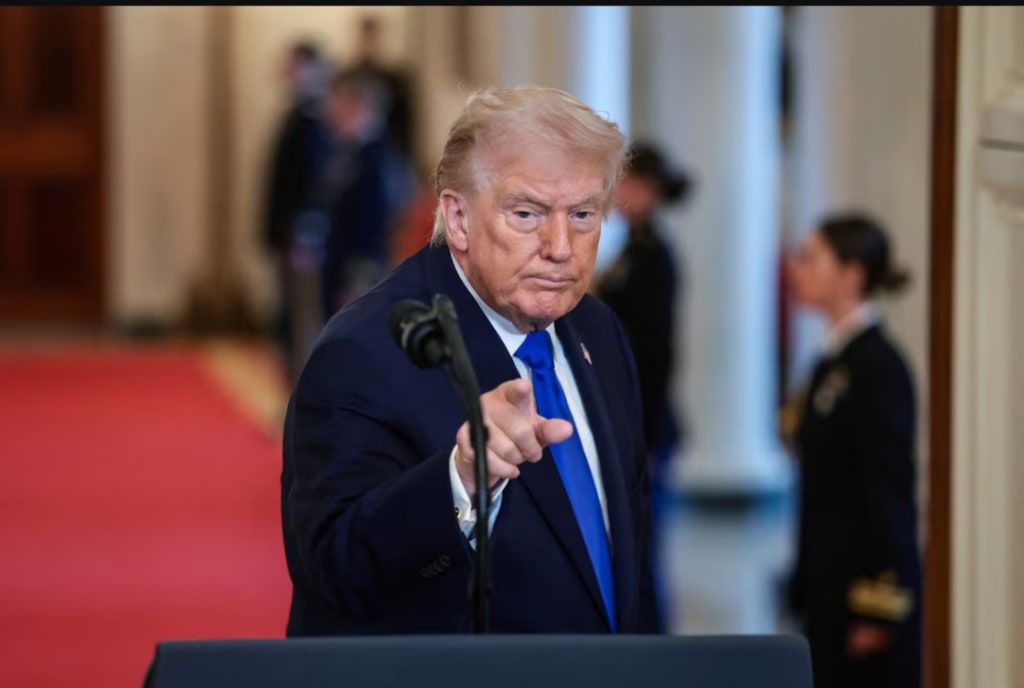
As President Donald Trump prepares to deliver his upcoming State of the Union address, the political climate surrounding him is marked by mounting domestic challenges and complex international tensions. The annual speech, presented before a joint session of United States Congress, offers the president an opportunity to outline policy priorities, frame national debates, and reassert leadership at a critical juncture.
This year’s address carries heightened significance. Economic uncertainty, partisan divisions, and global instability have combined to create what many observers describe as a defining political moment. For Trump, the speech represents more than a constitutional formality—it is a strategic platform to address concerns at home while projecting confidence abroad.
Domestic Headwinds: Economic Pressures and Political Divides
At home, the administration faces persistent economic pressures. Inflation concerns, fluctuating job growth numbers, and debates over federal spending have dominated national discourse. While Trump has frequently highlighted employment gains and market resilience, critics point to uneven economic recovery and rising living costs affecting middle-class households.
Immigration policy remains another flashpoint. Trump’s longstanding focus on border security and stricter immigration controls continues to energize supporters while drawing sharp criticism from opponents. Legislative gridlock in Congress has complicated efforts to pass comprehensive reforms, intensifying partisan friction.
Healthcare and tax policy debates also remain unresolved. Lawmakers are divided over the direction of fiscal reform, entitlement spending, and long-term debt management. As the national deficit grows, bipartisan consensus appears increasingly elusive.
In this environment, the State of the Union address becomes a vehicle for Trump to reframe these challenges. He is expected to emphasize economic resilience, promote deregulation efforts, and advocate for policies he argues will restore stability and strengthen American industries.
International Pressures: Diplomacy in a Shifting World
Beyond domestic politics, global developments have added further complexity. Geopolitical tensions, trade negotiations, and security alliances are evolving rapidly. Relations with major powers—including China and Russia—remain closely scrutinized. Trade policy, in particular, has been a central feature of Trump’s foreign strategy, marked by tariff disputes and renegotiated agreements.
Allied relationships within NATO and broader transatlantic partnerships have also faced moments of strain. European leaders have occasionally expressed concern over defense spending expectations and shifting diplomatic priorities.
Meanwhile, instability in regions such as the Middle East and Eastern Europe continues to demand U.S. engagement. Questions surrounding military commitments, humanitarian assistance, and energy security weigh heavily on foreign policy discussions.
In his address, Trump is likely to highlight what he considers diplomatic successes, including trade renegotiations and defense spending commitments from allies. At the same time, he may seek to reassure international partners of continued American leadership on the global stage.
The Political Stakes
The State of the Union traditionally serves as both a report and a roadmap. For Trump, it also functions as a political inflection point. Approval ratings, legislative battles, and electoral considerations shape the tone and messaging of such speeches.
Historically, presidents have used the address to reset narratives during turbulent periods. By emphasizing achievements and outlining forward-looking initiatives, they attempt to unify supporters and sway undecided voters. Trump’s rhetorical style—often direct and combative—may be tempered by the formal setting, though observers anticipate moments of assertive messaging aimed at reinforcing his policy agenda.
Opposition lawmakers, meanwhile, are expected to challenge key claims and present alternative policy visions. The response speech delivered by a member of the opposing party will likely underscore contrasting priorities on healthcare, climate policy, taxation, and democratic institutions.
Economic Vision and Policy Priorities
One central theme of the address is expected to be economic competitiveness. Trump has consistently promoted tax incentives, energy independence, and industrial revitalization. He may renew calls for infrastructure investment, supply chain reshoring, and expanded domestic manufacturing.
Energy policy will also command attention. With global markets sensitive to geopolitical disruptions, the administration has emphasized domestic energy production as a stabilizing factor. Balancing environmental concerns with economic objectives remains a delicate political equation.
In addition, technological innovation and cybersecurity could feature prominently. As digital threats escalate, safeguarding national infrastructure and private-sector networks has become a bipartisan concern. Investment in artificial intelligence, semiconductor production, and defense modernization may be highlighted as pillars of long-term growth.
Public Perception and National Unity
Beyond policy specifics, the tone of the speech will shape public perception. In times of uncertainty, citizens often look to national leaders for reassurance and clarity. The State of the Union offers a rare moment when millions of Americans focus collectively on a single political event.
Calls for unity, economic opportunity, and institutional stability may serve as thematic anchors. Whether such appeals resonate across ideological divides remains uncertain. Political polarization has intensified in recent years, and bipartisan cooperation appears increasingly rare.
Nevertheless, the address provides a constitutional reminder of shared democratic processes. The presence of lawmakers from both parties, members of the judiciary, and invited guests symbolizes the balance of powers embedded within the American system.
Conclusion: A Pivotal Address in Uncertain Times
As Donald Trump approaches the podium before United States Congress, the weight of domestic and international expectations looms large. Facing headwinds at home and abroad, the president’s message will seek to project confidence, defend policy decisions, and outline a forward-looking agenda.
Whether the speech succeeds in shifting momentum or deepening partisan divides will depend not only on rhetoric but also on subsequent legislative and diplomatic actions. In a rapidly changing political landscape, this State of the Union address stands as a consequential chapter in the ongoing narrative of American governance.
For supporters and critics alike, it will serve as a barometer of leadership amid challenge—a moment when words carry the potential to shape both perception and policy in the months ahead.
About the Creator
Asad Ali
I'm Asad Ali, a passionate blogger with 3 years of experience creating engaging and informative content across various niches. I specialize in crafting SEO-friendly articles that drive traffic and deliver value to readers.
A Gathering of Evil Bosses
“I’m the queen of chin jutting while I smooth my hair, attacking, insulting, and deflecting to protect my appointer.” “Oh, please, Blondi, my hair is curled, highlighted, and longer than yours. I feature television commercials telling immigrants that we will give them a free plane ride home, and if they voluntarily turn themselves in, they will be allowed to legally apply for re-entry. It runs everywhere, and I look good in it! You can’t compete because of your blond hair. Mine is nicer, and my lips are prettier than yours.”
By Andrea Corwin 6 days ago in The Swamp




Comments
There are no comments for this story
Be the first to respond and start the conversation.