
Trump Says Microsoft Will Pay More for Its Datacenters’ Electricity
Why this move could reshape tech, energy, and community costs in America

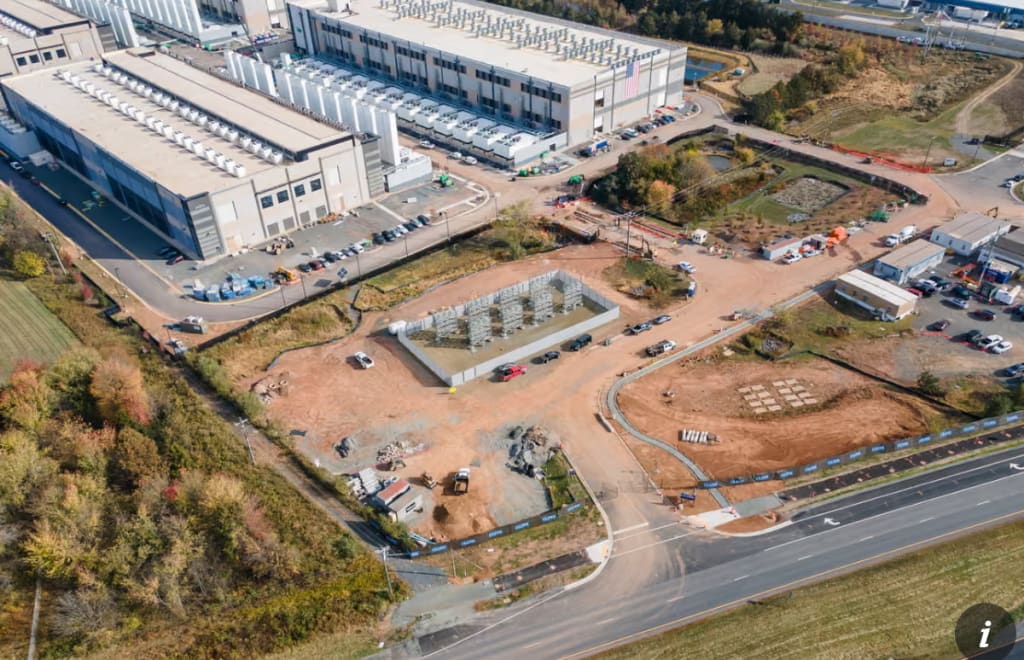
When it comes to energy, politics, and Big Tech, things just got interesting. President Donald Trump recently announced that Microsoft will pay more for the electricity used by its massive datacenters, a statement that has stirred debate from boardrooms to living rooms. The move highlights a growing tension: how do we balance America’s technological growth, particularly in artificial intelligence, with rising energy costs for everyday people?
Let’s unpack what’s happening, why it matters, and what it could mean for communities, companies, and consumers alike.
Datacenters Are Hungry for Power
Datacenters are the backbone of cloud computing and AI development. These massive facilities store and process the data that powers everything from your video calls to advanced AI programs. And all that processing requires energy — lots of it.
In fact, some datacenters use as much electricity as a small city. With AI workloads growing exponentially, electricity consumption in these centers could double by the mid‑2020s. That’s not just a tech problem — it affects local electricity grids, utility rates, and environmental resources.
Trump’s announcement reflects a broader concern: he wants ordinary Americans to avoid paying higher utility bills just because tech companies need more power.
Why Microsoft’s Response Matters
Microsoft didn’t push back. Instead, the company unveiled its “Community-First AI Infrastructure” plan, aimed at addressing energy concerns while continuing its AI expansion. The plan includes:
Paying electricity rates that cover the full cost of their datacenters.
Working with local utilities and regulators to support grid improvements.
Investing in job creation and AI training in host communities.
Reducing environmental impacts, including water usage.
Paying full property taxes without requesting incentives.
In short, Microsoft is trying to show that it’s willing to internalize its energy costs rather than let local communities shoulder the burden.
The Political Angle
This announcement is more than just corporate strategy — it’s political theater. With voters concerned about rising costs and inflation, Trump is signaling that his administration is protecting consumers from the hidden costs of AI infrastructure.
However, critics warn that forcing tech companies to pay higher electricity bills could slow investment in U.S. datacenters. Some clean energy advocates also argue that expanding renewable energy capacity is a more effective solution than simply redistributing costs.
The debate shows that AI isn’t just a technological revolution — it’s also reshaping energy policy, economics, and local politics.
Community Reactions
People living near datacenters have had mixed reactions. Some welcome the news, hoping that higher corporate contributions will prevent electricity bills from climbing. Others remain skeptical, worried that new projects might still strain local resources or that energy-intensive operations could continue despite higher costs.
Communities in states like Wisconsin and Virginia have already pushed back against new datacenters, citing water usage, environmental concerns, and electricity demand. Microsoft’s commitments aim to reassure local residents and reduce community resistance — but whether it works remains to be seen.
Broader Implications for the Tech Industry
If Microsoft’s plan is successful, it could set a new standard for the entire tech industry. Other companies, like Amazon, Google, and Meta, may follow suit, paying closer attention to electricity costs, local infrastructure, and community relations.
This could encourage more sustainable datacenter development, better corporate accountability, and even influence where AI infrastructure is built in the future.
AI, Energy, and the Future of Policy
The Trump-Microsoft electricity issue is more than a headline. It’s a window into how AI, energy consumption, and public policy intersect. Datacenters are no longer invisible infrastructure — their energy needs have direct economic, social, and environmental impacts.
By calling on Microsoft to pay more, Trump has spotlighted the challenges of maintaining rapid AI growth while protecting consumers. And Microsoft’s “Community-First” plan shows one way a tech giant can respond: balancing expansion with responsibility.
Conclusion: Powering Technology Without Powering Up Costs
At the heart of this story is a simple question: how do we ensure AI innovation doesn’t come at the expense of everyday Americans?
Trump’s directive and Microsoft’s response offer one potential path forward: let tech companies cover their own energy costs, invest in communities, and reduce environmental impacts. Whether this model becomes the industry standard remains to be seen.
For now, it’s a clear reminder that the future of AI isn’t just about algorithms and servers — it’s about people, power, and policy.
About the Creator
Muhammad Hassan
Muhammad Hassan | Content writer with 2 years of experience crafting engaging articles on world news, current affairs, and trending topics. I simplify complex stories to keep readers informed and connected.
Keep reading
More stories from Muhammad Hassan and writers in The Swamp and other communities.
Why the East Coast Wants More of Trump’s Least-Favorite Energy Source
The East Coast of the United States has long been at the center of political debates over energy policy. From coal-fired power plants in Pennsylvania to offshore wind projects in Massachusetts, the region has often found itself at odds with federal priorities. Recently, attention has turned to a particular energy source that former President Donald Trump famously criticized—natural gas. While Trump often championed coal and domestic fossil fuels, calling natural gas “not clean enough” for his administration’s vision, East Coast states are increasingly betting on it to fuel their energy needs. This pivot raises a critical question: why is a region leaning heavily into a fuel source that one of the country’s most influential political figures publicly dismissed? The answer lies in a mix of economic necessity, environmental policy, and infrastructure realities. Rising Demand, Limited Options Energy demand on the East Coast is growing faster than elsewhere in the country. The population in states from New York down to Florida is expanding, and urban centers are seeing increased consumption due to the rise of electric vehicles, new data centers, and more residential and commercial development. Renewable energy projects, while promising, are not yet sufficient to meet this surge in demand. Solar and wind power are growing, but their intermittent nature creates gaps in supply that cannot yet be fully bridged without reliable backup sources. Natural gas fills that gap. Unlike coal, it burns cleaner and produces significantly lower carbon dioxide emissions per unit of energy. It also emits fewer pollutants such as sulfur dioxide and particulate matter, which makes it more acceptable in states with strict air quality standards. For many East Coast states, the choice isn’t about political alignment—it’s about pragmatism. Infrastructure Investments Over the last decade, states along the East Coast have invested billions of dollars in natural gas infrastructure, including pipelines, storage facilities, and modernized power plants. This infrastructure provides a steady, controllable energy supply, unlike some renewable options that depend heavily on weather conditions. Retrofitting the grid entirely to run on solar, wind, or nuclear would take decades and tens of billions more in investment, which is why natural gas remains a central piece of the puzzle. For example, Massachusetts has been expanding its natural gas pipeline network to reduce the risk of winter shortages. Similarly, New York and New Jersey have approved projects that allow for natural gas storage in strategic locations to ensure the grid remains stable during peak demand periods. These projects face political opposition, environmental concerns, and even lawsuits, but their momentum demonstrates the economic and logistical importance of natural gas. Balancing Environment and Economics While Trump criticized natural gas for environmental reasons, East Coast states are adopting a more balanced approach. By using natural gas as a bridge fuel, these states aim to reduce reliance on coal while giving renewable technologies time to scale up. In New England, for example, natural gas now supplies nearly half of electricity generation, allowing older, dirtier coal plants to be retired. This shift has led to measurable reductions in regional carbon emissions and improved air quality in densely populated areas. At the same time, natural gas is not seen as a permanent solution. Policymakers are simultaneously promoting offshore wind projects, large-scale solar installations, and energy efficiency measures. The goal is to gradually replace natural gas over time with cleaner, renewable alternatives. But the pace of change is constrained by technological and financial realities, which is why natural gas demand remains strong despite political rhetoric. Political Pushback and the Trump Factor Trump’s criticisms of natural gas—particularly his push for coal and disdain for certain renewable policies—highlight the tension between federal politics and state-level priorities. East Coast governors, both Republican and Democrat, have largely ignored this political messaging in favor of practical solutions that meet the energy demands of their constituents. This political dynamic has also created an interesting market scenario. While Trump’s rhetoric may have slowed natural gas projects in some regions during his presidency, private investors and utility companies on the East Coast have seen opportunity. By doubling down on natural gas now, these stakeholders position themselves to profit from a fuel source that remains essential for reliable electricity generation. Economic Benefits The economic argument for natural gas is equally compelling. The fuel is relatively cheap compared to alternatives, especially when global oil prices fluctuate. It also supports thousands of jobs in construction, engineering, and maintenance along the East Coast. Furthermore, natural gas provides a degree of energy independence by reducing the need to import expensive foreign fuels, which aligns with broader economic and strategic goals even if it conflicts with Trump-era messaging. Looking Ahead The East Coast’s embrace of natural gas is not a rejection of renewable energy. Instead, it reflects a strategy of pragmatism: using a cleaner-burning fossil fuel to stabilize the grid while scaling up cleaner alternatives. States like New York, New Jersey, and Massachusetts are investing heavily in offshore wind, while others are pushing solar and hydroelectric projects. In the long term, natural gas may indeed become a transitional fuel rather than a permanent fixture—but for now, it remains indispensable. The question of energy policy on the East Coast underscores a larger truth: local realities often outweigh national politics. Even if a former president declares a fuel source “undesirable,” states must prioritize reliable, affordable, and environmentally responsible energy for millions of residents. In that context, natural gas is not just an energy source; it is a strategic tool that balances growth, sustainability, and economic stability. In conclusion, the East Coast’s demand for natural gas is about more than political statements or presidential preferences. It is about securing reliable energy, protecting the environment incrementally, and supporting economic growth. Whether Trump approves or not, the East Coast is charting its own course—one pipeline, one power plant, and one megawatt at a time.
By Muhammad Hassan28 days ago in The Swamp
The Saddest Thing - The Billionaires Who Rule America Aren't Even Enjoying Themselves
This single post says more about our ruling class than a thousand policy papers. The saddest thing about today's system is that the men robbing the rest of us - sabotaging our economic prospects, our pensions, our access to affordable healthcare - are not even happy.
By Scott Christenson🌴5 days ago in The Swamp


Comments
There are no comments for this story
Be the first to respond and start the conversation.