
U.S. Envoy Suggests It Would Be ‘Fine’ if Israel Expands Across the Middle East
Remarks by senior American official ignite diplomatic backlash and raise questions about Washington’s commitment to regional sovereignty and peace efforts

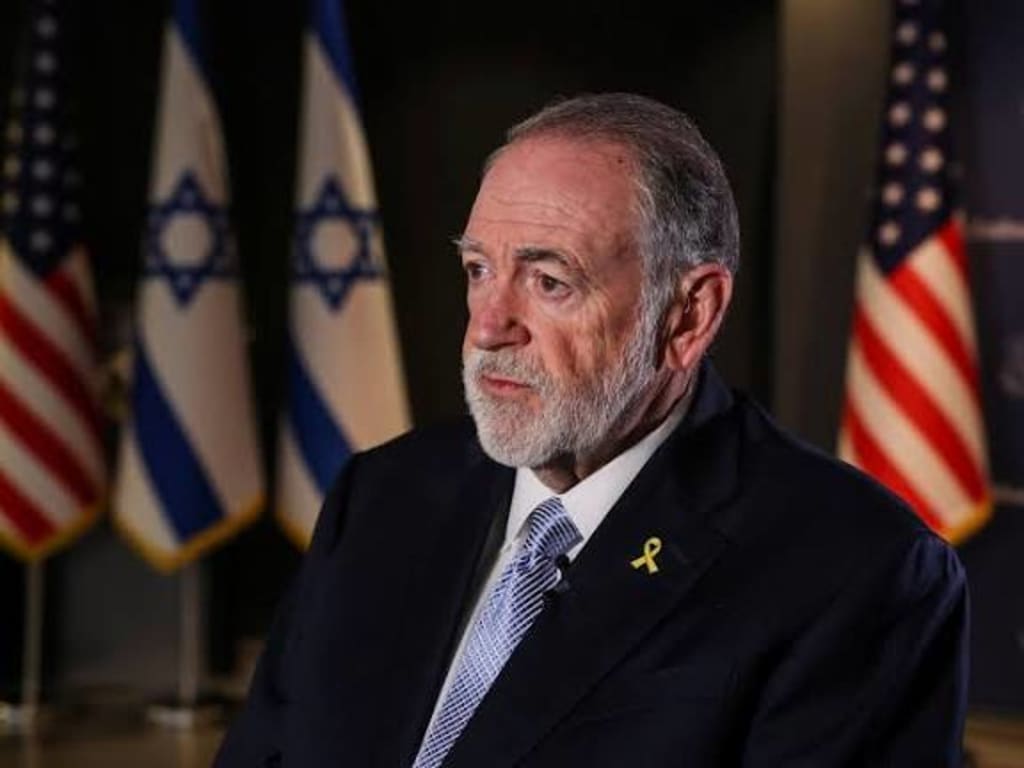
A senior U.S. government envoy has sparked controversy after suggesting that it would be “fine” if Israel were to expand its influence or territory across parts of the Middle East, comments that have drawn sharp reactions from diplomats, regional leaders, and human rights groups.
The remarks were made during a closed-door policy discussion with foreign correspondents and later confirmed by officials familiar with the exchange. While the envoy did not explicitly endorse military conquest, critics say the statement implies tolerance for territorial expansion that would violate international norms and destabilize an already volatile region.
Diplomatic Fallout
Regional governments quickly expressed concern over what they viewed as a departure from longstanding U.S. policy supporting negotiated solutions and respect for national sovereignty. A spokesperson for a Gulf state foreign ministry said the comments were “deeply troubling” and could encourage escalation rather than restraint.
Palestinian officials condemned the statement as evidence that Washington is abandoning its role as a neutral mediator. “Such language signals approval of occupation and undermines any prospects for peace,” one senior Palestinian representative said.
European diplomats privately warned that the comments could strain transatlantic unity at a time when coordinated diplomacy is needed to address conflicts in Gaza, Lebanon, and Syria.
U.S. Clarifications
Following the backlash, the U.S. State Department attempted to soften the impact of the remarks, issuing a statement emphasizing that U.S. policy continues to support a rules-based international order and opposes unilateral changes to borders.
“The United States remains committed to regional stability and to solutions achieved through diplomacy,” the statement said, adding that the envoy’s comments were taken out of context and did not reflect an official endorsement of territorial expansion.
Nevertheless, analysts note that the initial remark reflects growing divisions within Washington over how to manage Israel’s security posture and the broader Middle East crisis.
Strategic Context
The comments come amid heightened tensions across the region, with Israeli military operations expanding beyond Gaza and periodic strikes reported in Lebanon and Syria. Israeli officials have framed these actions as necessary to counter threats from militant groups backed by Iran.
Some security hawks in Washington argue that Israel’s military dominance could reshape the regional balance of power in favor of U.S. allies. Others warn that unchecked expansion would fuel radicalization and increase the likelihood of a wider regional war.
“This kind of rhetoric feeds the perception that force, not diplomacy, is becoming the preferred tool of policy,” said a Middle East analyst based in Washington. “That’s a dangerous signal in a region already on edge.”
Legal and Ethical Concerns
International law experts stress that any territorial expansion through military means would violate the UN Charter and long-standing principles of sovereignty. Human rights organizations have warned that such policies would likely worsen humanitarian conditions and displace civilians across multiple countries.
“These statements normalize the idea that borders can be changed by force,” said a spokesperson for a global rights group. “That sets a precedent with implications far beyond Israel and its neighbors.”
Domestic Political Impact
Within the United States, the envoy’s remarks have triggered debate in Congress. Several lawmakers called for clarification and reaffirmation of U.S. commitment to a two-state solution and regional diplomacy. Others defended the envoy, arguing that Israel must be allowed to secure its borders against hostile actors.
The divide reflects broader tensions in U.S. politics, where support for Israel remains strong but concerns over civilian casualties and regional escalation are growing.
Looking Ahead
While the administration has moved quickly to distance itself from the statement, its impact is likely to linger. Diplomatic observers say trust in U.S. mediation efforts could be weakened if regional partners believe Washington is shifting toward acceptance of territorial expansion.
As conflicts intensify across the Middle East, the episode underscores how a single comment can inflame sensitivities and complicate already fragile diplomatic efforts. Whether the controversy leads to policy recalibration or deeper rifts remains to be seen, but it highlights the precarious balance between military power and diplomacy in one of the world’s most unstable regions.
About the Creator
Fiaz Ahmed
I am Fiaz Ahmed. I am a passionate writer. I love covering trending topics and breaking news. With a sharp eye for what’s happening around the world, and crafts timely and engaging stories that keep readers informed and updated.
Keep reading
More stories from Fiaz Ahmed and writers in The Swamp and other communities.
Iran Prepares Nuclear Counterproposal as U.S. Considers Limited Military Strikes
Tensions between the United States and Iran over Tehran’s nuclear programme have intensified this week as Iranian officials prepare a draft nuclear counterproposal while Washington weighs the possibility of limited military strikes if diplomacy fails to yield a deal, according to multiple government and diplomatic sources. Iran’s Foreign Minister Abbas Araghchi said on Friday that Tehran expects to have a draft proposal ready for delivery to U.S. negotiators within the next two to three days, following indirect talks earlier this week in Geneva. Araghchi suggested that although significant disagreements remain, there is room for negotiation on measures to ensure Iran’s nuclear activities remain peaceful. “We have not offered any suspension [of enrichment] and the U.S. side has not asked for zero enrichment,” Araghchi said in a televised interview, adding that discussions are focused on safeguards and confidence-building measures. He said the two sides had agreed on some guiding principles but that a full agreement was not yet within reach. U.S. Pressure and Military Options Meanwhile, Donald Trump has publicly warned that the United States is considering limited military action to compel Tehran to accept terms on its nuclear programme, setting an informal deadline of roughly 10–15 days for a diplomatic breakthrough. Trump said on Friday that he is “considering” a limited strike to pressure Iran, framing it as a necessary step if talks falter. U.S. military planners have reportedly advanced options that include targeted strikes against specific military and leadership infrastructure, as well as contingencies that could involve broader measures if conflict escalates. Some officials even discussed the possibility of actions aimed at regime figures, though no formal order has been issued. The massive U.S. military presence already deployed in the Middle East — including aircraft carriers, fighters, and support assets — underscores the seriousness of Washington’s intent to use force if deemed necessary. Observers say the deployment is meant to signal resolve and deter miscalculation, but also complicates diplomatic channels. Diplomatic Efforts and Objections Despite the military rhetoric, both sides have emphasised a preference for diplomacy. Araghchi reiterated that Iran seeks a peaceful resolution and that it believes a deal is possible “in a very short period of time,” provided that negotiations focus on practical confidence-building and safeguards rather than maximalist demands. He rejected calls for Iran to permanently cease enrichment, especially without corresponding sanction relief, arguing that peaceful enrichment is a right recognized for many nations. Foreign diplomats and international organisations, including the United Nations, have expressed concern over the deteriorating rhetoric, urging both sides to keep diplomacy alive and avoid actions that could spiral into wider conflict. Some envoys have warned that military action would risk destabilising not only Iran but the broader region, affecting energy markets and global security cooperation. Regional and Global Implications Analysts say Iran’s move to prepare a formal counterproposal reflects a strategic calculation to avoid direct confrontation and safeguard its nuclear programme while winning sanction relief and international recognition of its rights to peaceful nuclear activities. Tehran’s insistence on maintaining enrichment, coupled with its resistance to zero-enrichment demands, remains a central sticking point in negotiations. In Washington, the suggestion of limited strikes has prompted debate in Congress, with some lawmakers calling for stronger congressional oversight over any military action, citing constitutional authority and fears of entanglement in another Middle Eastern conflict. Others stress the need to uphold U.S. security and prevent Iran from approaching nuclear weapons capability. What Comes Next Iran’s counterproposal, expected within days, could open the door to renewed talks if both sides are willing to compromise. However, with President Trump’s timeline and the spectre of military action looming, the next two weeks are likely to be decisive. Observers warn that continued friction could either push the parties back to the negotiating table with a clearer framework or escalate into direct conflict with far-reaching consequences for the region and beyond.
By Fiaz Ahmed 23 minutes ago in The Swamp
Why Black History Matters in America?
The United States of America is celebrating their 250th anniversary in 2026. I'm proud to be an American and as someone who was born here, I wouldn't imagine myself living anywhere else. This is a country where opportunities are possible. Where anyone can be successful in anything they desire to do. Equality, community, and togetherness are the backbones of what America is and should be about. However, we have an administration who wants to erase and disregard those who have made positive, meaningful impacts in our country, specifically Black figures, such as Martin Luther King, Jr., Rosa Parks, and Maya Angelou. President Trump and his administration have been constantly complaining and fighting against what they call the "Woke agenda". They use this excuse as a distraction from other issues they refuse to address, such as the high cost of living, climate change, and inflation. That equality is dividing America, when in reality, it's bringing us together. Being woke is not tied to a specific political party. No matter where you stand on the political spectrum, you can still care about other people and their plights. Compassion and empathy for others isn't tied to a political party, either. We were taught as children to treat others the way we want to be treated and not judge others because they're different from us. Caring about others isn't a personal attack on your beliefs. It doesn't make you any less of a person. People who are easily offended over African American figures, past or present, or anything related to it, are grasping at straws. Current and future generations need to know who people like Harriet Tubman and Shirley Chisholm were, especially in the classroom. Black History is part of American History. It should be recognized, not hidden or forgotten. Besides, you can't shield children from everything, just because your feelings are easily hurt.
By Mark Wesley Pritchard 19 days ago in The Swamp
Amid Destruction, Loss, Gaza Clings to Ramadan Traditions with Resilience
As the crescent moon signals the arrival of Ramadan, the streets of the Gaza Strip look very different from years past. Once vibrant neighborhoods decorated with glowing lanterns and bustling markets now stand scarred by rubble and silence. Homes have been reduced to debris, electricity is scarce, and the rhythm of daily life has been shattered by months of conflict and loss.
By Sajida Sikandar2 days ago in The Swamp
There's A Hole in My Bucket
It’s a well-known fact that Liza Dufresne was always the brains in the family. She was the one who always came up with the brilliant schemes the Dufresne kids carried out when they were younger. Like when they tricked Mrs. Claybourn into paying for a trip to Disney World. Liza convinced her that their parents had been kidnapped and were being held for ransom for the total price of three tickets. In reality, they were away on a weekend getaway for their anniversary. When they returned, Liza told the Claybourns that they did not like to talk about the ordeal. Their parents never found out how they got the money. Mrs. Claybourn never found out that the Dufresne parents were never really in any danger.
By David E. Perry2 days ago in Fiction



Comments
There are no comments for this story
Be the first to respond and start the conversation.