
Ukraine strikes a key industrial site deep inside Russia
A bold long-range attack signals Kyiv’s expanding reach, tests Moscow’s defenses, and raises new questions about escalation as the war’s battlefield stretches far beyond the front lines.
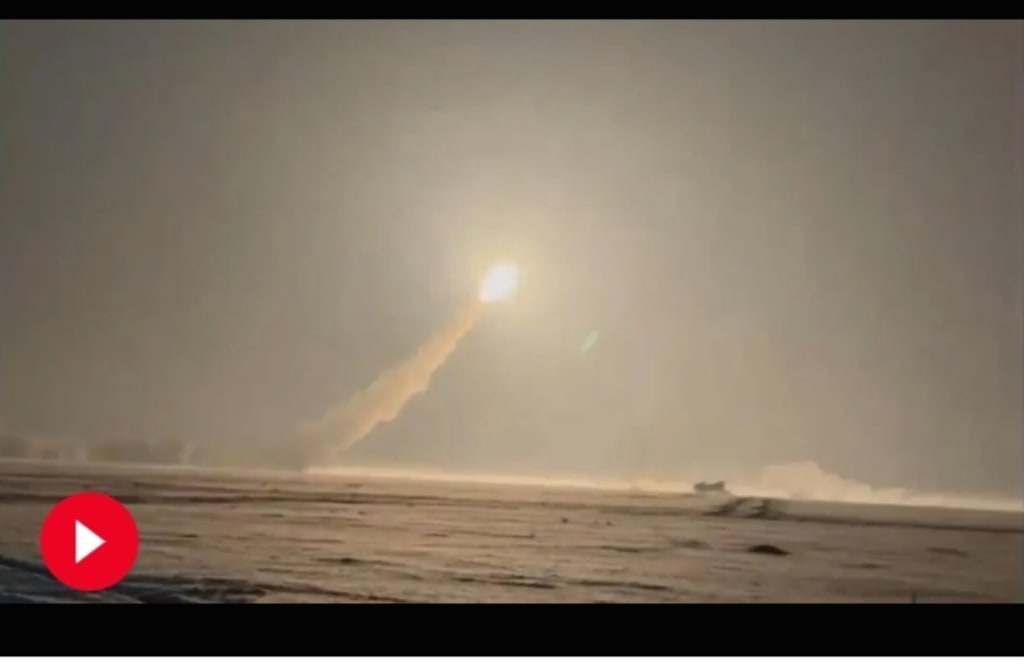
In a dramatic escalation that underscores the widening reach of modern warfare, Ukraine has struck a key industrial site deep inside Russia, signaling that the battlefield in Europe’s largest conflict since World War II is no longer confined to the front lines.
The attack, reportedly carried out using long-range drones or missiles, targeted infrastructure believed to be linked to Russia’s defense production and military supply chain. While details remain contested and independently verifying damage assessments is difficult in wartime, the symbolic and strategic implications are unmistakable: Kyiv is demonstrating its capacity to hit critical assets far beyond contested territories.
Expanding the Geographic Scope
Since Russia’s full-scale invasion in February 2022, much of the fighting has centered on eastern and southern Ukraine. However, as the war has evolved, both sides have increasingly targeted infrastructure beyond immediate combat zones. Energy grids, oil depots, rail hubs, and industrial complexes have become legitimate military objectives in a conflict defined by attrition and logistics.
For Ukraine, striking deep inside Russian territory serves multiple purposes. First, it disrupts supply chains that support Russia’s war effort. Factories producing ammunition, armored vehicles, or drone components are essential to sustaining prolonged operations. Even temporary shutdowns can slow replenishment cycles.
Second, such strikes force Russia to divert air defense systems away from the front lines to protect domestic assets. Every system repositioned to guard industrial facilities is one less deployed near active battlefields.
Third, the attacks carry psychological weight. They challenge the perception of invulnerability within Russia’s interior, introducing uncertainty for political leaders and the public alike.
A Shift in Tactical Innovation
Ukraine’s growing ability to conduct deep strikes reflects rapid innovation in drone and missile technology. Lacking the vast conventional arsenal of its adversary, Kyiv has relied heavily on asymmetric tactics—unmanned aerial systems, precision targeting, and decentralized intelligence networks.
Long-range drones, often domestically produced or modified, have extended operational reach hundreds of kilometers beyond the border. These systems are comparatively inexpensive yet capable of inflicting meaningful damage on high-value targets.
Military analysts note that modern industrial warfare is increasingly defined by dual-use infrastructure. Facilities producing civilian goods may also manufacture components adaptable for military use. Determining what constitutes a purely military target has become more complex, heightening the risk of broader economic disruption.
Moscow’s Response
Russian officials have condemned the strike as an escalation and vowed retaliation. Air defense systems in several regions have reportedly been activated in response to similar incidents, and authorities have increased security measures around sensitive installations.
The Kremlin has long framed the conflict as a defensive struggle against Western-backed aggression. Strikes on Russian soil reinforce that narrative domestically, potentially strengthening public support for continued mobilization. At the same time, repeated penetrations of airspace challenge the image of comprehensive territorial control.
Retaliatory actions could include intensified missile strikes on Ukrainian infrastructure or renewed targeting of energy systems as winter approaches. Previous waves of Russian attacks have sought to degrade Ukraine’s power grid, aiming to undermine civilian morale.
International Ramifications
The strike also reverberates beyond the immediate combatants. Western allies of Ukraine have supplied advanced weaponry but often with conditions limiting use against targets inside Russia. These constraints aim to prevent direct confrontation between NATO and Moscow.
When Ukraine conducts deep strikes, questions arise about the origin of the weapons used and whether they fall within agreed parameters. Kyiv has frequently emphasized its use of domestically developed systems for operations inside Russia, a distinction that helps maintain diplomatic balance.
Nonetheless, the broader concern among international observers is escalation management. Each new phase of the conflict tests red lines—some explicit, others implicit. So far, both sides have calibrated actions to avoid triggering direct involvement by external powers, but the margin for miscalculation narrows as the war drags on.
Strategic Calculus
From a strategic standpoint, targeting industrial capacity is consistent with the logic of total war. Industrial output determines a nation’s ability to sustain prolonged conflict. Damaging production lines, storage facilities, or transportation hubs can have cumulative effects over time.
However, such strikes rarely produce immediate, decisive outcomes. Industrial systems are resilient. Repairs can be rapid, production can shift geographically, and stockpiles may cushion short-term disruptions.
The key variable is frequency. If deep strikes become routine rather than exceptional, they could impose sustained costs and strain defensive resources. Conversely, isolated incidents may serve more as symbolic demonstrations than as turning points.
The Psychological Dimension
Beyond material damage, attacks on interior sites alter the psychological landscape of war. For Russian civilians living far from the front, explosions or air raid alerts introduce the conflict into daily life in new ways. This diffusion of insecurity can influence public opinion, though its direction is uncertain.
Some populations respond to external attacks with increased solidarity and support for leadership. Others grow wary of prolonged engagement. Information control and media framing play critical roles in shaping perceptions.
In Ukraine, successful deep strikes can bolster morale, reinforcing the narrative that resilience and innovation can offset disparities in size and resources.
The War’s Evolving Character
The strike highlights how the war has transformed from a rapid invasion attempt into a grinding, technologically adaptive struggle. Both sides continuously refine tactics, seeking advantages in electronic warfare, drone swarms, precision munitions, and intelligence integration.
Industrial targets, once considered relatively secure due to distance from the front, now sit within reach. This reality reflects broader changes in global warfare, where geographic depth offers less protection in the age of long-range unmanned systems.
For policymakers and military planners worldwide, the lessons are stark. Critical infrastructure—energy plants, manufacturing centers, logistics hubs—has become a frontline vulnerability even in regions far from active combat.
Uncertain Trajectory
Whether this latest strike signals a sustained campaign or a limited tactical operation remains unclear. What is evident is that the war’s geographic and strategic scope continues to expand.
As Ukraine pushes its operational reach deeper into Russia, the conflict edges further into uncharted territory. Each strike recalibrates expectations, tests thresholds, and reshapes the strategic equation.
In modern warfare, distance no longer guarantees safety. Industrial might, once shielded by vast territory, can be contested from afar. The implications extend beyond the immediate battlefield, offering a sobering glimpse into how conflicts may unfold in an era defined by technological reach and persistent escalation risks.
The world watches closely—not only to see who gains advantage on the ground, but to understand how far the boundaries of this war might ultimately stretch.
About the Creator
A Gathering of Evil Bosses
“I’m the queen of chin jutting while I smooth my hair, attacking, insulting, and deflecting to protect my appointer.” “Oh, please, Blondi, my hair is curled, highlighted, and longer than yours. I feature television commercials telling immigrants that we will give them a free plane ride home, and if they voluntarily turn themselves in, they will be allowed to legally apply for re-entry. It runs everywhere, and I look good in it! You can’t compete because of your blond hair. Mine is nicer, and my lips are prettier than yours.”
By Andrea Corwin 3 days ago in The Swamp
UK Inflation Rate Falls to 3% Helped by Cost of Petrol and Bread
The United Kingdom’s inflation rate has slowed to 3%, official figures released by the Office for National Statistics show, marking a notable decline from the 4.2% recorded six months ago. Economists and policymakers credit falling petrol prices and reduced bread costs as key drivers behind the easing of consumer price pressures. Key Drivers of the Decline Petrol prices have fallen sharply over the past quarter, reversing part of the surge seen during the previous year when global energy markets were volatile. According to ONS data, the average price of unleaded fuel dropped by nearly 12% compared to the same period last year, alleviating pressure on household budgets. Bread and other staple food items also contributed to the slowdown. Wheat prices have stabilized on international markets, and improved domestic supply chains have reduced production and retail costs. Analysts note that cheaper bread, while a small component of the overall Consumer Price Index (CPI), has symbolic importance for households feeling the impact of inflation. Implications for Households The fall in inflation provides some breathing room for UK households, many of whom have faced rising costs in recent years, particularly for energy, food, and housing. Consumer confidence surveys suggest that while families are cautiously optimistic, uncertainty remains about future price trends, particularly with potential fluctuations in energy markets and global supply chains. Emma Harris, a London resident, said, “It’s a relief to see some prices coming down, especially at the petrol station. But rent and utility bills are still high, so it doesn’t feel like a huge change yet.” Central Bank Perspective The Bank of England, which has closely monitored inflation as part of its monetary policy strategy, welcomed the decline but emphasized caution. In a statement, Governor Andrew Bailey noted that while easing inflationary pressures are encouraging, core inflation—excluding volatile items such as energy and food—remains elevated. “Falling petrol and bread prices are positive developments, but the underlying rate of inflation still warrants careful monitoring,” Bailey said. “Monetary policy decisions will continue to focus on maintaining price stability over the medium term.” Market Reactions Financial markets reacted positively to the news. The pound strengthened slightly against the dollar and euro following the release of the data, reflecting investor confidence that inflation pressures may be moderating. Analysts caution, however, that volatility in global commodity prices could affect the trajectory of UK inflation in the coming months. Retailers have welcomed the easing of costs, noting that consumer spending may pick up if households feel less pressure from essential items. Some supermarket chains reported stronger sales for basic food items, suggesting that price stability could help stimulate demand. Challenges Ahead Despite the decline, economists warn that inflationary risks are not fully behind the UK economy. Supply chain disruptions, global geopolitical tensions, and the lingering impact of Brexit-related trade adjustments could continue to create price volatility. Housing costs, a significant driver of household expenditure, remain high, with rents and property prices showing little sign of moderation. Furthermore, energy prices, while currently lower, remain susceptible to global market swings. Analysts emphasize that sustained inflation reduction will require a combination of stable energy costs, balanced fiscal policy, and continued productivity improvements across the economy. Outlook Most forecasts suggest that UK inflation may continue to moderate gradually over the next year if current trends in energy and food prices persist. Policymakers and economists stress the importance of monitoring wage growth, core inflation, and broader economic indicators to assess whether the recent decline is temporary or signals a more sustained trend. Conclusion The fall of the UK inflation rate to 3% offers a glimmer of relief for households, businesses, and policymakers, driven primarily by lower petrol and bread costs. While encouraging, officials caution that underlying pressures remain, and economic uncertainty persists. The coming months will be crucial in determining whether the easing of inflation translates into longer-term stability for the UK economy.
By Fiaz Ahmed 3 days ago in The Swamp



Comments
There are no comments for this story
Be the first to respond and start the conversation.