
USS Mason Commander Fired
Leadership, Accountability, and the Standards of Naval Command

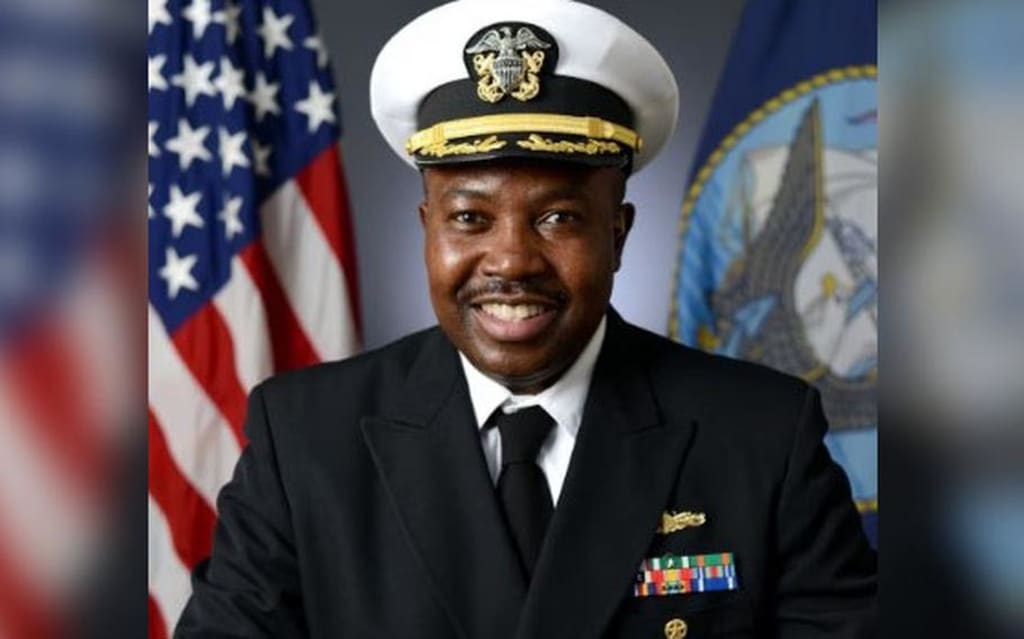
When news breaks that a Navy USS Mason commander has been fired, it quickly draws attention beyond military circles. Command at sea represents one of the most significant responsibilities in the United States Navy. A commanding officer is entrusted not only with a warship worth hundreds of millions of dollars, but also with the safety, morale, and readiness of hundreds of sailors. Removal from that position signals a serious breakdown in confidence.
While the public often sees only a headline—“USS Mason commander fired”—the broader context involves leadership standards, operational demands, and the Navy’s long-standing culture of accountability.
The Role of USS Mason
The USS Mason (DDG-87) is an Arleigh Burke-class guided-missile destroyer. Ships of this class are central to U.S. naval operations worldwide. They conduct missile defense, escort missions, maritime security, and strategic deterrence patrols. Operating in contested or high-traffic waters requires constant vigilance and disciplined leadership.
The commanding officer of a destroyer like USS Mason is responsible for every aspect of shipboard life. This includes navigation, combat readiness, training, maintenance, and crew welfare. The position is the culmination of decades of service, education, and operational experience.
What It Means When a Commander Is Fired
In the Navy, the term “fired” usually refers to a “relief of command.” This action occurs when senior leadership determines that they have lost confidence in a commanding officer’s ability to lead. Relief can result from various causes, including:
Loss of confidence in leadership ability
Failure to meet operational standards
Lapses in judgment or conduct
Administrative or procedural violations
Importantly, a relief of command does not always imply criminal behavior. In many cases, it reflects performance-related concerns or leadership shortcomings that do not meet Navy expectations.
The Navy holds commanding officers to exceptionally high standards. Even minor issues that might be manageable at lower ranks can carry greater consequences at the command level. The reasoning is straightforward: trust and credibility are essential in high-risk environments.
The Navy’s Culture of Accountability
The U.S. Navy operates under a strict chain of command. Accountability flows upward and downward. When something goes wrong aboard a vessel, the commanding officer ultimately bears responsibility.
This culture stems from centuries of naval tradition. At sea, where external support may be far away, clear authority and disciplined leadership are essential. The expectation is that commanders maintain professional conduct, ensure safe operations, and foster an environment of integrity.
When a commander is removed, it reinforces a message that leadership standards are non-negotiable. Senior Navy officials often emphasize that such decisions, while difficult, are made to preserve operational effectiveness and institutional trust.
Operational Pressures at Sea
Modern naval operations are demanding. Ships like USS Mason deploy for extended periods, sometimes operating in regions with heightened geopolitical tension. Crews face long hours, complex missions, and evolving security threats.
Commanders must manage both strategic objectives and the human dimension of leadership. Fatigue management, training schedules, morale, and discipline all fall within their responsibilities. The balance between mission execution and crew welfare is delicate.
High operational tempo can amplify leadership challenges. However, the Navy’s position remains consistent: demanding conditions do not excuse lapses in judgment or performance.
Impact on the Crew
When a USS Mason commander is fired, the immediate impact is felt most strongly aboard the ship. Sailors depend on stable leadership. A sudden change at the top can create uncertainty.
To mitigate disruption, the Navy typically appoints an interim commanding officer quickly. This ensures continuity of operations and reinforces the chain of command. Support structures, including executive officers and senior enlisted leaders, help maintain stability during transitions.
For the crew, professionalism remains the guiding principle. Training, drills, and mission requirements continue without pause.
Public Transparency and Limited Details
In many cases, official statements regarding a relief of command are brief. The Navy may cite “loss of confidence” without disclosing detailed circumstances. This approach balances transparency with privacy and operational security.
Investigations, if required, follow established procedures. Findings may lead to administrative action, reassignment, or additional review. Not every relief leads to public disciplinary proceedings.
For observers, the limited information can prompt speculation. However, it is important to recognize that the Navy’s internal processes are structured and methodical.
Broader Implications
Each time a Navy USS Mason commander is fired, it raises broader questions about leadership development and oversight. The Navy continuously evaluates its training pipelines, mentorship systems, and command screening processes.
Command at sea is highly competitive. Officers undergo rigorous evaluation before being selected. Yet even with careful screening, challenges can arise once in command.
The Navy’s response in such cases aims to protect readiness. Warships must remain capable of executing missions regardless of leadership changes.
The Human Dimension
Behind every headline is a human story. Commanding officers dedicate decades to earning their position. Relief of command represents a significant professional setback.
At the same time, the Navy prioritizes the collective over the individual. Ensuring that ships operate safely and effectively is paramount. Leadership is a privilege, not a guarantee.
Conclusion
The firing of a USS Mason commander reflects the Navy’s strict adherence to leadership standards. While headlines may focus on the immediate event, the deeper story centers on accountability, operational integrity, and institutional discipline.
Naval command carries immense responsibility. When senior leaders determine that standards have not been met, decisive action follows. Such decisions underscore a central principle of military service: trust is foundational, and maintaining it is essential to mission success.
In the demanding environment of modern naval operations, that principle remains as vital as ever.
About the Creator
Saboor Brohi
I am a Web Contant writter, and Guest Posting providing in different sites like techbullion.com, londondaily.news, and Aijourn.com. I have Personal Author Sites did you need any site feel free to contact me on whatsapp:
+923463986212
Keep reading
More stories from Saboor Brohi and writers in The Swamp and other communities.
Howard Lutnick
Howard Lutnick is a name closely associated with resilience in modern American business. Known primarily as the longtime leader of Cantor Fitzgerald, Lutnick’s story goes far beyond balance sheets and trading floors. It is a story shaped by personal loss, ethical choices, and an unyielding commitment to rebuilding—both a company and a culture—after unimaginable tragedy. Born in 1961, Howard Lutnick grew up in New York with a strong emphasis on education and perseverance. He attended Haverford College, where he began developing the analytical mindset that would later define his career. Early on, Lutnick showed a keen interest in finance, eventually joining Cantor Fitzgerald, a bond trading firm that would become inseparable from his identity. Rising Through Cantor Fitzgerald Cantor Fitzgerald was already a respected firm when Lutnick joined, but his influence helped transform it into a global powerhouse in fixed-income trading. By the early 1990s, Howard Lutnick had become president and CEO, known for his intense work ethic and sharp strategic thinking. Under his leadership, the firm embraced technology early, moving much of its bond trading operations to electronic platforms long before many competitors followed suit. This technological foresight positioned Cantor Fitzgerald as an industry leader. Lutnick’s management style was demanding, but it was also deeply loyal. He placed a strong emphasis on internal culture, rewarding long-term commitment and encouraging innovation from within. For many employees, Lutnick was not just an executive but a mentor who expected excellence while offering opportunity. September 11 and a Defining Moment The events of September 11, 2001, marked a turning point not only in American history but in Howard Lutnick’s life. Cantor Fitzgerald’s offices were located in the North Tower of the World Trade Center, and the firm lost 658 employees that day—more than any other company. Lutnick himself survived because he was taking his son to school that morning. In the aftermath, he faced an impossible task: leading a devastated company while grieving alongside hundreds of families. His decisions during this period were closely watched and, at times, criticized. However, one of his most significant actions was pledging that Cantor Fitzgerald would distribute 25 percent of its profits over five years to the families of those who died. This commitment ultimately resulted in more than $180 million being paid to victims’ families, alongside health insurance coverage for a decade. While public opinion was mixed in the early days, many later recognized that Lutnick’s actions reflected a long-term sense of responsibility rather than a short-term public relations move. Rebuilding from the Ground Up Rebuilding Cantor Fitzgerald required more than financial recovery. Howard Lutnick focused on restoring morale, trust, and purpose. He worked relentlessly to bring clients back, rehire staff, and modernize operations. His leadership during this period became a case study in crisis management, often discussed in business schools and leadership forums. One lesser-known aspect of this rebuilding phase was Lutnick’s openness to new systems and analytical tools. Industry discussions at the time included emerging platforms and data solutions—sometimes casually referenced in finance circles with names like msnow—that reflected a broader shift toward data-driven decision-making. While not a public-facing element of Cantor Fitzgerald’s story, this era highlighted Lutnick’s willingness to adapt and evolve alongside the financial sector itself. Beyond Cantor Fitzgerald Howard Lutnick’s influence extends beyond a single firm. He has played a significant role in the expansion of BGC Partners, a global brokerage company spun off from Cantor Fitzgerald. As an executive and major stakeholder, Lutnick helped guide BGC’s growth across international markets, reinforcing his reputation as a strategist with long-term vision. In addition to business, Lutnick has been active in philanthropy. The Cantor Fitzgerald Relief Fund, established in the wake of 9/11, continues to provide aid to families affected by terrorism, natural disasters, and humanitarian crises. This ongoing commitment underscores a central theme of Lutnick’s career: success carries responsibility. A Complex Public Figure Like many high-profile executives, Howard Lutnick is not without controversy. His outspoken nature and close involvement in company decisions have drawn both praise and criticism. Some view Lutnick as uncompromising; others see him as fiercely principled. What is difficult to dispute, however, is his consistency. Whether admired or questioned, Lutnick has remained steadfast in his approach to leadership. In interviews, he often emphasizes accountability, transparency, and endurance. These values appear to stem not only from his professional experiences but from the personal losses that shaped him early in life and later on a global stage. Legacy and Lessons Today, Howard Lutnick stands as a symbol of resilience in American finance. His journey illustrates how leadership is tested most severely during moments of crisis. Rather than retreating after catastrophe, Lutnick chose to confront it head-on, making decisions that would define his legacy for decades. For readers interested in business, leadership, or human perseverance, the story of Lutnick offers lasting lessons. Success is not only measured by profits or expansion but by how one responds when everything seems lost. In that sense, Howard Lutnick’s legacy is not just about rebuilding a company—it is about redefining what responsible leadership looks like in the modern world
By Saboor Brohi 5 days ago in The Swamp
Why Black History Matters in America?
The United States of America is celebrating their 250th anniversary in 2026. I'm proud to be an American and as someone who was born here, I wouldn't imagine myself living anywhere else. This is a country where opportunities are possible. Where anyone can be successful in anything they desire to do. Equality, community, and togetherness are the backbones of what America is and should be about. However, we have an administration who wants to erase and disregard those who have made positive, meaningful impacts in our country, specifically Black figures, such as Martin Luther King, Jr., Rosa Parks, and Maya Angelou. President Trump and his administration have been constantly complaining and fighting against what they call the "Woke agenda". They use this excuse as a distraction from other issues they refuse to address, such as the high cost of living, climate change, and inflation. That equality is dividing America, when in reality, it's bringing us together. Being woke is not tied to a specific political party. No matter where you stand on the political spectrum, you can still care about other people and their plights. Compassion and empathy for others isn't tied to a political party, either. We were taught as children to treat others the way we want to be treated and not judge others because they're different from us. Caring about others isn't a personal attack on your beliefs. It doesn't make you any less of a person. People who are easily offended over African American figures, past or present, or anything related to it, are grasping at straws. Current and future generations need to know who people like Harriet Tubman and Shirley Chisholm were, especially in the classroom. Black History is part of American History. It should be recognized, not hidden or forgotten. Besides, you can't shield children from everything, just because your feelings are easily hurt.
By Mark Wesley Pritchard 13 days ago in The Swamp




Comments
There are no comments for this story
Be the first to respond and start the conversation.