
Why DHS Suddenly Reversed Course on Suspending TSA PreCheck
Belong is the most suitable community on Vocal Media for publishing news-based, political, and world affairs articles, offering the highest visibility and reader engagement for serious content.

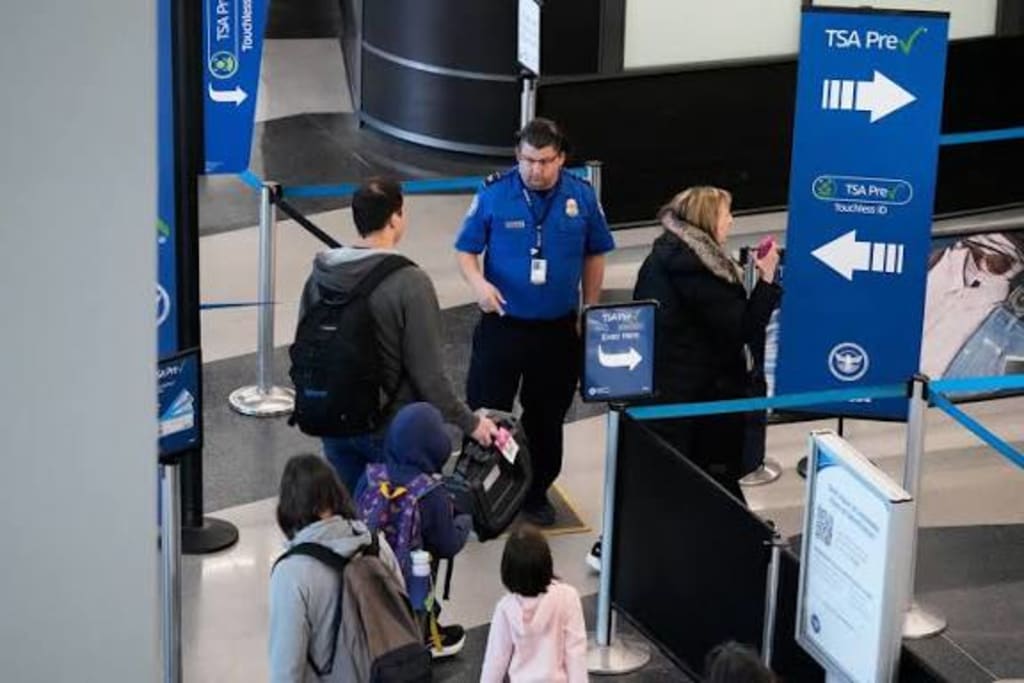
The abrupt reversal by the Department of Homeland Security (DHS) on suspending the popular TSA PreCheck program has raised questions about what changed behind the scenes. Just days after warning travelers that budget pressures could force the temporary shutdown of expedited airport screening, DHS announced that the program would remain operational after all. The episode highlights the political, economic, and public safety stakes tied to one of America’s most widely used travel initiatives.
TSA PreCheck allows vetted travelers to move through airport security with lighter screening requirements, avoiding long lines and removing fewer personal items. More than 20 million Americans are enrolled, making it a critical component of the nation’s aviation security system.
The Initial Announcement
The controversy began when DHS officials warned that unresolved funding disputes in Congress could disrupt non-essential security programs. TSA PreCheck and related trusted traveler services, including Global Entry, were listed as vulnerable if a prolonged budget standoff forced staffing cuts.
The warning triggered immediate concern among airlines, airports, and frequent travelers. With peak travel seasons approaching, suspending PreCheck would have pushed millions of passengers back into standard screening lanes, increasing congestion and wait times at major hubs.
Industry groups described the prospect as “unworkable.” Airlines warned that delays would ripple across flight schedules, while airport authorities cautioned that overcrowded checkpoints could create safety risks.
Public and Political Pressure
The backlash was swift. Lawmakers from both parties contacted DHS leadership, arguing that suspending PreCheck would punish travelers and undermine confidence in air travel security. Several members of Congress publicly urged DHS to reconsider, emphasizing that the program is funded largely through user fees rather than general tax revenue.
Behind the scenes, transportation committees reportedly pressed DHS to reclassify PreCheck as an essential security function rather than an optional service. The argument was simple: PreCheck does not weaken security—it enhances it by allowing officers to focus more attention on unknown or higher-risk passengers.
Public reaction also played a role. Social media filled with complaints from travelers who had paid enrollment fees and relied on the program for work and family travel. Business groups warned that disrupting PreCheck could hurt commerce and tourism.
Financial Reassessment
After further review, DHS acknowledged that the financial impact of continuing PreCheck was less severe than initially projected. Because the program is supported by application and renewal fees, it does not draw heavily from the agency’s operational budget. Suspending it would have created administrative complications, including refund requests and reprocessing of background checks once the program restarted.
A senior DHS official said maintaining PreCheck was “the most efficient option” under current conditions. “Shutting it down would cost more in the long run and create unnecessary disruption,” the official noted.
Operational and Security Concerns
Another factor in the reversal was security. Experts warned that removing PreCheck lanes would overload standard screening lines, forcing the Transportation Security Administration to stretch resources thinner. This could lead to longer wait times and potentially reduced screening effectiveness during busy travel periods.
Security analysts argued that PreCheck allows TSA officers to allocate manpower more strategically. By streamlining low-risk passengers, officers can focus attention on individuals who require more thorough screening.
“PreCheck is not a luxury,” said one aviation security consultant. “It’s a force multiplier. It makes the entire checkpoint system work better.”
What the Reversal Means for Travelers
For now, travelers can continue using PreCheck without interruption. DHS emphasized that the program remains fully operational and that enrollment and renewals will proceed as usual. However, officials cautioned that future funding disputes could still affect other services if Congress does not pass a long-term budget solution.
The episode has renewed calls for Congress to provide stable funding for aviation security programs. Lawmakers from both parties are now pushing for legislation that would shield trusted traveler programs from budget uncertainty.
A Lesson in Public Policy
The sudden reversal underscores how quickly policy can shift under political and public pressure. It also highlights the importance of programs that blend security with convenience in a modern travel system.
While DHS framed its initial warning as a contingency plan, the reaction revealed how deeply embedded PreCheck has become in American travel culture. What was once a pilot program is now viewed as essential infrastructure.
In the end, the decision to keep TSA PreCheck running reflects a balance of economics, security, and public expectation. For millions of travelers, the outcome is simple: shorter lines, fewer disruptions, and a reminder that even routine airport procedures can become political flashpoints in times of uncertainty.
About the Creator
Fiaz Ahmed
I am Fiaz Ahmed. I am a passionate writer. I love covering trending topics and breaking news. With a sharp eye for what’s happening around the world, and crafts timely and engaging stories that keep readers informed and updated.
Keep reading
More stories from Fiaz Ahmed and writers in The Swamp and other communities.
Kashmir, Spying, Demolitions: How Modi’s India Embraced the ‘Israel Model’
India’s security policies in India, particularly in the disputed region of Kashmir, have increasingly drawn comparisons with the approach used by Israel in the Palestinian territories. Analysts describe this shift as the adoption of an “Israel model” — a strategy that combines heavy surveillance, military dominance, and strict administrative controls to suppress dissent and reshape contested regions. Since Narendra Modi took office in 2014, India has significantly deepened defense and intelligence cooperation with Israel. Once distant partners, the two countries now share advanced surveillance technology, counterterrorism expertise, and military hardware. This relationship has influenced how New Delhi manages Kashmir, especially after the revocation of the region’s semi-autonomous status in 2019. Surveillance and Intelligence Expansion One of the most visible elements of the “Israel model” is the rapid expansion of digital surveillance. Kashmir has become one of the most heavily monitored regions in the world. Authorities have installed extensive networks of CCTV cameras, facial recognition systems, and drone patrols. Mobile phone data and internet activity are closely tracked, and communication blackouts have been imposed during periods of unrest. Israeli-made technologies, particularly advanced spyware and reconnaissance tools, have reportedly been incorporated into India’s security apparatus. Supporters argue these measures are necessary to combat militancy and prevent attacks. Critics, however, warn that such tools are increasingly used against journalists, political activists, and ordinary citizens, shrinking space for dissent and privacy. Human rights groups say this mirrors Israel’s methods in the West Bank and Gaza, where surveillance is used not only for security but also to exert constant pressure on the population. Demolitions and Collective Punishment Another controversial practice linked to this model is the demolition of homes belonging to suspected militants or protesters. In Kashmir, authorities have razed dozens of houses in recent years, claiming they were used to shelter insurgents. Officials describe demolitions as a deterrent strategy designed to discourage families from supporting militancy. This policy resembles Israel’s long-standing use of house demolitions as punishment for families of accused attackers. International legal experts argue that such actions amount to collective punishment, which is prohibited under international humanitarian law. Despite these criticisms, the tactic has gained political support within India as a visible demonstration of state power. Local residents in Kashmir describe demolitions as devastating, leaving entire families homeless without due legal process. Many see it as a tool to intimidate communities and reshape demographics through fear and displacement. Militarization of Daily Life The “Israel model” also involves the normalization of military presence in civilian spaces. Kashmir is already one of the most militarized regions on earth, with hundreds of thousands of troops stationed across towns and villages. Checkpoints, armored vehicles, and fortified bunkers have become part of everyday life. Schools, hospitals, and markets often operate under the watch of armed personnel. Curfews and movement restrictions are frequently imposed after attacks or protests. Supporters argue this level of control has reduced militant activity. Critics say it has deepened resentment and alienation among Kashmir’s Muslim majority population. The shift reflects a broader ideological change within India’s ruling establishment, which increasingly frames Kashmir not as a political dispute but as a security problem requiring permanent force. Political Messaging and Public Support Domestically, the comparison with Israel carries political weight. Israel is often portrayed by Indian nationalist media as a model of toughness and technological superiority in fighting terrorism. The Modi government’s close ties with Israel have been celebrated as proof of India’s rise as a strong global power willing to abandon past restraint. This narrative resonates with voters who support hardline policies and see Kashmir primarily through the lens of national security. The government’s actions are presented as restoring order and integrating the region fully into India. However, opposition parties and civil society groups warn that the approach risks eroding India’s democratic foundations. They argue that policies tested in an occupation context cannot be safely applied within a constitutional democracy without severe consequences for civil liberties. International Concerns International observers have increasingly voiced alarm at India’s direction. The United Nations and several human rights organizations have criticized internet shutdowns, detentions without trial, and restrictions on press freedom in Kashmir. Comparisons to Israeli practices have intensified these concerns, especially given the long-standing criticism of Israel’s policies in Palestinian territories. While India rejects the “Israel model” label, insisting its actions are internal security measures, the parallels are difficult to ignore. Both rely on surveillance, force, and administrative control rather than political reconciliation. A Risky Path Forward The embrace of this strategy marks a turning point in India’s governance of Kashmir. It may bring short-term stability, but experts warn it could fuel long-term instability by deepening grievances and mistrust. By adopting techniques associated with occupation and control, India risks redefining its democracy through the lens of permanent security. The Kashmir experiment, modeled increasingly on Israel’s methods, raises a profound question: can lasting peace be achieved through surveillance and demolitions, or does it require political dialogue and respect for rights? For now, the “Israel model” has become a defining feature of Modi’s India in Kashmir — one that continues to shape the region’s future and India’s global image.
By Fiaz Ahmed about 2 hours ago in The Swamp
A Gathering of Evil Bosses
“I’m the queen of chin jutting while I smooth my hair, attacking, insulting, and deflecting to protect my appointer.” “Oh, please, Blondi, my hair is curled, highlighted, and longer than yours. I feature television commercials telling immigrants that we will give them a free plane ride home, and if they voluntarily turn themselves in, they will be allowed to legally apply for re-entry. It runs everywhere, and I look good in it! You can’t compete because of your blond hair. Mine is nicer, and my lips are prettier than yours.”
By Andrea Corwin 6 days ago in The Swamp



Comments
There are no comments for this story
Be the first to respond and start the conversation.