
Xi Gains Leverage Before Trump Summit After Tariff Reversal
A shift in trade policy reshapes expectations ahead of high-level talks between Beijing and Washington.

Introduction
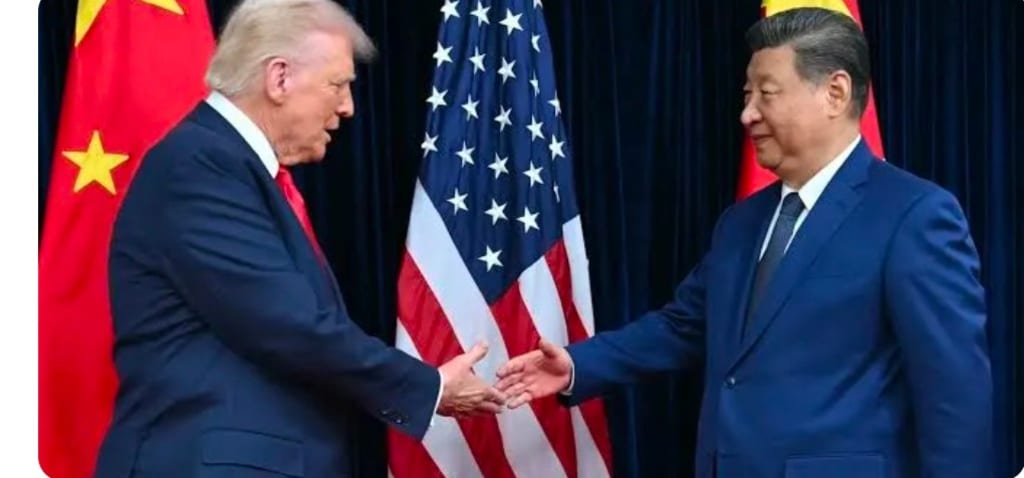
In the shifting landscape of global trade, timing can shape outcomes as much as policy itself. As preparations moved forward for a major summit between Chinese President Xi Jinping and former U.S. President Donald Trump, Beijing’s decision to reverse selected tariffs altered the balance of expectations. The move did not signal surrender or weakness. Instead, it reflected a calculated adjustment that positioned China with renewed leverage before negotiations resumed.
Trade tensions between the United States and China have defined much of the recent economic era. Tariffs introduced during the previous U.S. administration reshaped supply chains, increased costs for businesses, and strained diplomatic ties. With a summit on the horizon, the reversal of certain tariffs has shifted the narrative and raised questions about strategy, power, and intent.
The Background of the Trade Dispute
The trade conflict between Washington and Beijing began as a dispute over intellectual property, market access, and trade imbalances. Under the administration of Donald Trump, the United States imposed tariffs on hundreds of billions of dollars’ worth of Chinese goods. China responded with its own tariffs targeting American exports.
These measures were designed to pressure each side into concessions. The U.S. aimed to address long-standing concerns about technology transfers and manufacturing practices. China sought to defend its economic model and maintain domestic stability. While negotiations produced limited agreements, deeper structural issues remained unresolved.
Tariffs affected industries on both sides. American farmers, manufacturers, and retailers faced higher costs and uncertainty. Chinese exporters adjusted to reduced demand and restructured supply chains. Over time, global markets adapted, but the political and economic tension remained present.
China’s Tariff Reversal
In advance of the summit, China’s decision to roll back certain tariffs drew close attention. The reversal applied to a targeted list of goods rather than representing a broad shift in policy. Officials framed the change as a step toward reducing pressure on consumers and supporting economic recovery.
However, timing matters. By acting before high-level talks, Beijing signaled flexibility while retaining the ability to shape the agenda. The move placed the United States in a position where escalation would appear less constructive. In diplomatic terms, it created room for dialogue without conceding fundamental positions.
This strategy reflects a pattern often seen in Chinese statecraft: incremental shifts that open negotiation space while protecting long-term objectives. Rather than dramatic gestures, Beijing frequently relies on calibrated actions that influence perception and expectations.
Xi Jinping’s Position Before the Summit
For Xi Jinping, leverage extends beyond tariff lists. China’s domestic economic situation, global partnerships, and political structure all contribute to his negotiating position. Despite slower growth in recent years, China remains central to global manufacturing and trade networks.
By easing selected tariffs, Xi projects confidence. The message is that China can afford to adjust its policies without appearing reactive. This approach strengthens his hand by demonstrating control over economic tools.
At the same time, the reversal may ease pressure on Chinese businesses facing headwinds in exports and investment. By reducing costs on specific imports, Beijing can support sectors that rely on foreign inputs. This internal benefit reinforces the external diplomatic advantage.
Trump’s Approach to Negotiation
The negotiating style associated with Donald Trump often emphasizes public positioning and direct pressure. During his presidency, tariffs were used as leverage to prompt swift responses. Public statements, deadlines, and high-profile meetings were part of a strategy aimed at visible outcomes.
Facing a tariff reversal from China before a summit changes the dynamic. It narrows the scope for portraying Beijing as uncooperative. If China appears open to compromise, Washington must consider how to respond without escalating tensions unnecessarily.
This does not eliminate differences. Structural concerns over trade practices, market access, and technology remain central. But the optics shift when one side takes a step that can be framed as constructive.
Economic Implications
Tariff reversals affect more than diplomatic tone. They influence business confidence and investment planning. When uncertainty decreases, even slightly, markets respond.
Companies engaged in cross-border trade look for signals about future stability. A limited rollback suggests that both governments may prefer managed competition over open conflict. That expectation can shape decisions on sourcing, expansion, and hiring.
Global supply chains have already adjusted to earlier tariffs. Some production moved to Southeast Asia and other regions. However, China remains a major manufacturing hub. Reducing tariffs on selected goods may encourage partial re-engagement in sectors where costs had become prohibitive.
The broader economic environment also matters. Inflation, consumer demand, and currency movements all interact with trade policy. By reversing tariffs selectively, Beijing can ease cost pressures without surrendering bargaining power.
Diplomatic Signaling
Trade policy often doubles as diplomatic signaling. In this case, the tariff reversal communicates readiness for dialogue while maintaining core priorities.
For international observers, the move suggests that China seeks stability ahead of high-level talks. Other trading partners watch closely, as outcomes between Washington and Beijing influence global norms.
The summit itself represents more than a bilateral meeting. It carries implications for financial markets, security relationships, and multilateral institutions. When one side adjusts tariffs before discussions, it shapes expectations for the tone and substance of the meeting.
Domestic Considerations in China
Domestic factors play a role in any policy shift. Chinese leaders must balance economic performance with political stability. Tariffs can raise costs for domestic producers who depend on imported components. Adjusting them can relieve pressure on industries facing tighter margins.
By acting before negotiations, Xi Jinping also reinforces the narrative that China acts on its own timetable. The decision appears internally driven rather than externally compelled.
Public messaging within China emphasizes resilience and self-reliance. A limited tariff reversal can be framed as a pragmatic adjustment rather than a concession. That framing matters in maintaining confidence among businesses and citizens.
Domestic Considerations in the United States
On the American side, trade policy intersects with electoral politics and economic concerns. Tariffs have been defended as tools to protect domestic industries, but they also impose costs on importers and consumers.
A visible step from Beijing may prompt debate in Washington about whether reciprocal measures are appropriate. Policymakers must weigh the benefits of maintaining pressure against the potential advantages of easing tensions.
For leaders linked to the earlier trade strategy, including Donald Trump, the narrative centers on strength and results. Responding to China’s move requires careful framing to maintain credibility while exploring opportunities for progress.
Strategic Leverage Defined
Leverage in negotiations does not always come from escalation. Sometimes it comes from demonstrating flexibility. By reversing selected tariffs before a summit, China changes the baseline from which discussions begin.
Instead of negotiating from a position of mutual escalation, talks can start from partial de-escalation. This reduces immediate pressure while keeping key disagreements intact.
Leverage also includes economic interdependence. Despite tensions, the United States and China remain deeply connected through trade, finance, and investment. Neither side benefits from prolonged instability. Recognizing that reality shapes strategic choices.
Possible Outcomes of the Summit
Several outcomes remain possible. The summit could produce incremental agreements on specific sectors, such as agriculture or technology standards. It could also focus on restoring communication channels rather than delivering sweeping reforms.
If both sides view stability as beneficial, further tariff adjustments may follow. However, deep structural issues are unlikely to be resolved quickly. Intellectual property, market access, and security concerns require sustained negotiation.
The tariff reversal increases the likelihood of a constructive tone. It does not guarantee breakthroughs, but it lowers the risk of immediate confrontation.
Broader Global Impact
Global markets respond to signals from Washington and Beijing. Even limited shifts can influence currency movements, commodity prices, and investor sentiment.
Other countries that rely on trade with both powers prefer predictability. A calmer trade environment supports growth and reduces uncertainty. While competition between the two largest economies will continue, managed competition is less disruptive than open conflict.
By adjusting tariffs before a summit, China contributes to that perception of management rather than escalation. Whether the United States reciprocates will shape the next phase.
Conclusion
The decision by China to reverse selected tariffs ahead of a summit with Donald Trump reflects a calculated strategy. For Xi Jinping, the move creates diplomatic space while preserving core negotiating positions. It shifts the tone from confrontation toward cautious engagement.
Leverage in modern diplomacy often lies in shaping expectations. By acting first, Beijing influences the starting point of discussions. The upcoming summit will test whether that advantage translates into tangible progress.
Trade tensions between the United States and China remain complex and deeply rooted. Yet moments like this demonstrate how targeted policy adjustments can reset the conversation. In a relationship that affects the global economy, even incremental steps carry weight.
About the Creator
Saad
I’m Saad. I’m a passionate writer who loves exploring trending news topics, sharing insights, and keeping readers updated on what’s happening around the world.
A Gathering of Evil Bosses
“I’m the queen of chin jutting while I smooth my hair, attacking, insulting, and deflecting to protect my appointer.” “Oh, please, Blondi, my hair is curled, highlighted, and longer than yours. I feature television commercials telling immigrants that we will give them a free plane ride home, and if they voluntarily turn themselves in, they will be allowed to legally apply for re-entry. It runs everywhere, and I look good in it! You can’t compete because of your blond hair. Mine is nicer, and my lips are prettier than yours.”
By Andrea Corwin 4 days ago in The Swamp
Trump Says He Is Sending a Hospital Ship to Greenland — But Questions Swirl Over What It Means
U.S. President Donald Trump stunned international observers on 21 February 2026 by announcing that the United States is sending a “great hospital boat” to Greenland — a move that has raised eyebrows as well as diplomatic concerns. Trump made the announcement via a social media post on Truth Social, but provided few concrete details about why the vessel is needed, who requested it, or what it will do once it arrives. “Working with the fantastic Governor of Louisiana, Jeff Landry, we are going to send a great hospital boat to Greenland to take care of the many people who are sick, and not being taken care of there. It’s on the way!!!” Trump wrote, adding an image of the U.S. Navy hospital ship USNS Mercy — one of the two such vessels in the U.S. fleet — accompanied by a dramatic Arctic backdrop. Mid-day No Clear Medical Justification Despite the language of humanitarian aid, the announcement has left many scratching their heads. Greenland, with a population of around 57,000, provides universal healthcare to its residents as part of the Danish social system, and there has been no major public report of a health crisis that would require naval medical intervention. Officials in Washington, Nuuk, and Copenhagen have been slow to clarify the situation. Neither the White House nor Gov. Landry’s office has provided details about which vessel will be sent, when it will arrive, or what specific medical needs it is intended to address. The U.S. Navy’s two hospital ships — USNS Mercy and USNS Comfort — are both based in the United States and typically respond to humanitarian missions or military emergency deployments, but no formal deployment order has been confirmed. Diplomatic Context and Tensions The announcement occurs against a backdrop of heightened tension between the United States, Greenland, and Denmark. Trump has repeatedly signalled interest in exercising greater control over Greenland, including controversial suggestions in past years about purchasing or otherwise acquiring the resource-rich territory — proposals that were firmly rejected by both Danish and Greenlandic authorities. Earlier diplomatic efforts included talks between U.S., Danish, and Greenlandic officials aimed at reducing friction within NATO and clarifying the island’s strategic role. Last year, Denmark deployed personnel to Greenland under Operation Arctic Endurance, a NATO‑linked deterrence initiative responding to concerns about U.S. intentions. Adding to the complexity, just hours before Trump’s post, Denmark’s Joint Arctic Command conducted a medical evacuation of a U.S. submarine crew member near Nuuk, although Danish authorities have not suggested any connection between that incident and the hospital ship announcement. Reaction from Greenland and Denmark Public reaction in Greenland has been mixed. While some Greenlanders welcome any investment or attention that may bring resources or visibility to the island, others view the announcement skeptically. Critics argue that the move could be less about health care and more tied to longstanding geopolitical ambitions. Many Greenlanders insist that their home — rich in minerals and strategic Arctic positioning — remains firmly part of the Danish realm and not subject to U.S. acquisition. Danish officials have historically reiterated that Greenland is not for sale and that any cooperation with the United States must respect Danish sovereignty. Last week, King Frederik X of Denmark visited Greenland in what was widely seen as a signal of unity and resistance to external pressure. Strategic Messaging or Genuine Aid? Analysts suggest that Trump’s announcement may serve multiple purposes. On one hand, it uses the language of humanitarian support — highlighting care for “sick people” — to present a softer image around U.S. Arctic involvement. On the other, it underscores Trump’s broader strategic framing of the region as vital for U.S. national security, particularly in the context of competition with Russia and China. The lack of clear details, however, raises questions about the practical intent and feasibility of such a deployment. Without confirmation of a formal request from Greenlandic or Danish authorities, the mission could end up being more symbolic than substantive — another flashpoint in the ongoing debate over Arctic influence and sovereignty.
By Fiaz Ahmed about 13 hours ago in The Swamp




Comments
There are no comments for this story
Be the first to respond and start the conversation.