
Australia Goat Milk Market Size and Forecast 2025–2033
Rising Health Awareness, Infant Nutrition Demand, and Premium Dairy Trends Propel Australia’s Goat Milk Industry Forward

Australia Goat Milk Market Overview
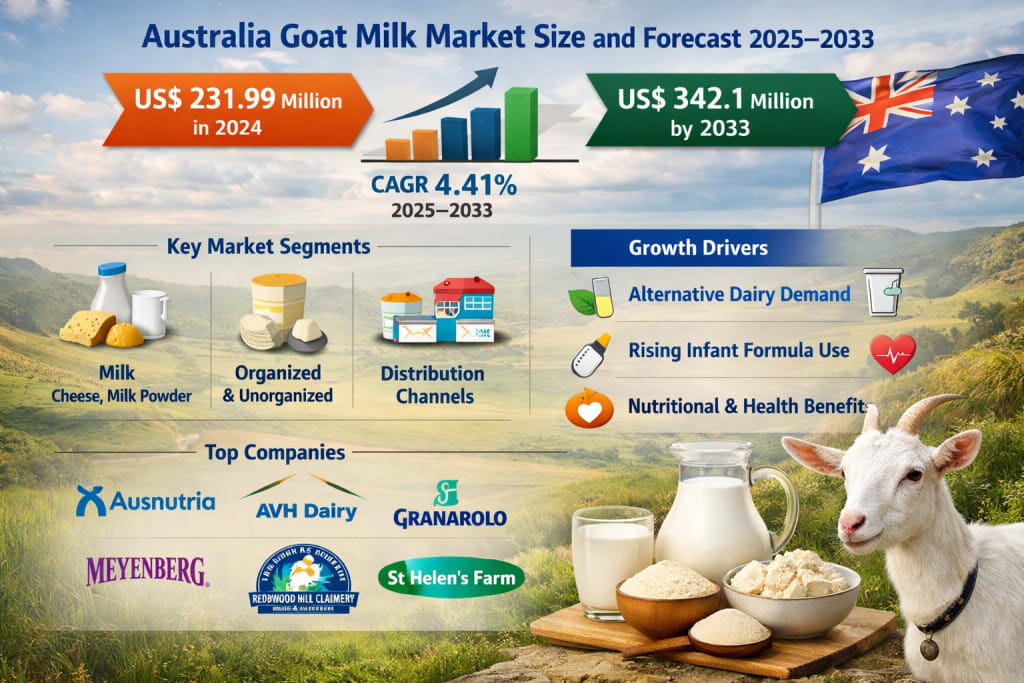
The Australia Goat Milk Market is gaining steady momentum as consumers increasingly shift toward healthier and more digestible dairy alternatives. According to Renub Research, the market is expected to reach US$ 342.1 million by 2033, up from US$ 231.99 million in 2024, growing at a CAGR of 4.41% from 2025 to 2033. This growth reflects a broader transformation in Australian dietary preferences, where functional nutrition, digestive health, and premium food choices are playing a more influential role in everyday consumption decisions.
Goat milk has long been valued for its rich nutritional profile. It contains essential vitamins and minerals such as calcium, iron, magnesium, and potassium, which support bone strength, cardiovascular health, and metabolic function. Compared to conventional cow milk, goat milk is often considered easier to digest due to its smaller fat globules and different protein structure. These qualities make it particularly attractive to individuals with mild lactose intolerance or sensitive digestive systems.
Beyond basic nutrition, goat milk is associated with several health benefits. Regular consumption is believed to help improve metabolism, support heart health, maintain healthy brain function, and encourage the growth of beneficial gut bacteria. In some traditional and nutritional contexts, goat milk is also linked with improved blood platelet counts during viral illnesses and is used as a supportive dietary option for conditions such as anemia, asthma, eczema, and certain digestive disorders. While clinical interpretations vary, the perception of goat milk as a “functional” and “gentle” dairy option continues to strengthen its appeal among health-conscious consumers.
The Australian market today offers a wide range of goat milk-based products, including fresh and pasteurized milk, cheese, yogurt, milk powder, and infant formula. In addition, goat milk has found growing application in the personal care and cosmetics industry, where it is used in soaps, creams, and lotions due to its moisturizing and skin-friendly properties. This diversification of end-use applications is helping the industry broaden its consumer base and reduce dependence on a single product category.
Another key factor supporting market expansion is the rising prevalence of lifestyle-related health conditions such as obesity, diabetes, hypertension, and cardiovascular diseases. As more Australians become mindful of their dietary choices, interest in nutrient-dense and easily digestible foods continues to rise. The country’s aging population, which is more susceptible to bone and joint-related issues, is also contributing to sustained demand for calcium-rich dairy alternatives like goat milk.
Furthermore, government support for dairy innovation, improvements in farming practices, and better availability of goat milk products through specialty health stores, supermarkets, pharmacies, and online platforms are enhancing market accessibility. Together, these factors are shaping a favorable environment for long-term growth in Australia’s goat milk industry.
Key Factors Driving the Australia Goat Milk Market Growth
Growing Popularity of Alternative Dairy
One of the strongest drivers behind the expansion of the Australia goat milk market is the rising popularity of alternative dairy products. While plant-based milks such as almond, soy, oat, and coconut have gained significant traction, a notable segment of consumers is seeking animal-based alternatives that still offer complete proteins and naturally occurring nutrients. Goat milk fits neatly into this space.
Unlike many plant-based beverages, goat milk is a natural source of high-quality protein, calcium, and essential fatty acids, making it appealing to consumers who want to move away from conventional cow milk without sacrificing nutritional density. Its higher digestibility profile and lower allergenic potential compared to cow milk further strengthen its position among people with sensitive digestion or mild dairy intolerance.
This shift is especially visible among flexitarians—consumers who are reducing, but not eliminating, animal-based products from their diets. For this group, goat milk is increasingly viewed as a premium, wholesome, and ethically appealing dairy option. As Australian consumers continue to explore diverse dietary patterns, goat milk is benefiting from its image as a natural, minimally processed, and functional food.
Rising Awareness of Nutritional Benefits
Nutritional awareness is another powerful engine of growth for the goat milk market in Australia. Goat milk contains higher levels of certain minerals, including calcium, magnesium, and potassium, which play a crucial role in maintaining bone density, muscle function, and overall metabolic health. It also contains medium-chain fatty acids, which are easier for the body to digest and convert into energy compared to the long-chain fats commonly found in cow milk.
A key advantage of goat milk lies in its protein structure. The proteins in goat milk tend to form softer curds in the stomach, making digestion easier and reducing the likelihood of discomfort for sensitive consumers. This characteristic has helped position goat milk as a suitable option for people who experience bloating or digestive issues with traditional dairy products.
As nutritionists, health practitioners, and wellness-focused media increasingly highlight these benefits, more Australians are incorporating goat milk into their regular diets. This growing awareness is not only boosting demand for plain goat milk but also supporting the expansion of value-added products such as fortified milk, flavored variants, and specialized nutrition formulations.
Growing Interest in Infant Formula
One of the most dynamic segments within the Australian goat milk market is infant formula. Demand for goat milk-based infant formula is rising steadily as parents become more selective and informed about early-life nutrition. Goat milk formula is often perceived as a gentler alternative to cow milk-based formulas, particularly for infants who show signs of sensitivity or mild intolerance.
The nutritional composition of goat milk supports healthy growth and development, and its proteins are known to be easier for infants to digest. Additionally, the oligosaccharide profile of goat milk is considered closer to that of human milk compared to cow milk, which can contribute to better gut health and immune support in early childhood.
As consumer confidence in goat milk infant formulas continues to grow—supported by regulatory approvals, clinical studies, and pediatric recommendations—this segment is emerging as a key growth pillar for the overall market. Premiumization trends in baby nutrition are further reinforcing this shift, with parents willing to invest in high-quality, specialized products for their children.
Challenges in the Australia Goat Milk Market
Strong Competition from Cow Milk and Plant-Based Alternatives
Despite its advantages, the goat milk industry in Australia faces intense competition from both traditional cow milk and a rapidly expanding range of plant-based beverages. Cow milk remains deeply entrenched in Australian consumption habits, supported by well-established supply chains, strong brand recognition, and generally lower prices.
At the same time, plant-based milks such as almond, soy, oat, and coconut have captured significant market share, particularly among younger consumers, vegans, and environmentally conscious buyers. These products benefit from aggressive marketing, wide retail presence, and strong positioning around sustainability and animal welfare.
In comparison, goat milk often carries a higher price point, reflecting smaller-scale production and higher farming costs. This can limit its appeal among price-sensitive consumers and make it more challenging to achieve mass-market penetration. While goat milk is gaining recognition as a premium and functional dairy option, expanding its shelf presence and improving brand visibility remain ongoing challenges for producers.
Environmental and Climate Challenges
Australia’s unpredictable climate presents another major hurdle for the goat milk industry. Droughts, heatwaves, and irregular rainfall patterns can significantly affect feed availability, water resources, and overall herd health. These environmental pressures directly influence milk yield, quality, and production costs.
Farmers often need to invest more in supplementary feed, water management systems, and veterinary care to maintain stable production levels during adverse conditions. Climate variability can also disrupt breeding cycles and reduce herd sizes, leading to supply fluctuations and price volatility in the market.
Addressing these challenges requires long-term investment in sustainable farming practices, climate-resilient infrastructure, and efficient resource management. While these measures can strengthen the industry’s resilience, they also add to operational costs, making it essential for producers to balance sustainability with profitability.
Market Segmentation
By Product
Milk
Cheese
Milk Powder
Others
By Sector
Unorganized
Organized
By Distribution Channel
Hypermarket and Supermarket
Convenience Store
Specialty Stores
Medical and Pharmacy Store
Online
The diversity of product offerings and distribution channels highlights the market’s evolution from a niche category into a more mainstream and multi-channel dairy segment. Organized players, in particular, are playing a crucial role in improving product quality, consistency, branding, and consumer trust.
Competitive Landscape and Company Analysis
The Australia goat milk market features a mix of international and specialized dairy players, all contributing to product innovation, supply chain development, and global market integration. Key companies covered in the market include:
Ausnutria Dairy Corporation Ltd.
AVH Dairy Trade B.V.
Goat Partners International
Granarolo S.p.A.
Meyenberg
Redwood Hill Farm & Creamery
St Helen's Farm
These companies are actively involved in product development, capacity expansion, strategic partnerships, and international trade to strengthen their market positions. Many are focusing on premium and value-added segments such as infant formula, specialty cheeses, and fortified dairy products, where margins are higher and brand differentiation is more achievable.
Recent developments across the industry indicate a growing emphasis on quality assurance, traceability, and sustainability, reflecting changing consumer expectations and regulatory requirements. Revenue analysis and strategic initiatives suggest that competition will continue to intensify, particularly in high-growth segments like infant nutrition and specialty health foods.
Final Thoughts
The Australia Goat Milk Market is on a steady and promising growth path, driven by rising health awareness, increasing demand for alternative dairy, and strong interest in goat milk-based infant nutrition. With the market projected by Renub Research to grow from US$ 231.99 million in 2024 to US$ 342.1 million by 2033, at a CAGR of 4.41%, the industry is clearly moving beyond its niche status toward broader mainstream acceptance.
While challenges such as competition from cow milk and plant-based alternatives, along with environmental pressures, remain significant, the long-term outlook is positive. Continued innovation, improved distribution, and stronger consumer education around nutritional benefits are expected to further strengthen the market’s position.
As Australian consumers increasingly prioritize digestibility, functionality, and premium nutrition, goat milk and its related products are well placed to capture a growing share of the country’s evolving dairy landscape.
About the Creator
Sakshi Sharma
Content Writer with 7+ years of experience crafting SEO-driven blogs, web copy & research reports. Skilled in creating engaging, audience-focused content across diverse industries.
Keep reading
More stories from Sakshi Sharma and writers in Trader and other communities.
Saudi Arabia Home Energy Management System Market Size and Forecast 2025–2033
Introduction: A Smarter Way to Power Saudi Homes Saudi Arabia is undergoing a profound transformation in how energy is produced, consumed, and managed. As part of the Kingdom’s ambitious Vision 2030 agenda, sustainability, digital transformation, and energy efficiency have moved to the center of national policy and private investment. One of the most visible results of this shift is the rapid rise of the Home Energy Management System (HEMS) market.
By Sakshi Sharmaabout 21 hours ago in Trader
Philippines Co-Working Office Space Market 2026: Hybrid Work Momentum, Startup Growth and Flexible Workplace Innovation
Philippines Co-Working Office Space Market Overview The market is rapidly gaining traction as businesses, freelancers and distributed teams increasingly prioritise flexibility and cost efficiency in workplace decisions. Co-working environments offer scalable office solutions, shared infrastructure and collaborative ecosystems that appeal to startups, SMEs and multinational organisations alike. As traditional long-term leases become less attractive in a hybrid work era, co-working spaces are emerging as a strategic component of workplace transformation across major Philippine business hubs.
By Manisha Dixit2 days ago in Trader




Comments
There are no comments for this story
Be the first to respond and start the conversation.