
Austria Coffee Market Size and Forecast (2025–2033)
Premiumization, Café Culture, and Convenience Trends Reshape Austria’s Coffee Industry

Introduction: A Market Rooted in Culture, Moving with Modern Tastes
Coffee in Austria is far more than a daily beverage—it is a cultural institution. From Vienna’s historic coffeehouses to modern specialty cafés in regional cities, coffee has long played a central role in Austrian social life. This deep-rooted tradition continues to shape consumption habits today, but the market is also evolving rapidly under the influence of premiumization, health awareness, and convenience-driven lifestyles.
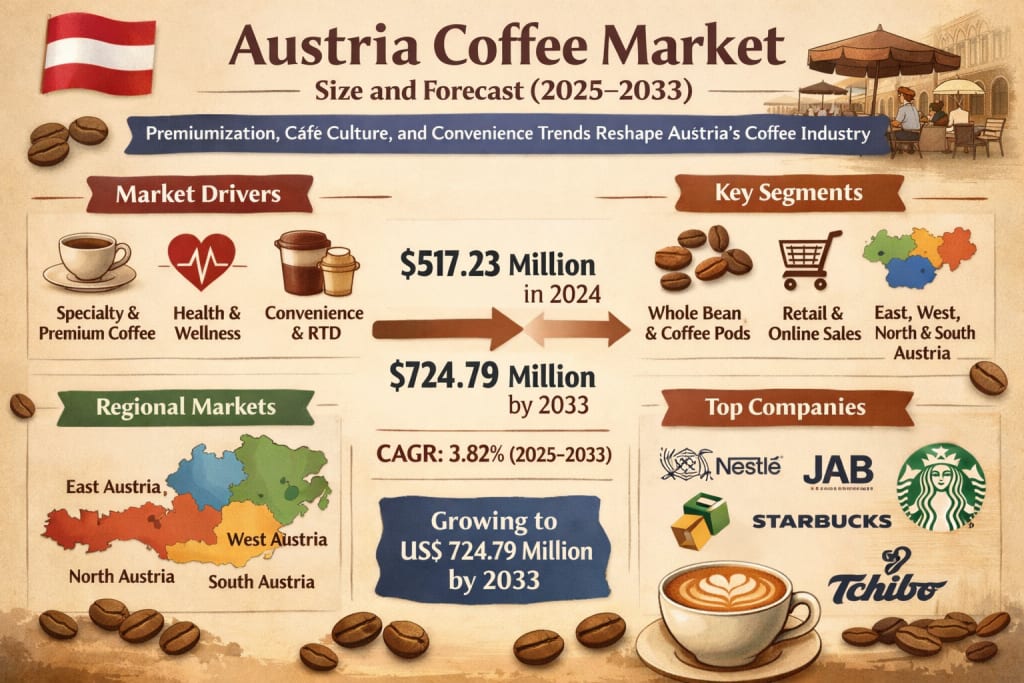
According to Renub Research, the Austria Coffee Market is expected to grow from US$ 517.23 million in 2024 to US$ 724.79 million by 2033, registering a compound annual growth rate (CAGR) of 3.82% from 2025 to 2033. This steady expansion reflects a mature yet dynamic market where tradition coexists with innovation. The rise of specialty coffee, the popularity of single-serve pods and ready-to-drink formats, and growing interest in ethical and sustainable products are reshaping how Austrians consume coffee at home and outside.
While classic beverages like the Melange and espresso-based drinks remain staples, consumers are increasingly open to experimenting with new brewing methods, origins, and flavor profiles. At the same time, supermarkets, online platforms, and convenience stores are playing a bigger role in shaping purchasing behavior, making coffee more accessible in a wide range of formats.
Overview of the Coffee Market in Austria
Austria’s coffee market is strongly influenced by its world-famous café culture, particularly in Vienna, where coffeehouses have been recognized by UNESCO as an intangible cultural heritage. Traditionally, cafés have served as social hubs—places for conversation, reading, business meetings, and leisure. This cultural backdrop continues to support stable demand for coffee across the country.
However, the modern Austrian coffee consumer is no longer limited to traditional preferences. In recent years, the market has seen a noticeable shift toward specialty and premium coffee, with growing interest in single-origin beans, artisanal roasting, and alternative brewing methods such as pour-over, cold brew, and French press. Third-wave coffee shops and local roasters are gaining visibility, especially in urban centers, where consumers are more willing to pay for quality, traceability, and unique taste experiences.
Sustainability and ethical sourcing are also becoming increasingly important. Many consumers now look for organic, fair-trade, and responsibly sourced coffee, and brands are responding by highlighting transparency in their supply chains and adopting more eco-friendly packaging. Alongside this, the rise of plant-based milk alternatives—such as oat, almond, and soy—has changed how coffee is prepared and consumed, particularly in cafés.
Convenience is another major force shaping the market. Busy lifestyles have driven demand for coffee pods, capsules, and ready-to-drink (RTD) beverages, allowing consumers to enjoy café-style coffee at home or on the go. These trends, combined with Austria’s strong coffee heritage, are expected to support consistent market growth throughout the forecast period.
Growth Drivers for the Austria Coffee Market
Premiumization and Specialty Coffee
One of the most powerful drivers of growth in the Austrian coffee market is the ongoing trend toward premiumization. Consumers are increasingly seeking high-quality, artisanal, and experience-driven coffee products rather than viewing coffee as a simple commodity. This has fueled demand for specialty beans, small-batch roasting, and innovative brewing techniques.
Independent roasters and third-wave cafés are thriving by offering carefully curated selections that emphasize origin, flavor complexity, and craftsmanship. For many consumers, coffee has become a lifestyle product—something to explore, compare, and enjoy with the same attention given to wine or craft beer. This shift is encouraging both local players and international brands to upgrade their portfolios and invest in higher-quality offerings.
At the same time, ethical considerations are becoming part of the premium experience. Fair-trade certifications, direct trade relationships, and sustainability claims are increasingly influencing purchasing decisions, especially among younger and more informed consumers. This combination of quality, transparency, and storytelling is helping premium coffee maintain strong momentum in Austria.
Health and Wellness Trends
Health and wellness are playing a growing role in shaping consumer choices in the Austrian coffee market. As awareness of nutrition and lifestyle-related health issues increases, many consumers are looking for cleaner, more natural, and lower-sugar options.
This has led to rising demand for organic coffee, additive-free products, and low-sugar or sugar-free beverages. Plant-based milk alternatives have also become mainstream, driven by dietary preferences, lactose intolerance, and environmental concerns. Oat, almond, and soy milk are now common in cafés and retail coffee products alike.
Additionally, some consumers are turning to low-caffeine or decaffeinated options, especially those who want to enjoy coffee without the stronger stimulant effects. Brands and cafés are responding by expanding their menus to include a wider range of wellness-oriented choices, helping coffee remain relevant to health-conscious consumers without compromising on taste or experience.
Convenience and Innovation
Modern lifestyles are increasingly time-pressed, and this is where convenience has become a major growth engine for the Austrian coffee market. Single-serve pods and capsules have gained strong traction because they offer consistent quality, ease of use, and minimal preparation time, making them ideal for home and office consumption.
At the same time, ready-to-drink (RTD) coffee beverages are becoming more popular, especially among younger consumers who value portability and quick access to caffeine. These products often feature specialty blends, flavored variants, or functional positioning, combining convenience with a sense of premium appeal.
Technological improvements in coffee machines, packaging, and preservation methods are further enhancing the consumer experience. Together, these innovations are expanding the ways people consume coffee and supporting steady market growth across different consumption occasions.
Challenges in the Austria Coffee Market
Changing Consumer Preferences
While evolving tastes create opportunities, they also present challenges for businesses operating in Austria’s coffee market. Consumers today expect variety, novelty, and customization, whether that means new flavors, brewing styles, or health-oriented options. Younger consumers, in particular, are drawn to trends such as cold brew, nitro coffee, and globally inspired specialty drinks.
For cafés and brands, the challenge lies in balancing innovation with tradition. Austria’s classic coffee culture remains deeply valued, and many customers still expect familiar beverages and the traditional coffeehouse experience. Constantly updating menus and product lines without alienating loyal, traditional customers requires careful strategy, market insight, and creative product development.
Labor and Operational Costs
Rising labor and operational costs are another significant challenge, especially for traditional cafés that emphasize service quality and atmosphere. Wages, rent, energy costs, and raw material prices have all been putting pressure on profit margins.
Smaller, independent cafés often find it harder to absorb these costs compared to large chains that can benefit from economies of scale. Since many Austrian coffeehouses rely heavily on personalized service and ambiance, cutting costs without damaging the customer experience is difficult. As a result, businesses must focus on operational efficiency, smart pricing strategies, and value-added offerings to remain competitive in an increasingly cost-sensitive environment.
Regional Insights
East Austria Coffee Market
Eastern Austria, led by Vienna, represents the cultural heart of the country’s coffee tradition. The region continues to show strong demand for classic coffeehouse experiences, but it is also at the forefront of modernization and innovation in the coffee sector.
Specialty cafés, micro-roasters, and concept coffee shops are becoming more common, reflecting a growing interest in premium beans and alternative brewing methods. At the same time, convenience-driven products such as pods, capsules, and RTD beverages are gaining popularity among busy urban consumers.
The coexistence of historic cafés, international chains, and modern startups makes Eastern Austria a highly competitive and diverse market. This diversity offers both opportunities and challenges for companies looking to cater to a wide spectrum of consumer preferences.
West Austria Coffee Market
Western Austria, including cities such as Salzburg and Innsbruck, combines strong tourism influence with a deep-rooted café culture. Traditional coffeehouses continue to play an important social and cultural role, often serving both locals and visitors.
In recent years, however, the region has also seen rising interest in specialty and locally roasted coffee. Third-wave cafés and family-run roasteries are gaining recognition for their focus on quality, freshness, and unique flavor profiles. This shift is encouraging established cafés to innovate while preserving their traditional charm.
For businesses, Western Austria represents a market where heritage and experimentation coexist, requiring flexible strategies that respect tradition while embracing new trends.
Austria Coffee Market Segmentation
By Product Type:
Whole Bean
Ground Coffee
Instant Coffee
Coffee Pods and Capsules
By Distribution Channel:
Supermarkets/Hypermarkets
Convenience/Grocery Stores
Online Retail
Other Distribution Channels
By Region:
East Austria
West Austria
North Austria
South Austria
Competitive Landscape and Key Companies
The Austrian coffee market features a mix of global giants and established regional players, creating a competitive environment focused on branding, innovation, and distribution reach. Key companies covered in the market analysis include:
Nestlé S.A.
JAB Holding Company
The Kraft Heinz Company
J.J. Darboven GmbH & Co. KG
Strauss Group Ltd
Melitta Group
Starbucks Corporation
Krüger GmbH & Co. KG
Luigi Lavazza SpA
Maxingvest AG (Tchibo)
These companies compete across multiple segments, from instant coffee and capsules to premium whole-bean and specialty offerings. Strategies such as product innovation, sustainability initiatives, brand partnerships, and expansion of retail and online presence are shaping the competitive dynamics of the market.
Final Thoughts: A Market Blending Heritage with Modern Lifestyles
Austria’s coffee market stands at an interesting crossroads, where centuries-old café traditions meet modern consumer expectations. With the market projected to grow from US$ 517.23 million in 2024 to US$ 724.79 million by 2033, the industry is set for steady and sustainable expansion over the coming years.
Premiumization, health-conscious choices, and convenience-driven formats are redefining how Austrians enjoy their coffee, while sustainability and ethical sourcing are becoming increasingly important purchasing criteria. At the same time, challenges such as rising costs and rapidly changing consumer preferences will require businesses to stay agile and innovative.
Overall, the Austrian coffee industry remains resilient, culturally rich, and forward-looking—well-positioned to continue evolving while staying true to the traditions that made it famous around the world.
About the Creator
Ethereum (ETH-USD) Outlook: $2,000 Support, $2,700 Resistance in Focus
Ethereum (ETH-USD), the second-largest cryptocurrency by market capitalization, is once again at a critical technical and psychological crossroads. As market volatility remains elevated across digital assets, Ethereum is currently trading within a defined range, with $2,000 acting as a key support level and $2,700 emerging as a major resistance zone. Investors and traders are closely monitoring these levels to assess Ethereum’s next directional move.
By Hammad Nawaz7 days ago in Trader
Buyers seek relief from high home loan rates, causing an increase in the popularity of assumeable mortgages.
In a tight housing market, many potential homebuyers are having trouble finding options that are affordable because mortgage rates are expected to remain high through the beginning of 2026. As a result, some homebuyers and sellers are returning to an older method of financing known as the assumable mortgage. This strategy lets a buyer take over an existing loan at the original interest rate rather than securing a new mortgage at today's higher rates.
By Raviha Imran2 days ago in Trader




Comments
There are no comments for this story
Be the first to respond and start the conversation.