
Beta Glucan Market Size and Forecast 2026–2034
How immune health, functional foods, and pharma innovation are pushing a natural fiber into the global spotlight

Global Beta Glucan Market Outlook: A Fiber with a Big Future
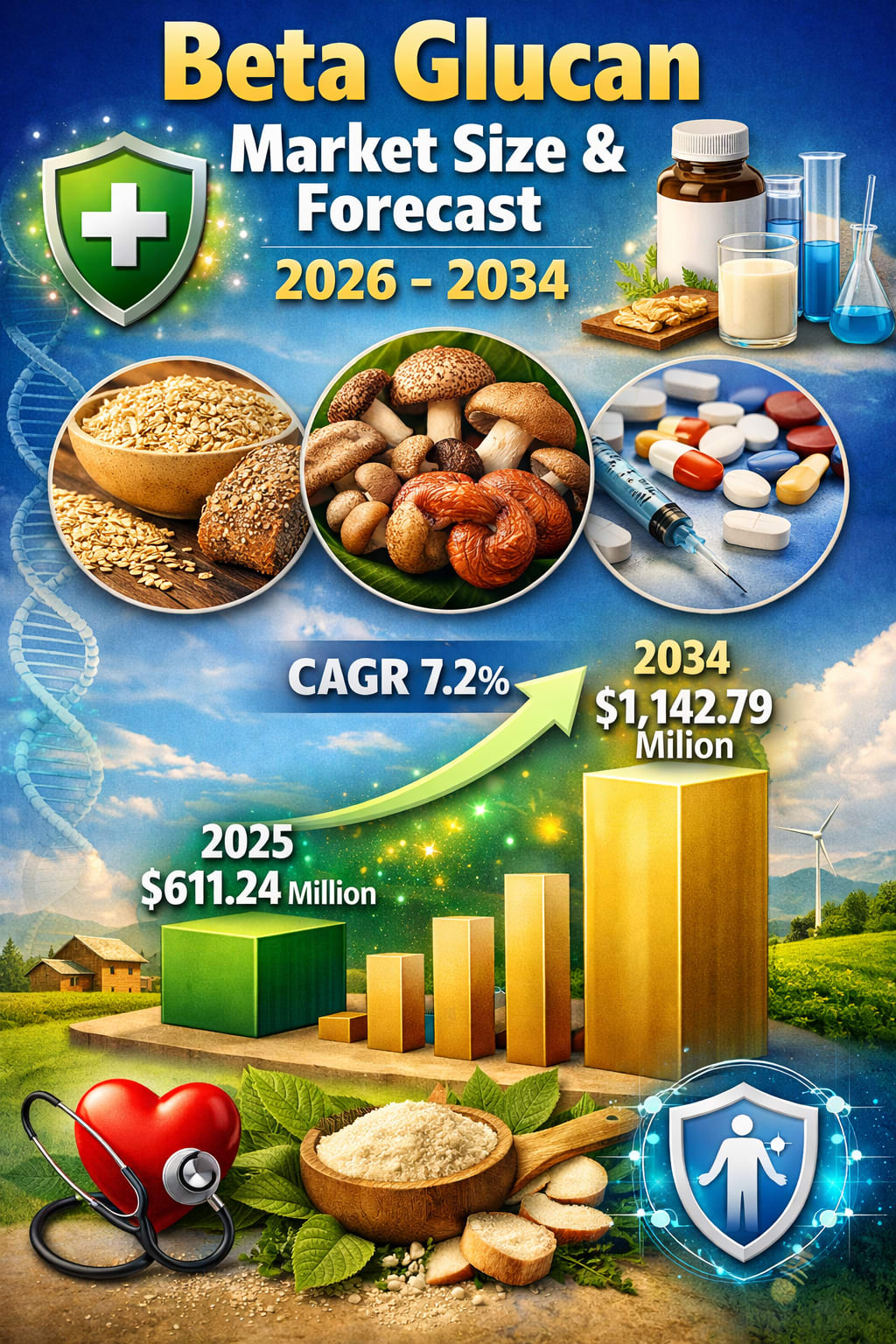
The global beta glucan market is entering a decade of steady and meaningful growth, powered by rising health awareness, increasing demand for functional foods, and expanding applications in pharmaceuticals and clinical nutrition. According to Renub Research, the beta glucan market is expected to grow from US$ 611.24 million in 2025 to US$ 1,142.79 million by 2034, registering a Compound Annual Growth Rate (CAGR) of approximately 7.2% from 2026 to 2034.
This growth story is closely tied to how consumers think about health today. Across the world, people are moving away from reactive healthcare and toward preventive wellness. Ingredients that can naturally support immunity, heart health, digestion, and metabolic balance are no longer niche—they are becoming everyday essentials. Beta glucan, a soluble dietary fiber found in sources such as oats, barley, yeast, mushrooms, algae, and some bacteria, sits right at the center of this shift.
Well-known for its ability to stimulate the immune system, reduce cholesterol, and regulate blood sugar levels, beta glucan has evolved from a “functional ingredient” into a strategic component of modern nutrition and healthcare. Its unique ability to slow digestion, improve metabolic responses, and support cardiovascular health has made it a popular choice across food, supplement, and pharmaceutical industries.
What makes beta glucan especially attractive is its alignment with several powerful global trends: the clean-label movement, the rise of plant-based diets, and the growing demand for science-backed natural ingredients. As ongoing research continues to confirm and expand its health benefits, beta glucan is no longer just an additive—it is becoming a core building block of health-oriented products worldwide.
Why the Beta Glucan Market Is Growing
Rising Consumer Focus on Immune and Preventive Health
One of the strongest drivers behind the beta glucan market is the global shift toward immune health and preventive care. In recent years, consumers have become far more conscious of strengthening their immune systems, not only to fight infections but also to reduce the long-term risk of chronic diseases. This has fueled strong demand for ingredients that are both natural and clinically supported.
Beta glucan’s immune-modulating properties make it a standout in this space. It is widely used in dietary supplements, fortified foods, and functional beverages designed to support immune resilience. The aging population, in particular, is driving demand for preventive nutrition, while younger, health-conscious consumers are actively seeking everyday foods that offer added health benefits.
Healthcare professionals and wellness brands increasingly promote beta glucan as a science-backed ingredient rather than a trend-driven supplement. This credibility is crucial in a market where consumers are more skeptical and better informed than ever before. The broader push toward preventive healthcare solutions—supported by digital health initiatives and public health strategies—has only strengthened the long-term outlook for beta glucan-based products.
Growing Demand for Functional Foods and Clean-Label Ingredients
The rapid expansion of the functional food and beverage sector is another major engine of growth for the beta glucan market. Today’s consumers want more from their food: not just calories and taste, but measurable benefits for heart health, digestion, blood sugar control, and overall well-being.
Beta glucan fits perfectly into this landscape. It is a natural, recognizable ingredient that aligns with clean-label expectations and plant-based trends. Food manufacturers are increasingly incorporating beta glucan into breakfast cereals, bakery products, dairy alternatives, and beverages to enhance fiber content and health appeal—without compromising taste or texture.
The growing interest in transparent labeling has also worked in beta glucan’s favor. Its natural origin and well-documented benefits make it easy for brands to communicate value to consumers. A notable example is BENEO’s launch of Orafti® β-Fit, a wholegrain barley flour with 20% beta-glucans, designed to support heart health and blood sugar management—highlighting how innovation continues to expand the functional fiber category.
As high-fiber, plant-based, and heart-healthy diets gain popularity worldwide, beta glucan is increasingly becoming a go-to solution for food companies looking to differentiate their products in a crowded marketplace.
Expanding Applications in Pharmaceuticals and Animal Nutrition
Beyond food and supplements, beta glucan is also gaining momentum in pharmaceuticals and animal nutrition—two areas that significantly broaden the market’s growth potential.
In the pharmaceutical sector, beta glucan is used for immune support, wound healing, and as an adjunct therapy in various treatments. Its role as a natural immune activator makes it especially attractive in clinical nutrition and preventive healthcare products. Ongoing research is exploring its potential in managing metabolic and inflammatory disorders, opening new doors for medical applications.
In animal nutrition, beta glucan is used to boost immunity, improve gut health, and reduce reliance on antibiotics. As the global agriculture industry shifts toward more sustainable and antibiotic-free practices, demand for natural immune-enhancing feed ingredients is rising steadily.
Strategic moves in the industry reflect this momentum. For example, Lallemand Bio-Ingredients expanded its beta-glucan business by acquiring Biotec BetaGlucans (BBG), signaling strong confidence in the long-term growth of this segment.
Challenges Facing the Beta Glucan Market
High Production Costs and Raw Material Variability
Despite its strong growth outlook, the beta glucan market faces notable challenges—starting with production costs. Extracting, purifying, and processing beta glucan requires advanced technologies to preserve its quality and biological activity. These processes can be expensive, especially when compared to more conventional dietary fibers.
Additionally, the quality and yield of beta glucan vary depending on the source—whether it is derived from oats, yeast, or mushrooms. This variability affects both cost structures and product consistency, making supply chain management more complex for manufacturers.
Regulatory and Standardization Complexities
Another key hurdle is regulation. Health claims related to immunity, cholesterol reduction, and blood sugar management are tightly controlled in many regions. Companies must invest heavily in scientific validation and clinical studies to meet regulatory requirements, which can slow down product launches and increase development costs.
The lack of global standardization in labeling and definitions of beta glucan content also creates confusion in the market. Different regulatory frameworks across countries make international expansion more challenging, especially for smaller players.
Market Segments Shaping the Industry
Cereal Beta Glucan: The Market Leader
Cereal-derived beta glucan, especially from oats and barley, remains the dominant segment. Its strong association with heart health and cholesterol reduction has made it a staple in functional foods such as breakfast cereals, bakery items, and beverages.
Consumers trust cereal beta glucan for digestive health, weight management, and blood sugar control. From a manufacturing perspective, it offers advantages like neutral taste, ease of processing, and broad regulatory acceptance. As high-fiber and plant-based diets continue to trend upward, cereal beta glucan is expected to maintain its leading position.
Mushroom Beta Glucan: Premium and Immunity-Focused
Mushroom-derived beta glucan, sourced from varieties like shiitake, maitake, and reishi, is gaining popularity for its potent immune-support properties. These products are widely used in supplements and nutraceuticals, often marketed as premium wellness solutions.
Although production costs are higher, consumers are willing to pay more due to the perceived efficacy and traditional medicinal reputation of mushrooms. Improvements in extraction technology have also helped improve consistency and bioavailability, supporting wider adoption.
Soluble Beta Glucan: Driving Innovation in Beverages and Supplements
Soluble beta glucan is particularly attractive for use in beverages, soups, dairy alternatives, and liquid supplements because it dissolves easily in water and integrates well into different formulations. It is especially valued for its role in managing cholesterol, blood sugar, and gut health.
As functional drinks and convenient health products continue to grow in popularity, soluble beta glucan is expected to see rising demand across both food and pharmaceutical applications.
Key Application Areas
Food and Beverages: The Largest Market Segment
Food and beverages remain the biggest application area for beta glucan. It is widely used in cereals, baked goods, drinks, dairy products, and plant-based foods to boost fiber content and enhance health positioning.
Urban lifestyles, busy schedules, and rising health awareness are driving consumers toward convenient foods that also support heart health, immunity, and digestion. Beta glucan’s versatility makes it easy to integrate into everyday products, helping brands create value-added offerings in competitive markets.
Pharmaceuticals: A Growing Opportunity
In pharmaceuticals, beta glucan is gaining traction as an immune modulator, wound-healing agent, and supportive ingredient in clinical nutrition. Its strong safety profile and natural origin make it appealing for long-term use, especially in preventive care and immune-compromised patient groups.
Ongoing research into new therapeutic applications could further expand this segment over the coming decade.
Regional Market Insights
United States: Innovation and Preventive Nutrition
The U.S. beta glucan market is driven by high awareness of functional nutrition and preventive healthcare. Beta glucan is widely used in supplements, fortified foods, and health beverages, supported by strong demand for clean-label and plant-based ingredients.
The country’s advanced research ecosystem and active product innovation continue to fuel growth. Recent developments, such as the launch of highly bioavailable alternatives to traditional beta glucans, highlight how the market is evolving beyond conventional formulations.
United Kingdom: Heart Health and Functional Foods
In the UK, demand is largely driven by interest in heart health, digestive wellness, and immune support. Oat-derived beta glucan is particularly popular due to its cholesterol-lowering reputation and compatibility with traditional diets. Government initiatives promoting healthier food formulations are also encouraging wider use of fiber-rich ingredients.
India: Rapid Growth and Rising Awareness
India represents one of the fastest-growing markets, supported by a rising middle class, increasing health awareness, and growing interest in plant-based and natural ingredients. Beta glucan is gaining traction in nutraceuticals, fortified foods, and health drinks, with improving distribution through e-commerce and pharmacy channels.
Saudi Arabia: Emerging but Promising
In Saudi Arabia, growing focus on wellness, lifestyle diseases, and preventive nutrition is creating new opportunities for beta glucan products. While the market is still developing, rising incomes, urbanization, and government health initiatives are making it an attractive long-term growth region.
Competitive Landscape
The global beta glucan market features several prominent players, including:
Ceapro Inc.
Tate & Lyle PLC
Koninklijke DSM N.V.
Cargill Incorporated
Kerry Group Plc
Givaudan SA
Euglena Co. Ltd.
Merck KGaA
These companies compete through product innovation, strategic acquisitions, and expansion into new application areas, with a strong focus on clean-label, high-performance, and scientifically validated ingredients.
Final Thoughts: A Decade of Steady, Health-Driven Growth
The beta glucan market is no longer a niche corner of the nutrition industry—it is becoming a central part of the global shift toward preventive healthcare, functional foods, and natural wellness solutions. With the market projected by Renub Research to grow from US$ 611.24 million in 2025 to US$ 1,142.79 million by 2034 at a CAGR of around 7.2%, the outlook remains strong and sustainable.
As consumers continue to prioritize immunity, heart health, and metabolic well-being, and as food and pharmaceutical companies invest in innovation and research, beta glucan is well positioned to remain one of the most important functional ingredients of the next decade. In a world increasingly focused on health from the inside out, this humble fiber is proving that sometimes, the biggest impact comes from the simplest, most natural sources.



Comments
There are no comments for this story
Be the first to respond and start the conversation.