
How Infrastructure and Access Layers Are Redefining Blockchain Adoption?
Unpacking the critical role of underlying architecture and user interfaces in accelerating the global embrace of blockchain solutions.


As the cryptocurrency ecosystem matures, attention is gradually shifting away from short-term market movements toward the foundational layers that support long-term adoption. While early blockchain development focused heavily on base networks and token issuance, the current phase emphasizes accessibility, infrastructure efficiency, and developer enablement. These elements play a crucial role in determining how widely decentralized technologies can be adopted across industries.
Blockchain adoption is no longer limited to individual users or speculative participants. Enterprises, developers, and service providers increasingly rely on infrastructure that allows them to deploy applications, manage nodes, and interact with networks without unnecessary complexity. This evolution reflects a broader pattern seen in other technology sectors, where abstraction and ease of access drive growth.
The Role of Infrastructure in a Multi-Chain Ecosystem
The expansion of blockchain networks has created a diverse, multi-chain environment. While this diversity encourages innovation, it also introduces fragmentation. Different networks have distinct architectures, consensus models, and tooling requirements, making it difficult for developers and businesses to operate efficiently across ecosystems.
Infrastructure-focused solutions address this challenge by simplifying access to blockchain networks. These layers handle node deployment, network connectivity, and backend services, allowing developers to focus on building applications rather than maintaining core infrastructure. As the number of blockchains continues to grow, such abstraction layers are becoming increasingly important.
Accessibility as a Growth Catalyst
One of the key barriers to blockchain adoption has historically been technical complexity. Running nodes, managing validators, and maintaining uptime require specialized knowledge and resources. This limits participation and slows innovation.
By lowering these barriers, infrastructure platforms help democratize access to blockchain technology. Developers can experiment more freely, startups can deploy faster, and enterprises can integrate decentralized systems without rebuilding their entire technical stack. Over time, this accessibility supports a healthier and more diverse ecosystem.
Infrastructure Tokens and Network Utility
Unlike purely transactional tokens, infrastructure-related digital assets are often tied to network usage rather than speculation alone. Their value is commonly linked to services such as node access, staking participation, or API consumption. This utility-driven design aligns token demand with actual platform activity.
As blockchain infrastructure becomes more widely used, tokens associated with these services may benefit from organic demand growth. However, their long-term relevance depends on continued adoption, reliable performance, and alignment with evolving developer needs.
A Closer Look at Blockchain Infrastructure Platforms
Within discussions around decentralized infrastructure and node services, ankr crypto is frequently referenced as an example of how access layers can support blockchain participation. Projects in this category focus on providing scalable infrastructure tools that simplify interaction with multiple networks.
The broader relevance of ankr crypto highlights an important trend: blockchain growth is increasingly supported by platforms that operate behind the scenes. These solutions may not always be consumer-facing, but they play a vital role in enabling applications, validators, and services to function efficiently across ecosystems.
Interoperability and Long-Term Sustainability
As blockchain networks continue to evolve, interoperability remains a central theme. Infrastructure platforms that support multiple chains contribute to a more connected ecosystem, where applications are not locked into a single network. This flexibility reduces risk for developers and encourages experimentation across environments.
Long-term sustainability in crypto is closely tied to how well systems can adapt to change. Infrastructure layers that remain modular and network-agnostic are better positioned to support future innovation, regardless of which blockchains gain prominence.
Looking Ahead
The future of blockchain adoption will likely be shaped less by individual networks and more by the systems that connect them. Infrastructure, accessibility, and interoperability are becoming foundational pillars of the ecosystem. As these layers mature, they enable broader participation and more practical use cases for decentralized technology.
Understanding these dynamics helps clarify how value is created beyond price movements and market cycles.
Final Thoughts
Blockchain technology is steadily transitioning toward an infrastructure-driven phase, where ease of access and scalability matter as much as innovation itself. Platforms that simplify interaction with decentralized networks play a quiet but essential role in this evolution. By focusing on these underlying layers, participants can gain a clearer perspective on how the crypto ecosystem is being built for long-term relevance.
About the Creator
J. Hanry
Hanry James is an experienced analyst and content writer with over 8 years of experience. He has contributed to several leading publications in renowned tech summits such as TechWorld Expo, Global Digital Forum, and FutureTech Summit.
Maharashtra Police Hall Ticket 2026: Complete Guide to Download and Verify Easily
The Maharashtra Police Hall Ticket is the most important document for candidates appearing in the 2026 recruitment exam. It serves as your entry pass and contains crucial details like your name, roll number, exam date, and exam center. Many candidates face stress when they delay downloading it. This guide will help you download and verify your hall ticket easily, avoiding last-minute panic.
By hamza mirza7 days ago in Trader
The Pride Flag and the Diversion
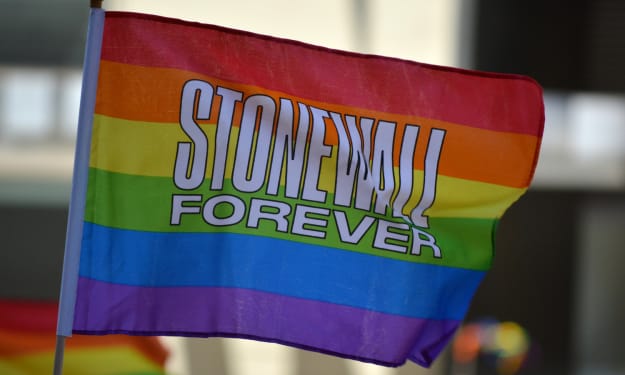
For nearly a decade, the LGBTQIA Pride Flag rippled in the wind at Christopher Park, a kaleidoscope of color staked into the soil of America’s first national monument to LGBTQIA+ liberation. That flag came down this week. Federal officials, citing new guidance from the Trump Administration, silently lowered the rainbow flag from its pole across the street from the Stonewall Inn. The birthplace of the modern gay rights movement now flies only the United States flag.
By Tim Carmichael5 days ago in Pride



Comments
There are no comments for this story
Be the first to respond and start the conversation.