
How Welding and Assembly Suppliers Are Powering Smart Factories
Discover how integrated arc welding and automated assembly systems are transforming production into a connected, intelligent ecosystem.

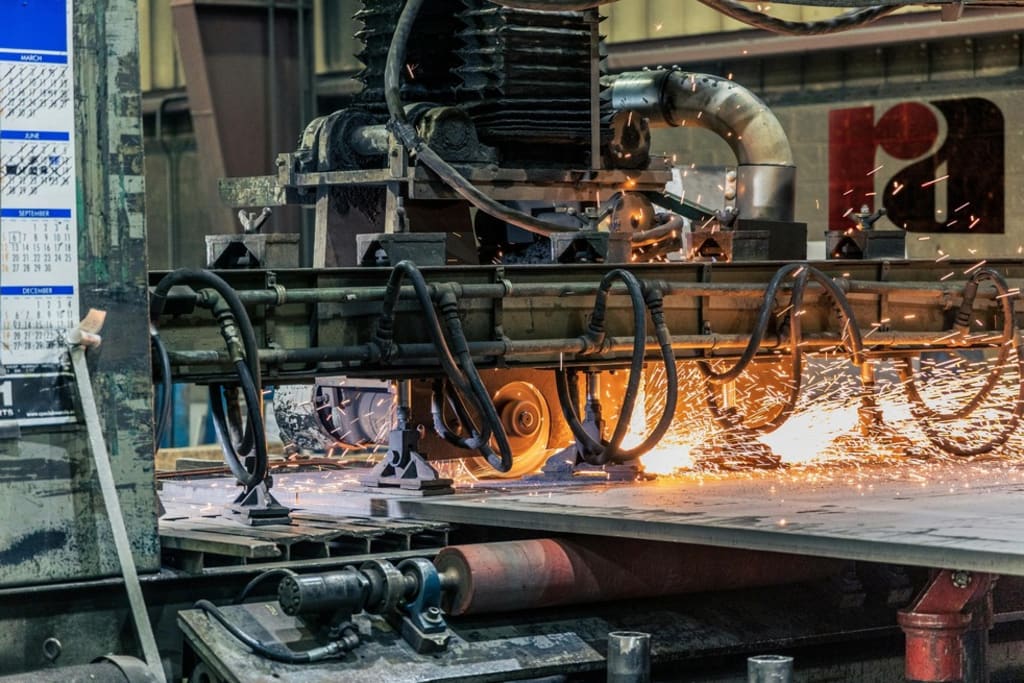
In a world where productivity and adaptability define market leaders, traditional production silos are disappearing. Manufacturing success today isn’t about buying the best standalone machines—it’s about weaving them into cohesive, intelligent systems.
This convergence is driving an exciting collaboration between arc welding machine suppliers and automated assembly system suppliers. Together, they’re reimagining what a factory can be: a connected ecosystem where welding, joining, assembly, and inspection happen seamlessly, with minimal human intervention and maximum data insight.
Why Integration Matters More Than Ever
Twenty years ago, you might have invested in a high-end arc welding cell for structural parts, then sourced separate conveyors, robots, or fixtures from other vendors. Integration often involved patching together components after installation.
Today, that approach no longer cuts it. Manufacturers face pressures that demand a unified strategy:
Shorter product life cycles: Assembly lines must adapt quickly to new SKUs.
Labor shortages: Automation isn’t a luxury—it’s a necessity.
Quality demands: Every weld and assembled part must be traceable and repeatable.
Data-driven operations: Equipment must feed real-time analytics to ERP and MES systems.
That’s why the smartest companies are looking for partners who can combine welding and assembly into a fully automated, interconnected solution—from raw material handling to finished part packaging.
Arc Welding: Still the Backbone, Now Smarter Than Ever
Arc welding remains the backbone of countless industries—from automotive to heavy equipment. But modern arc welding machines are nothing like the manual rigs of decades past.
Leading arc welding machine suppliers now deliver platforms that feature:
Adaptive arc control: Automatically adjusts parameters to handle material variability.
Vision-guided seam tracking: Ensures perfect weld placement, even on complex geometries.
Robot-integrated cells: Synchronize torch movement, clamping, and quality inspection.
Data capture and traceability: Document every weld’s parameters for compliance and continuous improvement.
These capabilities transform arc welding from a standalone process into a digitally connected building block of an automated production line.
Automated Assembly: The Perfect Complement
Meanwhile, automated assembly system suppliers have evolved to provide:
Flexible feeding systems: Handle diverse part geometries with minimal changeover.
Collaborative robotics: Enable safe human-machine interaction.
In-line inspection stations: Detect defects before downstream processes.
Modular platforms: Scale production capacity without massive retooling.
The result? A fully automated workflow where parts are welded, assembled, verified, and packaged in a single, coordinated sequence—reducing cycle time and boosting quality.
How Forward-Thinking Suppliers Collaborate
The real magic happens when suppliers of arc welding machines and automated assembly systems work side by side during project development:
✅ Joint Process Simulation: Before a single piece of hardware ships, both teams model workflows virtually to identify bottlenecks and optimize line balancing.
✅ Unified Controls Architecture: Instead of multiple controllers for each machine, integrated systems run on a common PLC or PC-based platform for easier maintenance.
✅ Centralized Data Management: All process data—weld parameters, torque values, inspection results—flows into a single MES or quality system.
✅ Shared Training and Support: Operators and technicians learn to run the entire line as a cohesive system.
This collaboration future-proofs manufacturing investments by ensuring that every piece of equipment can grow and adapt together.
What to Loo fork in Your Next Supplier
If you’re planning to invest in automated welding and assembly, ask suppliers these critical questions:
- How do you integrate your systems with other automation platforms?
- Can you provide end-to-end process simulation before build-out?
- Do you offer unified control systems and data interfaces?
- How do you support training for fully integrated lines?
- What experience do you have collaborating with complementary suppliers?
The best partners will have proven success stories and references that demonstrate their ability to deliver integrated solutions—not just isolated machines.
Final Thoughts: Integration Is the New Differentiation
The next era of manufacturing belongs to those who can unify processes into intelligent, responsive systems. Whether you’re sourcing equipment from an arc welding machine supplier or an automated assembly system supplier, remember: integration isn’t an afterthought. It’s the foundation of a smart factory.
Choose suppliers who understand this vision—because in the factories of tomorrow, seamless collaboration between technologies is the ultimate competitive advantage.
About the Creator
Taylor Winfield Technologies
We are leading arc welding machine suppliers, dedicated to providing high-quality, reliable, and innovative welding solutions for industries worldwide. Our machines are designed for precision, efficiency, and long-term performance.
Keep reading
More stories from Taylor Winfield Technologies and writers in Trader and other communities.
The One-Stop Powerhouse for Industrial Welding: Why Smart B2B Owners Choose Taylor-Winfield Technologies
When you run a business that hinges on metal joining (or, let’s be honest, fusing anything that sits still long enough), the machines you choose can make or break your bottom line. Maybe you’ve been burned by cheap imports or stuck piecing together an automated assembly line with parts that came with instructions in six languages—but none you speak.
By Taylor Winfield Technologies8 months ago in Trader
from death into life
Young Aldin of Wiloh had never contemplated death. It was almost strange — so many around him had the tendency to obsess over it, to clamor and claw almost desperately at their own perceptions of the end to know death as much as they could: when it would come, why it would come, where it would take them when it did.
By angela hepworth6 days ago in Fiction



Comments
There are no comments for this story
Be the first to respond and start the conversation.