
Improving Cash Flow for Transportation Businesses
Freight Bill Factoring

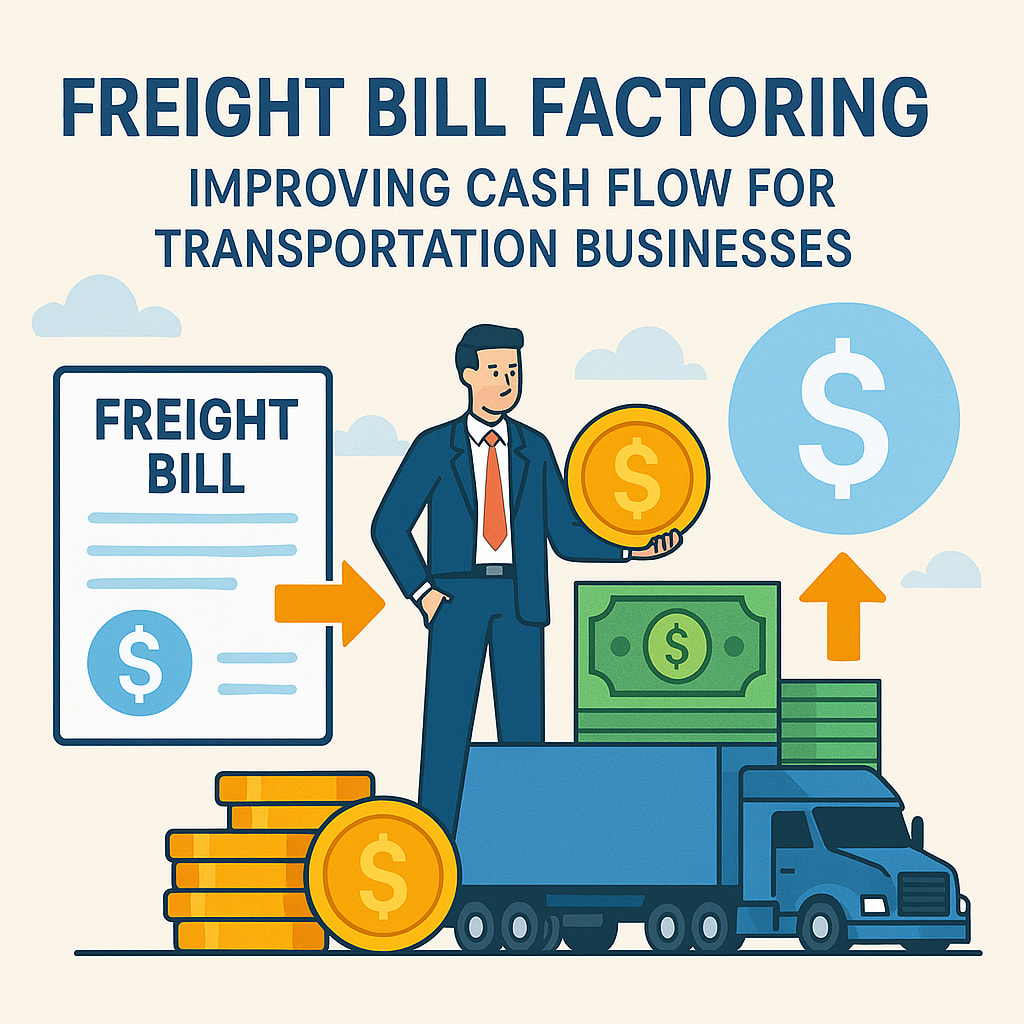
Cash flow is the lifeblood of the transportation and logistics industry. Trucking companies, freight carriers, and independent owner-operators often face long payment cycles that can stretch 30, 45, or even 90 days after a load is delivered. During that waiting period, expenses such as fuel, maintenance, insurance, payroll, and tolls continue to pile up. This is where Freight Bill Factoring becomes a practical financial tool for keeping operations moving without interruption.
Freight bill factoring is a financing solution that allows transportation businesses to convert unpaid freight invoices into immediate cash. Instead of waiting weeks or months for shippers or brokers to pay, carriers can receive most of the invoice value upfront, often within a day. This steady access to cash helps businesses operate smoothly and grow with confidence.
How Freight Bill Factoring Works
The process of freight bill factoring is straightforward. After delivering a load, the carrier submits the freight bill or invoice to a factoring provider. The factoring company advances a large percentage of the invoice value—typically between 80% and 95%. Once the customer pays the invoice in full, the factoring company releases the remaining balance to the carrier, minus a small factoring fee.
This arrangement shifts the burden of waiting for payment away from the carrier. Instead of worrying about slow-paying customers, transportation companies can focus on scheduling loads, maintaining vehicles, and expanding routes.
Why Cash Flow Matters in the Freight Industry
Transportation businesses operate on tight margins and high upfront costs. Fuel prices fluctuate, equipment repairs are unpredictable, and drivers must be paid on time. Even a short delay in payments can disrupt daily operations. Freight bill factoring provides predictable cash flow, making it easier to manage expenses and plan ahead.
For smaller carriers and owner-operators, this can be especially valuable. Access to consistent working capital allows them to accept more loads, negotiate better fuel rates, and avoid high-interest loans or credit card debt.
Key Benefits of Freight Bill Factoring
One of the biggest advantages of freight bill factoring is speed. Traditional loans often involve lengthy approval processes, credit checks, and strict requirements. Factoring approval is typically faster and more flexible, as it is based largely on the creditworthiness of the customer being invoiced rather than the carrier’s own credit history.
Another benefit is improved financial stability. With regular cash inflow, businesses can cover operating costs without stress. This stability supports long-term planning, fleet expansion, and driver retention.
Freight bill factoring can also reduce administrative workload. Many factoring arrangements include invoice processing and collections, freeing carriers from chasing payments and handling billing disputes. This allows business owners to focus on logistics rather than paperwork.
Who Uses Freight Bill Factoring
Freight bill factoring is widely used across the transportation sector. Independent owner-operators rely on it to manage cash flow without taking on debt. Small and mid-sized trucking companies use it to stabilize finances and compete with larger carriers. Even growing logistics businesses turn to factoring as a scalable solution that adapts to increased invoice volume.
It is particularly helpful for companies experiencing rapid growth, seasonal demand spikes, or inconsistent payment cycles. Instead of turning down loads due to cash constraints, factoring enables businesses to say yes to more opportunities.
Cost Considerations and Transparency
Factoring fees vary depending on invoice volume, customer payment speed, and overall risk. While there is a cost involved, many carriers view it as a trade-off for reliability and peace of mind. The key is understanding the fee structure and ensuring transparency before entering any agreement.
When managed properly, the benefits of steady cash flow often outweigh the costs, especially when compared to late fees, missed opportunities, or operational slowdowns caused by insufficient funds.
A Strategic Tool for Growth
Freight Bill Factoring is not just a short-term fix—it can be a strategic financial tool. By smoothing out cash flow, transportation businesses gain flexibility, resilience, and the ability to grow without relying on traditional debt. In an industry where timing and reliability are everything, having access to immediate capital can make all the difference.
For freight carriers navigating long payment cycles and rising operational costs, freight bill factoring offers a practical way to stay competitive, profitable, and prepared for the road ahead.
About the Creator
Tim Scott
Tim Scott is an expert author and writer who pleased the world with his creative tips and ratings. He also blogs for their Fans and followers and provide the solution of their query, with this blog he wants to share his knowledge.
Understanding Stock Options: A Beginner’s Guide to Options Trading
Introduction Stock options are a powerful financial tool used by traders and investors to manage risk, speculate on price movements, and enhance portfolio returns. While options can seem complex for beginners, understanding the basics opens opportunities for more advanced strategies in trading.
By Hammad Nawaz6 days ago in Trader




Comments
There are no comments for this story
Be the first to respond and start the conversation.