
Philippines Blockchain Gaming Market 2026: Play-to-Earn Expansion, Web3 Innovation and Community-Driven Growth
How tokenized gaming economies, mobile adoption and global developer partnerships are shaping the Philippines blockchain gaming industry

Philippines Blockchain Gaming Market Overview
The Philippines blockchain gaming market growth is rapidly emerging as one of Southeast Asia’s most dynamic digital entertainment segments, driven by strong gamer participation, mobile-first ecosystems and early adoption of Web3 technologies. Blockchain gaming integrates decentralized finance, digital asset ownership and gaming mechanics, allowing players to earn, trade and monetise in-game assets through tokenized economies. The Philippines has become a prominent adoption hub due to its youthful demographic profile, high internet usage and strong community-based gaming culture.
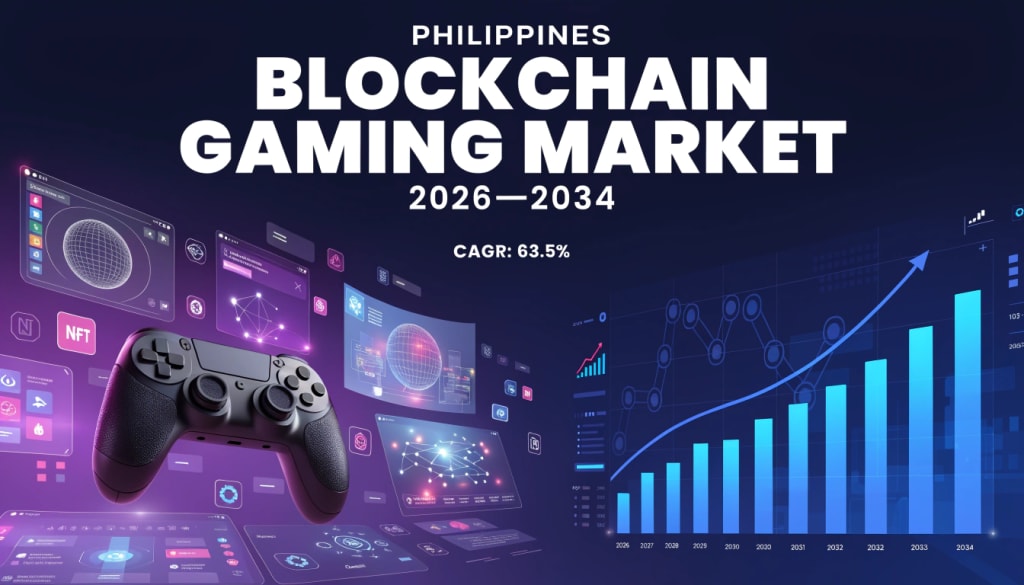
According to IMARC Group, the Philippines blockchain gaming market reached USD 180.3 million in 2025 and is projected to grow to USD 16,758.9 million by 2034, exhibiting a compound annual growth rate (CAGR) of 63.5% during 2026–2034. Market growth is supported by expanding play-to-earn ecosystems, strategic collaborations between global developers and local communities, and strong digital engagement among Filipino gamers.
Key Market Drivers
Rapid Adoption of Play-to-Earn Gaming Models
Play-to-earn (P2E) frameworks enable gamers to generate digital income through gameplay, attracting widespread participation across the Philippines. These models combine entertainment with financial incentives, making blockchain gaming particularly appealing in emerging digital economies.
Strong Community Participation and Gaming Guild Ecosystems
Local gaming guilds, influencers and esports communities play a central role in onboarding players and promoting Web3 titles. Collaborative community structures have accelerated adoption while creating network effects that sustain ecosystem growth.
High Mobile Penetration and Digital Engagement
Smartphone-driven gaming behaviour and strong internet usage create favourable conditions for blockchain game accessibility. The Philippines’ mobile-first digital environment enables mass participation in decentralized gaming platforms.
Integration of Digital Ownership and NFT Assets
Blockchain gaming introduces verifiable ownership of digital assets through NFTs, enabling players to buy, sell and trade items with real-world value. This innovation is reshaping monetisation models and enhancing player engagement across gaming ecosystems.
Request a Sample Report with the Latest 2026 Data & Forecasts
What the Opportunities Are
The Philippines blockchain gaming market presents transformative opportunities as Web3 innovation, digital finance integration and immersive entertainment converge.
Expansion of Metaverse and Interoperable Gaming Ecosystems
Blockchain gaming serves as a gateway to broader metaverse environments where digital identities, assets and experiences interconnect. Developers can create cross-platform asset interoperability and persistent virtual worlds to enhance long-term engagement.
Growth of Gaming Guild and Community-Based Economies
Guild-driven participation models represent a distinctive opportunity within the Philippines, enabling collaborative earning, mentorship and onboarding structures that accelerate user acquisition and ecosystem sustainability.
Localized Game Development and Content Creation
Rising developer interest and growing technical talent pools create opportunities for locally developed blockchain titles tailored to Filipino culture and player preferences, strengthening domestic industry capabilities.
Integration with Digital Payments and Cryptocurrency Adoption
Strong growth in cryptocurrency usage and digital wallets supports seamless transaction flows within blockchain games, improving accessibility and facilitating monetisation across player ecosystems.
Esports and Competitive Blockchain Gaming Formats
The convergence of esports infrastructure with blockchain gaming mechanics can create competitive play-to-earn tournaments, digital asset prize pools and new spectator experiences, expanding entertainment monetisation pathways.
These opportunities collectively indicate the Philippines’ potential to evolve into a regional blockchain gaming innovation hub.
Recent News and Developments
February 2025: Market analysis confirmed the Philippines blockchain gaming market reached USD 180.3 million in 2025, reflecting rapid expansion of play-to-earn ecosystems and strong community adoption.
May 2025: Industry trends highlighted increasing collaboration between global developers and Philippine gaming guilds, strengthening user acquisition and supporting early adoption of Web3 gaming platforms.
October 2025: Platform diversification across Ethereum, BNB Chain and Polygon ecosystems expanded technical infrastructure options for blockchain game deployment and user participation.
January 2026: Long-term outlook projections indicated the market is expected to reach USD 16,758.9 million by 2034, reinforcing one of the fastest growth trajectories within Southeast Asia’s digital entertainment sector.
Why You Should Know About the Philippines Blockchain Gaming Market?
The Philippines blockchain gaming market represents a powerful intersection of gaming, finance and digital ownership innovation. As Web3 technologies redefine interactive entertainment and monetisation models, blockchain gaming is evolving into a foundational component of next-generation digital economies.
With projected exponential growth through 2034, supported by community participation, mobile adoption and developer partnerships, the sector offers compelling opportunities for game studios, investors and technology providers.
As the Philippines continues positioning itself as a global play-to-earn adoption leader and community-driven Web3 ecosystem, the blockchain gaming market is poised for sustained expansion while shaping the future of digital entertainment and decentralized virtual economies.
About the Creator
Keep reading
More stories from Manisha Dixit and writers in Trader and other communities.
Philippines Culinary Tourism Market 2026: Gastronomic Exploration, Cultural Immersion and Experiential Travel Growth
Philippines Culinary Tourism Market Overview The Philippines culinary tourism market growth is emerging as a dynamic segment within the country’s broader tourism ecosystem, driven by travellers seeking authentic cultural experiences through food. Culinary tourism encompasses food tours, cooking classes, market visits, street food exploration and destination dining experiences that allow visitors to engage deeply with local culture. With the Philippines’ rich culinary heritage, diverse regional dishes and vibrant food culture, gastronomy has become a central attraction for both domestic and international tourists.
By Manisha Dixitabout 16 hours ago in Trader
Australia’s Luxury Travel Market 2026: Personalised Journeys, Experiential Tourism and Premium Innovation
Australia Luxury Travel Market Overview Australia’s luxury travel market has evolved into one of the most dynamic segments within the country’s broader tourism industry. No longer confined to five-star accommodation and first-class flights, luxury travel today revolves around exclusivity, personalisation, immersive cultural encounters and sustainable experiences. Affluent travellers increasingly seek curated journeys that deliver authenticity, comfort and meaningful engagement rather than standard sightseeing packages.
By Amyra Singh7 days ago in Trader
idream film infrastructure company ltd Business Update: Can Consistent Performance Drive Long-Term Gains?
idream film infrastructure company ltd continues to attract attention from investors who follow small and growing companies. Many market participants now study idream film infrastructure company ltd to understand whether it can deliver steady long-term gains. The company works in the film and media support sector, which grows as digital content demand increases. They will examine how idream film infrastructure company ltd operates, what supports its growth, what risks exist, and what the future may hold. This guide uses simple and clear language so every reader can understand the full picture of idream film infrastructure company ltd.
By John.doe798a day ago in Trader




Comments
There are no comments for this story
Be the first to respond and start the conversation.