

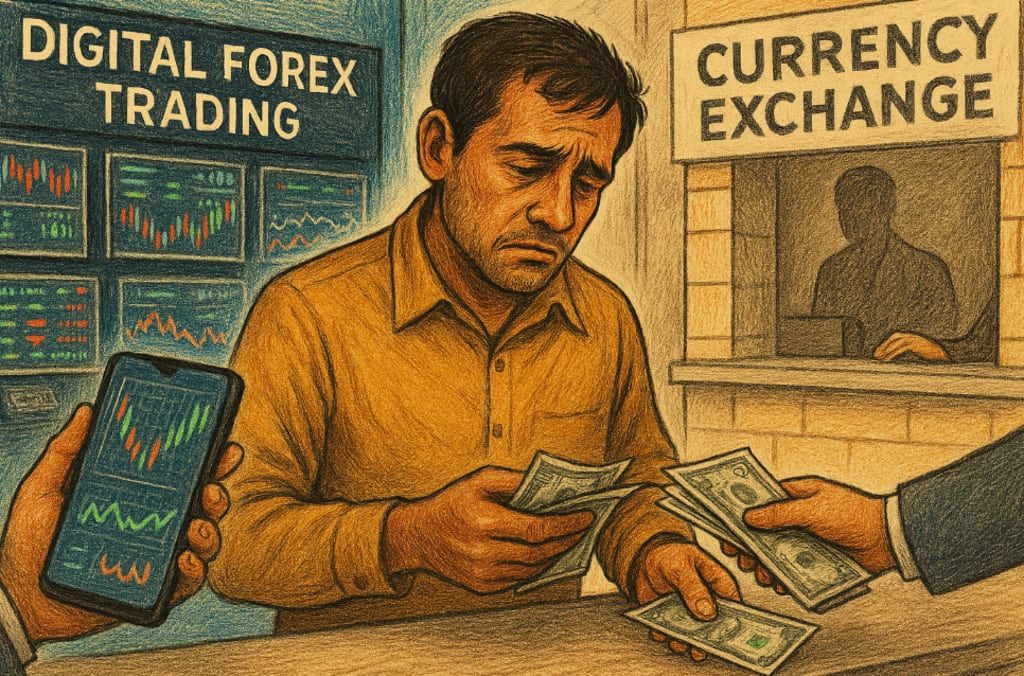
Raj had always been captivated by the lure of financial markets. The flashing screens, the constant tick of numbers, and the promise of wealth with just a few clicks. When he discovered digital forex trading, he thought he had struck gold.
With his smartphone always in hand, he spent hours watching price fluctuations, convinced that he could predict the next move. The online brokers assured him—no need for stacks of cash or direct transactions, just leverage, algorithms, and speed. But the deeper he went, the more he realized the hidden dangers lurking beneath the surface.
At first, the profits were exhilarating. Raj doubled his money in a week, then tripled it. The virtual trades made him feel invincible. But soon, the losses arrived—swift and unforgiving. One miscalculated trade, one moment of market volatility, and he watched his account balance drain within minutes. The platform algorithms, designed to favor rapid transactions, worked against him, pushing him deeper into a cycle of impulsive decisions.
What hurt the most was the lack of physical control. Unlike traditional forex trading, where he could hold currencies, exchange them directly, and make deliberate decisions, digital forex was abstract—numbers on a screen controlled by unseen forces. Unlike physical transactions, where he could negotiate rates and interact with professionals, here he was alone, facing bots programmed to profit off his mistakes.
Then came the realization—unregulated platforms, hidden fees, and even fraudulent brokers disguised as reputable firms. His account was suddenly frozen, his funds inexplicably inaccessible. Customer support was nonexistent. The dream of easy money had turned into a nightmare.
In desperation, Raj turned to traditional forex trading. He physically exchanged currency at reliable financial institutions, making calculated moves with tangible assets. With each exchange, he felt the reassurance of control, transparency, and security. No unpredictable algorithms, no artificial manipulation—just the real, physical movement of currencies guided by knowledge and strategy.
Reflecting on his journey, Raj knew he had learned his lesson. The digital forex world was enticing, but deceptive. What seemed easy and accessible was, in reality, a dangerous game controlled by forces beyond a trader’s reach.
He walked away from the flashing screens, from the world of virtual trading, and embraced the tangible, reliable method that generations before him had trusted. And this time, his wealth was built on a foundation he could actually hold.
This piece illustrates the risks of digital forex trading while highlighting the advantages of physical exchanges. I hope it aligns with what you were envisioning! Let me know if you'd like any adjustments.

For beginners stepping into the world of forex trading, it’s essential to approach the market with caution and a well-thought-out strategy. While the digital landscape promises quick profits and effortless transactions, it’s equally riddled with risks that can lead to significant losses. Here are a few key principles to keep in mind:
First and foremost, education is your greatest asset. Take the time to understand how forex markets operate, the factors influencing currency movements, and the risks involved. Don’t rely on luck or intuition—successful traders base their decisions on solid knowledge and analysis.
Risk management is crucial. Avoid placing all your funds into a single trade, and always set limits on how much you’re willing to lose. Many beginners fall into the trap of over-leveraging, believing it will amplify gains, only to see their accounts wiped out in minutes.
Be wary of online brokers and platforms that promise unrealistic returns. Ensure that any brokerage you choose is regulated by a legitimate financial authority. Unregulated platforms often hide fees, manipulate trades, or even freeze accounts without warning.
Finally, patience and discipline are key. Forex trading is not a get-rich-quick scheme—it requires careful planning, steady decision-making, and continuous learning. Stick to a strategy that works for you, and never trade based on emotion.
About the Creator
Edge Alexander
Captivating wordsmith, crafting transformative narratives that spark curiosity, ignite conversation, and leave an indelible mark.
https://gogetfunding.com/to-make-a-difference/
Keep reading
More stories from Edge Alexander and writers in Trader and other communities.
Trading Disparity: Day Traders vs. Hedge Funds
Have you ever wondered about the mystique surrounding the financial world? How do ordinary day traders seemingly achieve extraordinary annual profits of 200-300%, while mighty h edge funds struggle to secure a mere 20-40%? Brace yourself, for the answers to this intriguing conundrum, are both complex and multifaceted.
By Edge Alexander9 months ago in Trader



Comments (1)
Digital forex trading sounds too risky. Raj's experience shows how easy it is to get lured in by quick profits but then face huge losses. I've seen similar things in tech. Have you ever been tempted by a seemingly easy-money opportunity? What made you cautious or not? Traditional forex trading seems more reliable. Handling physical currency gives a sense of control. It makes me wonder why anyone would still go for the digital version, despite all the risks Raj faced. How do you think the two compare in terms of long-term viability?