
Why Do Governments Keep Printing Money?
How To Protect Your Financial Future

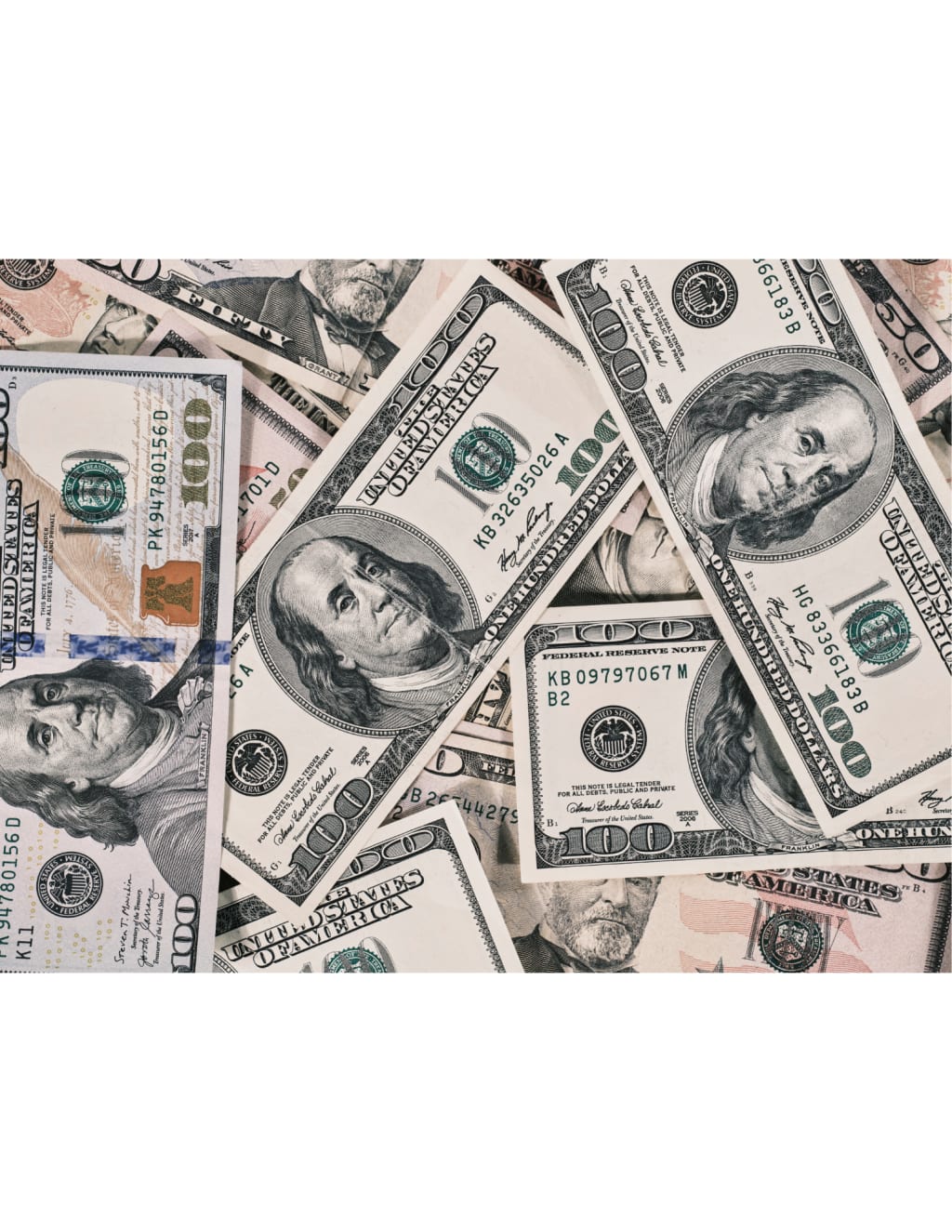
Have you ever wondered why the government prints money? The government prints money to keep the financial system functioning, fund spending more easily, manage interest rates and employment through the Federal Reserve, and respond to financial crises.
One problem with this system, however, is that it causes inflation. Inflation refers to the rate at which the general price level of goods and services in an economy rises over time.
Does it ever seem like your grocery bill keeps rising? Do your bills feel more expensive? That's not just because of rising prices; it's also because inflation devalues currency over time.
So, if the government creating more money causes its value to drop, why do we still use this system? Even more importantly, how can you protect your money from the ravages of inflation?
There are several things to know about both of these questions. We'll explore the answers in this guide below.
Why Does The Government Print Money?
To begin, the government does not just “print” money. The government creates most money digitally now through banks, although the U.S. Treasury does continue to print cash.
When we talk about the government creating money, we are referring to how Fed policy and bank lending expand deposits and credit throughout the economy.
There are several reasons why the government prints money, and a surprising amount of history behind why it does so in the current way. One reason that the government continues to print money is so it can acquire more goods. This process is known as seigniorage.
Explaining Qualitative Easing
The central bank also uses the money it prints for a process called quantitative easing (QE). QE refers to a system whereby central banks buy large amounts of government bonds and other financial assets.
In doing so, the central bank injects money into the economy, lowers long-term interest rates, and stimulates spending and investment. There are many reasons to do this, such as:
- boosting liquidity
- encourage bank lending
- encourage riskier investments
- combat deflation
- support economic growth during financial crises like the 2008 recession
The purpose of QE is not to “make a profit.” It is a policy tool used to support market functioning and ease financial conditions, especially when the economy is under stress and short-term rates are already low.
By purchasing assets, the Fed can push down longer-term yields and encourage borrowing and investment.
Some examples of things that the Federal Reserve has purchased with the QE program include:
- treasury bonds
- mortgage-backed securities
- corporate bonds
How Does This Relate to Inflation?
What do these policies mean regarding inflation? In short, many of the Federal Reserve's policies lead to some inflation. However, that does not mean that the Federal Reserve does nothing to regulate inflation.
The Federal Reserve attempts to keep inflation at an acceptable level by either increasing the amount of money being put to use or decreasing the amount in use. It primarily does so by
- encouraging borrowing and spending by increasing the monetary supply
- discouraging lending by decreasing the money supply, printing less money for a period of time
More specifically, the Federal Reserve will increase the money supply with the following practices:
- changes the discount rate at which it lends money to financial institutions, which has a ripple effect on the interest rates consumers and businesses pay for loans
- conducts open market operations where it buys back U.S. Treasury Securities from financial institutions
In pursuing its policies, the Federal Reserve aims to keep the economy robust and employment at a near-total level. This system exists because the American economy runs on a fiat currency, the U.S. dollar.
Previously, though, America operated on the gold standard. The process of moving off of the gold standard was not immediate, but took place over a few decades. Several factors caused that shift, though economists still debate which approach is truly the best.
The Gold Standard and Why the Government Prints Money
The gold standard was a monetary system in which government currency, whether printed or minted, was linked to a specified amount of gold. This system had several advantages.
First, it provided a fixed exchange rate relative to gold and other currencies on the standard. As a result, it removed a great deal of economic uncertainties.
Second, this system encouraged a great deal of long-term investment and saving. This incentive came from the prolonged economic stability that a gold standard produced.
Third, this system protected against economic manipulation by the federal government. It constrained the central bank's ability to devalue the currency or engage in currency wars.
This last component was of special importance to a nation that was formed out of a deep suspicion of centralized governments and financial manipulation. This linking of the national identity to its currency shows in many of the coins minted by the U.S.
For example, the standard coin motif on American currency was often a depiction of Lady Liberty, such as on the Saint Gaudens Double Eagle Gold Coin. That coin is an interesting case study for this subject, since it was the last gold coin minted before the nation ended its gold standard.
What Caused the Shift?
As the nation entered into the Great Depression, the paper money printed by the central bank was tremendously devalued. Many people no longer trusted paper money and instead put their trust in gold.
However, in the eyes of President Roosevelt, this caused a problem. The mistrust of U.S. paper money seemed to be prolonging the effects of the Great Depression.
More importantly, the federal government was incapable of printing more money to address the Depression, due to the limited supply of gold.
So, President Roosevelt did something unprecedented in American history: in 1933, he issued Executive Order 6102. This act effectively ended gold ownership for the majority of Americans.
This was also the year that the U.S. Mint was required to stop minting gold. To this day, the 1933 Saint Gaudens Double Eagle is one of the rarest gold coins in the world.
Originally, the U.S. Mint produced roughly 445,000 of these coins, but President Roosevelt ordered them melted down. Only a handful of coins from this series are known to have survived today.
However, while all of this severely restricted the place of gold in the U.S. economy, it did not completely end the gold standard. That shift came under President Nixon on August 15, 1971.
That day, President Nixon publicly announced that he was ending the convertibility of the dollar into gold or other reserve assets. This act became known as the Nixon shock.
At that time, the United States moved exclusively to a fiat currency system. The U.S. has operated on this system ever since.
How Can You Protect Your Assets From Inflation?
Economists debate whether the gold standard is better than the fiat currency system. However, it is a fact that inflation progresses each year, progressively devaluing the dollar. This devaluation further contributes to the volatility in other assets, such as stocks and bonds.
However, while gold and silver may not be legal tender in the U.S., they are still available as investment assets. Precious metals, such as gold and silver, are excellent investments when you want a store of value to hedge against inflation.
Precious metals include the following assets:
- gold
- silver
- platinum
- palladium
- rhodium
Precious metals have several benefits for investors. They can provide stability during volatile economic periods, since precious metals generally retain their value over long periods.
In the short term, precious metals can even help generate a profit. For example, gold has vaulted to a record $4,600/oz recently. Such a rise can help investors gain more money than they initially invested.
You can also invest in a precious metals IRA. So long as you follow the IRS guidelines for these accounts, your precious metals IRA can help you weather hard economic times.
However, precious metals are not a miracle solution to economic troubles. While they can occasionally turn a profit, they are best used for preserving your wealth over the long-term. Increasing your wealth usually requires investments in stocks, bonds, equity, and other assets.
It is always best to talk to a financial advisor before making investments. Generally, advisors recommend diversifying between 5%-15% of your investment portfolio into precious metals. The exact amount will vary depending on your financial goals.
It is also best to consult your financial advisor about how you split up your precious metals IRA. It is generally best to have a mix of gold and silver, but this ratio, too, may vary based on your goals.
Research the Best Ways to Preserve Your Wealth From Inflation
The summary for why the government prints money is to purchase goods and have more flexibility to address economic concerns. For better or worse, this practice makes inflation a fundamental part of the national economy.
Given that, it is best to know how you can protect your assets from inflation and devaluation. Precious metals have a longstanding tradition of guarding against inflation. Investing in these assets is a great way to start when looking for a way to guard against inflation.
When searching for precious metals, ensure you only purchase from reputable exchanges. As with all investment assets, there are several scammers who are more than happy to sell you bad products for exorbitant prices.
Furthermore, it is always the best practice to consult your financial advisor before making any large investments. Consult your advisor to determine how much to diversify into precious metals. Diversifying should always serve to promote your financial goals.
About the Creator
Sound Money
Sound Money Reform
The Sound Money Defense League advocates for restoring gold and silver as constitutional money through grassroots activism, policy reform, and public education on the risks of fiat currency and the benefits of sound money.
Keep reading
More stories from Sound Money and writers in Trader and other communities.
Ethereum is under $3 billion of selling pressure as exchange-to-exchange Bitcoin price gaps appear.
The cryptocurrency markets are displaying renewed volatility this week as Ethereum faces substantial selling pressure and traders confront notable pricing differences between major exchanges — particularly Coinbase and Binance. The deeper market dynamics that are influencing investor behavior, liquidity flows, and pricing mechanisms for digital assets are reflected in these trends.
By Raviha Imran4 days ago in Trader



Comments
There are no comments for this story
Be the first to respond and start the conversation.