
Mickey Lolich
The Relentless Ace Who Defined Detroit’s Gritty Baseball Era

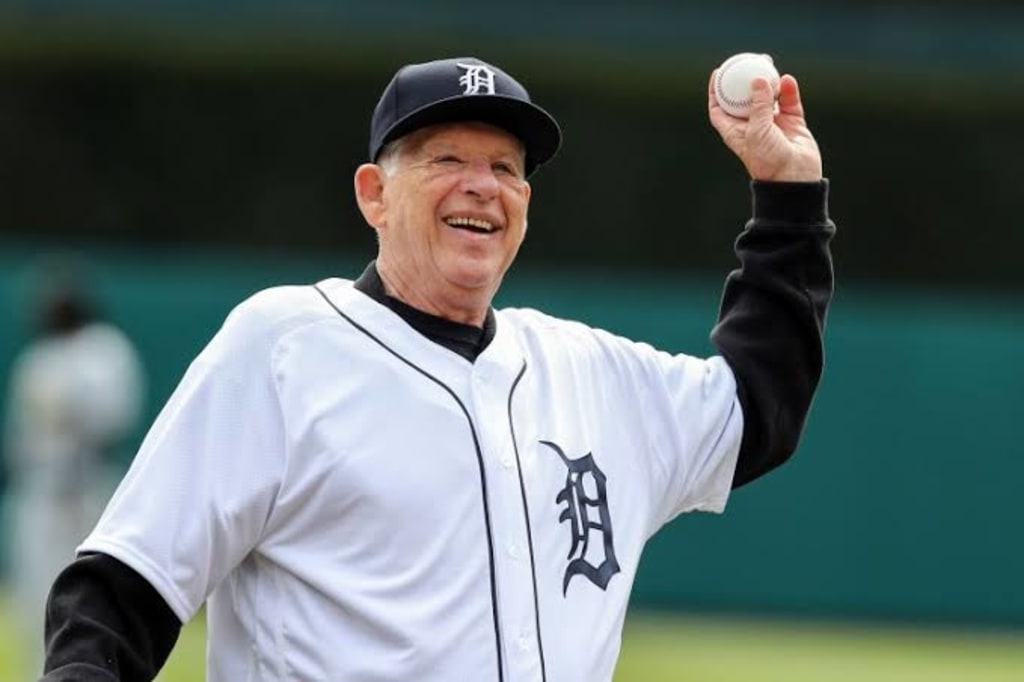
In the long, storied history of Major League Baseball, certain players become inseparable from the identity of the teams they served. Mickey Lolich is one of those rare figures. For Detroit Tigers fans, his name still carries the weight of endurance, toughness, and unwavering loyalty. While he never chased the spotlight or personal branding, Lolich built a legacy rooted in resilience, competitive fire, and one of the most iconic postseason performances in baseball history.
Born on September 12, 1940, in Portland, Oregon, Michael Stephen Lolich grew up in a working-class family where discipline and hard work were everyday expectations. His path to professional baseball was not glamorous. Lolich did not arrive with national hype or early stardom. Instead, he developed steadily, relying on durability and a powerful left arm that would later make him one of the most dependable pitchers of his generation.
Lolich made his Major League debut with the Detroit Tigers in 1963, joining a team that was still searching for consistency. Early in his career, he showed flashes of promise but struggled with control and command. Walks were an issue, and his ERA fluctuated. Yet the Tigers saw something others might have overlooked: a pitcher who could absorb innings, battle through adversity, and never shy away from pressure.
That faith would soon be rewarded.
The 1968 season marked a turning point not just for Lolich, but for the Tigers franchise. Baseball historians often refer to it as the “Year of the Pitcher,” and Lolich stood at the heart of it. He finished the regular season with a 17–9 record and a strong ERA, but numbers alone cannot explain his impact. His defining moment came during the 1968 World Series against the St. Louis Cardinals.
In one of the most legendary performances in World Series history, Lolich started three games and won all three. In an era where pitchers were used far more aggressively than today, his workload was astonishing. He outdueled Bob Gibson twice—no small feat, given Gibson’s dominance that season. Lolich’s Game 7 complete-game victory secured Detroit’s first World Series championship since 1945. His efforts earned him the World Series Most Valuable Player award, a rare honor for a pitcher and a testament to his competitive brilliance.
What made Lolich especially compelling was his consistency over time. From 1967 through 1976, he led the American League in complete games more than any other pitcher. He threw more than 300 innings in three separate seasons, a workload almost unimaginable by modern standards. While his win-loss record varied year to year, his availability never did. Managers knew they could count on him every fourth day, regardless of fatigue or previous performance.
Unlike many stars of his era, Lolich spent his entire Major League career with one team. Over 16 seasons, all with the Tigers, he became a symbol of loyalty in a sport increasingly defined by movement and negotiation. His durability came at a cost, however. The heavy workloads eventually took a toll on his arm and overall health. By the late 1970s, his effectiveness declined, and he retired after the 1979 season.
Statistically, Lolich finished his career with 217 wins, 255 complete games, and over 2,800 strikeouts. While these numbers are impressive, they do not fully capture his significance. He was never a flashy pitcher. His physique was unconventional, and his pitching style relied more on grit than finesse. Yet teammates respected him deeply, and opponents knew they were in for a long, punishing game whenever he took the mound.
After retiring from baseball, Lolich stepped away from the public eye. He chose a quieter life, running a doughnut shop in Michigan for a time and avoiding the celebrity culture that often surrounds former sports heroes. This decision only strengthened his reputation among fans as an authentic, grounded figure who never let fame define him.
In recent years, conversations around baseball history have increasingly emphasized advanced analytics and modern metrics. While these tools offer valuable insights, they sometimes struggle to measure qualities like endurance, mental toughness, and leadership—areas where Lolich excelled. His career serves as a reminder that baseball greatness is not always sleek or polished. Sometimes, it is forged through persistence, pain tolerance, and an unyielding commitment to the team.
Mickey Lolich may not dominate highlight reels or social media debates, but his place in baseball history is secure. He represents an era when pitchers were expected to finish what they started and when loyalty to one franchise could define an entire career. For Detroit fans, he remains more than a former player. He is a symbol of blue-collar excellence, a reminder that greatness often comes from showing up, throwing hard, and refusing to back down.
Decades after his final pitch, Mickey Lolich’s legacy still echoes through Comerica Park and the memories of those who witnessed his quiet brilliance. His story proves that in baseball—and in life—true impact is often built not on flash, but on fortitude.
About the Creator
Saboor Brohi
I am a Web Contant writter, and Guest Posting providing in different sites like techbullion.com, londondaily.news, and Aijourn.com. I have Personal Author Sites did you need any site feel free to contact me on whatsapp:
+923463986212
Keep reading
More stories from Saboor Brohi and writers in Unbalanced and other communities.
Anthony Davis
Few NBA players attract attention quite like Anthony Davis. As a dominant two-way force and a proven championship contributor, Davis remains one of the league’s most closely watched stars. Recently, renewed discussion around a potential Anthony Davis trade has stirred debate among fans and analysts alike, with teams such as the Washington Wizards and the Dallas Mavericks unexpectedly entering the rumor cycle. While no deal has been confirmed, the growing volume of speculation highlights how quickly narratives can shift in today’s NBA. Why Anthony Davis Is Always in Trade Talks Anthony Davis represents a rare blend of elite defense, interior scoring, and versatility. When healthy, he can completely alter the outcome of a game. Because of that impact, his name frequently surfaces whenever teams consider reshaping their futures. Questions like “did Anthony Davis get traded?” or “is AD traded?” tend to trend even without official developments. In a league increasingly driven by star movement, even stable situations can change rapidly. Front offices are constantly evaluating timelines, cap flexibility, and long-term upside, which keeps players of Davis’s caliber linked to major trade discussions. The Washington Wizards and a Rebuild Strategy The Washington Wizards have been quietly restructuring their roster with a long-term vision in mind. After years of inconsistent results, the organization has focused on asset accumulation and flexibility. This approach has led to speculation around a potential Wizards trade involving a high-profile star. The idea of Anthony Davis to the Wizards may seem ambitious, but it reflects Washington’s search for a clear identity. A move of that magnitude would instantly elevate the franchise’s profile while providing leadership for a developing roster. Hypothetical frameworks often include younger players such as AJ Johnson, Malaki Branham, or Marvin Bagley III, whose contracts and potential fit the rebuilding model. AJ Johnson basketball observers see him as a guard with developmental upside, while Branham offers scoring ability and Bagley brings frontcourt depth. Together, these types of assets are commonly discussed in theoretical trade packages—not as predictions, but as illustrations of how complex an Anthony Davis trade to Wizards scenario would be. Mavericks Trade Rumors and Championship Aspirations Alongside Washington, the Dallas Mavericks are another team frequently mentioned in trade speculation. The Mavericks are firmly built around Luka Dončić, and the front office has consistently explored ways to strengthen the roster around its superstar. Any major Dallas Mavericks trade discussion inevitably involves elite players who can complement Dončić’s offensive brilliance. A potential Mavs trade for Davis would be complicated but intriguing. Pairing an interior defensive anchor with one of the league’s best playmakers could transform Dallas into a more balanced contender. Players such as Jaden Hardy, Dante Exum, or veterans like Khris Middleton are sometimes referenced in speculative scenarios due to contract structure rather than expectation. Importantly, talk of an Anthony Davis to the Mavericks deal does not imply a Luka trade. On the contrary, Dallas views Dončić as untouchable, and any Mavericks trade would aim to enhance—not disrupt—the team’s core. Sorting Rumor From Reality Despite widespread discussion, reports of Anthony Davis traded remain unsubstantiated. There has been no official confirmation of an Anthony Davis trade, whether to Washington, Dallas, or elsewhere. Still, the persistence of these conversations shows how closely fans track star movement. In the modern NBA, speculation often begins with strategic curiosity rather than concrete negotiation. Teams routinely explore scenarios internally, which can quickly leak into public discourse. That dynamic fuels headlines asking “did Anthony Davis get traded?” even when no transaction has occurred. The Role of Young Talent in Major Deals One reason these rumors gain traction is the league’s emphasis on youth and flexibility. Players like Malaki Branham, AJ Johnson, and Jaden Hardy are viewed as developmental pieces who can help balance immediate competitiveness with future growth. Meanwhile, experienced role players such as Marvin Bagley III and Dante Exum provide rotational stability. These combinations often form the backbone of large-scale trades. Whether it’s a Wizards trade or a Dallas Mavericks trade, franchises must align talent, contracts, and draft assets to make blockbuster moves feasible. What an Anthony Davis Trade Would Mean If an Anthony Davis trade to Wizards were ever finalized, it would signal a bold shift in Washington’s direction. The team would gain an elite defender and proven leader, potentially accelerating its rebuild. A move involving the Mavericks would reshape Western Conference dynamics by strengthening Dallas’s defensive identity. Even without a deal, the possibility of Anthony Davis to the Wizards or another franchise forces teams to reassess their competitive positions. That alone demonstrates Davis’s continued influence across the league. Final Perspective For now, Anthony Davis remains one of the NBA’s most discussed stars, not because of confirmed movement, but because of his undeniable impact. Whether it’s speculation about AD traded, a potential Mavericks trade, or the ambitious idea of Anthony Davis to the Wizards, these conversations reflect a league defined by constant evaluation and change. Until an official announcement is made, these discussions remain hypothetical. Still, they underscore a familiar truth in professional basketball: when elite talent is involved, the entire league pays attention.
By Saboor Brohi a day ago in Unbalanced
Wild Card Weekend Recap: What Happens Now?
I think I figured out why I love Wild Card Weekend so much. It's because it's the first playoff anything of the calendar year. The NFL season starts in the fall, and once upon a time, the champion was crowned either on or slightly before New Year's. The evolution of the NFL schedule has resulted in the playoffs starting just into the New Year, and currently, the final week of the season falls on the first weekend of the New Year, with Wild Card Weekend coming a week after that. So yes, chronologically, the NFL's Wild Card Weekend serves as the first playoff anything of the calendar year.
By Clyde E. Dawkins24 days ago in Unbalanced
Greeley-Jay Outlasts Byram Hills 3-1
Scroll down for photos Practice Photos On Saturday December 13, Greeley-Jay hosted Byram Hills at the Brewster Ice Arena, and at the outset, it was the Bobcats who made themselves at home with a number of good opportunities. But none were converted, and with the door left open, Greeley-Jay came through.
By Rich Monetti4 days ago in Unbalanced




Comments
There are no comments for this story
Be the first to respond and start the conversation.