
When Recovery Becomes a Violation
Why the NBA Got Paul George’s Suspension Wrong

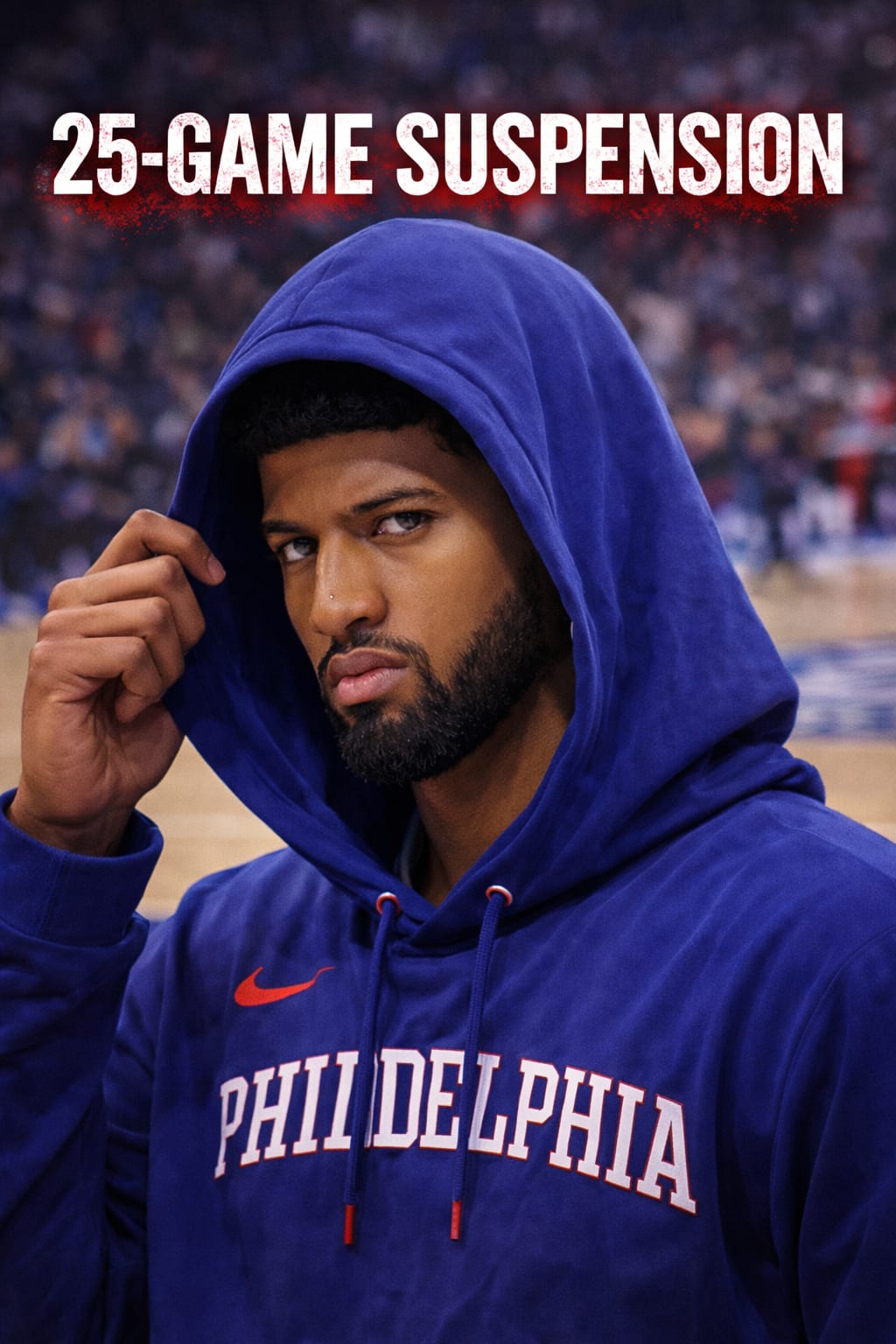
When Paul George was asked how he managed to recover from one of the most devastating injuries an NBA player can suffer, his answer was refreshingly honest. Speaking about the long road back and offering advice to teammates dealing with similar physical wear and tear — including Joel Embiid — George said plainly that “drugs helped me” during his recovery.
Not performance-enhancing drugs. Not shortcuts. Just a blunt acknowledgment that modern recovery often involves medical intervention.
Shortly after that comment, George was hit with a 25-game suspension for violating the NBA’s Anti-Drug Program. And while the timing raised eyebrows, the more important story isn’t when the suspension happened — it’s what it wasn’t for.
The language of the suspension matters. A lot.
The NBA did not classify George’s violation as a performance-enhancing drug offense. There was no mention of steroids, HGH, blood doping, or masking agents. There was no escalation, no prior PED history, and no suggestion that George gained an unfair competitive advantage. That alone tells us this wasn’t about cheating the game.
It also wasn’t marijuana. The league no longer tests for THC, and players cannot be suspended for cannabis use. So the idea that George was punished for using weed as pain management doesn’t hold up under the current rules.
What does fit — both the suspension length and George’s own statement — is the use of a prescribed medication that violated NBA policy due to disclosure, approval, or technical compliance issues. In other words, something legal, doctor-directed, and non-performance-enhancing, but not cleared through the league’s strict procedural framework.
And that’s where the NBA’s logic breaks down.
If a licensed medical professional prescribes a medication to help a player manage pain, recover from injury, sleep, or cope with the mental toll of rehab, that should not be treated the same way as drug abuse or competitive manipulation. The league’s drug policy may be well-intentioned, but in situations like this, it punishes availability instead of promoting it.
George didn’t say drugs made him faster, stronger, or more explosive. He said they helped him recover. There’s a massive difference.
The NBA is a league that constantly emphasizes player health, load management, and long-term wellness. Teams invest millions into sports science, recovery technology, and medical staff. Yet when a player openly acknowledges that medically supervised treatment helped him get back on the floor, the response is a suspension that removes him from competition for nearly a third of the season.
That’s backwards.
If the goal is to have stars healthy and available — especially in a league often criticized for stars missing games — recovery should be encouraged, not quietly discouraged through punitive policy enforcement. The message sent here isn’t “follow the rules,” it’s “say less, disclose less, and don’t be honest.”
And that helps no one.
The NBA’s insistence on confidentiality only worsens the optics. By refusing to clarify the nature of violations like this, the league allows fans to assume the worst: PEDs, illegal drugs, or reckless behavior. In reality, the evidence strongly suggests this was a bureaucratic failure, not a moral or competitive one.
There’s a simple fix: differentiate intent.
If a player is abusing substances or trying to gain an unfair edge, suspend them. But if a player is following medical advice in pursuit of recovery and availability, the league should be working with them — not sidelining them.
Paul George’s situation highlights a policy stuck between two eras: one that preaches wellness, and another that still punishes the tools required to achieve it.
Recovery isn’t cheating. Being honest about it shouldn’t be either.
If the NBA truly wants its stars on the court, it needs to start treating medically supervised recovery as part of the game — not a violation of it.
About the Creator
Logan M. Snyder
https://linktr.ee/loganmsnyder
Keep reading
More stories from Logan M. Snyder and writers in Unbalanced and other communities.
Why the Cardinals Hiring Mike LaFleur Feels Like a Pivot, Not a Plan
When the Arizona Cardinals finally announced Mike LaFleur as their next head coach, the reaction around the league was less excitement and more confusion. Not because LaFleur lacks credentials, but because the timeline of the hire suggests something uncomfortable: he wasn’t their first choice.
By Logan M. Snyderabout 24 hours ago in Unbalanced
Wild Card Weekend Recap: What Happens Now?
I think I figured out why I love Wild Card Weekend so much. It's because it's the first playoff anything of the calendar year. The NFL season starts in the fall, and once upon a time, the champion was crowned either on or slightly before New Year's. The evolution of the NFL schedule has resulted in the playoffs starting just into the New Year, and currently, the final week of the season falls on the first weekend of the New Year, with Wild Card Weekend coming a week after that. So yes, chronologically, the NFL's Wild Card Weekend serves as the first playoff anything of the calendar year.
By Clyde E. Dawkins20 days ago in Unbalanced
John Jay Enters Passing Lanes in 71-62 Win
Scroll down for photos On Friday January 9, John Jay welcomed Hen Hud to the high school for some Friday night basketball and kicked off the festivities by taking an early 8-3. But the scoreboard wasn’t as telling as the style of play.
By Rich Monetti5 days ago in Unbalanced




Comments
There are no comments for this story
Be the first to respond and start the conversation.