
Goodbye Galleries, Hello India
Unique experiences for lovers of all art forms


Having just returned from six weeks in India after copious amounts of research beforehand, I can conclude that India is an epic interactive art gallery filled to the brim with different visual and sensual art forms. For those who love textiles, patchwork, block printing, and silk might entice you. If you are like me and live for culture, the traditional dance performances from different states might be your thing. For fans of archaeology, you cannot move beyond Hampi. India is also an architect’s treasure trove. There really is something for everyone!
Delhi - Lodhi Art District
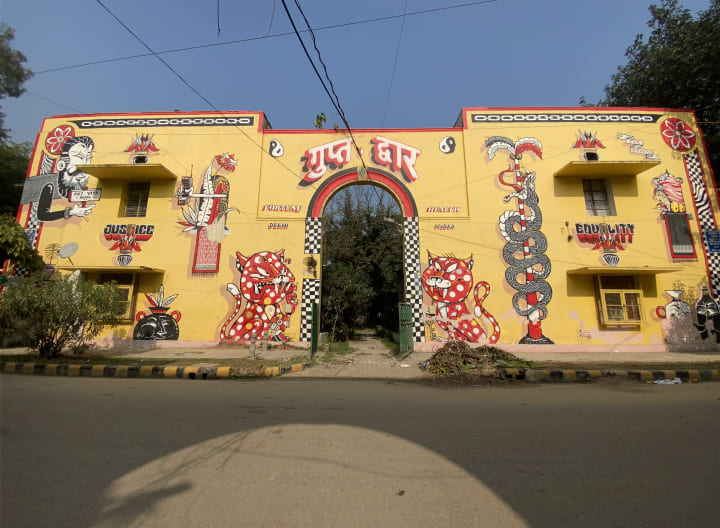
Firstly, start your India travels in Delhi like I did and visit India’s first open- air art gallery. The Lodhi Art district is a relatively quiet neighborhood away from the grime and pollution that can plague the rest of the city. The buildings are emblazoned with artworks from both Indian and international artists. Each one represents a deep and meaningful story or message, such as world peace or the role of the family.
The Delhi Street Art tour from Reality Tours and Travel took me through a carefully selected range of artworks. There are still more streets to explore, though. The bonus with Reality Tours is that its profits go towards supporting the communities in the Sanjay and Dharavi slums in Delhi and Mumbai, respectively.
Religious Street Art
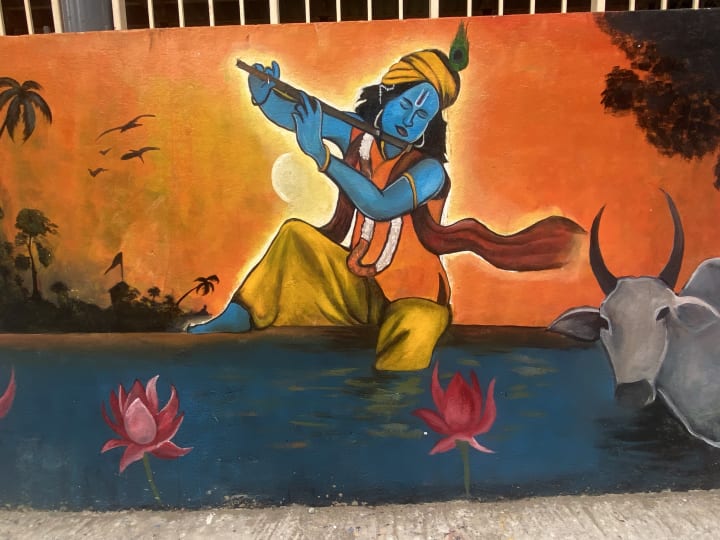
Although not religious myself, I am in awe of the sheer quantity and vibrance of the street art around India. Street art is diverse, depicting direct messages to passers buy and reflecting many world religions.
Hinduism was the main image reflected in most of the places I visited. Deities were therefore prominent figures throughout my travels. In Varanasi for instance, the artwork is everywhere including in the numerous alleyways one can get lost in.
Rajasthani folk dance and Kathputli puppets
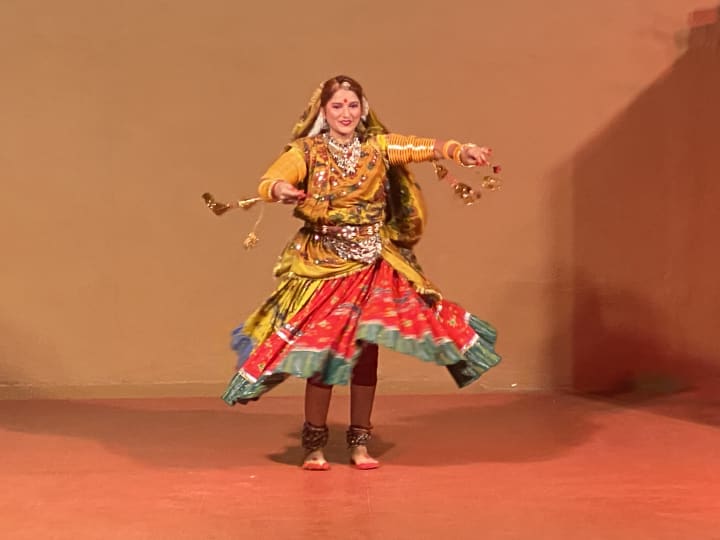
Udaipur is the romantic city of Rajasthan state. White buildings on and around Lake Pichola, sunsets, and silver jewellery are plentiful, depicting scenes from a romantic movie. Visitors can also enjoy a performance of Kathputli (traditional Rajasthani puppets) and folk dance.
The string marionettes are the most popular form of puppetry in India. Kathputli refers to dolls made entirely of wood; however, these also have cloth and metal wire. The shows depict scenes from Rajasthani folk tales.
There are a number of different Rajasthani dances, my favourites being the Kalbelia (serpentine style) depicting stories from folklore and the Bhavai, a dance that is usually performed by women belonging to one of the tribal communities of the state. It takes many years to master this dance, which involves women balancing eight to nine pots or brass pitchers on their heads as they dance and twirl.
Jaipur - Try Blockprinting
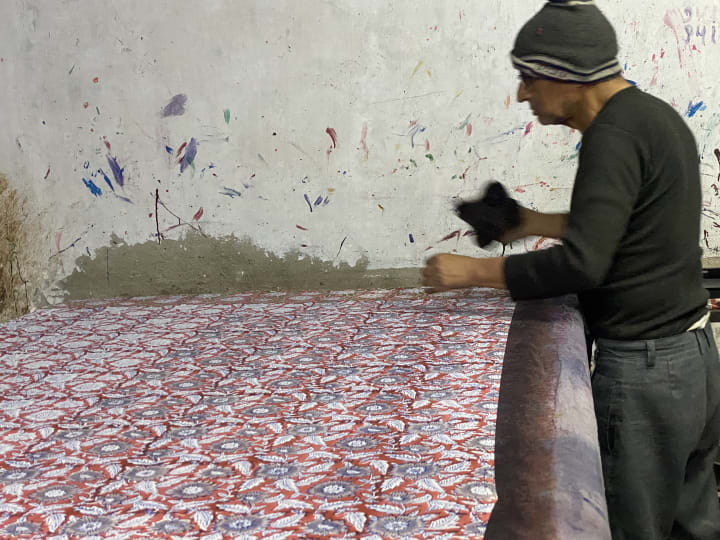
Block printing has a long history in India. It is the craft of dyeing and colouring a fabric using wooden blocks. These can be found all over India but primarily in the north. Rajasthan and Gujarat are two states that are famous for this. The block has a stencil per se of geometric motifs, mainly reflecting India’s variety of cultures and histories. For instance, at the demo I experienced, we were working with elephant motifs. India is the largest exporter of block prints, so this art form is very significant.
At the well-known factory in Jaipur, you can have a go at block printing. I wasn’t very talented at it. You need to press down on the block hard. I did so with all my might, but according to my audience, I stopped just before pushing it onto the cloth. I must have been ‘scared’ of pain, I guess. The elephant turned out okay in the end, and I got a few laughs from it!
Henna for a cause in Agra

I got a Henna while I was in Agra. I can confidently say at the best place to do so — Sheroes Hangout — a café run by female victims of acid attacks. Learning about this situation in India and chatting with the ladies made my Henna experience a special one. Although acid attacks incited by husbands onto their wives are decreasing, this is till occurring all too frequently with over 1000 of incidents each year.
Not one for body art, I was reluctant to get a Henna but was convinced by my fellow travellers to take the plunge. I felt special taking part in an ancient historical practice. Henna is used in Indian culture to decorate women’s (and men’s) skin during times of celebration such as weddings and other important days.
Agra - The ultimate love story of India
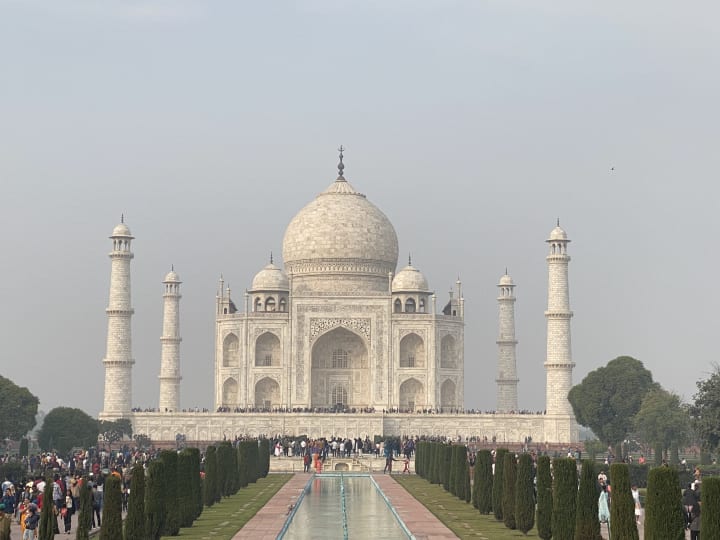
The Taj Mahal is the product of a romantic gesture. Emperor Shah Jahan designed the Taj Mahal in response to the death of his favourite wife Mumtaz Mahal. Her dying wish was to be buried in the most beautiful mausoleum in the world. A feat that was achieved by the labour of 250 people and even elephants!
After the 12 years of construction in 1643, the First Lady of the Mughal world was buried in a mausoleum worthy of her name.
Shah Jahan died 20 years later and his body was brought to the Taj to be buried alongside the love of his life.
Varanasi -the art of faith
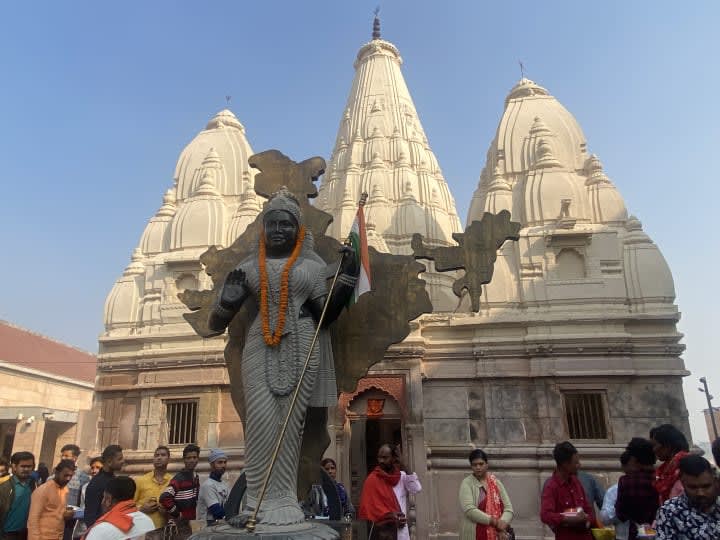
Varanasi is arguably the holiest place in India and the longest continuously inhabited city in the world. Along the ghats (steps leading down to the river), we see Hinduism at its most authentic. The smoke from the cremation of bodies, the singing, fire, and dancing creates an incredible experience. Wedding attendees process through the narrow alleyways. It’s another world from my concrete jungle of Sydney Australia. Observing the Hindu rituals involves being among people and experiencing a different faith. People see and experience all these things in the most enchanting and inspiring of ways.
Kerala -Kathakali Performance
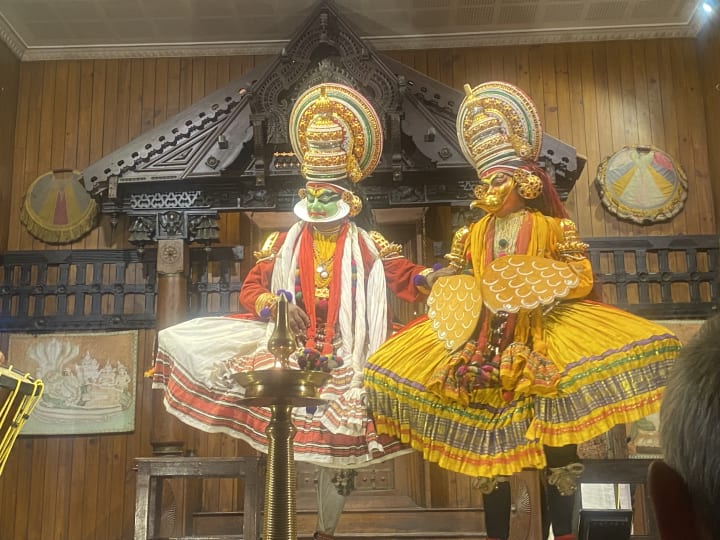
Kathakali is an ancient Indian dance. One of the oldest art forms in India, it is one of the eight classical dances in India. The art is based on ‘the story’ and is characterised by the vivid, colourful makeup worn by the characters. The performance also includes watching the performers put on their makeup. It is native to the state of Kerala and to speakers of Malayalam.
Kathakali combines music, vocal performers, choreography, and hand and facial gestures to express ideas. However, Kathakali also incorporates movements from ancient Indian martial arts and athletic traditions of South India.
The traditional themes of the Kathakali are folk stories, religious legends and spiritual ideas from the Hindu texts. The vocal performance has traditionally been performed in Sanskritised Malayalam.
Hampi
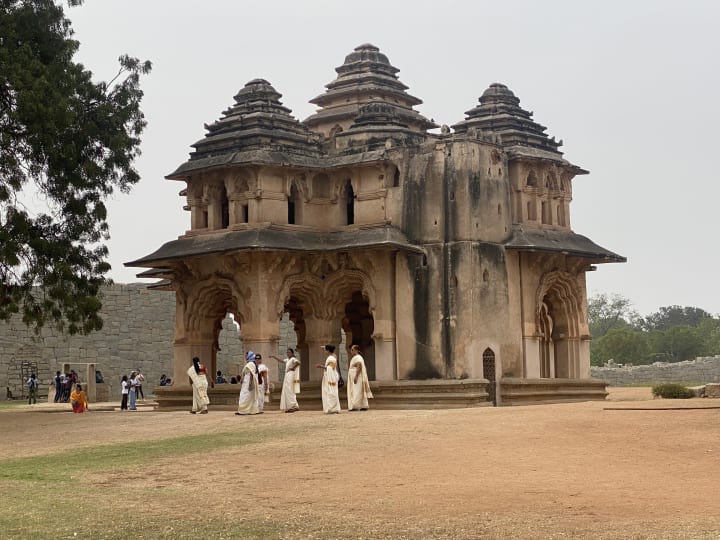
Although Hampi is not on the itinerary of many South Indian tours, this epic ancient world is a must-visit! Hampi used to be the largest town in Asia, competing with Beijing. Perhaps it is India’s answer to Rome, however despite my experience with Italian, I believe it leaves Rome behind.
Hampi is a UNESCO World Heritage site and for good reason. Ancient ruins are everywhere, including temples, courtyards, even toilets! Don't forget the boulders! The idea of walking through these ruins makes me long to walk back in time and feel the stories from centuries ago. While in Hampi, you could also visit Badami which I understand to also be impressive.
About the Creator
Keep reading
More stories from Sophia Higgins and writers in Wander and other communities.
Make Malawi Your COVID-19 Detox
Are you lusting after an adventure? Anywhere preferably far away from your COVID “cocoon?” Malawi could be the answer. Landlocked by Zambia, Tanzania, and Mozambique, it is often overlooked by tourists. Although a trip here could be in the distant future due to COVID outbreaks and travel bans, it is a refreshing and unique destination for your post-pandemic bucket list.
By Sophia Higgins4 years ago in Wander
Seattle Nightlife Report: Pony
Mid-winter Friday night. Early but already so dark. The days are getting longer but 6 PM is still pitch black. “Firepit!” You declare things after just a few seconds of solemn thought – not a request or suggestion, not a demand. Last week you walked around saying, “Hot tub?” to anyone who would listen. Or one afternoon you pointed at two men holding hands as they crossed 12th Avenue, looked me in the eyes and said, “Boyfriends.”
By Joe Nasta | Seattle foodie poet16 days ago in Wander
Our Journey to Merzouga’s Golden Dunes by Morocco Family Vacation
Before traveling to Morocco, the Sahara Desert felt like something meant for postcards or adventurous backpackers not families with kids. I worried about long drives, extreme heat, and whether the experience would be overwhelming for my children. But our family trip to Merzouga, deep in the golden dunes of the Sahara, became one of the most meaningful experiences we’ve ever shared together.
By Ariel Cohen5 days ago in Wander


Comments
There are no comments for this story
Be the first to respond and start the conversation.