
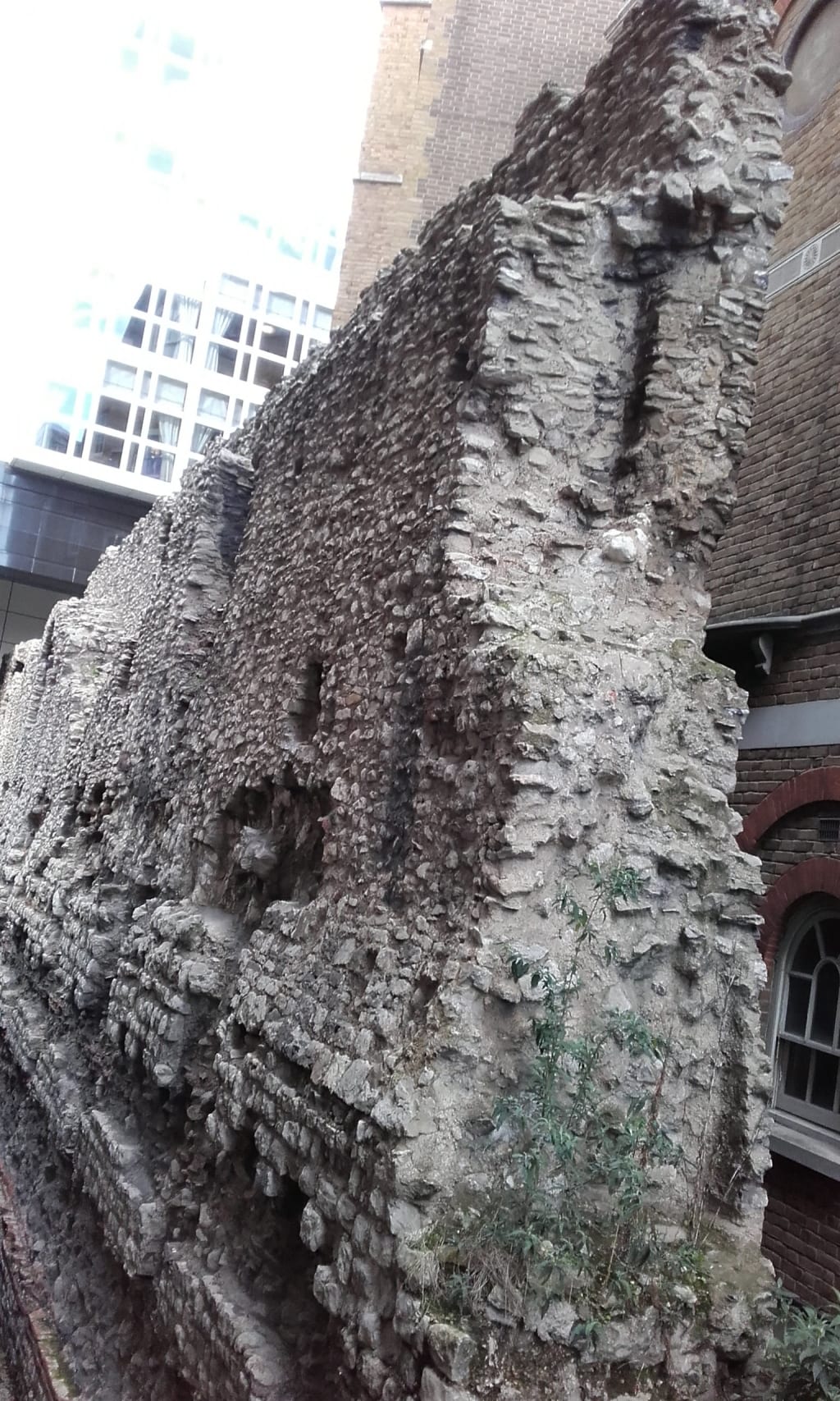
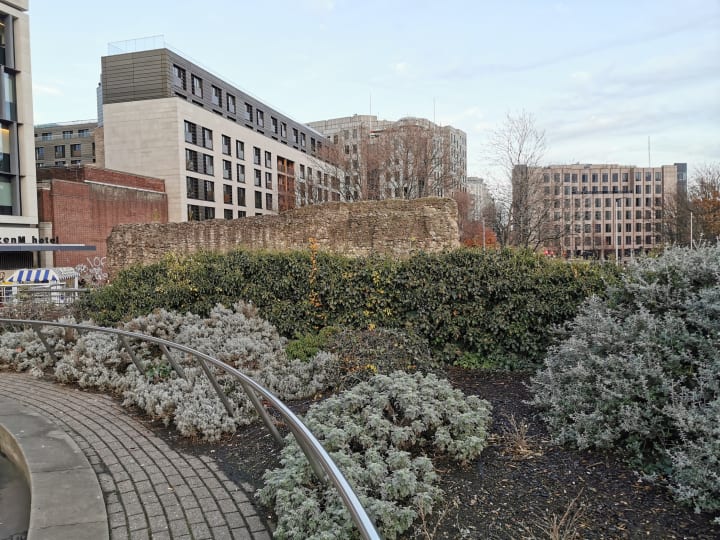
Roman London, known as Londinium, was founded by the Romans around AD 43 as a strategic settlement on the River Thames. It rapidly grew into a significant trading and administrative centre for the Roman Empire, connecting Britain with the rest of the Roman world. The city was laid out in a grid pattern, with major roads like Watling Street and Ermine Street converging at Londinium, facilitating trade and communication throughout Britannia.
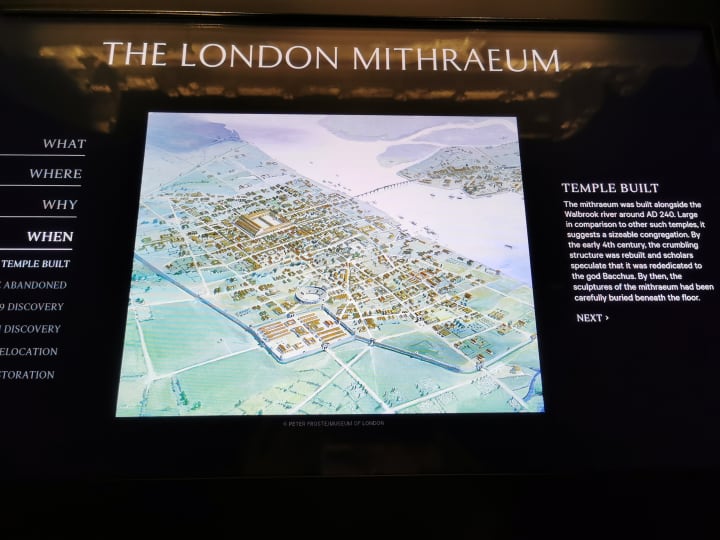
The Romans constructed various structures in Londinium, including a forum, bathhouses, temples, a theatre, and a basilica, serving as centres of administration, worship, and entertainment. Around AD 200, the London Wall was built to fortify the city. Parts of this wall can still be seen in modern-day London, such as at the Tower of London and in the Barbican area.
The Roman occupation of Londinium lasted for approximately 400 years, during which the city flourished as a cultural and commercial hub, attracting people from different parts of the Empire. However, in AD 410, the Roman Empire began to decline, weakening its authority in Britain. Londinium faced challenges, including barbarian attacks, and its decline continued after the Romans officially left Britain in the early 5th century.
The remains of Roman London were gradually buried and forgotten as new structures were built over the centuries. The rediscovery of Roman artefacts and structures began in the 19th century during construction work and archaeological excavations. Today, various Roman artefacts are on display in the Museum of London, providing insights into the daily life, culture, and history of Roman London.
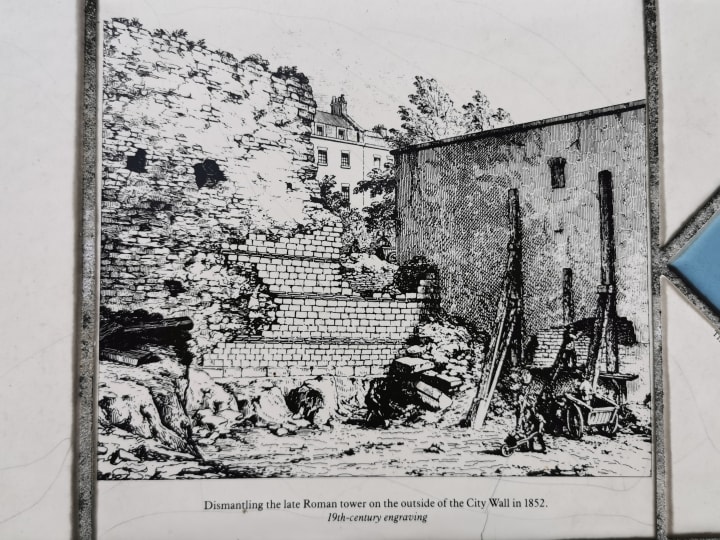
Roman London played a significant role in shaping the city's future, serving as the foundation for London's development and growth over the centuries. The legacy of Londinium can be seen in the vibrant and cosmopolitan city that London is today.
A Money Temple On Top Of A Roman Temple
Bloomberg's current Headquarters in the City of London made news in the financial world when it first announced its new headquarters in DATE. Many were surprised that an American financial services company was moving to the old City of London and not following others who were decamping or setting up in the new financial district - Canary Wharf.
Many may recognise Bloomberg, which was set up by Micheal Bloomberg, a one time Mayor of New York or the financial folk who use Bloomberg terminals and their online services. Bloomberg choice of location was a significant one because it is in the Ward of Walbrook, one of the 25 Wards in the City of London, also known as the Square Mile.
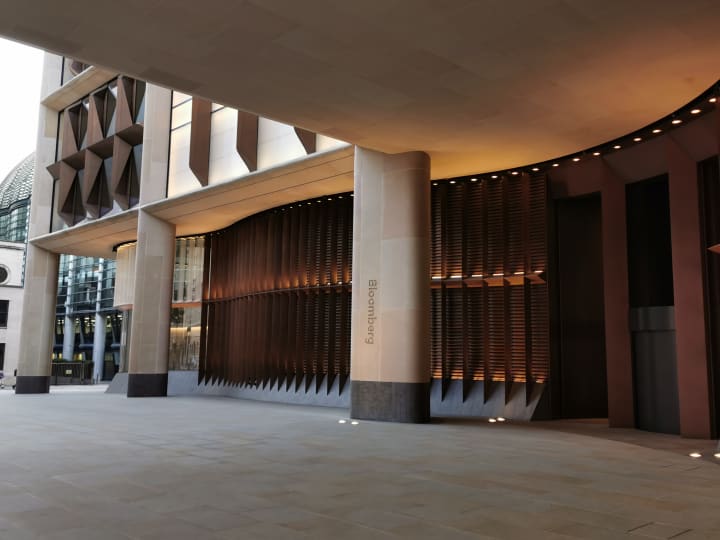
The Old World
Walbrook has been around for 2000 centuries and played a prominent role in Roman London. Why? It may be a lost river, but the area was the first Roman settlement as more people moved towards the site. In Londinium, established communities of merchants started to flourish. In the 3rd century AD, nearly 200 years after the founding of London, a Roman Londoner built a temple to the god Mithras on this reclaimed ground, next to the river.
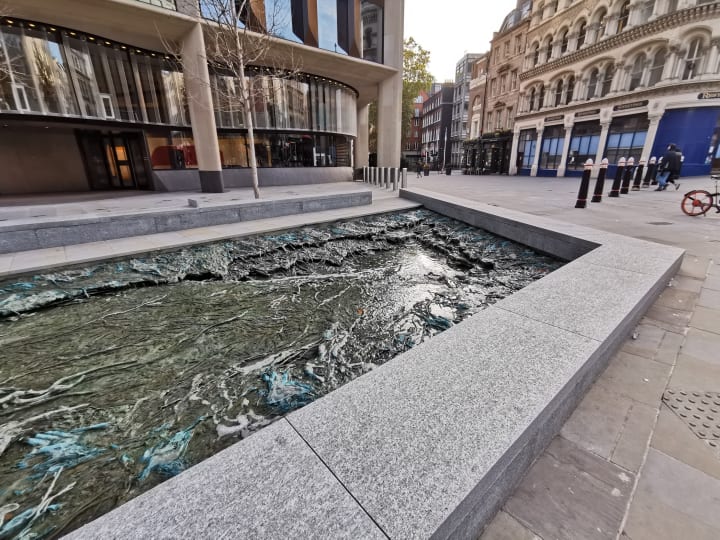
The new world would build on the old location Legal & General. When construction commenced in 1954, they made a significant find. They found the remains of the Temple, which was subsequently and carefully moved to allow for construction to proceed. It was returned in 2014 to its original location - underneath today's Bloomberg Headquarters.
Who was Mithras?
The Temple was constructed by a merchant in honour of Mithras, whom the Romans chose to worship. The cult was all male. There were seven degrees of initiation, and different rituals meals were associated with each stage.
Discovery
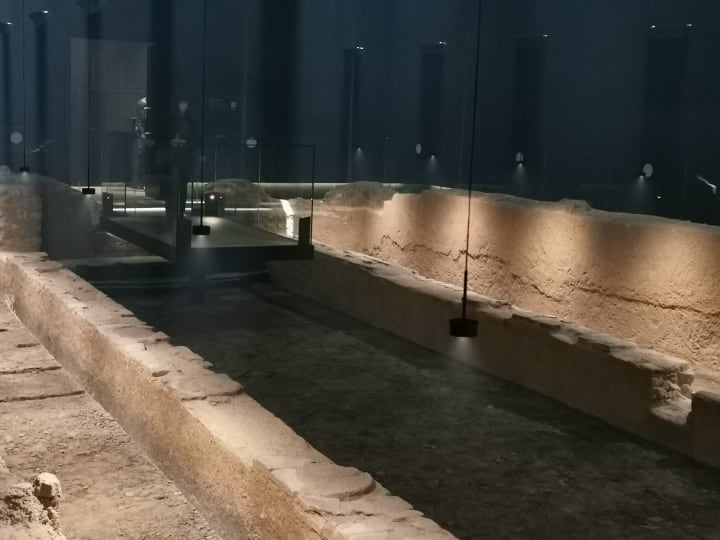
Bloomberg decided to restore the Mithraeum to its original site as part of their new European headquarters. The new site is 7 metres (23 ft) below the modern street level and an exhibition space beneath the Bloomberg building. The Temple was moved a little west of its original position to preserve parts of the walls that were not uncovered in 1952–54 and are too fragile to display today.
The ruins are reconstructed as they appeared at the end of October 1954, reflecting the first building phase of around AD 240 without any later Roman additions to the site. A large majority of the stones and bricks are original.
Today
You can visit the Temple, and you must book a ticket in advance. It is free, and the entrance is at 12 Walbrook. Tickets are free. There's ample space to move around the exhibit with timed entry and no flash photography. There's not much to see except the foundations, but the accompanying sounds give you a sense of a bygone era. I was surprised as to how small it was too.
Several artefacts are displayed in the glass wall cabinet, and it's an exciting collection. Interestingly, according to the Bloomberg Mithraeum website, the archaeological excavation between 2012 and 2014 is one of the most extensive ever to have taken place in London.
More than 14,000 individual artefacts were recovered, including 63,000 sherds of Roman pottery and three tonnes of animal bone, providing evidence of trade, consumption, food and industry. Each object told a story and was made, handled, treasured, worn, consumed, lost or discarded by someone from Roman Londinium.
Thank you for your attention.
Best wishes,
Tabby
About the Creator
Tabby London
The London I've been discovering is usually off the well-beaten track.I love the nooks and crannies and walking along the streets steeped in centuries worth of history. I'm fond of Zone 1 because that's where it all began centuries ago.
Keep reading
More stories from Tabby London and writers in Wander and other communities.
Seattle Nightlife Report: Pony
Mid-winter Friday night. Early but already so dark. The days are getting longer but 6 PM is still pitch black. “Firepit!” You declare things after just a few seconds of solemn thought – not a request or suggestion, not a demand. Last week you walked around saying, “Hot tub?” to anyone who would listen. Or one afternoon you pointed at two men holding hands as they crossed 12th Avenue, looked me in the eyes and said, “Boyfriends.”
By Joe Nasta | Seattle foodie poet14 days ago in Wander
A Taste of London
There is a show on Recipe.TV called “A Taste of London” hosted by Chef Edward Delling- Williams. It is as the title of the show says the food of London and culture. Being a native of London Edward Delling-Williams on the subject of London and the food. I love to watch a taste of London anytime it’s on. I would even watch reruns of it even if I’ve seen the episode before because it’s so enjoyable. I also like Edward Delling- Williams. He’s a personal host of the show one of my favorite cooking show personalities.
By Revista Mikoa day ago in Wander
Why Black History Matters in America?
The United States of America is celebrating their 250th anniversary in 2026. I'm proud to be an American and as someone who was born here, I wouldn't imagine myself living anywhere else. This is a country where opportunities are possible. Where anyone can be successful in anything they desire to do. Equality, community, and togetherness are the backbones of what America is and should be about. However, we have an administration who wants to erase and disregard those who have made positive, meaningful impacts in our country, specifically Black figures, such as Martin Luther King, Jr., Rosa Parks, and Maya Angelou. President Trump and his administration have been constantly complaining and fighting against what they call the "Woke agenda". They use this excuse as a distraction from other issues they refuse to address, such as the high cost of living, climate change, and inflation. That equality is dividing America, when in reality, it's bringing us together. Being woke is not tied to a specific political party. No matter where you stand on the political spectrum, you can still care about other people and their plights. Compassion and empathy for others isn't tied to a political party, either. We were taught as children to treat others the way we want to be treated and not judge others because they're different from us. Caring about others isn't a personal attack on your beliefs. It doesn't make you any less of a person. People who are easily offended over African American figures, past or present, or anything related to it, are grasping at straws. Current and future generations need to know who people like Harriet Tubman and Shirley Chisholm were, especially in the classroom. Black History is part of American History. It should be recognized, not hidden or forgotten. Besides, you can't shield children from everything, just because your feelings are easily hurt.
By Mark Wesley Pritchard 3 days ago in The Swamp




Comments (3)
Nice message
Awesome piece
This was so informative and interesting. Thank you.