
The Surprising Advantages of 3-Cylinder Engines : Why 3-Cylinder Engines Are More Efficient Than You Think
These days we’re seeing a lot of great 3-cylinder engines popping up. Tech’s gotten so good, we can squeeze a ton of power out of tiny little engines now.


You may have noticed—and if not, let me explain—engines are getting smaller and more efficient these days, and that trend looks like it’s here to stay. Gone are the days of massive engines in relatively small cars. So, what does that mean? We’re getting more economical engines, and right now, the trend is toward 3-cylinder setups—something engineers didn’t really consider seriously a while back. Sure, 3-cylinder engines existed before, and some were even kinda popular, but they never really caught on.
Now, we've got a bunch of cars in Indonesia rocking those tiny 3-cylinder engines. You know, the ones that came out of the government's LCGC (Low-Cost Green Car) program? Most of them are 1.0 or 1.2 liters, though some carmakers are still sticking with the old-school 4-cylinder layout. But let’s be honest—these newer 3-cylinders are way smoother and more fuel-efficient than the clunky ones from back in the day.
Take the Toyota Agya, for example. It’s a pretty common car around here, and it’s got a 1.0-liter 3-cylinder engine that cranks out a respectable 70 horsepower. It’s actually not bad to drive, especially when you compare it to the older 3-cylinder models.
Maybe smaller engines with fewer cylinders aren’t seen as profitable, but since cars are getting lighter, their performance will stay about the same—and they'll be a lot more economical. The days of cars getting heavier and less fun to drive are over. Of course, you’ve still got to use some common sense with these cars; they’re not built to be speed demons on the street. They're meant to be smart, efficient, and practical.
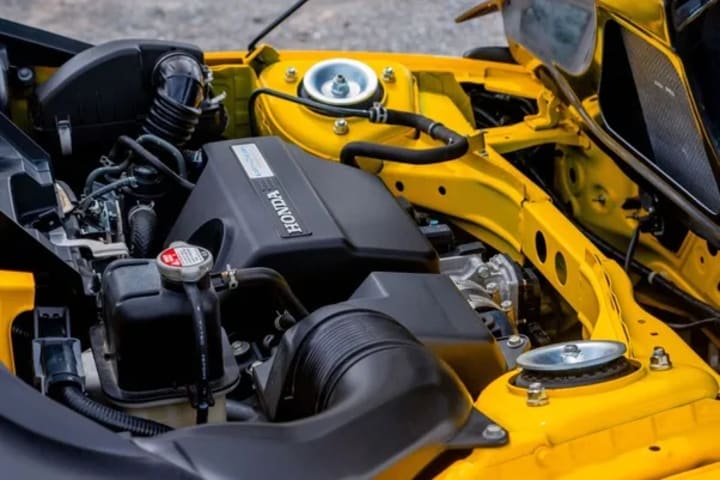
Or maybe another example is Japan; they have Kei Cars powered by 660cc turbocharged 3-cylinder engines, and some of them can produce close to 70HP! That’s an impressive feat of engineering, especially considering it comes from such a small engine. It feels like a few decades ago, we wouldn’t have dreamed of such a thing.
It happens because Japan has a tax system based on engine capacity, so the bigger the engine, the higher the tax. Kei Cars were born to get around that regulation. I’ve never driven a Kei Car myself, but friends have raved about them, especially the engines. They’re not too different from a small inline-4, proving that inline-3 engines are really stepping up their game.
Some car manufacturers are also using inline-3 turbo engines as power plants because they’re compact and lightweight. One example is the Toyota GR Yaris, which uses a 1.6-liter inline-3 turbo engine. This little engine packs a punch, producing around 260 horsepower and 270 lb-ft of torque. Paired with a 6-speed manual transmission and all-wheel drive, the GR Yaris is a seriously quick car.
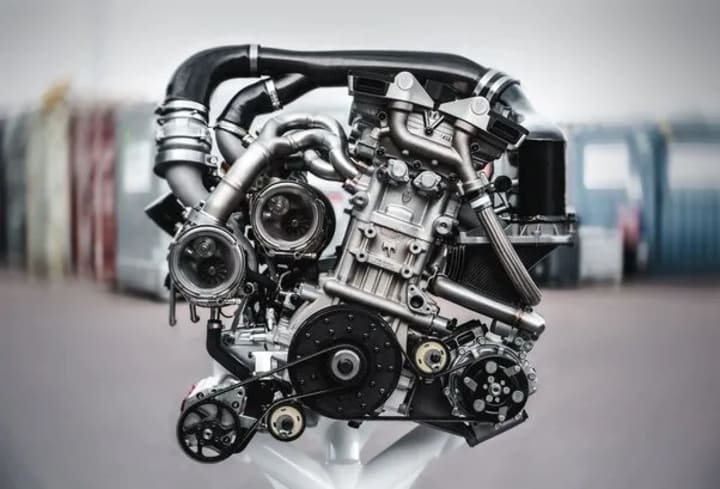
But an extreme example might be the Koenigsegg TFG or Tiny Friendly Giant. This little 2-liter, 3-cylinder engine packs a whopping 600 horsepower. It’s currently the most powerful 3-cylinder engine ever made. What’s even crazier? It doesn’t have a traditional camshaft. Instead, it uses pneumatic valves controlled by Koenigsegg’s sister company, Freevalve.
Koenigsegg designed the TFG specifically for the Gemera. They wanted something small, light, and incredibly powerful. Plus, they flipped the script on their hybrid setup. Unlike the Regera, where the engine does most of the work, the Gemera relies mostly on electric motors, with the TFG providing extra power and charging the battery.
The TFG’s sequential turbocharger setup is pretty neat. It has two exhaust valves per cylinder. At low RPMs, only the small turbo valve opens, giving a quick boost. Once you hit 3000 RPM, the big turbo valve joins the party, delivering massive power and torque.
It seems like 3-cylinder engines are getting a lot better lately. Maybe it’s because carmakers are being pushed to make smaller, more efficient engines with big power. I wouldn’t be surprised if we see more 3-cylinder engines in the future.
About the Creator
Pinesthi Mukti Rizky Wibowo
Hi, my name is Eky and here I will write about automotive and other things, most of the writing will be taken from my personal Quora or Medium account. Most of my writing is curated from my Quora account which I have more than 4,000 answers
Keep reading
More stories from Pinesthi Mukti Rizky Wibowo and writers in Wheel and other communities.
Modern vs. Vintage Car Headlights: Key Design Differences Explained
Maybe you’ve wondered why most classic cars have such plain-looking headlights. That’s because, up until the 1980s, headlights basically came in two shapes: round or square. You could “choose anything,” as long as it was one of those two. Sure, there were a few oddball designs here and there, but I’d bet 95% of headlights worldwide were either round or square. It wasn’t something that could easily be changed—mainly because the tech just wasn’t there yet.
By Pinesthi Mukti Rizky Wibowo10 months ago in Wheel
Teslas in Tbilisi
When I arrived in Tbilisi in August 2025, I noticed right away how many Tesla cars this city had. I obviously don't have the exact stats but it seems like they are everywhere and there's a lot more of them compared to other large cities I've been to.
By Lana V Lynx6 days ago in Wheel



Comments
There are no comments for this story
Be the first to respond and start the conversation.