
Missed a Day of Writing? Read This Before You Panic
The Truth About Writing Consistency, Discipline, And Creative Momentum

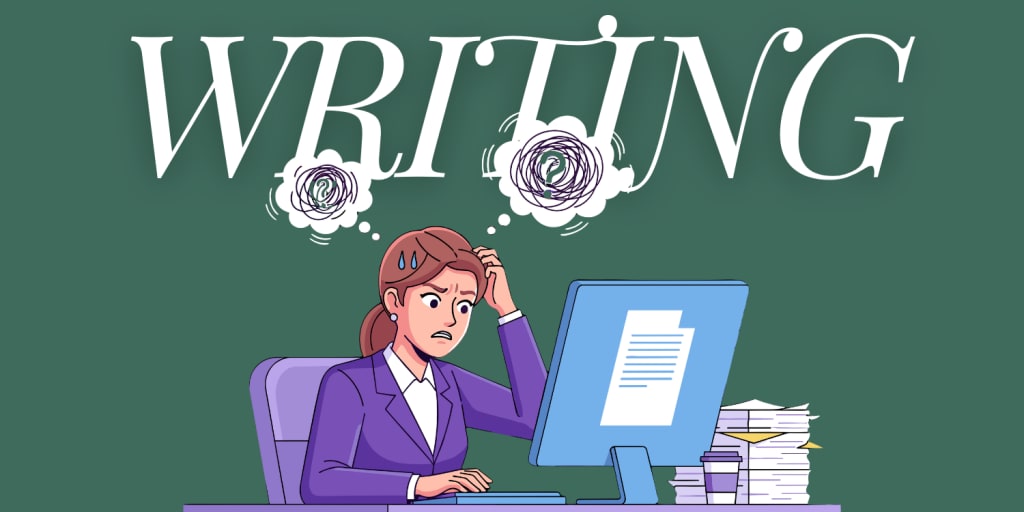
I missed yesterday.
I didn't write, not one word, not even a sentence in my notes app, nada.
I went to bed feeling like I'd failed, like I'd broken something important and assuming the entire habit I'd built was now ruined.
This morning I woke up, wrote 800 words, and then started writing this article, too.
I quickly realised the habit wasn't broken. The world didn't end, that's for sure. It turns out I'm fine.
Skipping one day of writing (in my writing streak) felt catastrophic for a moment, but it wasn't.
Here's why missing a day feels worse than it actually is, and how to recover without spiralling.
(And before we continue, we're not talking about a day off because a loved one died, or we were sick for a week and couldn't work, or because we went on holiday.)
The Guilt Is Disproportionate
When I skip a day of writing, my brain tells me:
"You're not a real writer." "You've lost your momentum." "The habit is broken now." "You'll never get back on track."
This is an irrational part of my brain telling me something that isn't true. Missing one day doesn't erase 50 days of showing up. It doesn't undo the habit. It doesn't prove I'm undisciplined.
But what I hate the most is that it feels like all those things, even when it's not true.
The Fear Is Legitimate
When this doomed feeling takes over, we make an assumption about our momentary writing pause that isn't true. We assume that our break is actually us quitting.
Here's the reality:
- A break is: One day off, then back to it.
- Quitting is: One day off, followed by spiralling, leading to giving up entirely.
As you can see between the two definitions, the missed day isn't the problem. The guilt spiral is the problem. The fear of missing one day is actually the fear of repeating old patterns. So my brain associates "missed one day" with "this is how quitting starts."
For example, I have a legitimate fear of losing momentum, believing one missed day will turn into two, then a week, and before I know it, I'll never write again.
This fear is based on past experience. I've quit things before by "taking a break" that turned into something permanent. I've also quit other habits by feeling guilty, then avoiding the guilt by skipping another day, which eventually led me to abandon the habit entirely.
I'm fearful the past will repeat itself, and considering how much it's happened to me, I don't blame myself for feeling this fear.
But it's just a fear, though.
Negative Writing Streak Mentality
What's not helping me is my incredibly negative writing streak mentality, one I know I'm not alone in thinking.
I'd written 47 days in a row when I broke the streak, and because that streak felt important. Sacred, even, it felt like throwing away 47 days of work.
But that's not how habits work. We all know the value isn't in the streak and in the consistency over time.
47 out of 48 days is still 98% consistency, which is an excellent result.
But my brain just fixates on the one missed day instead of the 47 successful ones, and that's making this small hiccup feel like a natural disaster.
All-or-nothing Writing Thinking
I know I'm not the only one who harbours a very black-and-white attitude toward writing (and toward working in general). My brain says: "If you can't write every day, you've failed." And quite often it fixates on perfectionism, telling myself that: "If you can't do it perfectly, don't do it at all."
This is why people quit after missing just one day. They think they've already failed, so why continue?
But logically, we know writing (as a habit and a skill to master) isn't about perfection. It's about showing up most of the time and being kind to yourself when you don't.
And I'd rather write 300 days out of 365 than aim for 365, miss one, and quit entirely. We need to remember that life exists in the middle ground. 90% consistency is infinitely better than 0% consistency.
Missing one day doesn't delete the habit. It's just one day.
How To Actually Recover From Your Writing Break
The last thing you want to do is to let the irrational thoughts win. We need to catch ourselves before what we fear becomes a reality.
Step 1: Don't apologise to yourself
I used to spend the next day beating myself up. "I'm so undisciplined. I should have written yesterday. I'm terrible at this."
This makes it worse. Now I've spent two days feeling bad instead of one. Just move on. Yesterday is over, and today is new, and let's treat it that way.
Step 2: Write today (even if it's bad)
Don't try to "make up" for yesterday by writing twice as much today.
Just write normally, with your usual goals and writing objectives. Prove to yourself that the habit still exists by completing it as you normally would.
Step 3: Forgive yourself immediately
You're human, and humans miss days.
You felt exhausted, overwhelmed, you legitimately needed rest, or you genuinely couldn't face the keyboard that day. Shit happens, but it doesn't mean you're failing.
Step 4: Update your definition of success
This was a test of what success means to you. And if you've taught yourself that success means "never miss a day," you're headed straight for failure.
Writing 80% of days is enough. Practically, that's 5–6 days per week, and if you write 25 days out of 30, that's 83%. But if you're aiming for 100% and beating yourself up over every miss, you'll burn out or quit.
Remind yourself that success is "write most days and get back on track when I don't." And if you can't do that, imagine you were saying it to a younger version of yourself.
Lead with kindness, and lower the bar from perfection to consistency. You'll last longer, I promise you.
Missing A Writing Day Is Good For You
Sometimes you need to miss a day.
You're genuinely sick. Or burnt out. Or dealing with a crisis. Or just exhausted.
Forcing yourself to write when you're barely functional isn't discipline; it's self-punishment when it's the last thing you should be doing. Missing a day to rest can actually strengthen the habit long-term by preventing burnout.
The Real Pattern to Watch
Missing one day isn't the problem.
Missing one day, then two, then a week, then never writing again, well, that's a problem worth spiralling over.
So my rule is: I can miss one day without guilt, but I have to write the next day. That's my non-negotiable.
This prevents the spiral while still allowing me to be human.
I'm also reminding myself constantly that people love streaks (we're obsessed with them). Apps celebrate them and sell their worth based on keeping you locked into a streak. Writers post screenshots of 100-day, 500-day, and 1,000-day streaks in order to look like they're worthy writers.
Streaks are motivating until you break one, and then they become crushing.
I don't track streaks anymore. I track: "Did I write most days this week?" If yes, I succeeded. If the answer is no, I adjust and try again next week.
This removes the all-or-nothing pressure because what actually matters is consistency over time, which trumps unrealistic perfection.
If You Missed Today
If you're reading this because you skipped writing today and feel terrible:
Stop. You didn't ruin anything. The habit isn't broken. You're still a writer. Just write tomorrow. That's it, that's all you have to do.
One missed day means nothing unless you let it become two, so just don't let that happen.
---
I write about the emotional and practical reality of being a writer - drafting, doubt, discipline, and publishing while still figuring it out.
Mostly for people who write because they have to, need to, want to | https://linktr.ee/ellenfranceswrites
About the Creator
Ellen Frances
Daily five-minute reads about writing — discipline, doubt, and the reality of taking the work seriously without burning out. https://linktr.ee/ellenfranceswrites
Keep reading
More stories from Ellen Frances and writers in Writers and other communities.
Amazon's Algorithm Didn't Promote My Book. Here's What I Should Have Done Instead.
I believed the myth: write a good book, upload it to Amazon, and the algorithm will do the rest. There are millions of readers browsing Amazon, and the platform's sophisticated recommendation system pushes my book to fans of romance fiction (my book's genre). There is this "Customers who bought this also bought…" magic that would introduce my book to the right people.
By Ellen Francesa day ago in Writers
When Amazon Says You’re a Disappointment
Yesterday, for the first Wednesday in months, I didn’t publish a piece on Vocal. Believe me, I wanted to. I had it all written up and ready to go. I was going to share the news that I had officially become a published author.
By Sandy Gillmana day ago in Writers
Understanding Modern Accountancy Services for Businesses and Individuals
Accountancy services play a central role in the financial health of businesses and individuals. In today’s regulatory and digital environment, accounting is no longer limited to recording transactions or preparing annual statements. It has evolved into a comprehensive advisory function that supports compliance, strategic decision-making, tax efficiency, and long-term growth.
By jimmie Lotte3 days ago in Writers




Comments
There are no comments for this story
Be the first to respond and start the conversation.