

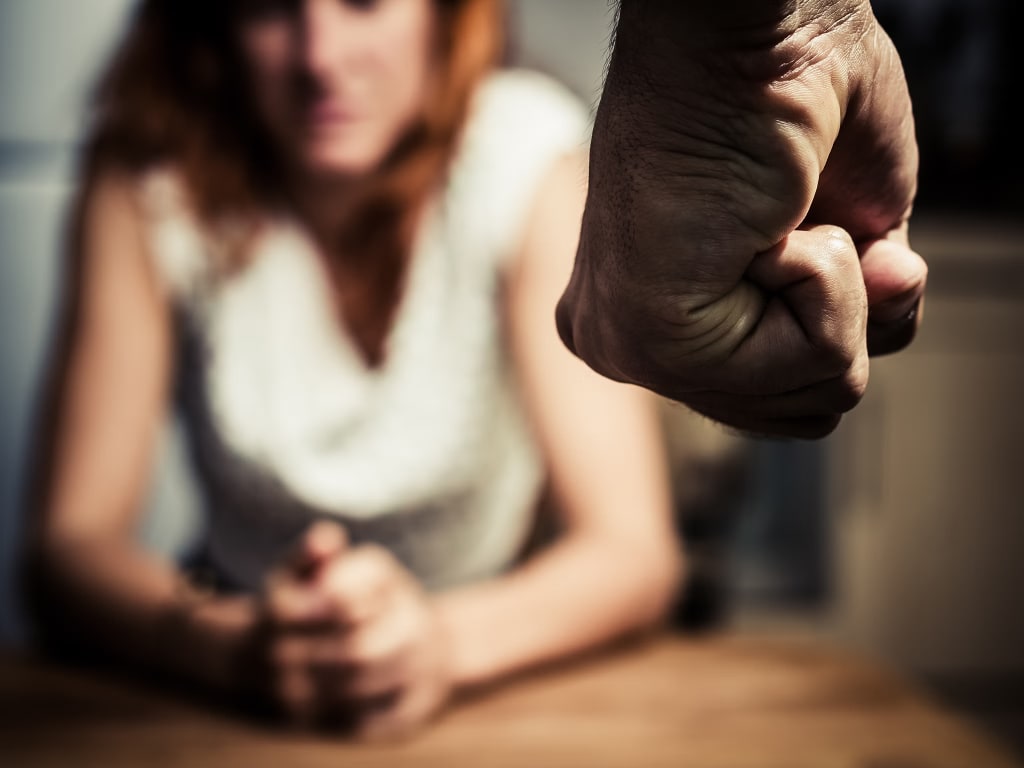
She took the diaper bag,
the one with the broken zipper she'd been meaning to fix
since March.
She took his blanket — the yellow one,
not the blue one he'd left behind,
which she only realized later,
which she did not go back for.
She took her phone with eleven percent battery.
She took her keys.
She did not take her good coat.
The car was cold.
He was asleep in the backseat,
One hand open the way children's hands open in sleep,
like they are deciding, even then,
what to hold and what to let go.
She drove with both hands on the wheel.
She drove the way you drive
when you are not sure
If you are really doing this
But your hands have already decided
And your hands are smarter than your fear.
The city at 2 a.m. is full of lights
that don't ask anything of you.
Traffic signals are changing for no one.
A diner sign. A yellow glow.
She had twelve dollars and a half tank of gas
and a sister three hours north
who had said whenever, I mean it, whenever
and meant it
and never thought she'd have to mean it
and meant it anyway.
She practiced what she'd say.
I just need a few days.
I'm sorry to just show up.
He was asleep the whole drive; he was fine.
She practiced
not saying the other things.
The shape of a hand.
The particular sound a door makes
when it isn't just a door anymore.
She had gotten very good
at not saying things.
That was the skill the years had given her
And she was done with it now.
She was putting it down.
She was leaving it in the car.
Her sister opened the door before she knocked.
Had been awake. Had known.
No questions. Just the hallway light,
and her sister's arms,
and the boy transferred sleeping
from shoulder to shoulder
like something precious being passed
across a great distance,
I've got him, I've got him,
I've got him,
go ahead and cry.
She cried.
Three hours of not crying
came out all at once
in a kitchen that smelled like her childhood,
her sister's hand on her back,
moving in small circles
the way their mother had done
when they were sick,
when the world was the size of a bedroom
and someone who loved you
knew how to make it smaller.
In the morning, he woke up in a new place
and looked around with the serious face
he made when he was thinking something through.
He found her eyes.
He decided it was fine.
He said juice
And she said yes
and that was the whole of it,
That was everything,
the world beginning again
in an ordinary kitchen
with a boy who wanted juice
and a woman who stood up
and got it.
She did not know what came next.
She knew there were forms,
and phone calls, and fear
that didn't have the decency to leave
just because she had.
She knew there would be nights
that found her anyway.
She knew she'd second-guess.
She knew the word fine
would take years to mean what it used to mean.
But the juice was cold.
The morning was quiet.
Her son was eating cereal
one piece at a time, with great concentration,
as if this were important work,
which she was beginning to understand
It was.
As if simply being here,
in a kitchen,
in the morning,
soft and ordinary and safe,
was nothing.
Was, in fact,
the whole thing.
Was enough.
About the Creator
Monique Williams
Hello everyone,
I’m Monique talented writer who works in the medical field. I’m also a full time student at SNHU. My stories will be focused towards counseling and healing so thank you for reading and thanks in advanced for the support.
Keep reading
More stories from Monique Williams and writers in Writers and other communities.
A Room of my Own
Four different people have lived in this room since we bought the house, none of which ended well. No good deed goes unpunished for long. I decided after the last round that it was the last round. I no longer have an extra room; I have a writing room.
By Harper Lewis4 days ago in Writers



Comments
There are no comments for this story
Be the first to respond and start the conversation.