
Writing Feels Like Therapy
The Quiet Art of Healing Through Words
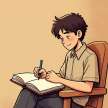

There is a peculiar solace in the act of writing—a quiet alchemy that transforms the chaos inside us into something tangible, something we can examine without fear. Life often presses upon us with an unrelenting weight, and emotions can become suffocating, swirling inside the mind like storms we cannot control. In these moments, words offer an escape, a lifeline, and sometimes even a revelation. They allow us to speak to ourselves in ways that silence never permits, to untangle the thoughts that seem too heavy to carry alone.
Writing is both a mirror and a scalpel. It reflects the corners of our minds that we often ignore, the shadowed thoughts we hide even from ourselves. And yet, when these thoughts find a page, they lose their suffocating weight. We can examine them, confront them, and gradually release them. Sentence by sentence, paragraph by paragraph, writing becomes a process of understanding and, ultimately, healing.
Unlike therapy in the clinical sense, writing requires no appointment, no trained hand guiding the process, no neutral office waiting for our confessions. The page does not judge; it does not interrupt; it simply receives. In this way, it can be more honest than conversation. We allow ourselves to be raw, to admit what we fear others will reject, and to explore the complexities of our own hearts without fear of ridicule. In doing so, writing becomes a kind of private sanctuary, a safe place to confront both our pain and our joy.
At its core, writing as therapy is about listening to oneself. When we write, we slow down. We notice the subtle details of our emotions—the ache behind a word, the tension in a thought, the whisper of hope amid despair. We become students of our own minds, learning to recognize patterns, to understand triggers, to honor feelings that might otherwise be dismissed or ignored. There is a remarkable power in acknowledging one’s own inner world. To give our thoughts and emotions a name is to take the first step in mastering them, rather than allowing them to master us.
Writing also offers a form of catharsis. There is a weight that lifts simply by naming fear, anger, or grief on a page. When we put pen to paper—or fingers to keyboard—we externalize the turmoil within us. Thoughts that once circled endlessly in the mind find structure and clarity. Emotions that felt inescapable become more manageable when transformed into words. There is a strange liberation in seeing chaos rendered legible. And while the act of writing may not erase suffering, it can make that suffering less threatening, less opaque, less consuming.
Sometimes, writing is confession. It allows us to reveal truths that have been buried or suppressed. Other times, it is exploration—a way to navigate emotions we cannot yet name. We might begin a piece without knowing exactly what we are feeling, and yet by the end, clarity emerges. A single word can unlock a memory. A phrase can untangle grief. A paragraph can chart the journey from despair to hope. And, more often than not, we discover truths about ourselves that therapy in its traditional form cannot always unearth.
There is also a universality to writing that makes it deeply human. Across cultures, across centuries, people have written to cope with the uncertainty and intensity of life. Letters, diaries, poems, essays—these forms exist because human beings have always needed a way to make sense of their experiences. We write to mourn, to celebrate, to rage, to reflect, to dream. Even if no one else ever reads our words, the act of writing connects us to this long lineage of human introspection and resilience.
Writing as therapy teaches patience—not just with the process, but with oneself. We learn to sit with our thoughts without judgment. We learn that healing is not linear; it is a journey of small insights, of messy drafts, of words that may never see the light of day. And we learn that it is okay to be imperfect. The act itself, regardless of the result, holds value. Every sentence, every line, every reflection is a step toward understanding, toward release, toward inner peace.
The process of writing can also sharpen self-awareness. By putting feelings into words, we engage with them on a deeper level. We recognize contradictions, uncover desires, and confront fears we might otherwise avoid. We see the layers of ourselves that are often hidden beneath the surface—our regrets, our hopes, our unspoken longings. And in this act of examination, we cultivate empathy for ourselves. We learn that our emotions are valid, our struggles meaningful, and our experiences worthy of reflection.
For many, writing becomes a lifelong companion. It is a habit that nurtures mental and emotional health, a personal sanctuary that is always available. Journals, poetry, essays, or even short reflections on social media can all serve this purpose. Each word written is a conversation with the self, a chance to listen, to question, to release. Over time, writing becomes a map of one’s inner world, a chronicle of growth, struggle, and transformation.
In the quiet of our writing, we find freedom. Freedom to express what is unspeakable, to confront what is painful, to honor what is joyful. Freedom to pause, to reflect, to untangle, to breathe. The page becomes a confidant, a witness, and a healer. And in this intimate exchange, we discover that words, when embraced fully, have the power not just to record our lives but to reshape them.
Ultimately, writing is both mirror and balm. It reflects our inner world with clarity and tenderness, while simultaneously soothing the parts of ourselves that ache for understanding. It is therapy that is patient, accessible, and deeply personal. No appointment is necessary. No therapist’s validation required. All it asks is a willingness to engage—to confront, to explore, to write, and in doing so, to heal.
In a world that often demands silence in the face of pain, writing gives voice. It offers a private, sacred space to navigate the turbulence of life. It is the act of caring for oneself through words, the simple yet profound realization that to write is to honor the self. And in those quiet moments, when thoughts become sentences and emotions become paragraphs, we experience a rare kind of liberation. Writing does not promise to fix everything, but it does promise to listen, to witness, and to allow the heart its due. And sometimes, that is enough.
About the Creator
Jhon smith
Welcome to my little corner of the internet, where words come alive
Keep reading
More stories from Jhon smith and writers in Writers and other communities.
We Are Our Ancestry
I grew up in a house filled with stories. Not the kind written on pages, but those whispered over dinner tables, hummed in lullabies, and carried in the creak of the old wooden floors. My grandmother would sit by the window, staring out at the trees, and begin in a soft voice: “Your great-grandfather once walked these lands, barefoot, with nothing but hope in his pocket.” I didn’t understand the weight of that hope then. I only knew it sounded important.
By Jhon smith15 days ago in Writers


Comments
There are no comments for this story
Be the first to respond and start the conversation.