
Drone Control Apps: The New Tech Wave in San Diego (2026–2027)
The sky is no longer the limit — it’s the next user interface

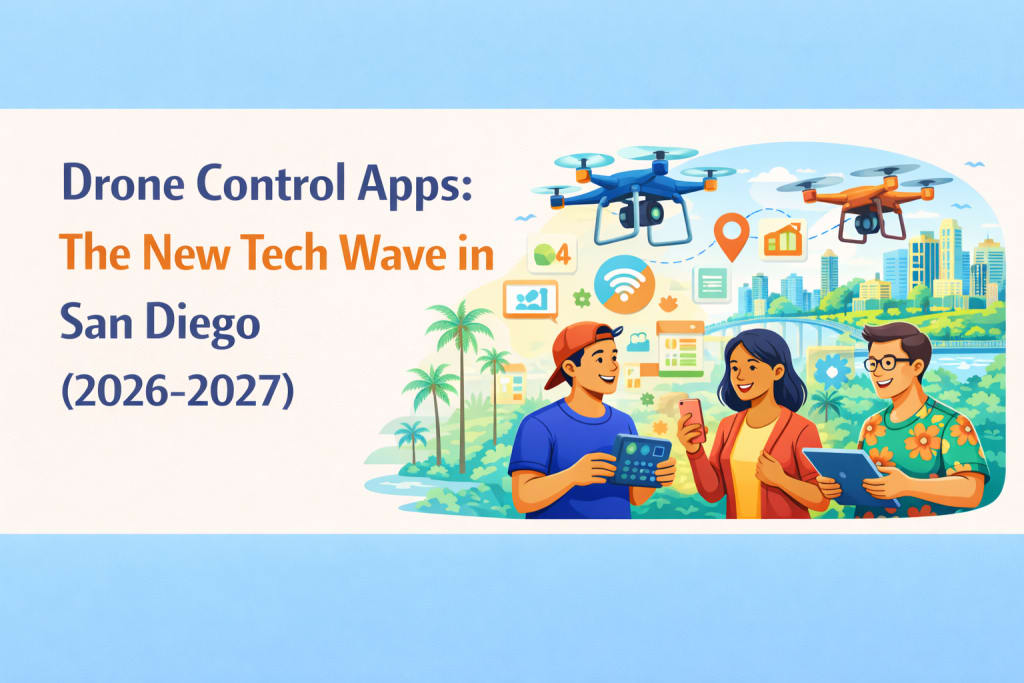
Not long ago, drones were seen primarily as hobbyist gadgets or niche military tools. Today, they are becoming an essential part of industries ranging from logistics and construction to healthcare delivery and environmental monitoring. As hardware capabilities advance rapidly, attention is shifting toward the software layer that controls these machines — particularly mobile applications that allow operators to manage complex systems with precision.
By 2026 and beyond, the evolution of drone technology is less about the aircraft itself and more about the intelligence guiding it. Drone control apps are transforming from simple remote interfaces into sophisticated platforms integrating artificial intelligence, real-time analytics, automation, and collaborative data systems.
Certain regions are emerging as leaders in this transformation, and San Diego has quietly become one of the environments where drone innovation intersects with software development in meaningful ways.
The expanding drone market and why software is becoming the competitive edge
Industry projections highlight the scale of change underway. Analysts estimate that the global drone market could surpass $90 billion by the early 2030s, driven by enterprise adoption rather than consumer usage alone.
Key sectors fueling growth include:
Infrastructure inspection and mapping.
Public safety and disaster response.
Agriculture and environmental monitoring.
Healthcare logistics and emergency supply delivery.
While hardware innovation initially drove adoption, the focus is shifting toward software platforms capable of handling autonomous navigation, regulatory compliance, and data interpretation.
Research indicates that nearly 70% of enterprise drone operators consider software capabilities more important than hardware specifications when selecting solutions — a sign that application development is becoming the true differentiator.
As one aerospace executive noted, “The drone is just a sensor platform; the real value comes from the intelligence behind it.”
Why mobile control systems are replacing traditional hardware interfaces
Early drone systems relied on specialized controllers that limited accessibility. Modern drone control apps, however, leverage the processing power of smartphones and tablets, enabling flexible interfaces and rapid updates.
Mobile platforms offer several advantages:
- Real-time telemetry visualization.
- AI-assisted flight planning.
- Remote collaboration between operators.
- Cloud-based data storage and analysis.
Industry surveys suggest that mobile-based control interfaces can reduce operator training time by up to 40%, as familiar touch interfaces simplify complex workflows.
This shift democratizes drone operation, allowing professionals outside traditional aviation fields to integrate drones into their workflows.
Artificial intelligence transforming drone capabilities
AI integration is redefining what drone control apps can achieve. Instead of manually guiding every movement, operators increasingly rely on intelligent systems capable of autonomous decision-making.
Key AI-driven features include:
- Obstacle detection and avoidance.
- Automated route optimization.
- Object recognition for inspections or surveillance.
- Predictive maintenance alerts.
Market forecasts indicate that AI-enabled drone software may grow at annual rates exceeding 20%, reflecting increasing demand for automation.
Google CEO Sundar Pichai once described AI as “a foundational technology that will transform every industry.” Drone technology represents a clear example of that transformation, blending machine learning with physical systems operating in real-world environments.
Regulatory challenges shaping app development
Unlike many consumer technologies, drones operate within complex regulatory frameworks designed to ensure safety and privacy. Developers must account for airspace restrictions, licensing requirements, and evolving compliance standards.
Applications increasingly integrate regulatory intelligence directly into their interfaces, alerting users to restricted zones or flight limitations.
This functionality reduces risk for operators and demonstrates how software development plays a critical role in enabling safe adoption of emerging technologies.
Regions with strong aerospace and defense ecosystems often develop deeper expertise in regulatory compliance, allowing developers to build more sophisticated and reliable platforms.
Data management becoming the core of drone innovation
Each drone flight generates massive amounts of data, including imagery, sensor readings, and telemetry information. The challenge lies not in collecting data but in transforming it into actionable insights.
Modern drone control apps increasingly focus on:
- Real-time data analysis.
- Automated reporting.
- Integration with enterprise workflows.
- Secure cloud storage.
Studies suggest that organizations using automated drone data processing reduce analysis time by more than 50%, enabling faster decision-making.
This shift highlights a broader trend: drones are evolving from flying cameras into data platforms powered by advanced software ecosystems.
Collaboration between aerospace, defense, and civilian innovation
San Diego’s unique mix of aerospace companies, defense contractors, research institutions, and technology startups creates a fertile environment for drone innovation.
Military applications historically drove advancements in unmanned systems, but commercial industries are now adapting these technologies for civilian use. Collaboration between sectors accelerates innovation by transferring knowledge across domains.
This cross-pollination influences app development, encouraging higher standards for reliability, security, and performance.
Emerging use cases redefining how drones are used
Drone control apps increasingly support specialized workflows tailored to specific industries:
- Emergency response teams using drones for situational awareness during disasters.
- Construction firms conducting automated site inspections.
- Environmental scientists monitoring wildlife or climate impact.
- Logistics companies testing last-mile delivery systems.
Each use case introduces unique technical challenges, pushing developers to design flexible platforms capable of adapting to diverse requirements.
Why mobile app development San Diego is becoming closely linked to drone innovation
The rise of mobile app development San Diego reflects the broader evolution of drone technology from hardware-driven innovation toward software-centric ecosystems. Developers operating within regions rich in aerospace expertise and technological talent benefit from exposure to complex real-world challenges.
This environment encourages experimentation with AI integration, secure communication systems, and advanced user interfaces — all critical components for next-generation drone control applications.
The future of drone apps: from remote control to autonomous ecosystems
Looking toward 2027, drone control apps may evolve into fully autonomous platforms requiring minimal human intervention. Operators will transition from pilots to supervisors, overseeing fleets of drones capable of coordinating tasks independently.
Future trends may include:
- Swarm technology enabling coordinated multi-drone operations.
- Integration with smart city infrastructure.
- Real-time collaboration between drones and ground-based robotics.
- Advanced simulation environments for mission planning.
These developments suggest that drone apps will become central to broader technological ecosystems rather than standalone tools.
Beyond flight: software defining the next era of aerial technology
The evolution of drone control apps demonstrates how software increasingly defines technological progress. Hardware capabilities may enable flight, but intelligent applications determine how effectively drones serve real-world needs.
As industries continue adopting aerial technology, the focus will shift toward creating intuitive, secure, and intelligent platforms that bridge the gap between human operators and autonomous systems.
The next wave of innovation will likely come not from faster drones but from smarter software — applications that transform complex aerial systems into accessible tools capable of reshaping industries from the ground up.
About the Creator
Mike Pichai
Mike Pichai writes about tech, technolgies, AI and work life, creating clear stories for clients in Seattle, Indianapolis, Portland, San Diego, Tampa, Austin, Los Angeles and Charlotte. He writes blogs readers can trust.
Keep reading
More stories from Mike Pichai and writers in 01 and other communities.
What Makes Mobile App Development Austin Projects Hard to Scale?
When the numbers first climbed, everything felt like momentum. More users meant validation. More activity meant progress. Dashboards looked healthy enough that nobody wanted to slow things down by asking uncomfortable questions.
By Mike Pichai10 days ago in 01
How Virtual Production Reduces Production Costs and Timelines
Virtual Production Company services are quickly becoming the go-to choice for filmmakers, advertisers, and content creators who want to move faster without burning through their budgets. The film and media world has always been expensive and time-consuming. Long location shoots, unpredictable weather, costly set builds, and endless post-production edits can stretch both timelines and finances. Virtual production flips that script. It blends physical filmmaking with real-time digital environments, allowing creators to see and adjust scenes instantly. What this really means is fewer surprises, tighter control, and smarter spending.
By Quite Brilliant4 days ago in 01
Savannah Guthrie: The Journalist Who Redefined Morning Television
Savannah Guthrie stands as one of the most recognizable and trusted faces in American broadcast journalism. Over the past two decades, she has built a career defined by intelligence, resilience, and credibility—qualities that have helped her navigate the intense pressures of live television, political reporting, and public scrutiny. From courtroom coverage to the anchor desk of Today, Guthrie’s journey reflects the evolution of modern journalism itself.
By Story Prism7 days ago in 01




Comments
There are no comments for this story
Be the first to respond and start the conversation.