
High-Speed Camera Market: Global Industry Trends & Forecast
High-Speed Camera Market: Capturing Precision Through Advanced Imaging Technologies and Expanding Industrial Applications

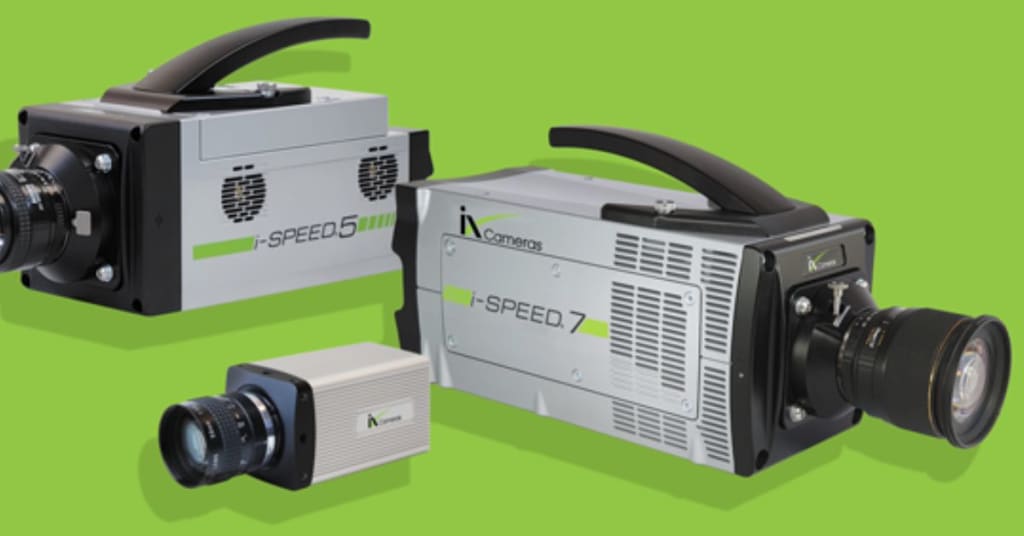
The High-Speed Camera market is experiencing a significant transition as the demand for high-frame-rate (HFR) imaging expands beyond scientific laboratories into mainstream industrial and entertainment applications. These cameras, capable of capturing images at speeds ranging from 1,000 to over 1,000,000 frames per second (fps), are essential for analyzing events that occur too quickly for the human eye or standard video sensors to perceive.
1. Market Segmentation by Usage
The market is categorized by frame rate, resolution, and spectrum capability:
By Frame Rate
1,000 – 5,000 fps: Common in sports slow-motion and standard production line monitoring.
5,000 – 20,000 fps: The "sweet spot" for automotive crash testing and ballistics research.
Above 20,000 fps: Ultra-high-speed cameras used in combustion research, fluid dynamics, and plasma physics.
By Spectrum
Visible Light: The primary market segment for general industrial and media use.
Infrared (Thermal): Increasing demand for high-speed thermal imaging to detect heat friction in machining or rapid chemical reactions.
X-Ray: Highly specialized cameras used for non-destructive testing and medical research.
2. Primary Market Drivers
Automotive Safety Testing: Stringent safety regulations require high-speed imaging to analyze airbag deployment, seatbelt tensioning, and structural deformation during impact.
Industrial Automation & Quality Control: As production lines move faster, high-speed cameras are used for "troubleshooting on the fly," identifying mechanical failures that cause downtime.
Defense & Aerospace: Vital for missile launch analysis, ballistics, and aerodynamic testing in wind tunnels.
Sports & Entertainment: The "Super Slow Motion" trend in live broadcasting and the use of high-speed cameras for motion capture in filmmaking and gaming.
3. Technological Innovations
CMOS Sensor Evolution: Modern CMOS sensors have significantly reduced noise levels at high ISOs, allowing for high-speed capture even in relatively low-light conditions.
Embedded AI and Edge Processing: New cameras can now "detect" an event (like a spark or a fracture) and automatically trigger the recording, saving massive amounts of data storage.
Increased Data Throughput: Transitioning from internal memory buffers to high-speed interfaces like CoaXPress and 100Gb Ethernet to allow for longer record times.
Miniaturization: The development of rugged, compact high-speed cameras that can be mounted inside engines or on the tips of robotic arms.
4. Regional Market Highlights
North America: The largest market share, driven by a robust defense sector and the presence of major automotive R&D centers.
Europe: Strong focus on precision manufacturing and the aerospace industry, particularly in Germany and the UK.
Asia-Pacific: The fastest-growing region due to the massive expansion of consumer electronics manufacturing and increased government spending on defense and space research in China and India.
5. Challenges & Barriers
High Initial Cost: Professional-grade high-speed cameras remain expensive, often ranging from $10,000 to $150,000 per unit.
Data Management: A few seconds of high-speed video can generate terabytes of data, requiring specialized storage solutions and long download times.
Lighting Requirements: Capturing at high frame rates requires extremely high light intensity, which can sometimes damage the subject (due to heat) or requires complex lighting setups.
6. Competitive Landscape
The market is dominated by specialized players focusing on precision and reliability:
Key Players: Vision Research (Phantom), Photron, NAC Image Technology, Fastec Imaging, and Weisscam.
Emerging Segment: High-speed capability is increasingly being integrated into high-end consumer and industrial sensors (e.g., Sony's Pregius line), creating a "mid-range" market for less critical applications.
Strategic Outlook
The future of the High-Speed Camera market is moving toward Long-Record Systems. Traditional cameras could only record for a few seconds before filling their RAM; new architectures are allowing for continuous high-speed streaming directly to NVMe storage, which will revolutionize the monitoring of continuous manufacturing processes.
About the Creator
Rahul Pal
Market research professional with expertise in analyzing trends, consumer behavior, and market dynamics. Skilled in delivering actionable insights to support strategic decision-making and drive business growth across diverse industries.
How to Keep Your Home Cool and Comfortable Without Relying Too Much on Air Conditioning
Maintaining a cool and comfortable home, especially during warmer months, can be challenging. While air conditioning is effective, it often leads to higher energy bills and increased environmental impact. Fortunately, there are several practical and cost-effective strategies you can use to regulate indoor temperatures naturally and efficiently.
By Kashif Khan2 days ago in 01
The Pride Flag and the Diversion
For nearly a decade, the LGBTQIA Pride Flag rippled in the wind at Christopher Park, a kaleidoscope of color staked into the soil of America’s first national monument to LGBTQIA+ liberation. That flag came down this week. Federal officials, citing new guidance from the Trump Administration, silently lowered the rainbow flag from its pole across the street from the Stonewall Inn. The birthplace of the modern gay rights movement now flies only the United States flag.
By Tim Carmichael6 days ago in Pride


Comments
There are no comments for this story
Be the first to respond and start the conversation.