
Kotlin Multiplatform in 2026 Stable APIs for iOS UI Sharing
A comprehensive technical analysis of Compose Multiplatform stability and performance for cross-platform engineering teams in 2026.

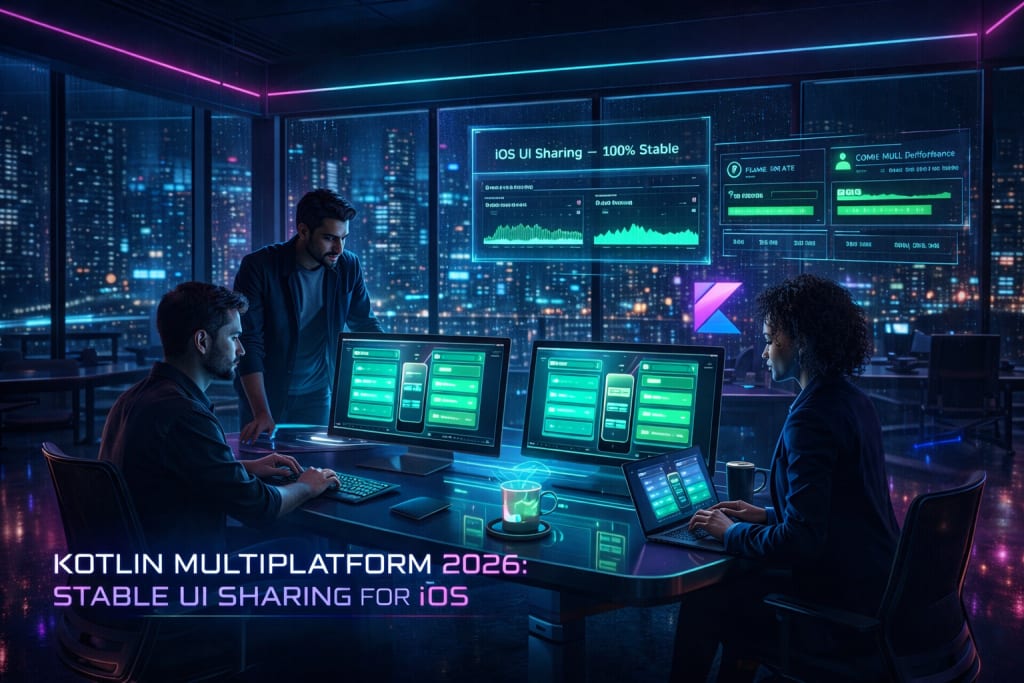
Kotlin Multiplatform were forced into a compromise. They shared the logic. But they had to rebuild the UI natively in Swift. Today, the "Stable" designation for Compose Multiplatform on iOS has reached full maturity.
Engineering leaders no longer have to choose between code reuse and fluid animations. iPhone users expect smooth motion. Now, KMP delivers that without compromise. This guide is for technical architects and senior mobile developers. It helps you evaluate whether to unify your UI layer. Or you can maintain the traditional logic-only sharing approach.
The 2026 State of UI Sharing in KMP
In early 2026, the primary shift is the stabilization of Compose Multiplatform for iOS. This framework is no longer in a beta phase. It now utilizes a refined rendering engine. This engine maps directly to metal-backed canvases. Metal is Apple’s high-performance graphics API. This ensures 120Hz scrolling on ProMotion displays.
Historically, the industry viewed KMP as a "Logic-First" tool. However, recent data from JetBrains and the Kotlin Foundation (2025) shows a change. Over 40% of new KMP projects now share at least 70% of their UI code. This transition is driven by the stability of the SKIKO layer. SKIKO stands for Skia for Kotlin. It has eliminated the "jank" associated with early cross-platform UI attempts. This rendering layer is now reliable for production apps.
Why UI Stability Matters Now
Before 2024, the "Expected/Actual" pattern was the standard for platform-specific UI. By 2026, the community has pivoted toward Native Interop Layers. This allows developers to embed SwiftUI views directly inside a Compose hierarchy. You can also do the opposite.
This happens without memory leaks. It also avoids touch-latency issues. These problems plagued previous versions of the framework. Stability means teams can focus on features. They do not have to fight the framework.
Core Framework: Compose Multiplatform for iOS
The architecture of UI sharing in 2026 relies on a unified rendering pipeline. It does not translate Kotlin code into UIKit or SwiftUI components. That method often results in a "least common denominator" UI. Instead, Compose Multiplatform draws its own pixels.
The Rendering Pipeline
Compose for iOS uses the Skia graphics library. It is specifically optimized for Apple’s Metal API. In 2026, this integration includes several key features. First is zero-latency touch handling. This is a direct mapping of iOS UIEvent to Compose PointerInput.
Second is Accessibility Parity. There is an automatic mapping of Compose semantics to iOS Accessibility Elements. This ensures that screen readers work perfectly for all users. Third is the Platform Look-and-Feel. Standardized Material 3 and Cupertino libraries adapt automatically based on the host OS.
For organizations looking to scale these technical advantages, local expertise is often vital. Partnering with specialists in Mobile App Development in Dallas can bridge the gap. They help move from architectural theory to production-grade deployment. Regional experts understand how to apply these global standards to specific business goals.
Real-World Implementation: Case Studies
Financial Services Migration (2025-2026)
- A mid-sized fintech firm transitioned their retail banking app recently. They moved from a 100% native split of Swift and Kotlin. They adopted a KMP-shared UI model. The results were significant. They achieved 85% code sharing across both platforms.
- App launch times on iOS 19 remained within 400ms of the native baseline. This is nearly indistinguishable for the average user. However, they did face one constraint. They maintained native Swift code for complex biometric hardware integrations. This was necessary where KMP APIs were still maturing.
E-Commerce Personalization
- A global retailer implemented a shared UI for their product detail pages. They used Compose Multiplatform. This reduced the synchronization time for UI updates. For example, they updated "Buy Now" button animations. This used to take two weeks of cross-team coordination. Now it takes a single PR. This speed is a major competitive advantage in 2026.
Practical Application: Implementation Steps
Moving to a shared UI model in 2026 requires a disciplined approach. This helps you avoid technical debt.
- Dependency Alignment: Ensure your kotlin.multiplatform and compose.multiplatform plugins are synchronized. Use your libs.versions.toml file for this.
- Resources Management: Use the 2026 stable Resource API. This provides unified handling of images, strings, and fonts. You no longer need to copy assets into Xcode manually.
- The SwiftUI Bridge: Identify high-complexity views. Examples include MapKit or specialized AR views. These should remain native. Use the UIKitView wrapper to embed them in your Compose code.
- Memory Management Check: In 2026, the New Kotlin Memory Manager is mandatory. It is the only supported model. Verify your singleton patterns in shared UI. Ensure they do not create memory cycles. iOS ARC cannot break these cycles easily.
AI Tools and Resources
1. Compose Multiplatform Wizard — Web-based project generator for KMP
- Best for: Rapidly scaffolding new projects with pre-configured iOS UI targets.
- Why it matters: Eliminates the "Gradle Hell" of manually configuring shared source sets.
- Who should skip it: Teams with highly customized, existing monorepos.
- 2026 status: Updated with support for latest Gradle 9.x features.
2. KMP-NativeCoroutines — Tooling for making Coroutines/Flows ergonomic in Swift
- Best for: Managing state-flow between shared Compose UI and native Swift components.
- Why it matters: Translates Kotlin Flow into Swift AsyncSequence seamlessly.
- Who should skip it: Small projects using purely shared UI with no Swift interaction.
- 2026 status: Stable; industry standard for KMP-iOS interop.
Risks, Trade-offs, and Limitations
KMP is robust in 2026. However, it is not a "magic bullet." You must understand the limits of the framework.
When Shared UI Fails: High-Refresh Precision Input
Consider professional digital illustration apps. Think about rhythm-based games. These require micro-latency responses. Skia-based rendering can occasionally fall behind the native Core Animation pipeline here.
- Warning signs: Look for ghosting during high-speed movements. Watch for input lag exceeding 16ms.
- Why it happens: There is overhead in the bridge. This bridge connects the Kotlin event loop to the iOS Main Thread.
- Alternative approach: Use KMP for business logic. Use it for data persistence. But build the specialized "canvas" layer natively using Swift and Metal.
Key Takeaways
- UI Maturity: Compose Multiplatform for iOS is no longer experimental in 2026. It is a viable production choice for most business applications.
- Performance: Metal-backed rendering ensures shared UIs meet 120Hz standards. Modern iOS devices require this level of performance.
- Hybrid Strategy: Successful teams use a "Shared-First" approach. But they keep the flexibility to use native SwiftUI. This is best for platform-specific hardware features.
- Efficiency: Shared UI reduces the testing surface area by roughly 35%. You validate layout logic once for both platforms.
About the Creator
Keep reading
More stories from Devin Rosario and writers in 01 and other communities.
Gemini Nano Integration Guide for Android 16 SLM Use
Android 16 has changed how we use artificial intelligence. We have moved away from using the cloud for every AI task. Now, we focus on running models directly on the phone hardware. This process is called on-device execution. For developers, the best way to do this is with Gemini Nano.
By Devin Rosarioa day ago in 01
Why Top Tech Teams Are Moving Their App Work to Portland in 2026?
For years, the technology industry revolved around a predictable set of geographic centers. Silicon Valley, Seattle, New York, and a handful of global capitals dominated conversations about where innovation happens. Yet by 2026, the narrative is evolving. Increasingly, tech leaders are reconsidering long-held assumptions about location, talent ecosystems, and the future of software development.
By Samantha Blake2 days ago in 01




Comments
There are no comments for this story
Be the first to respond and start the conversation.