
Scientific Instrument Market Trends: Laboratory Automation, R&D Investments & Forecast to 2034
Rising investments in research and development, increasing demand for analytical testing solutions, and technological advancements are driving the global Scientific Instrument Market.

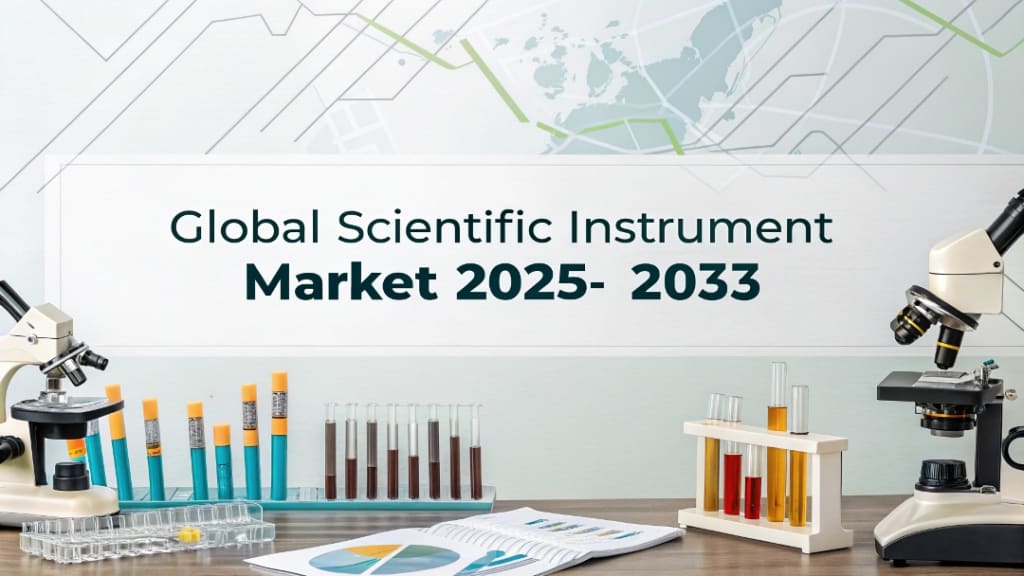
In a world where data-driven decisions determine the success of everything from drug discovery to environmental protection, the tools we use to measure our progress have never been more critical. The global scientific instrument market—the silent engine behind modern R&D—reached a significant valuation of USD 46.2 Billion in 2024. Far from being mere "lab gear," these instruments are the high-tech eyes and ears of researchers worldwide. As we look ahead, this infrastructure is expanding toward a projected value of USD 68.78 Billion by 2033, reflecting a world increasingly reliant on precision, automation, and molecular-level insights.
Market Growth Drivers: The momentum behind scientific instrumentation is largely fueled by the massive expansion of testing facilities in the pharmaceutical and biotechnology sectors. As global health challenges become more complex, the demand for high-throughput clinical analyzers has skyrocketed, particularly for drug safety and genomic research. In the UK, for instance, government expenditure on research and development recently climbed to approximately USD 22 billion in a single year, a clear indicator of the public sector’s commitment to scientific advancement. This surge in funding ensures that laboratories are not just maintaining existing workflows but are actively upgrading to more sophisticated, high-precision tools to handle increasing sample volumes and meet stringent quality standards.
Get a Sample Report for Actionable Market Insights
Market Trends: We are currently witnessing a transformative shift toward "smarter" laboratories through the integration of Artificial Intelligence (AI) and automation. Gone are the days of manual, repetitive testing; today’s market is defined by AI-driven analytical platforms that can automate complex data collection and interpretation. A notable trend is the miniaturization of equipment—moving from bulky, room-sized machines to portable, handheld devices that allow for point-of-care diagnostics and field studies. Companies are also prioritizing "green" instrumentation, focusing on energy-efficient performance and reduced solvent consumption. For example, recent product launches in the mass spectrometry space highlight a move toward systems that deliver world-class sensitivity while significantly lowering the operational carbon footprint.
Recent News and Developments in the Scientific Instrument Market: The industry is currently abuzz with strategic collaborations aimed at pushing the boundaries of what these instruments can do. In early 2024, Shimadzu Scientific Instruments entered a partnership with Telescope Innovations to accelerate chemical research through automated laboratory systems. Meanwhile, in the public sector, India’s Central Scientific Instruments Organisation (CSIO) teamed up with Hindustan Aeronautical Limited to establish a new Centre of Excellence in Chandigarh, focusing on advanced avionics and instrumentation. On the funding side, private equity is pouring in; Bain Capital Life Sciences recently committed roughly $3 billion toward its latest fund, much of which is earmarked for the development of next-generation life science tools. Furthermore, Flagship Pioneering recently launched Lila Sciences with $200 million in funding to build an AI platform specifically designed to automate scientific research.
Supporting Quantitative Insights and Real-World Impact: While many think of scientific instruments as belonging solely to universities, the industrial segment actually holds the majority of the market share. This is driven by sectors like food and beverage, where spectroscopy and chromatography are essential for safety testing. In the clinical world, scientific clinical analyzers remain the dominant product type. These machines are the workhorses of modern hospitals, analyzing blood and serum samples with incredible speed. In North America, which currently leads the global market, the focus has shifted heavily toward personalized medicine. By using advanced sequencing instruments, clinicians can now tailor cancer treatments to a patient’s specific genetic profile, an application that has improved patient outcomes by over 15% in targeted oncology trials.
Government Schemes and Infrastructure Support: Governments are playing a hands-on role in stabilizing the supply chain for these critical tools. India’s Instrumentation Development Programme (IDP) is a prime example, focusing on the indigenous production of affordable, high-end instruments to reduce reliance on imports. Similarly, the Sophisticated Analytical Instrument Facilities (SAIF) program provides researchers from smaller startups and MSMEs access to state-of-the-art equipment that would otherwise be cost-prohibitive. Across the Atlantic, the U.S. CHIPS and Science Act is injecting billions into laboratory infrastructure to ensure that the next generation of semiconductors and biotechnologies are developed using the world’s most precise measurement tools.
Final Thoughts: For an experienced consultant looking at this market, the takeaway is clear: we are entering an era of "democratized precision." Scientific instruments are no longer confined to the elite echelons of research. They are becoming more portable, more automated, and more integrated into our daily industrial processes. Whether it’s ensuring the water we drink is free of toxins or developing a vaccine in record time, these instruments are the foundational blocks of a safer, more efficient future. As the market nears the USD 70 billion mark, the focus will remain on making these complex technologies approachable and accessible for every laboratory, regardless of size.
About the Creator
Rahul Pal
Market research professional with expertise in analyzing trends, consumer behavior, and market dynamics. Skilled in delivering actionable insights to support strategic decision-making and drive business growth across diverse industries.
RAG on Mobile: Embedding Vector Databases in Production
The industry is changing. By 2026, we have moved away from cloud AI. We now favor "Local-First" architectures. These systems prioritize user privacy. They offer offline functionality. They also reduce network latency. This shift toward RAG on mobile is a major transition. RAG stands for Retrieval-Augmented Generation. It is a way to give AI better context.
By Devin Rosario2 days ago in 01
Top 12 Digital Marketing Companies in India 2026
India’s digital marketing landscape continues to evolve rapidly as businesses move toward performance-driven online strategies. In 2026, companies are investing in data-led campaigns, automation tools, search optimization, and audience-focused content to remain competitive across crowded digital channels.
By Jane Smith5 days ago in 01


Comments
There are no comments for this story
Be the first to respond and start the conversation.