
West Palm Beach’s Luxury EV Market Faces an Unexpected Challenge: Charging Accessibility
As high-end electric vehicles surge across South Florida, charging infrastructure struggles to keep pace with luxury expectations.

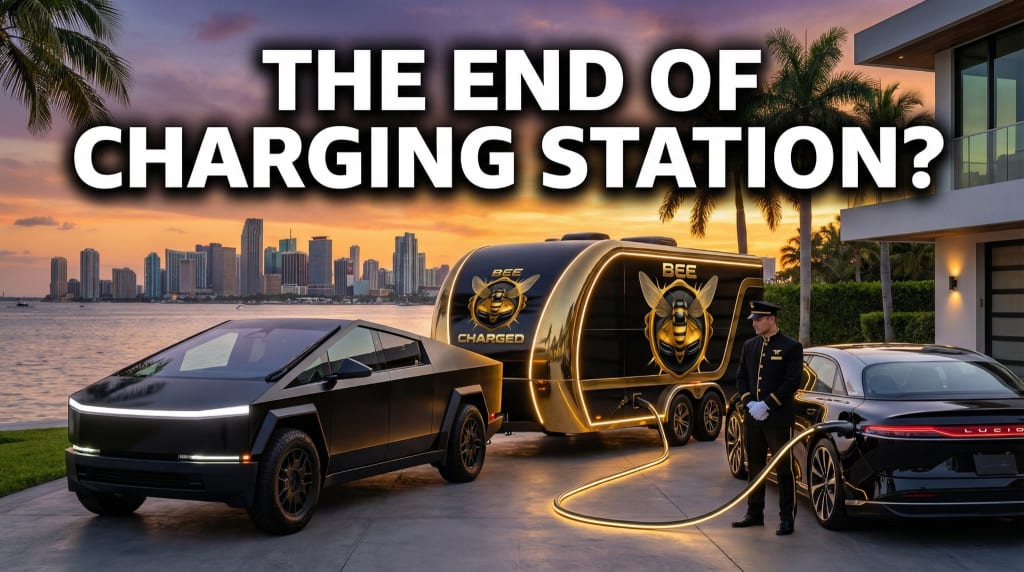
West Palm Beach has become one of Florida’s most concentrated markets for luxury electric vehicles. Along Worth Avenue and throughout gated communities stretching from Palm Beach Gardens to Boca Raton, high-end EVs are now a common sight. Sleek sedans and performance-driven electric models signal both environmental awareness and technological sophistication.
Yet beneath this visible success lies a less-discussed issue: charging accessibility in affluent coastal communities is not keeping pace with adoption.
The Luxury EV Paradox
Palm Beach County ranks among the leading per-capita markets for premium electric vehicles in the United States. For many residents, EV ownership reflects more than sustainability—it represents innovation, status, and forward-thinking lifestyle choices.
However, the charging experience often falls short of the ownership experience.
Public charging frustrations include:
- Inconsistent station availability
- Malfunctioning payment systems
- Charging bays blocked by non-charging vehicles
- Long wait times during peak season
For drivers accustomed to seamless service across every aspect of their lives, these interruptions create a noticeable disconnect. The premium vehicle experience does not always extend to the infrastructure supporting it.
Infrastructure Challenges in Coastal Communities
West Palm Beach’s geography adds complexity. Waterfront estates, island properties, and older luxury condominiums frequently lack the electrical capacity required for high-speed residential charging without substantial upgrades.
In many cases, infrastructure improvements can involve:
- Significant electrical system modifications
- HOA approval processes
- Compliance with historical preservation guidelines
Seasonal residency further complicates the equation. Snowbirds arriving during the winter months may return to depleted batteries, crowded public charging stations, or limited building-based charging access already in use by full-time residents.
Yacht owners, country club members, and collectors maintaining multiple vehicles encounter additional challenges when long absences or storage arrangements interrupt charging routines.
The Rise of Mobile Charging Services
As demand grows, mobile charging services are emerging to address infrastructure gaps. Rather than requiring drivers to visit public stations, these services deliver charging directly to the vehicle’s location—whether at a private residence, marina, hotel, or event venue.
The model resembles other convenience-driven industries that prioritize on-demand service. Instead of adapting schedules around charging availability, drivers can request assistance where and when it is needed.
In high-density luxury markets, this approach reduces friction during peak tourism season and offers flexibility in areas where permanent charging installations may be limited or delayed.
Membership-Based Charging Access
Some providers have introduced annual membership programs designed to simplify access. These programs typically operate under a flat-fee structure that removes monthly subscription management and usage tracking.
Members pay a yearly fee and request service as needed, often with standardized pricing and defined response windows. The structure mirrors private club or aviation-style access models rather than traditional pay-per-use systems.
Such programs aim to deliver:
- Predictable pricing without seasonal surcharges
- Scheduled or emergency response options
- Discreet, location-based service
- Reduced reliance on public charging infrastructure
For property managers and private communities, mobile charging services may also serve as an interim solution while permanent infrastructure upgrades are evaluated.
Redefining the EV Ownership Experience
As electric vehicle adoption accelerates across Florida, infrastructure development will continue to evolve. In the interim, service-based solutions are positioning themselves as a bridge between luxury ownership expectations and the current realities of public charging networks.
For West Palm Beach residents accustomed to high-touch service models, charging convenience is becoming part of the broader ownership equation. The conversation is shifting from simply owning an electric vehicle to ensuring the surrounding ecosystem supports the same level of reliability and refinement.
The future of premium EV living in South Florida may depend not only on the vehicles themselves—but on how seamlessly they remain powered.
About the Creator
Keep reading
More stories from charliesamuel and writers in 01 and other communities.
Boston’s Electric Vehicle Boom Meets New England’s Oldest Challenge: Winter
Boston’s electric vehicle (EV) adoption has accelerated significantly over the past two years. However, as winter settles across New England, colder temperatures are exposing persistent weaknesses in the region’s charging infrastructure.
By charliesamuelabout 3 hours ago in 01
Lifecycle Management Strategies for Stationary Concrete Batching Plants
Stationary concrete batching plants are the backbone of large-scale construction projects, from commercial buildings to highways, bridges, and industrial infrastructure. These plants are designed to deliver high-quality concrete consistently and efficiently. However, like any complex industrial equipment, stationary batching plants require careful lifecycle management to maximize productivity, reduce downtime, and extend operational longevity. Understanding how to manage a stationary plant is particularly crucial when integrating other complementary equipment, such as a mobile concrete mixer plant, for flexible on-site operations.
By consrtuctionmachines7 days ago in 01
Super Bowl LX Recap: A Team Called Hawks
Sixty. The Super Bowl turned 60! Still amazes me that this was the sixtieth Super Bowl played in NFL history. It seems like yesterday that I watched Super Bowl XXVII, the first SB I ever watched. The QB who won Super Bowl XXVII has since called a few SBs, and will call next year's game, but that's another story. Super Bowl LX took place at Levi's Stadium in Santa Clara, California, the home stadium of the San Francisco 49ers. However, it was one of their division foes who represented the NFC, as the Seattle Seahawks faced off against the New England Patriots.
By Clyde E. Dawkins3 days ago in Unbalanced




Comments
There are no comments for this story
Be the first to respond and start the conversation.