
Quote of the Day by Albert Einstein: “Try not to become a man of success, but rather try to become a man of value.”
“Why Albert Einstein’s timeless words still challenge modern ideas of success, purpose, and what truly matters.”

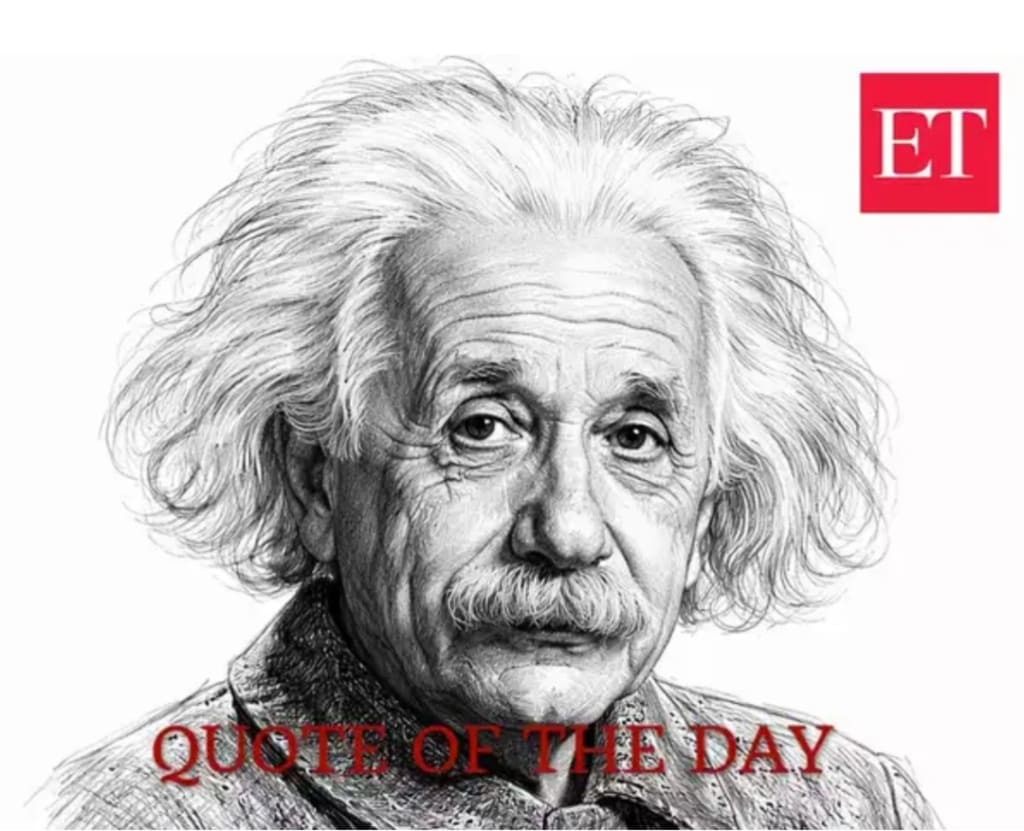
“Why Albert Einstein’s timeless words still challenge modern ideas of success, purpose, and what truly matters.”
Few figures in history have shaped human thought as profoundly as Albert Einstein. Known worldwide for revolutionising physics, Einstein was also a deep thinker on life, ethics, and human purpose. Among his many reflections, one quote continues to resonate across generations and cultures:
“Try not to become a man of success, but rather try to become a man of value.”
At first glance, the statement appears simple. Yet beneath its brevity lies a powerful critique of how societies define achievement and a reminder that true worth is not measured by status, wealth, or fame, but by character and contribution.
---
Understanding the Quote: Success vs Value
In modern society, success is often associated with external markers — money, job titles, influence, or public recognition. Social media metrics, corporate rankings, and material possessions have become shorthand for “making it.”
Einstein’s quote turns that idea on its head. He suggests that success without value is hollow, while value, even without visible success, carries lasting meaning. A “man of value” is someone whose actions positively affect others, whose work improves understanding, or whose character adds integrity to the world around them.
In essence, Einstein was drawing a line between achievement that serves the self and contribution that serves humanity.
---
Why Einstein Rejected Conventional Success
Einstein himself was a paradox by conventional standards. He achieved immense fame, yet he lived modestly and showed little interest in wealth or social status. His life reflected his belief that intellectual curiosity, moral responsibility, and service to humanity mattered far more than accolades.
He once declined the presidency of Israel, not because he lacked prestige, but because he believed leadership required qualities beyond reputation. This aligns perfectly with his quote: he valued impact and integrity over personal advancement.
For Einstein, success was temporary, but value was enduring. Scientific breakthroughs might change equations, but values shape civilizations.
---
Relevance in Today’s World
In an era defined by competition, hustle culture, and constant comparison, Einstein’s words feel more relevant than ever. Many people chase success relentlessly, often at the expense of mental health, relationships, or ethical boundaries.
The quote invites a pause — a moment to ask deeper questions:
Does my work improve lives or merely advance my position?
Am I respected for my values or just my achievements?
Will what I’m building still matter when titles and trends fade?
Value-driven living encourages purpose over pressure, meaning over metrics, and impact over image.
---
Value as a Measure of Legacy
History remembers people not for how successful they appeared in their lifetime, but for the value they added to the world. Teachers who inspired generations, doctors who served communities, artists who reshaped culture — many were not wealthy or powerful, yet their influence outlived them.
Einstein understood that legacy is built on contribution, not applause. A person of value leaves behind ideas, kindness, progress, and inspiration — things that cannot be measured on balance sheets but are deeply felt across time.
---
Applying the Quote to Everyday Life
Becoming a “person of value” does not require genius-level intellect or global fame. It begins with everyday choices:
Integrity: Doing the right thing, even when it’s inconvenient.
Empathy: Understanding others and acting with compassion.
Excellence: Taking pride in work, no matter how small.
Service: Using skills and resources to uplift others.
A teacher shaping young minds, a parent raising ethical children, or a professional improving systems honestly — all embody Einstein’s ideal of value over success.
---
Success Redefined, Not Rejected
Importantly, Einstein was not dismissing success entirely. Rather, he was reframing it. Success becomes meaningful when it flows from value, not when it replaces it.
When value comes first:
Success is sustainable.
Recognition becomes secondary, not central.
Achievements carry moral weight, not just visibility.
In this sense, value is the foundation; success is the byproduct.
---
A Timeless Message for a Fast World
Einstein’s quote endures because it speaks to a universal tension: the desire to be recognized versus the responsibility to be meaningful. In fast-moving societies obsessed with outcomes, his words remind us that who we are matters more than what we achieve.
At a time when people are re-evaluating careers, redefining happiness, and questioning old measures of success, Einstein’s advice offers clarity. It encourages individuals to slow down, reflect, and align ambition with purpose.
---
Conclusion: Choosing Value in a Noisy Age
“Try not to become a man of success, but rather try to become a man of value” is more than a quote — it is a philosophy for life. It challenges shallow definitions of achievement and invites a deeper, more human standard for living.
In choosing value over success, we choose meaning over noise, impact over image, and legacy over labels. And in doing so, we align not only with Einstein’s wisdom, but with the timeless principles that quietly shape a better world.
If you’d like, I can also turn this into a daily reflection piece, motivational column, or educational explainer for a broader audience.
About the Creator
Keep reading
More stories from Salaar Jamali and writers in Art and other communities.
‘A Lot of Fear’: The Families Bearing the Brunt of Sweden’s Immigration Crackdown
Sweden, once widely regarded as one of Europe’s most welcoming destinations for refugees and migrants, is undergoing a profound shift in its immigration policy. In recent years, a tougher stance on asylum, residency, and deportations has taken hold, driven by political pressure, concerns over crime, and the rise of anti-immigration sentiment. While policymakers frame the changes as necessary to restore order and integration, families with migrant backgrounds say they are paying the highest price. For many, the new approach has created an atmosphere of fear, uncertainty, and emotional strain that reaches deep into everyday life.
By Salaar Jamali7 days ago in Art




Comments
There are no comments for this story
Be the first to respond and start the conversation.