
The Diverse Styles of Graffiti Art: From Tags to Murals
A dive into the many styles of graffiti with A.I.
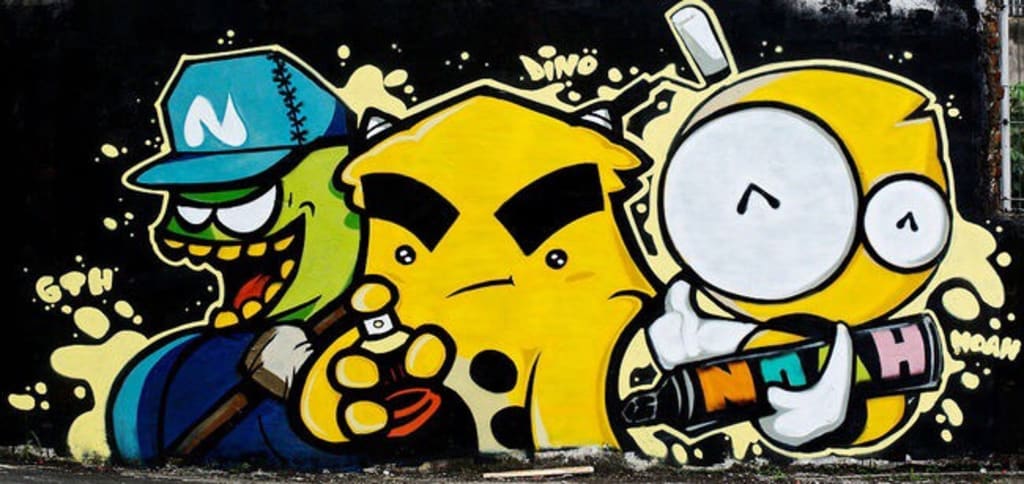
Street art may seem like a typical spray-painted wall. Nevertheless, it is actually a colourful expression of rebellion created by urban youth and infused with culture, self-identity, and social message. Originally founded in the underground punk rock scene of New York City in the 1970's, this urban medium has grown to become a worldwide art movement used to decorate the barren landscape of concrete. Graffiti has also developed through a variety of artistic styles. Different styles of graffiti reflect the artist's own individual expression, level of skill, and purpose of the message, having influenced fashion, advertising, and fine art. This article will examine the global evolution of graffiti and highlight the variety of graffiti artistic styles that continue to change the face of the urban environment, testing all views of art in general.
From Street Markings to Global Phenomenon
Graffiti has been used to express an artist's work for thousands of years. Graffiti was created by the Romans in Pompeii, writing words on the wall, and later, Egyptians also carved words into walls or created art on walls to express ideas (these art pieces created by the Egyptians are not counted as formal records). But the modern version of graffiti grew out of social and economic crises in New York City in the late 1960's. As a way of expressing themselves, many of the young people at that time, such as Taki 183, wrote their names on the walls of the city to bring attention to those areas that had fallen into disrepair.
Hip-hop is often thought of as the root of graffiti (along with rap music and DJing & breaking). Writers were able to ride the subway system and "bomb" the trains to get their art around to many different places. The first instance of graffiti was very raw and rebellious and was mostly labeled as vandalism. Many of the major cities, including New York City, started anti-graffiti campaigns in the 1980's, which pushed graffiti writers underground to make a living. Graffiti artists such as Keith Haring and Jean-Michel Basquiat started working with galleries in the 1980's.
Through the 1990's and early 2000's, graffiti became known throughout the world through artists such as Banksy. Today, graffiti is seen in museums (for example, the recent retrospective on Jean-Michel Basquiat at the Museum of Modern Art), and businesses are commissioning graffiti for their buildings, which is proof that graffiti has evolved from an illegal activity to a way of life.

A Breakdown of Techniques and Aesthetics
Graffiti styles range from quick hits to elaborate masterpieces, each serving a unique purpose in the writer's arsenal. Here's a guide to the core forms:
Tagging
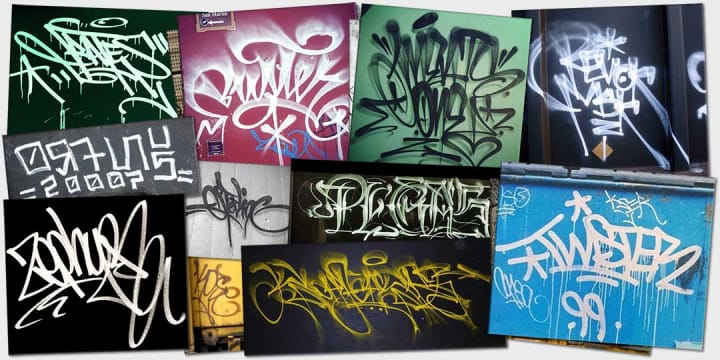
The foundational style: a personal moniker's stylized signature, often in one color with a flair for speed and uniqueness. Tags claim space, build fame, and mark territory—think of it as a writer's "hello world."
- Purpose: Visibility and reputation in the scene.
- Notable Example: Taki 183, whose 1971 tags inspired a movement, as documented in The New York Times.
- Characteristics: Fluid, illegible to outsiders, executed in seconds.
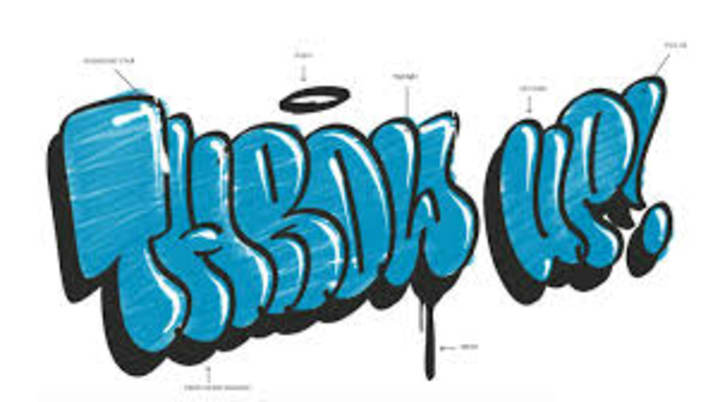
Throw-ups
Evolved from tags, throw-ups (or "fill-ins") are bubble-lettered names designed for rapid execution—often 30 seconds to a minute. They're blocky, outlined, and filled with 2-3 colors for high-impact visibility.
- Speed Factor: Perfect for "bombing" (quick hits in risky spots).
- Influence: NYC writers like Seen popularized them on trains.
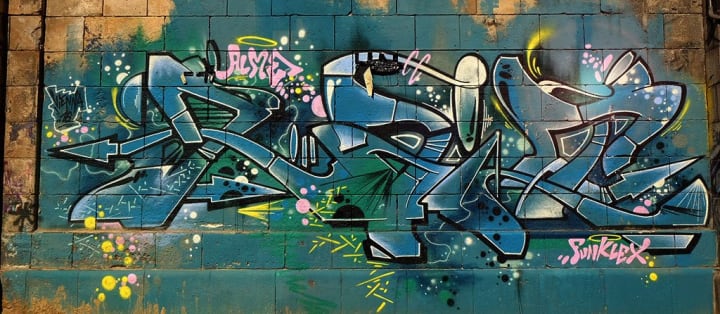
Wildstyle
The pinnacle of complexity: interlocking, arrow-laden letters twisted into optical illusions, demanding mastery of form and flow. Wildstyle reads like a puzzle, rewarding close inspection.
- Appeal: Shows skill; unreadable from afar but mesmerizing up close.
- Pioneers: Phase 2 and Tracer, who innovated 3D arrows and extensions in the 1980s.
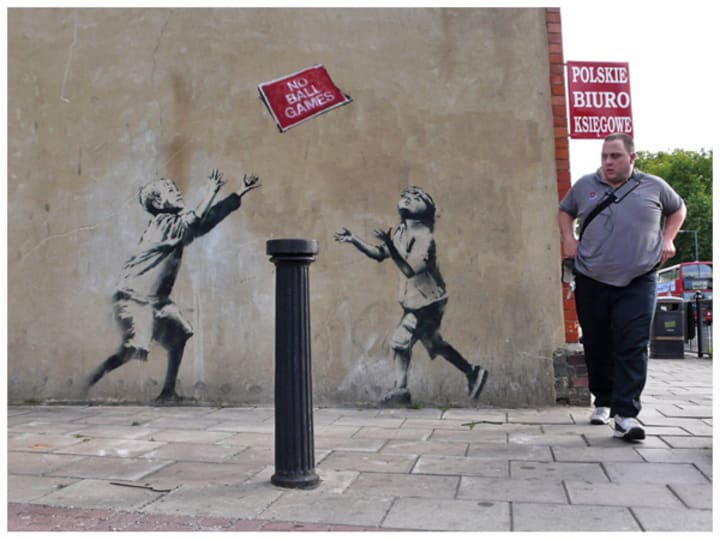
Stencils
Pre-cut templates sprayed for precise, repeatable images, often layered for depth. Ideal for sharp political or satirical messages.
- Political Edge: Bypasses freehand limits for mass replication.
- Icon: Banksy, whose stenciled rats, girls with balloons, and anti-war motifs (e.g., Girl with Balloon) critique society. Works like his West Bank barrier pieces blend art and activism.
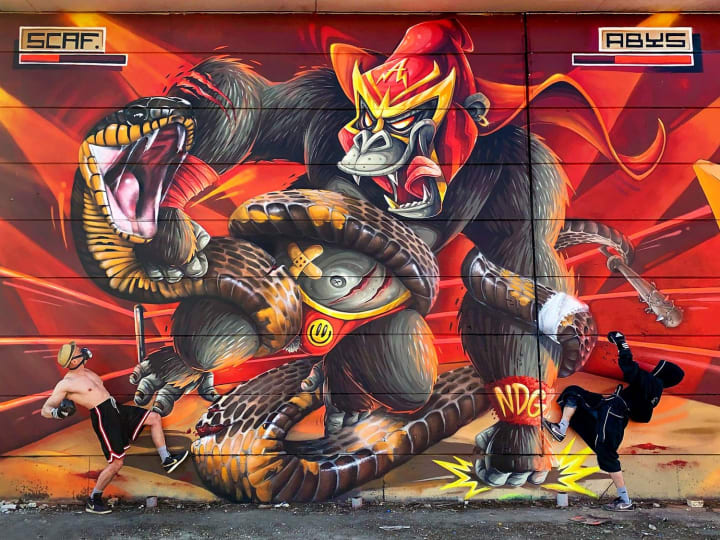
Muralism
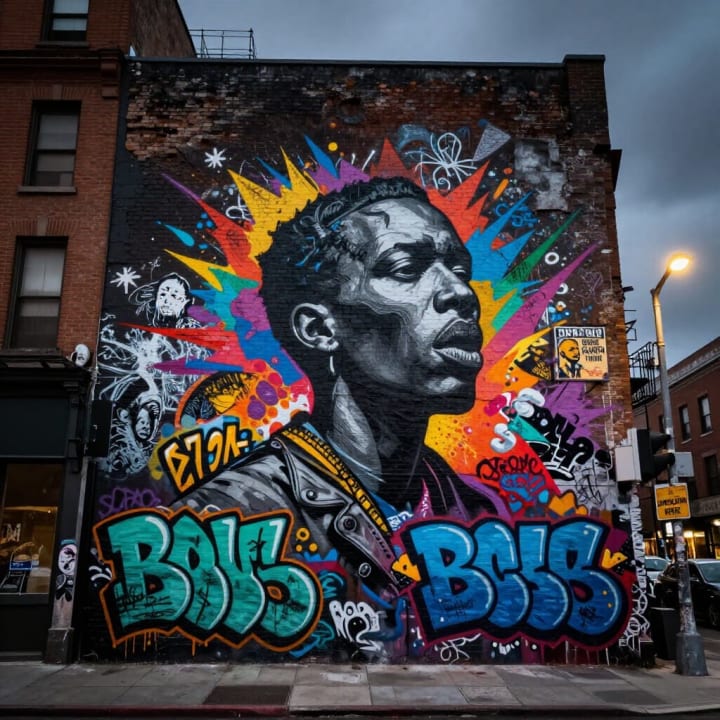
Large-scale, narrative wall paintings blending graffiti lettering with illustrations, often collaborative and community-focused.
- Role: Transforms neighborhoods; engages locals.
- Examples: Philadelphia's Mural Arts Program (over 4,000 murals) or Os Gêmeos' surreal São Paulo giants.
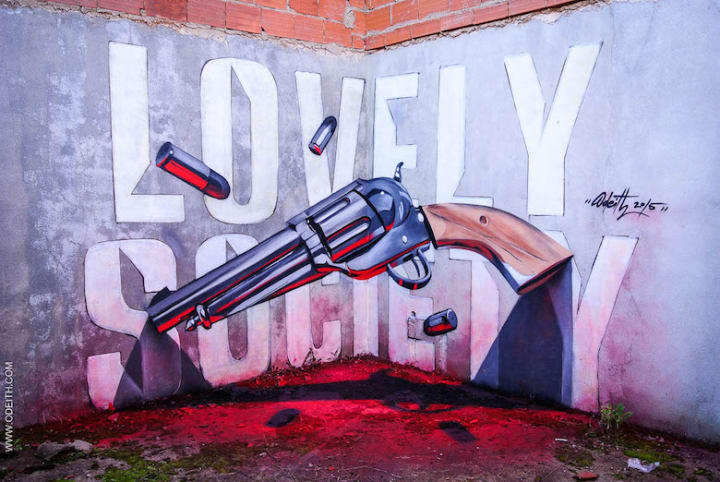
3D Graffiti
Illusionistic style using shading, highlights, and perspective to make flat letters or characters pop off the wall as if extruded into space.
- Techniques: Gradient fills, cast shadows, rim lighting.
- Masters: Nemo (France) and Check One (Poland), whose hyper-realistic 3D tags bend reality.
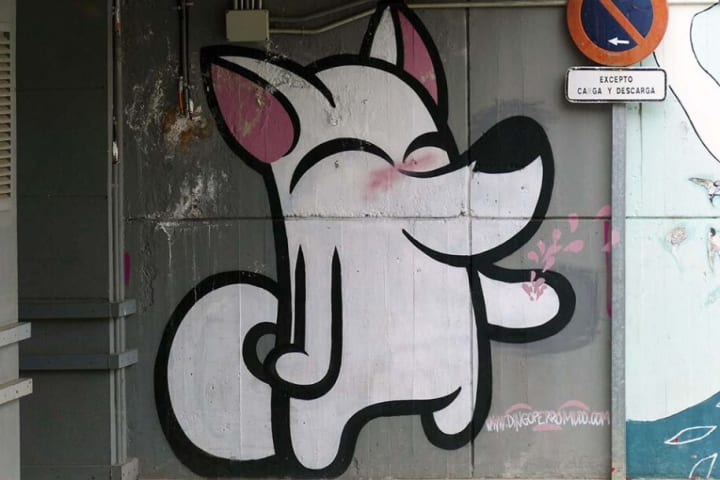
Character Graffiti
Standalone or integrated cartoonish figures—wildstyle's playful companions—telling stories through expression and exaggeration.
- Storytelling: Characters embody the writer's persona or message.
- Legends: Dondi's "children" or Crash's wild kids from 1980s NYC.
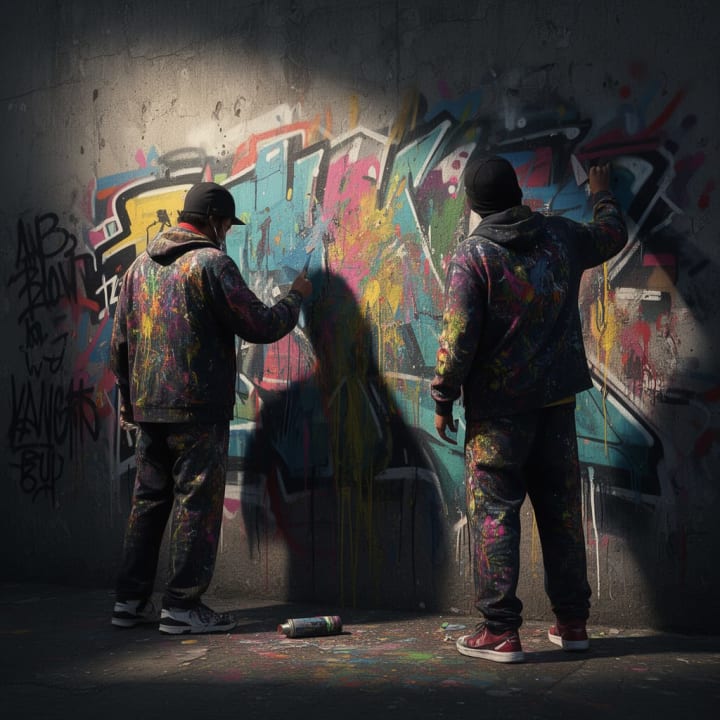
A Global Mosaic
Graffiti absorbs local flavors:
- NYC Hip-Hop: Raw energy birthed tagging and wildstyle.
- Brazilian Pichação: Angular, cryptic tags defying São Paulo's favelas.
- European Stencils: Berlin's post-Wall murals reflect division and unity.
- Australian Indigenous: Blends dot painting with tags for cultural reclamation.
Hip-hop provided the soundtrack and ethos, while punk, comics, and typography fueled visual innovation.
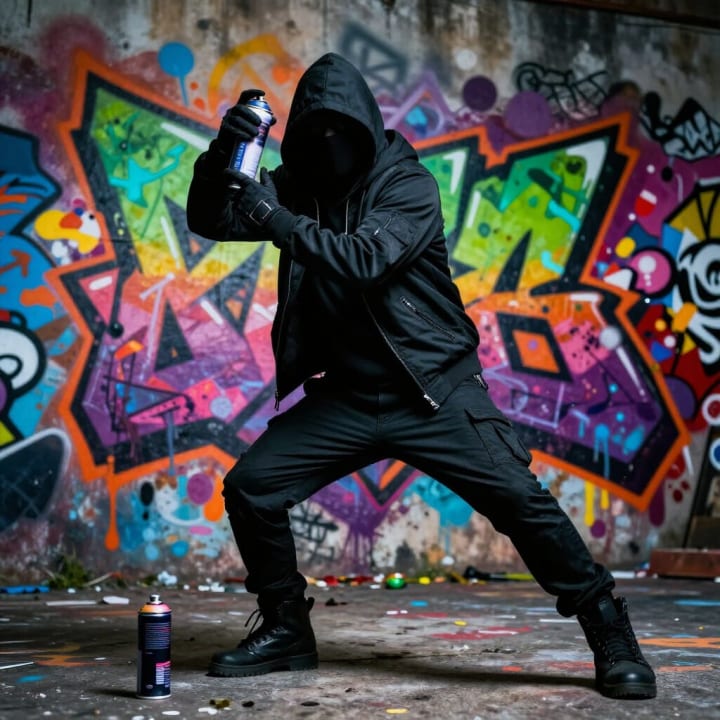
From Streets to Screens
Today's graffiti scene fuses tradition with tech:
- Digital Graffiti: Apps like Procreate mimic spray cans; AR overlays (e.g., Invader's pixel aliens visible via apps) make art interactive.
- NFTs and Galleries: Banksy's shredded Love is in the Bin fetched $25M; MoMA and Tate host graffiti exhibits.
- Sustainable Shifts: Eco-paints and legal walls (e.g., Melbourne's laneways) promote longevity.
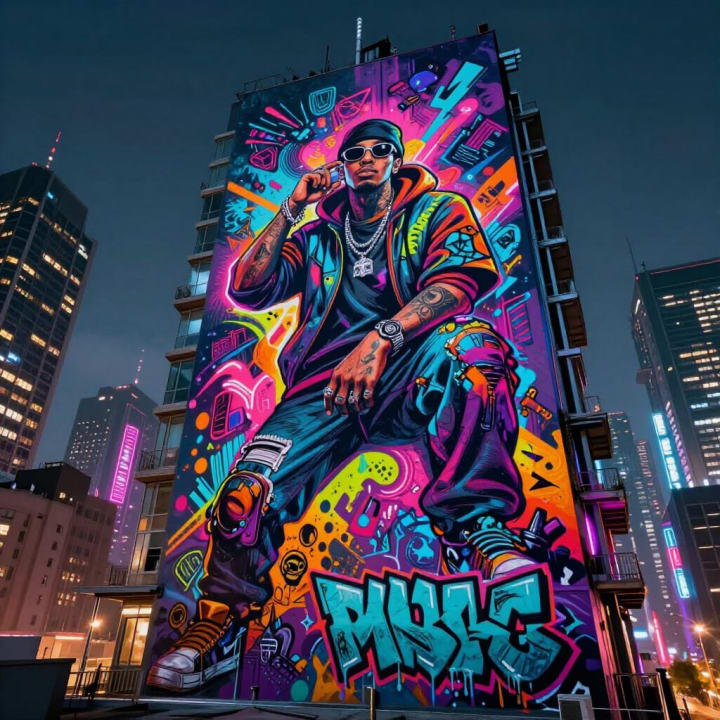
The Ever-Evolving Canvas of Graffiti
Graffiti’s diverse forms, from quick tags to large-scale murals, show how graffiti can be used as a way for everyone (politically located in urban space, with a sense of autonomy) to express themselves artistically. Graffiti is composed of several forms, all of which have their own meanings; together, they create a corpus of graffiti that represents innovation, resilience, and (in many cases) beauty, even amongst the urban environment’s dirtiness. Graffiti will continue to evolve as technology continues to improve, and graffiti will develop hybrid forms that will be bolder than before, to the point that graffiti, rather than being adjourned or phased out, will function in an emerging context as a vital art form.
Step outside: hunt your city's alleys, legal walls, and underpasses. Snap pics, learn the styles, and appreciate the artists reshaping your world. Who knows? Your local scene might inspire your first sketch. Dive in—the streets are calling.
About the Creator
xJRLNx
Im a dude letting out his madness with the help of Ai.
Quote of the Day by Albert Einstein: “Try not to become a man of success, but rather try to become a man of value.”
“Why Albert Einstein’s timeless words still challenge modern ideas of success, purpose, and what truly matters.” Few figures in history have shaped human thought as profoundly as Albert Einstein. Known worldwide for revolutionising physics, Einstein was also a deep thinker on life, ethics, and human purpose. Among his many reflections, one quote continues to resonate across generations and cultures:
By Salaar Jamali6 days ago in Art
Living in a hemp house
Hemp, a multi-purpose crop that delivers fibres, shivs, seeds, and pharmaceuticals is currently used in insulation materials and bio-composites for a more sustainable construction industry. Russ Martin and his wife Karon Korp tell their story as owners of the first hemp house in the U.S.
By Susan Fourtané 7 days ago in Interview




Comments
There are no comments for this story
Be the first to respond and start the conversation.