Arisha Usman
Bio
Here’s the latest on Artificial Intelligence and technology!
Stories (16)
Filter by community
DeepSeek Faces Large Scale Cyberattack Amid Meteoric Rise
In a surprising twist, Chinese AI startup DeepSeek has found itself battling a massive cyberattack just as it was celebrating a landmark achievement. The company's AI chatbot recently became the most downloaded app on Apple's App Store in the U.S., overtaking giants like OpenAI's ChatGPT.
By Arisha Usmanabout a year ago in Education
DeepSeek AI Soars to the Top of the App Store
In an impressive feat, Chinese AI startup DeepSeek has taken the tech world by storm. Its AI Assistant app, released in January 2025, has quickly claimed the #1 spot among free apps on Apple's App Store in the United States and several other countries. Offering a blend of advanced features, an open-source approach, and efficient development, DeepSeek’s success has ignited fresh discussions on global AI competition, U.S. tech export policies, and the evolving tech landscape.
By Arisha Usmanabout a year ago in Education
Chip Stocks Plummet After DeepSeek Shakes Up AI World
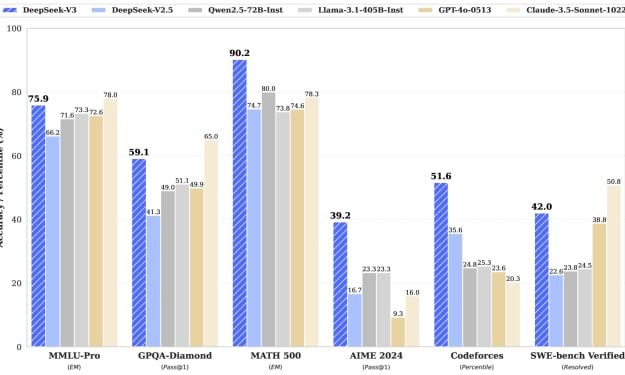
In the last 24 hours, semiconductor stocks took a nosedive, causing a ripple of concern across the financial markets. The trigger? Chinese AI startup DeepSeek unveiled its new AI model, R1, which challenges conventional wisdom about how much investment is needed to develop cutting-edge AI technologies. The news has not only rattled investors but also raised questions about the future of U.S. dominance in the AI industry.
By Arisha Usmanabout a year ago in Education
The Mystery of Dead Galaxy Signals
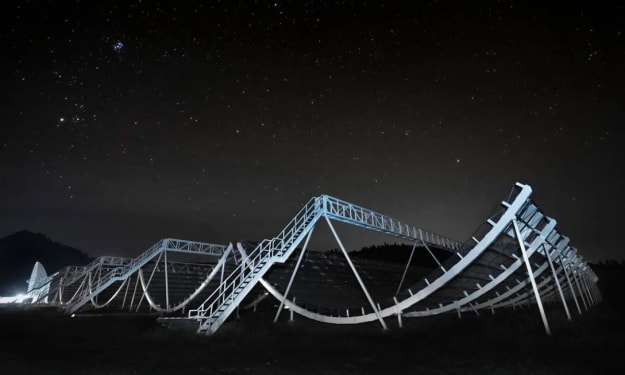
Astronomers recently uncovered a surprising phenomenon that challenges long-standing beliefs about fast radio bursts (FRBs). These brief but intense flashes of cosmic radio waves, often lasting only milliseconds, have puzzled scientists for years. The latest discovery, reported by NBC, came from an unexpected source: a “dead” galaxy located two billion light-years from Earth. This galaxy, inactive and ancient, defies the assumption that FRBs are exclusively generated by young, energetic star-forming regions. The findings open up new possibilities for understanding these enigmatic signals and the processes behind them.
By Arisha Usmanabout a year ago in Education