Fiaz Ahmed Brohi
Bio
I am a passionate writer with a love for exploring and creating content on trending topics. Always curious, always sharing stories that engage and inspire.
Stories (627)
Filter by community
Quaid-e-Azam Muhammad Ali Jinnah Anniversary: Remembering the Visionary Founder of Pakistan. AI-Generated.
Every year, Pakistan pauses to remember Quaid-e-Azam Muhammad Ali Jinnah on his death anniversary, honoring the man whose leadership, determination, and political brilliance led to the creation of an independent Muslim state in South Asia. More than seven decades after his passing, Jinnah’s ideals continue to shape Pakistan’s national identity and democratic aspirations.
By Fiaz Ahmed Brohi2 months ago in Geeks
Australian State Passes ‘Extraordinary’ Gun and Protest Laws After Bondi Attack. AI-Generated.
Australia has long been regarded as a global model for strict gun control and public safety. However, a recent violent attack in Bondi has shaken public confidence and prompted one Australian state to pass what leaders themselves have described as “extraordinary” new gun and protest laws. The move has sparked intense debate nationwide, raising urgent questions about security, civil liberties, and how far governments should go in moments of crisis. A Tragedy That Changed the Conversation The Bondi attack shocked Australians not only because of its violence, but because it occurred in a place associated with everyday life — a popular public area where people gather freely. The tragedy reignited fears about public safety and exposed gaps in the state’s ability to prevent and respond to violent threats. In the days following the incident, political pressure mounted rapidly. Community grief turned into calls for decisive action, with demands that authorities ensure such an event could never happen again. Against this backdrop, the state government moved swiftly to introduce sweeping legislative changes. What the New Laws Include The newly passed laws significantly expand police powers related to firearms and public protests. On the gun control side, authorities now have broader discretion to stop, search, and detain individuals suspected of carrying weapons. Penalties for illegal possession have been increased, and restrictions around firearm access, storage, and licensing have been tightened further. Equally controversial are the changes to protest laws. The legislation gives police enhanced authority to restrict or shut down demonstrations deemed to pose a public safety risk. Organizers can face harsher penalties if protests disrupt infrastructure or emergency services, even if no violence occurs. Government officials argue that these measures are necessary in a new security environment where threats can emerge suddenly and unpredictably. Government’s Defense: Safety Comes First State leaders have defended the laws as proportionate and essential. According to officials, the Bondi attack demonstrated that existing frameworks were not sufficient to deal with fast-moving, high-risk situations. They argue that expanded police powers will allow authorities to intervene earlier, potentially preventing attacks before lives are lost. Supporters of the legislation also point out that Australia’s history of gun reform shows tough laws can save lives when implemented decisively. From this perspective, the laws are framed not as an erosion of freedoms, but as a temporary strengthening of protections in response to extraordinary circumstances. Civil Liberties Groups Push Back However, civil rights advocates and legal experts have raised serious concerns. Critics warn that the laws blur the line between genuine public safety measures and excessive state control. Protest restrictions, in particular, have drawn sharp criticism. Activists argue that peaceful protest is a cornerstone of democracy and that broad police discretion risks suppressing dissent. There are fears that the laws could be used to silence unpopular or politically inconvenient movements rather than address real threats. Legal scholars have also questioned the speed with which the legislation was passed, warning that laws written in moments of fear can have long-lasting consequences. A Shift in Australia’s Global Image? Internationally, Australia has often been praised for balancing safety with personal freedoms. The new laws have prompted observers to ask whether the country is entering a new phase — one where security concerns increasingly outweigh civil liberties. Some analysts see the move as part of a broader global trend. Around the world, governments facing public violence are adopting tougher security laws, often expanding surveillance and policing powers. Australia’s response to Bondi, they argue, reflects the same tensions seen in Europe, North America, and beyond. Public Opinion Remains Divided Among the public, reactions have been mixed. Many Australians support strong action, believing that safety in public spaces must be guaranteed at all costs. Others worry that the laws punish the many for the actions of a few, potentially reshaping everyday freedoms in subtle but significant ways. This division highlights a central dilemma: how to honor victims and prevent future tragedies without undermining the democratic values that define Australian society. What Happens Next? The coming months will be critical. How police apply the new powers, how courts interpret them, and whether the laws are reviewed or amended will determine their long-term impact. For now, the Bondi attack has left a lasting mark — not only on those directly affected, but on Australia’s legal and political landscape. The challenge ahead lies in ensuring that extraordinary laws do not become permanent features, and that safety and freedom remain partners rather than rivals.
By Fiaz Ahmed Brohi2 months ago in Journal
Women’s Rights Are on a Sharp Decline in Israel: Advocates Blame Netanyahu’s Far-Right Government. AI-Generated.
Israel has long presented itself as a democracy that champions equality and progressive values in the Middle East. Women have served in its military, held high political office, and played visible roles in public life. Yet in recent years, women’s rights advocates warn that these gains are being steadily eroded. At the center of their concerns is Prime Minister Benjamin Netanyahu’s far-right governing coalition, which critics say is reshaping Israeli society in ways that disproportionately harm women.
By Fiaz Ahmed Brohi2 months ago in Journal
Business Class Passenger Jailed for 20 Months for Stealing Another Person’s Bag. AI-Generated.
Air travel is often associated with convenience, comfort, and a sense of security—especially in premium cabins like business class. However, a recent court case has shattered the assumption that crime is less likely in elite spaces. A business class passenger has been sentenced to 20 months in jail after stealing another traveler’s bag, sending a strong message that privilege does not place anyone above the law.
By Fiaz Ahmed Brohi2 months ago in Wander
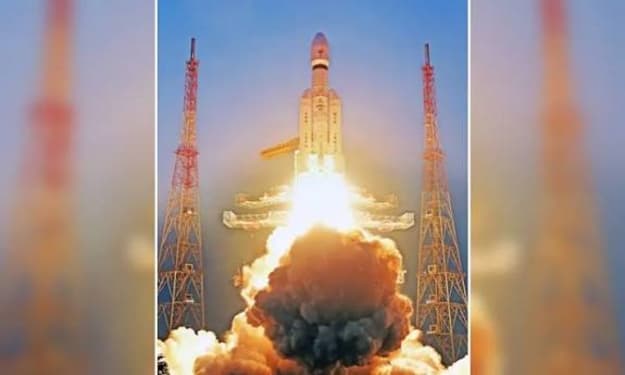
India’s Space Agency Launches Its Heaviest Satellite, Marking a New Era of Technological Ambition. AI-Generated.
India has taken a significant leap forward in its space journey with the successful launch of its heaviest satellite to date, reinforcing the country’s growing stature as a major spacefaring nation. The mission, carried out by the Indian Space Research Organisation (ISRO), is being hailed as a milestone that combines technological precision, strategic vision, and national pride. The launch not only showcases India’s advanced engineering capabilities but also signals its readiness to handle complex, high-mass missions that were once dominated by a handful of global space powers. A Landmark Mission for ISRO The satellite, weighing several tonnes, was placed into orbit using one of ISRO’s most powerful launch vehicles. The mission demanded exceptional coordination, advanced propulsion systems, and meticulous planning, as heavier satellites require far greater thrust and precision to achieve stable orbit. ISRO scientists confirmed that the satellite was deployed successfully and all onboard systems were functioning as expected shortly after launch. Cheers erupted at mission control as years of research and preparation culminated in a flawless execution. Why This Satellite Matters This launch is not just about size—it is about capability. The heaviest satellite ever launched by India carries advanced payloads designed for high-speed communication, enhanced data transfer, and improved coverage across vast geographical areas. Such satellites play a crucial role in: Telecommunications and broadband connectivity Weather forecasting and climate monitoring Disaster management and emergency response Defense and strategic communications With this satellite, India strengthens its ability to deliver reliable services to millions of people, including those in remote and underserved regions. A Boost for India’s Space Ambitions Over the past decade, India has steadily expanded its space program—from low-cost satellite launches to interplanetary missions. This heavy satellite launch signals a shift toward high-capacity, high-impact missions, placing ISRO in direct competition with leading global space agencies. Experts note that handling heavier satellites opens doors to future projects, including: Large space stations Advanced deep-space missions Commercial satellite launches for international clients India’s ability to launch such payloads domestically also reduces dependence on foreign launch providers, enhancing strategic autonomy. Engineering Challenges Overcome Launching a heavy satellite is no easy task. Engineers had to address challenges such as increased fuel requirements, structural stress on the launch vehicle, and precise orbital insertion. ISRO upgraded key components of its launch system, including propulsion stages, navigation systems, and real-time monitoring tools. Extensive ground testing ensured the rocket could withstand the enormous forces involved during liftoff and ascent. The success of the mission reflects ISRO’s emphasis on incremental innovation—refining existing technology while pushing boundaries step by step. Impact on India’s Commercial Space Sector The launch also benefits India’s rapidly growing private space industry. With proven heavy-lift capability, India becomes more attractive as a launch destination for global satellite operators seeking cost-effective and reliable services. In recent years, ISRO has increasingly collaborated with private companies, allowing startups to participate in manufacturing, testing, and mission support. This ecosystem approach is expected to generate jobs, attract investment, and position India as a key player in the global space economy. National Pride and Global Recognition For many Indians, the launch represents more than a technical achievement—it is a moment of collective pride. Social media platforms were flooded with congratulatory messages, while political leaders praised ISRO scientists for their dedication and perseverance. International observers have also taken note, recognizing the mission as proof of India’s maturity in space technology. Analysts say such achievements enhance India’s diplomatic influence and soft power, particularly among developing nations seeking affordable space solutions. What Comes Next? ISRO has ambitious plans ahead, including human spaceflight missions, advanced lunar exploration, and next-generation launch vehicles. The successful deployment of its heaviest satellite provides valuable experience that will feed into these future endeavors. Scientists emphasize that this mission is not an endpoint but a stepping stone toward even more complex projects that will shape India’s space trajectory for decades to come. A Giant Leap Forward With the launch of its heaviest satellite, India has once again demonstrated that innovation, discipline, and vision can overcome limitations of scale and budget. The mission stands as a testament to ISRO’s philosophy of doing more with less—while aiming higher every time. As the satellite begins its operational life in orbit, it carries not just technology, but the aspirations of a nation reaching confidently for the stars.
By Fiaz Ahmed Brohi2 months ago in The Swamp
Venezuela Passes Law Enacting Harsh Penalties for Supporters of US Blockade. AI-Generated.
Venezuela’s political crisis took a dramatic new turn as the country’s legislature passed a controversial law imposing severe penalties on individuals accused of supporting the United States–led economic blockade. Framed by the government as a necessary act of national defense, the legislation has ignited intense debate at home and abroad, raising serious questions about freedom of expression, political dissent, and the future of democratic space in the oil-rich South American nation. A Law Born Out of Sanctions Pressure For years, Venezuela has been under sweeping US sanctions targeting its oil industry, financial institutions, and senior officials. The government blames these measures for deepening the country’s economic collapse, which has resulted in hyperinflation, shortages of basic goods, and mass migration. Officials argue that foreign sanctions amount to “economic warfare” designed to force political change. The newly passed law seeks to criminalize what authorities describe as collaboration with or support for these sanctions. According to the government, Venezuelans who lobby foreign powers, endorse economic restrictions, or provide information that could strengthen the blockade are undermining national sovereignty. Supporters of the legislation say it closes legal loopholes that previously allowed “internal allies of foreign aggression” to operate without consequence. What the Law предусматриes Under the new framework, those found guilty of backing the blockade could face long prison sentences, heavy fines, and bans from holding public office. The law also allows the state to seize assets from individuals and organizations accused of benefiting from sanctions or promoting them. In some cases, penalties may apply retroactively, a provision that has alarmed legal experts. The legislation grants broad authority to prosecutors and security agencies, using loosely defined terms such as “support,” “promotion,” or “facilitation.” Critics argue that this vagueness leaves the law open to abuse and selective enforcement, particularly against political opponents, activists, journalists, and civil society groups. Government’s Defense: Sovereignty and Survival President Nicolás Maduro’s administration has defended the law as an essential tool for protecting Venezuela’s independence. Officials insist that sanctions have crippled public services, reduced oil revenue, and worsened humanitarian conditions. From their perspective, anyone advocating for continued foreign pressure is complicit in the suffering of ordinary citizens. State media has portrayed the law as a patriotic measure, comparing it to wartime legislation used by other countries to punish collaboration with hostile powers. Government allies in the legislature argue that no sovereign nation would tolerate citizens working with external forces to destabilize the economy. Opposition and Rights Groups Push Back Venezuela’s opposition has condemned the law as a blatant attempt to silence dissent. Opposition leaders say the government is using sanctions as a pretext to criminalize criticism and dismantle remaining checks on power. They warn that peaceful advocacy, policy debate, and international diplomacy could now be treated as criminal acts. Human rights organizations have echoed these concerns. They argue that the law violates international standards on freedom of expression and political participation. By equating criticism of government policy with treason, critics say the state risks erasing the boundary between legitimate dissent and criminal behavior. Legal analysts have also raised red flags about due process. With expanded powers for investigators and limited judicial independence, there are fears that trials under the new law may lack transparency and fairness. International Reaction and Diplomatic Fallout The passage of the law is likely to strain Venezuela’s already tense relations with Western governments. US officials have previously stated that sanctions are aimed at pressuring the government, not punishing the population. Washington and its allies may view the legislation as further evidence of democratic backsliding. At the same time, countries critical of sanctions regimes have expressed sympathy for Venezuela’s position, arguing that unilateral economic measures often harm civilians more than political elites. This divide underscores the broader global debate over the legitimacy and effectiveness of sanctions as a foreign policy tool. What This Means for Venezuela’s Future In practical terms, the law could reshape Venezuela’s political landscape. Activists and opposition figures may become more cautious, limiting engagement with international actors. Civil society organizations could face increased scrutiny, while self-censorship may grow among journalists and academics. Economically, the legislation does little to address the root causes of Venezuela’s crisis, such as mismanagement, corruption, and declining oil infrastructure. Critics argue that punishing perceived supporters of sanctions will not generate investment or restore confidence. A Nation at a Crossroads Venezuela’s new law reflects a government under pressure, seeking control in an environment shaped by sanctions, political polarization, and economic hardship. Whether it strengthens national unity or deepens divisions remains to be seen. What is clear, however, is that the law marks a significant escalation in the state’s response to both foreign pressure and internal dissent—one that will have lasting consequences for Venezuelan society.
By Fiaz Ahmed Brohi2 months ago in The Swamp
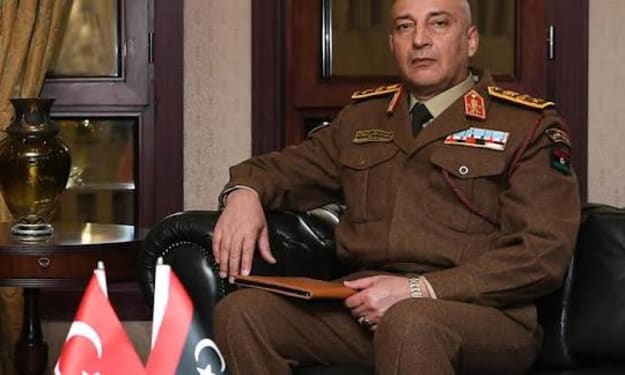
Libya’s top military chief killed in plane crash in Turkiye. AI-Generated.
A devastating aviation accident has rocked Libya and its military leadership. Libya’s top military chief, Lieutenant General Mohammed Ali Ahmed al-Haddad, was killed in a plane crash in Turkey on Tuesday, alongside several senior military officials and crew members. The tragic incident occurred as the delegation was returning from an official visit to Ankara, where they had held high-level defense talks with Turkish counterparts. � The National +1 A Tragic Loss for Libya Libyan Prime Minister Abdul-Hamid Dbeibah expressed deep sorrow over the incident, calling the loss “a great tragedy for the nation.” The prime minister announced that official mourning would be observed for three days across the country to honor the fallen leaders. � The National Al-Haddad was widely regarded as one of Libya’s most respected military figures. He served as the Chief of Staff of the Libyan Army and played a crucial role in efforts to unify the country’s armed forces, an ongoing challenge ever since Libya’s institutions were fractured by years of civil conflict. � Al Jazeera What Happened? The plane carrying Gen. al-Haddad and his delegation was a Dassault Falcon 50 business jet that departed from Ankara’s Esenboga Airport en route to Tripoli, Libya. According to Turkish authorities, radio contact was lost roughly 40–42 minutes after takeoff. The aircraft issued an emergency landing request, reportedly due to a technical malfunction, before disappearing from radar. � Türkiye Today Turkish rescue teams later located the wreckage near the village of Kesikkavak in the Haymana district southwest of Ankara. Officials confirmed that all individuals on board perished in the crash, including the chief of staff, several senior Libyan military officers, and three crew members. � euronews Who Was on Board? Apart from General al-Haddad, the crash claimed the lives of several key military personnel: General Al-Fitouri Ghraibil, head of Libya’s ground forces Brigadier General Mahmoud Al-Qatawi, director of the Military Manufacturing Authority Mohammed Al-Asawi Diab, adviser to the chief of staff Mohammed Omar Ahmed Mahjoub, a military photographer Plus three Turkish flight crew members � The National The Visit and Its Purpose The Libyan delegation had been in Turkey for defense consultations meant to strengthen military cooperation between Ankara and Libya’s internationally recognised Government of National Unity (GNU). Reports indicate that al-Haddad met with senior Turkish defense officials, including Defense Minister Yasar Guler and other commanders, in discussions aimed at deepening military ties. � Türkiye Today Turkey has been a major partner of Libya’s western government, providing military support and training since 2019. This partnership was pivotal in stabilising the GNU’s control over parts of Libya and facilitating efforts to unify the divided nation. The talks were also seen as a continuation of Ankara’s role in Libya’s security architecture. � Turkish Minute The Broader Impact on Libya General al-Haddad’s death represents a significant setback for Libya’s efforts to create a cohesive national military structure. Since the fall of long-time leader Muammar Gaddafi in 2011, Libya has been marked by fragmentation, with competing administrations and military factions controlling different parts of the country. � The National Al-Haddad had been a central figure in bridging divides within Libya’s armed forces. His leadership was seen as a stabilising influence in negotiations and coordination between rival groups. In the wake of the crash, both western and eastern factions have expressed condolences, showing the unexpectedly wide respect he commanded across divisions. � The National International Reactions International response to the tragedy has been supportive and somber. Turkey has opened a formal investigation into the cause of the crash, with prosecutors and authorities examining flight data recorders and assessing whether the malfunction was purely technical. � Türkiye Today In Libya, leaders from various political and military factions, including eastern commander Khalifa Haftar, extended condolences and emphasised unity in honouring the fallen officials. The tragedy has prompted renewed calls for national solidarity and a recommitment to stabilisation efforts. � The National What Comes Next? The investigation into the crash is ongoing, and it may take weeks or months to determine the exact cause. Meanwhile, Libya faces a period of mourning and transition within its military leadership. A temporary replacement for al-Haddad will lead the armed forces while the government evaluates long-term leadership options. The loss also adds a layer of complexity to Libya’s political landscape. As the country continues its journey toward peace, reconciliation, and institutional unity, the death of such a unifying figure could influence future negotiations and power balances. Conclusion The sudden death of Libya’s top military chief in a plane crash near Ankara, Turkey, is a national tragedy with far-reaching implications. It has not only left a leadership vacuum in Libya’s military but also underscored the fragility of a nation still striving for unity after years of conflict. As investigations unfold and Libya mourns, the legacy of General Mohammed Ali Ahmed al-Haddad — a leader respected across divides — will be remembered as central to the ongoing story of Libya’s effort to rebuild and unify. � en.wikipedia.org
By Fiaz Ahmed Brohi2 months ago in The Swamp
Regular Exercise Doesn’t Just Strengthen the Heart, It Reprograms Its Nerves. AI-Generated.
When it comes to heart health, most of us think about cholesterol, blood pressure, and the power of a good cardio session. While these factors are undeniably important, emerging research reveals that regular exercise does more than strengthen the heart muscle—it actually reprograms the nerves that control it, offering profound benefits for long-term cardiovascular health.
By Fiaz Ahmed Brohi2 months ago in Geeks
Russia-Ukraine War Updates: Darkness in Ukraine After Latest Russian Attack. AI-Generated.
Ukraine is once again facing a harrowing night as the latest wave of Russian attacks plunges parts of the country into darkness. Power outages, disrupted communications, and widespread fear have marked the latest escalation, highlighting the ongoing challenges that ordinary Ukrainians face amid the brutal conflict that has gripped the nation for over three years. The attacks, which began in the early hours, targeted critical energy infrastructure across multiple regions, leaving thousands without electricity and severely affecting heating systems during the harsh winter. Ukrainian officials reported that entire towns were left in blackout, compounding the difficulties for residents already grappling with disrupted supply chains, cold weather, and the psychological toll of living in a war zone. President Volodymyr Zelenskyy addressed the nation, calling the attacks “a cruel attempt to terrorize our people.” In a statement, he emphasized that Ukraine would respond decisively to every act of aggression, both on the battlefield and through diplomatic channels. “Our resilience will not be broken. We are united, and we will overcome these dark hours,” Zelenskyy said. The strikes mark a continuation of Russia’s strategic targeting of civilian infrastructure, a tactic that has drawn international condemnation. By hitting power grids and essential services, analysts say Russia aims to sow fear, disrupt daily life, and undermine morale among the Ukrainian population. Humanitarian organizations have warned that prolonged outages could lead to severe consequences, particularly for vulnerable populations such as the elderly, children, and those with medical conditions requiring electricity-dependent care. Local authorities have urged residents to prepare for extended periods without power. In Kyiv, officials distributed portable generators to critical facilities, including hospitals and shelters, while emergency services were placed on high alert. Citizens were advised to keep warm, conserve battery power, and report any emergencies to municipal authorities. Despite these precautions, many families face hours in the dark, relying on candles and battery-powered devices. Meanwhile, the Ukrainian military continues to defend key positions in the east, where fighting remains intense. Recent reports indicate that Russian forces have launched multiple missile and drone attacks on frontline areas, targeting both military installations and logistical networks. Ukrainian commanders have highlighted the resilience of their troops, noting that defensive lines are holding despite the constant barrage. International reactions have been swift. The European Union condemned the attacks, labeling them “unjustifiable acts against civilians.” U.S. officials echoed this sentiment, urging Russia to respect international humanitarian law. Several countries have called for emergency meetings at the United Nations to address the escalating crisis and discuss further support for Ukraine. The human cost of the blackout is already evident. Hospitals in affected areas have reported difficulties in treating patients as backup power systems struggle to keep up. Schools and businesses remain closed, leaving communities grappling with the disruption of daily life. Social media platforms have been flooded with images and videos of families navigating the darkness, highlighting both the fear and resilience of the Ukrainian people. Energy experts have warned that full restoration of electricity could take days in some regions. Repair crews face dangerous conditions as they work to assess damage and restore critical lines, often under the threat of continued attacks. This latest assault underlines the ongoing vulnerability of Ukraine’s infrastructure and the complex challenges in maintaining essential services during wartime. Amid the darkness, stories of solidarity are emerging. Citizens are helping neighbors, sharing resources, and finding ways to stay connected despite power outages. Charitable organizations and local volunteers are mobilizing to provide food, blankets, and medical aid, demonstrating the strength and unity of communities under pressure. As night falls over Ukraine once more, the country braces for the challenges ahead. The attacks underscore that, even as diplomatic efforts continue, the realities of war remain stark and relentless. While the lights may be out in parts of Ukraine, the determination of its people to persevere and defend their homeland shines undiminished.
By Fiaz Ahmed Brohi2 months ago in The Swamp
The ‘City of Prophets’ Where Three Religions Align. AI-Generated.
Across the ancient landscapes of the Middle East lies a city unlike any other — a place where faith, history, and humanity intersect so deeply that it has shaped the beliefs of billions. Often referred to as the “City of Prophets,” Jerusalem stands as one of the most spiritually significant cities on Earth, revered by Judaism, Christianity, and Islam alike. Few places in the world carry such profound sacred meaning while also bearing the weight of centuries of conflict, devotion, and coexistence. A City Rooted in Sacred History Jerusalem’s importance stretches back thousands of years. In Jewish tradition, it is the eternal capital of Israel and the site of the ancient First and Second Temples, including the revered Western Wall, where worshippers pray to this day. King David established Jerusalem as the political and spiritual heart of Judaism, making it central to Jewish identity and faith. For Christians, Jerusalem is inseparable from the life of Jesus Christ. It is the city where he preached, was crucified, buried, and resurrected — events that form the foundation of Christian belief. The Church of the Holy Sepulchre, believed to house both the site of the crucifixion and the tomb of Jesus, remains one of Christianity’s holiest shrines and draws pilgrims from every corner of the world. Islam, too, holds Jerusalem in the highest esteem. Known as Al-Quds in Arabic, it is home to Al-Aqsa Mosque, Islam’s third-holiest site. According to Islamic tradition, the Prophet Muhammad was taken on the miraculous Night Journey (Isra and Mi'raj) from Mecca to Jerusalem before ascending to the heavens. This event firmly cemented the city’s sacred status in Islam. Where Faiths Physically Converge What makes Jerusalem truly extraordinary is not just that it is holy to three religions — but that their sacred spaces exist within walking distance of one another. The Old City, enclosed by ancient walls, is divided into four quarters: Jewish, Christian, Muslim, and Armenian. Within these narrow streets, daily life unfolds alongside prayer calls, church bells, and religious rituals. It is not uncommon to see a Jewish worshipper walking past a Christian pilgrim while a Muslim call to prayer echoes overhead. This physical proximity of faiths is rare anywhere else in the world and symbolizes both spiritual unity and historic tension. Prophets Shared Across Religions Jerusalem earns its title as the “City of Prophets” because many of the figures revered across these religions are shared. Abraham, considered the patriarch of monotheism, is honored in all three faiths. Moses, David, Solomon, and Jesus appear prominently in Jewish, Christian, and Islamic traditions, though each religion interprets their roles differently. This shared spiritual lineage highlights a powerful truth: despite doctrinal differences, the foundations of these faiths are deeply interconnected. A City of Conflict and Coexistence Jerusalem’s holiness has also made it one of the most contested cities in history. Empires, crusaders, caliphates, and modern states have all fought to control it. Today, political tensions continue to shape life in the city, with disputes over sovereignty, access to holy sites, and national identity. Yet amid conflict, Jerusalem also offers countless examples of coexistence. Markets bustle with vendors of different faiths. Hospitals, universities, and workplaces bring together people from diverse backgrounds. Religious leaders often call for peace, emphasizing that the city’s sacred nature demands compassion rather than division. A Living Symbol for Humanity Beyond religion and politics, Jerusalem represents something universal: the human search for meaning. Pilgrims visit seeking forgiveness, healing, or spiritual clarity. Tourists arrive drawn by history and culture. Locals live daily lives shaped by ancient traditions and modern realities. Jerusalem teaches the world that faith can both divide and unite — and that understanding shared roots may be the key to lasting peace. Why Jerusalem Still Matters Today In an increasingly polarized world, Jerusalem remains a powerful reminder of how deeply beliefs shape civilizations. It challenges humanity to honor sacred heritage while striving for tolerance and mutual respect. The “City of Prophets” is not just a relic of the past — it is a living, breathing crossroads of faith. Its story continues to unfold, urging the world to recognize that while religions may differ, their call for justice, mercy, and peace is remarkably aligned.
By Fiaz Ahmed Brohi2 months ago in Geeks
Anthony Albanese Was Cruising to the Summer Break. Now His Leadership Faces Its Most Serious Test. AI-Generated.
For much of the year, Australian Prime Minister Anthony Albanese appeared to be steering his government through relatively calm waters. With major elections behind him, steady approval ratings, and a focus on economic management and social reform, the approach of the summer break seemed like a chance for consolidation rather than confrontation. That sense of political ease, however, has been abruptly disrupted. A combination of mounting public pressure, policy controversies, and national security concerns has pushed Albanese into the most demanding phase of his leadership to date.
By Fiaz Ahmed Brohi2 months ago in The Swamp
Satellite Shows Tanker Seized by US Near Venezuela Is Now Off Texas Coast. AI-Generated.
Satellite imagery revealing that a tanker seized by the United States near Venezuela has now appeared off the coast of Texas has renewed global attention on Washington’s enforcement of sanctions, maritime law, and energy geopolitics. The movement of the vessel, once at the center of a tense standoff in the Caribbean, highlights how sanctions enforcement increasingly plays out not only through diplomacy and courts, but also on the open seas. From Caribbean Waters to the Gulf of Mexico The tanker was originally intercepted by US authorities near Venezuelan waters amid allegations that it was carrying oil linked to sanctioned entities. According to officials familiar with the case, the vessel was suspected of transporting crude in violation of US sanctions imposed on Venezuela’s energy sector. These sanctions aim to restrict the flow of oil revenues that Washington argues have supported authoritarian governance rather than the Venezuelan population. Recent satellite images now show the tanker anchored or maneuvering near the Texas coastline, a clear sign that US authorities have taken physical control of the ship and its cargo. The journey from the Caribbean to the Gulf of Mexico underscores the operational reach of US maritime enforcement and its ability to bring seized assets directly under American jurisdiction. Why the Seizure Matters The seizure is more than a single enforcement action; it is part of a broader strategy to curb sanctions evasion. Over the past few years, the US has accused networks of ship owners, traders, and intermediaries of using complex tactics to move Venezuelan oil despite restrictions. These tactics often include turning off tracking systems, changing ship names, transferring cargo at sea, or routing oil through third countries. By physically seizing a tanker and relocating it to US waters, authorities send a powerful message to global energy traders: sanctions violations carry real and costly consequences. The move also demonstrates that satellite tracking and maritime intelligence have become critical tools in modern economic enforcement. Legal and Diplomatic Dimensions Once a seized tanker reaches US-controlled waters, the case typically moves into the legal system. Courts may determine the fate of the vessel and its cargo, including whether the oil is confiscated, sold, or used to compensate for penalties. In previous cases, proceeds from seized cargoes have sometimes been redirected toward humanitarian or legal settlements, though such outcomes often spark political debate. Diplomatically, the seizure adds strain to already fragile US–Venezuela relations. Caracas has repeatedly condemned sanctions as illegal and harmful, arguing they exacerbate economic hardship for ordinary citizens. Venezuelan officials often portray tanker seizures as acts of piracy, while Washington frames them as lawful enforcement under international and domestic law. Energy Markets Watching Closely Global energy markets are also paying attention. While one tanker does not significantly alter global oil supply, such actions contribute to uncertainty around sanctioned crude flows. Traders, insurers, and shipping companies become more cautious when enforcement appears aggressive and visible. This caution can have ripple effects, including higher transportation costs, reduced willingness to handle high-risk cargoes, and increased scrutiny of vessels operating near sanctioned regions. In a world already grappling with geopolitical tensions, energy security concerns, and price volatility, even symbolic actions can influence market behavior. The Role of Satellite Technology The public availability of satellite imagery has transformed how such घटन events are monitored and reported. Analysts, journalists, and even private citizens can track vessels almost in real time, making maritime enforcement more transparent than ever before. This visibility reduces the ability of sanctioned actors to operate quietly and increases public accountability for governments enforcing or violating international rules. In this case, satellite images showing the tanker’s presence off Texas effectively confirm US claims of control, leaving little room for ambiguity about the outcome of the seizure. A Signal of Future Enforcement The tanker’s relocation to US waters suggests that Washington intends to maintain, if not intensify, its sanctions enforcement posture. As long as sanctions on Venezuela remain in place, similar actions are likely, especially against vessels suspected of repeated or large-scale violations. For ship owners and energy traders, the lesson is clear: sanctions compliance is no longer just a paperwork exercise. Physical enforcement, backed by technology and legal authority, is very much on the table. Conclusion The appearance of a US-seized tanker off the Texas coast, confirmed by satellite imagery, is a vivid reminder of how geopolitics, energy, and maritime law intersect. While the legal process will determine the vessel’s ultimate fate, the broader message has already been delivered. In an era of heightened scrutiny and advanced surveillance, sanctions enforcement is becoming more visible, more assertive, and harder to ignore—on the high seas and beyond.
By Fiaz Ahmed Brohi2 months ago in The Swamp