Fred Bradford
Bio
Philosophy, for me, is not just an intellectual pursuit but a way to continuously grow, question, and connect with others on a deeper level. By reflecting on ideas we challenge how we see the world and our place in it.
Stories (173)
Filter by community
Good Advice from Bad People
We’ve all heard the saying, “Don’t judge a book by its cover.” But what about judging advice by the person giving it? It’s a tricky moral dilemma. Can a flawed person still offer wisdom? Can someone with a questionable character or a history of poor decisions still say something worth listening to? The answer, surprisingly, is yes. Over the years, I’ve learned that good advice can come from the most unexpected—and sometimes unsavory—sources. Here’s what I’ve taken away from the unlikely mentors in my life.
By Fred Bradfordabout a year ago in FYI
5 Ways to Use Failure to Your Advantage
Failure is often seen as a roadblock, but in reality, it’s a stepping stone to success. Every great achiever, from inventors to entrepreneurs, has faced setbacks before reaching their goals. Instead of fearing failure, embrace it as a powerful tool for growth. Here are five ways you can turn failure into an advantage:
By Fred Bradfordabout a year ago in Art
5 Ways to Stop Reacting Emotionally and Take Control of Your Life
Emotions are a fundamental part of being human. They color our experiences, shape our relationships, and influence our decisions. However, when emotions take the wheel and dictate our reactions, they can lead to impulsive behavior, damaged relationships, and unnecessary stress. Learning how to stop reacting emotionally is not about suppressing your feelings—it’s about understanding them, managing them, and responding in a way that aligns with your values and goals.
By Fred Bradfordabout a year ago in Humans
5 Reasons Why Ego is Important
In a world that often emphasizes humility and selflessness, the concept of ego can get a bad rap. We’re told to “check our ego at the door” or warned against being “egotistical.” But what if the ego isn’t the villain it’s often made out to be? What if, in fact, a healthy ego is essential for personal growth, success, and well-being?
By Fred Bradfordabout a year ago in Art
5 Money Tricks from Warren Buffett
Warren Buffett, the legendary investor and billionaire, is a living testament to financial wisdom. Known as the "Oracle of Omaha," Buffett has built an empire through smart investing, frugality, and strategic decision-making. If you're looking to improve your financial habits, here are five money tricks inspired by Buffett's philosophy that can help you build long-term wealth and achieve financial freedom.
By Fred Bradfordabout a year ago in Art
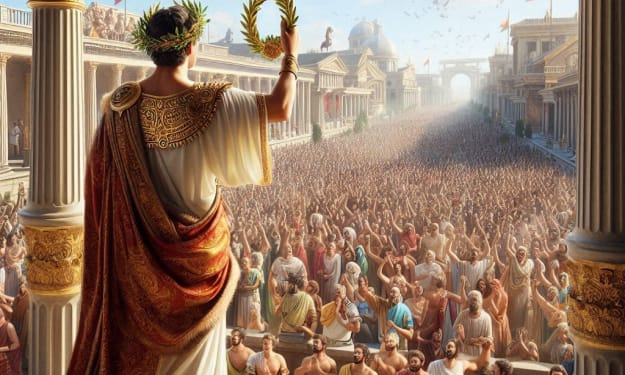
The Philosophy of Nero
Emperor Nero is often remembered for his infamous reign, marked by excess, cruelty, and debauchery. In popular culture, he is the embodiment of tyranny, infamous for allegedly "fiddling while Rome burned" and for committing gruesome acts of violence, including the murder of his mother and wife. Yet, beneath this bloodstained legacy lies a more complex philosophical and psychological narrative that reveals deeper themes of power, perception, and personal struggle. Understanding the philosophy of Nero requires a closer look at his life, his leadership, and the ideas he may have entertained.
By Fred Bradfordabout a year ago in Critique
5 Life Lessons from Miyamoto Musashi
Miyamoto Musashi (1584–1645) is widely regarded as one of the greatest samurai and swordsmen in Japanese history. Beyond his legendary duels and undefeated record, Musashi was also a philosopher, strategist, and artist. His magnum opus, The Book of Five Rings, contains profound wisdom that extends far beyond combat and can be applied to everyday life. Here are five key life lessons from Miyamoto Musashi that can inspire and guide us.
By Fred Bradfordabout a year ago in Art
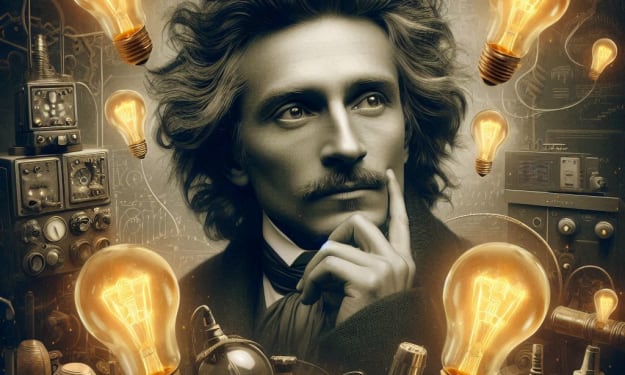
What We Can Learn from Nikola Tesla
Nikola Tesla was more than just an inventor; he was a visionary whose ideas were decades ahead of his time. Though he was often overshadowed by contemporaries like Thomas Edison, Tesla's contributions to science and technology have shaped the modern world in ways many people don't realize. From wireless energy to alternating current (AC), Tesla's ideas laid the groundwork for much of the technology we take for granted today. But beyond his inventions, there are valuable lessons we can learn from Tesla’s life and work.
By Fred Bradfordabout a year ago in Art
Your Truth vs. Other People’s Truth
Truth—a word so simple, yet so complex in its essence. For centuries, philosophers, scientists, and theologians have grappled with its nature. Is truth objective, an immutable reality existing independently of human perception? Or is it subjective, a personal construct shaped by our experiences, beliefs, and emotions? In a world brimming with diverse perspectives, the tension between "your truth" and "other people’s truth" is more relevant than ever.
By Fred Bradfordabout a year ago in Art
If the Great Philosophers Returned
If the philosophers of old times—those monumental thinkers like Socrates, Confucius, Aristotle, or Nietzsche—were somehow resurrected into our modern world, what would you ask them? This tantalizing question invites not only reflection on our current dilemmas but also speculation on how these giants of thought might interpret our society, technologies, and existential quandaries. The exercise bridges the timelessness of human questions with the specificity of our present age.
By Fred Bradfordabout a year ago in Humans
What I Learned from The Catcher in the Rye by J.D. Salinger
J.D. Salinger's The Catcher in the Rye is one of the most revered—and controversial—novels of the 20th century. With its unforgettable protagonist, Holden Caulfield, the book offers a window into the turbulence of adolescence, capturing the confusion, pain, and searching that come with growing up. As I delved into Holden’s world, I was struck not just by his rebellion and cynicism, but by the deep themes that resonate across generations. Here’s what I learned from reading this iconic novel.
By Fred Bradfordabout a year ago in BookClub
5 Life Lessons from Benedict de Spinoza
Benedict de Spinoza, a 17th-century Dutch philosopher, is celebrated as one of the greatest rationalists of the Enlightenment. His profound insights into human nature, ethics, and the universe remain remarkably relevant in our modern lives. Through his magnum opus, Ethics, Spinoza challenges us to rethink our relationships with ourselves, others, and the world. Here are five transformative life lessons drawn from Spinoza's philosophy:
By Fred Bradfordabout a year ago in Art