Holianyk Ihor
Bio
Stories (452)
Filter by community
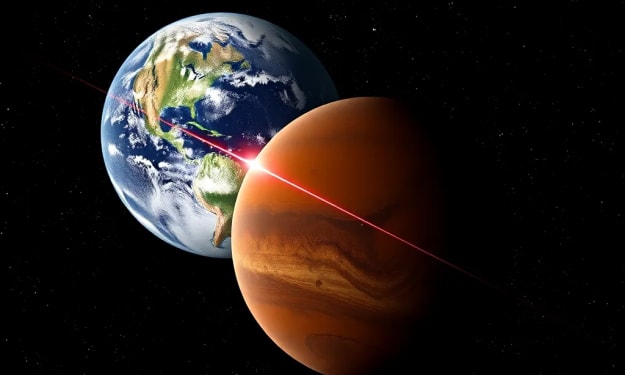
Planets Without Sunlight: The Mystery of the Wandering Worlds
When we imagine planets, we typically picture them orbiting a bright star, basking in the warmth of sunlight just like Earth. The star provides light, energy, and the gravitational anchor that keeps planets in their stable orbits. But what if we told you that not all planets play by these rules? Somewhere out there, drifting alone in the vast cold darkness of space, are planets with no sun at all. These are known as rogue planets mysterious, starless worlds lost in the cosmic night.
By Holianyk Ihor7 months ago in Futurism
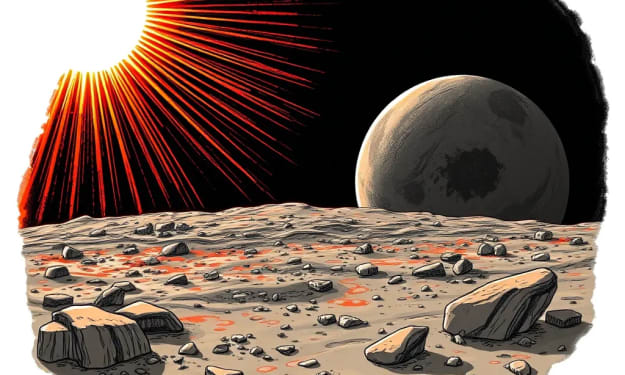
Why Mercury Is So Hot Without an Atmosphere: The Paradox of the Sun’s Closest Planet
When we talk about the hottest planets in the Solar System, Venus often takes center stage with its thick, choking atmosphere and lead melting surface temperatures. But Mercury the closest planet to the Sun deserves its own spotlight. Despite having no real atmosphere, its surface can reach blistering temperatures of 430°C (800°F) during the day. How is this possible? And if it’s so hot, why does the lack of atmosphere matter?
By Holianyk Ihor7 months ago in Futurism
Precession and Axial Tilt: The Cosmic Dance of Planets
When we look up at the planets in the sky, it’s easy to imagine them simply spinning on their axes and calmly orbiting the Sun. But in reality, each planet is engaged in a complex and elegant “cosmic dance,” with two of the most important moves being axial tilt and precession. These phenomena play a critical role in shaping a planet’s climate, seasons, and even its long term environmental stability. Let’s dive into how they work and why they matter.
By Holianyk Ihor7 months ago in Futurism
Asteroids That Threaten Earth: A Hidden Danger from the Depths of Space
Every day, Earth is bombarded by millions of tiny specks of cosmic dust and small meteoroids that burn up harmlessly in our atmosphere. But lurking among this harmless debris are much larger cosmic travelers asteroids with the potential to cross paths with our planet. Some are massive enough to cause devastation on a global scale. As we continue to explore the universe, a critical question emerges: how real is the threat of an asteroid impact, and can we protect ourselves?
By Holianyk Ihor7 months ago in Futurism
The Most Massive and Luminous Stars in the Universe: Cosmic Giants
When we gaze at the night sky, the stars appear as delicate points of light, shimmering in the dark canvas above us. Yet, behind this beauty lie true titans stars so massive and brilliant that they defy ordinary comprehension. These cosmic giants form in the most extreme conditions, live fast, and die in spectacular explosions, shaping the very fabric of galaxies. Let’s journey into the fascinating world of the most massive and luminous stars in the universe.
By Holianyk Ihor7 months ago in Futurism
How the Moon Influences Earth: The Invisible Threads of Gravity and Light
The Moon is far more than a glowing nightlight hanging in the sky. For poets and lovers, it’s a symbol of beauty and mystery but scientifically, it's a vital player in Earth’s natural systems. From ocean tides to climate stability and even the biological rhythms of life, the Moon’s influence is both profound and far-reaching. If our celestial neighbor were to vanish, Earth would become an entirely different and far less hospitable place.
By Holianyk Ihor7 months ago in Futurism
Antigravity Effects: Hypotheses and Scientific Dreams That Could Reshape the Future
Imagine a world where cars float silently above the roads, buildings hover effortlessly in the sky, and spacecraft lift off without the thunderous roar of rocket engines. This is the vision that has captivated both scientists and science fiction writers for decades a vision built around the elusive concept of antigravity.
By Holianyk Ihor7 months ago in Futurism
The Secrets of Earth’s Magnetic Field: The Planet’s Invisible Shield
Deep beneath our feet, thousands of kilometers below the surface, lies one of the greatest and most mysterious forces of our planet Earth’s magnetic field. Though invisible and imperceptible to our senses, this powerful shield plays a critical role in protecting life on Earth. It shields us from solar storms, deflects harmful cosmic radiation, and even helps animals navigate across the globe. But what exactly is it? Where does it come from? And what secrets is science still trying to uncover?
By Holianyk Ihor7 months ago in Futurism
Life Support Systems with Zero Energy: Sci-Fi Dream or Future Survival Tech?
In space, energy is more than just a necessitynit’s a currency of survival. Without it, there’s no propulsion, no communication, and most critically, no way to sustain human life. But what happens if energy runs out completely? Imagine a spacecraft hit by a solar storm, its solar panels fried, its batteries drained. How can a crew survive without power? Surprisingly, scientists are exploring life support systems that could function with zero external energy. Let’s dive into this bold concept that straddles the line between science fiction and near-future innovation.
By Holianyk Ihor7 months ago in Futurism
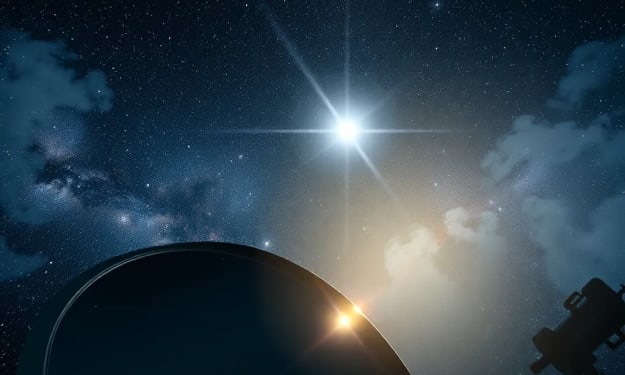
Catching Light from the Edge of Time: How Photons from Distant Quasars Reveal the Universe’s Secrets
Somewhere on the edge of the observable universe billions of light-years away ancient giants still burn brightly. These are quasars: dazzling, hyperactive galactic cores powered by supermassive black holes devouring surrounding matter. Though impossibly far, the light they emit or more precisely, the photons travels across space for over 10 billion years, eventually reaching us. Each photon is like a cosmic message in a bottle, whispering secrets about the early universe and everything the light passed through on its epic journey.
By Holianyk Ihor7 months ago in Futurism
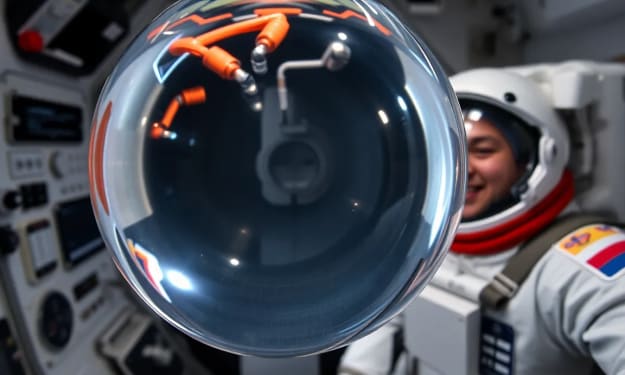
The Physics of Fluids Without Gravity: Surprising Behaviors and Space Discoveries
What happens when you pour water into a glass… in space? On Earth, we hardly think about how liquids behave. Gravity pulls water down, shaping it to its container, and drops always fall somewhere. But in microgravity, the rules change completely. A simple drop of water becomes a floating sphere with a smooth, perfect surface. In the weightless environment of space, the familiar physics of fluids takes on a strange and fascinating new form.
By Holianyk Ihor7 months ago in Futurism
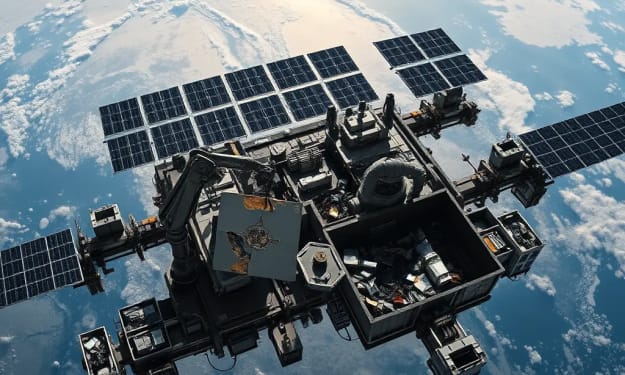
Satellite Recycling Stations: Giving Old Spacecraft a Second Life
Just like Earth, space is starting to get cluttered. For decades, satellites, spent rocket stages, and fragments of defunct spacecraft have been left behind, turning Earth’s orbit into a cosmic junkyard. These objects may seem harmless, but they travel at speeds of up to 28,000 km/h, and even a tiny fragment can destroy an active satellite or damage a crewed mission. To tackle this growing threat, scientists and engineers are developing a futuristic yet practical solution: satellite recycling stations in orbit.
By Holianyk Ihor7 months ago in Futurism