Holianyk Ihor
Bio
Stories (450)
Filter by community
How Star Maps Are Made: From Ancient Myths to Galactic Databases
There’s something undeniably captivating about the night sky. For thousands of years, humans have stared at the stars in awe—searching for patterns, creating myths, and using the heavens to navigate oceans and measure time. Today, we’ve taken that fascination to the next level. With cutting-edge technology and decades of astronomical research, we can now map the cosmos in astonishing detail. But how exactly are these celestial maps created? Let’s take a journey through time and technology to discover how we chart the stars.
By Holianyk Ihor8 months ago in Futurism
Next-Gen Rocket Tech: How Modern Launch Innovations Are Redefining Space Travel
Space travel isn’t just about roaring engines and fiery liftoffs anymore. Today, launching a rocket involves a stunning mix of cutting-edge engineering, artificial intelligence, and advanced materials science. What once seemed like science fiction is now part of our evolving reality, as space becomes more accessible, more efficient, and more sustainable. Let’s explore some of the most transformative technologies changing the face of rocket launches—and shaping the future of space exploration.
By Holianyk Ihor8 months ago in Futurism
Cosmic Voyagers: How Space Probes Explore the Far Reaches of Our Solar System
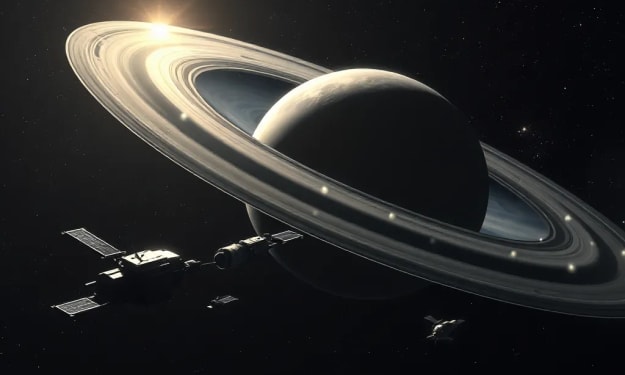
When we gaze up at the night sky, it’s easy to forget that some of our most ambitious explorers aren’t people—but machines. Silent and persistent, space probes have traveled billions of kilometers beyond Earth, venturing into the unknown corners of our Solar System. These robotic pathfinders have helped humanity unlock cosmic secrets far beyond our reach.
By Holianyk Ihor8 months ago in Futurism
Microgravity and Human Health: Lessons from the ISS and Scientific Experiments
When we gaze up at the stars, we often marvel at the vastness of space but rarely pause to consider the profound physical and biological challenges that humans face beyond our planet. Among these challenges, one of the most significant is microgravity. At first glance, weightlessness might seem fun and exciting—astronauts floating effortlessly, objects drifting around the cabin, and movements appearing graceful and free. However, behind this spectacular display lie deep and often uncomfortable changes occurring within the human body. The International Space Station (ISS) has served as a unique laboratory for decades, helping scientists study how microgravity affects human health.
By Holianyk Ihor8 months ago in Futurism
Quantum Telescopes of the Future: Is Image Transmission Without Light Possible?
Imagine a telescope that can "see" objects without capturing a single photon from them. No light, no reflection, no lenses — yet an image of a distant star or the surface of an exoplanet appears before your eyes. At first glance, this sounds like science fiction, but quantum physics is making such scenarios increasingly plausible.
By Holianyk Ihor8 months ago in Futurism
The Geometry of the Universe: Flat, Closed, or Infinite?
Since ancient times, humanity has looked up at the stars, not only in awe but also in search of answers. One of the deepest questions we’ve ever asked is deceptively simple: What shape is the universe? It’s more than just a philosophical curiosity—it’s a fundamental part of understanding the nature of space, time, and even the ultimate fate of everything we know. According to modern cosmology, the universe can take on three possible shapes: flat, closed, or open. Each of these geometries offers a different view of reality—and a different destiny.
By Holianyk Ihor8 months ago in Futurism
How Astronomical Interferometers Work – and Why We Need Them
When you think about humanity’s most powerful tools for peering into the universe, you probably imagine colossal telescopes with mirrors the size of swimming pools. But there’s a special class of instruments that doesn’t just look at the sky — it listens to it with astonishing precision. These are astronomical interferometers, and they work by linking together multiple telescopes to form a single, super-sensitive eye on the cosmos. But how do they work — and why go to such technical lengths?
By Holianyk Ihor8 months ago in Futurism
The First Spectra of Exoplanet Atmospheres: What Is Their Nature Breathing?
There was a time when simply spotting a planet around another star felt like a miracle. Today, we’ve gone far beyond mere observation — we've started to sniff the air of distant worlds. With the help of powerful space telescopes, scientists have captured the first atmospheric spectra of exoplanets, unlocking their chemical makeup and offering tantalizing clues about their environments. From searing gas giants to Earth-like candidates, each world has its own unique story hidden in its atmosphere.
By Holianyk Ihor8 months ago in Futurism
The Psychology of Deep Space Missions: Loneliness, Fear, and Existential Reckoning
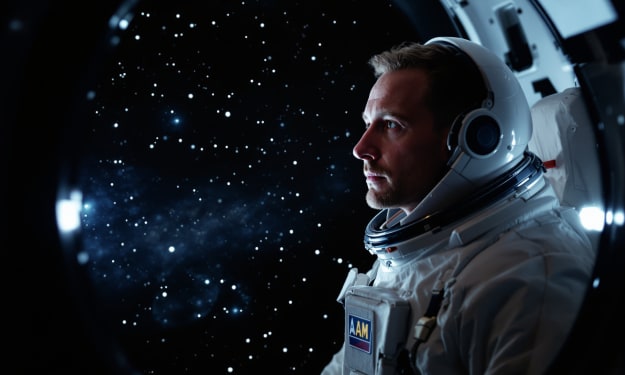
Space is often seen as the final frontier — vast, silent, and endlessly mysterious. But beyond the technical marvels and heroic narratives lies a quieter, deeper challenge: the human mind. As we push further from Earth in our quest to explore the cosmos, astronauts face not only physical trials but also intense psychological battles. Loneliness, fear, and existential reflection become constant companions. What happens to a person’s mind when Earth is just a fading blue dot in an endless sea of black?
By Holianyk Ihor8 months ago in Futurism
What Does a Person Feel Looking at Earth from Deep Space?
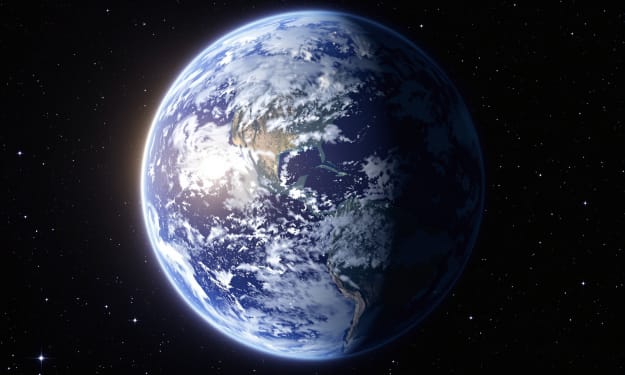
When astronauts first ventured beyond our atmosphere, they came back changed—not just physically, but emotionally and philosophically. They spoke of an overwhelming sense of awe and perspective that shook the foundations of how they viewed our world. But what happens when you go even farther? Not just into orbit or to the Moon, but to the far reaches of the Solar System or beyond—where Earth becomes no more than a faint glimmer, a pale blue dot lost in the void?
By Holianyk Ihor8 months ago in Futurism
Science Fiction vs. Reality: Which Space Dreams Have Already Come True?
There was a time when reading about space travel, interplanetary missions, and intelligent aliens felt like pure fantasy — thrilling, but impossible. Rockets and moon landings were for the pages of pulp magazines, not front-page headlines. But science has a way of catching up with imagination. In fact, many ideas that once lived only in the realm of science fiction are now part of our everyday reality. It’s as if writers of the past weren’t just dreaming — they were quietly sketching blueprints for the future.
By Holianyk Ihor8 months ago in Futurism
What If the Universe Is a Hologram? Exploring the Theory of Holographic Reality
The universe feels vast, solid, and deeply real. We touch mountains, observe galaxies, and live our lives under the comforting rules of gravity, matter, and space. But what if this experience — everything we see, feel, and know — is just a grand illusion? Not in a mystical or philosophical sense, but in a profoundly scientific one. Welcome to one of the most mind-bending ideas in modern theoretical physics: the holographic theory of the universe.
By Holianyk Ihor8 months ago in Futurism